
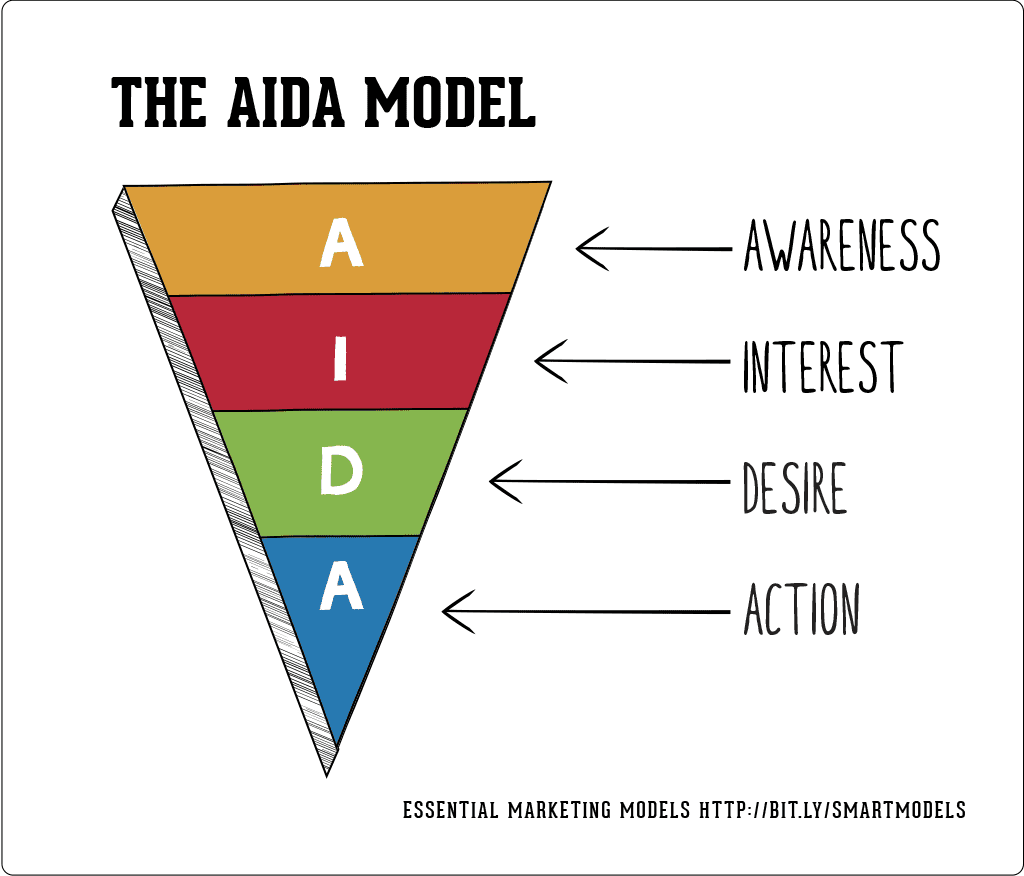
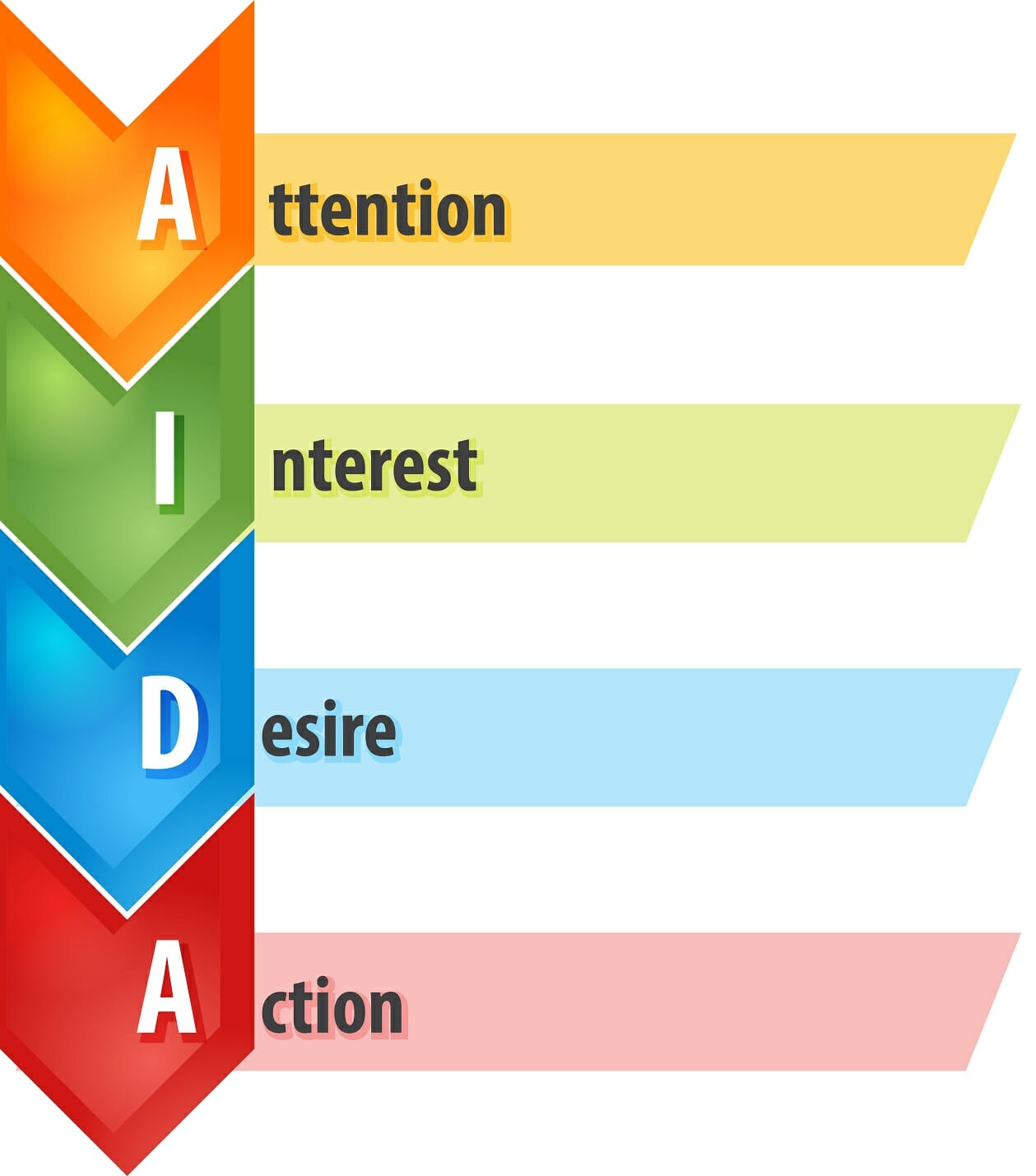
AIDA, an acronym that has become a cornerstone of advertising and marketing strategy, stands for Attention, Interest, Desire, and Action. This classic marketing model, developed by Elias St. Elmo Lewis in the late 19th century, outlines the psychological steps a consumer goes through before making a purchase. While its origins predate the digital age, AIDA remains remarkably relevant and effective in today’s complex advertising landscape. Understanding and strategically applying its principles can significantly enhance the impact and success of any marketing campaign, from traditional print ads to cutting-edge digital content.
The power of AIDA lies in its ability to provide a clear, sequential framework for understanding consumer behavior. It moves beyond simply presenting a product or service and instead focuses on guiding the potential customer through a journey, from initial awareness to a desired outcome. In essence, AIDA is a blueprint for persuasive communication, designed to capture and hold an audience’s attention, build a compelling case for a product or service, and ultimately drive them towards a specific action.
The Pillars of AIDA: A Deeper Dive
Each stage of the AIDA model represents a distinct psychological and behavioral shift that marketers aim to elicit from their audience. Mastering these individual stages is crucial for constructing a campaign that resonates deeply and effectively.
Attention: Capturing the Initial Gaze
The first and arguably most critical step in the AIDA model is grabbing the consumer’s attention. In an era of information overload, where individuals are bombarded with thousands of marketing messages daily, cutting through the noise is a formidable challenge. The goal here is to stop the prospect in their tracks and make them pause long enough to notice your message.
Strategies for Grabbing Attention
- Novelty and Uniqueness: Presenting something unexpected, original, or visually striking can immediately pique curiosity. This could involve unusual imagery, unconventional messaging, or a surprising format.
- Emotional Resonance: Appealing to emotions – be it joy, humor, fear, or surprise – can create a powerful connection and make a message memorable. Emotional hooks are particularly effective in grabbing attention and fostering engagement.
- Intriguing Questions or Statements: Posing a question that directly addresses a pain point or aspiration of the target audience, or making a bold, declarative statement, can immediately draw them in.
- Visual Impact: In visual mediums like social media, websites, and print, compelling imagery or video is paramount. High-quality, relevant, and emotionally evocative visuals are essential for initial attention-grabbing.
- Strong Headlines: For written content, a captivating headline is the first point of contact. It needs to be concise, benefit-oriented, and create a sense of urgency or curiosity.
- Personalization: Addressing the consumer directly or referencing their specific interests can make the message feel more relevant and harder to ignore.
- Celebrity Endorsements or Influencer Marketing: Leveraging the existing audience and credibility of well-known figures can instantly draw attention to a brand or product.
The objective at this stage is not to sell, but simply to be noticed. A campaign that fails to capture attention at the outset will never have the opportunity to progress to the subsequent stages, rendering all other efforts futile.
Interest: Sustaining Engagement and Building Relevance
Once attention has been captured, the next crucial step is to maintain it by fostering interest. This involves providing information that is relevant, engaging, and speaks directly to the needs, desires, or problems of the target audience. It’s about moving beyond the initial hook to offer something of value that encourages the consumer to learn more.
Cultivating Consumer Interest
- Highlighting Benefits, Not Just Features: While features describe what a product is or does, benefits explain what the product does for the customer. Focusing on how the product will improve their lives, solve their problems, or fulfill their desires is key.
- Storytelling: Narratives have a profound ability to engage audiences. Sharing a story about the product’s origin, its impact on customers, or how it addresses a common challenge can create a deeper connection.
- Providing Value: Offering useful information, insights, or even entertainment related to the product or service can keep the audience engaged. This could be in the form of blog posts, infographics, how-to guides, or entertaining videos.
- Demonstrating Expertise: For complex products or services, showcasing knowledge and authority in the relevant field can build trust and reinforce interest.
- Creating Curiosity: Introducing elements of mystery or hinting at further solutions can encourage the audience to delve deeper into the message.
- Using Engaging Language: Employing vivid descriptions, relatable language, and a tone that resonates with the target audience can make the content more compelling.
- Social Proof: Testimonials, reviews, and case studies can demonstrate that others have found value in the product or service, thereby increasing interest.
At this stage, the audience is actively considering whether the offering is something they genuinely need or want. The marketing message must provide compelling reasons to continue the exploration.
Desire: Creating a Strong Want or Need
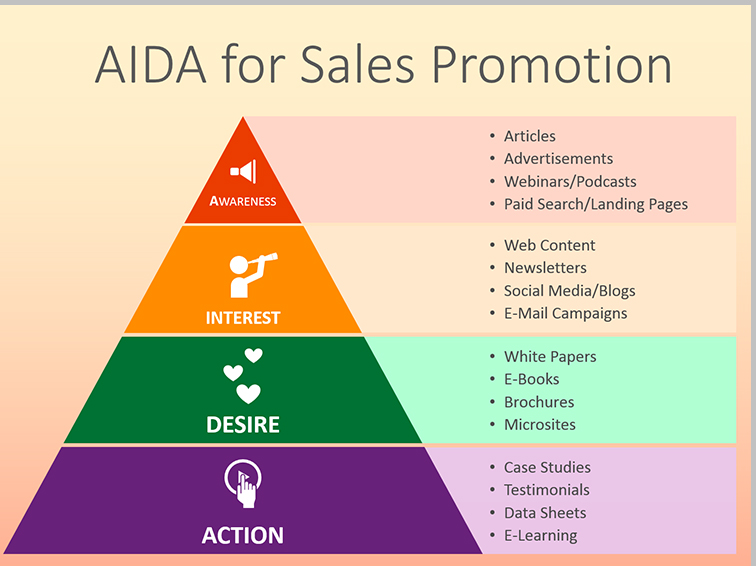
The third stage of AIDA is about transforming interest into desire. This is where the marketer aims to convince the consumer that the product or service not only meets their needs but is something they want and need to possess. It’s about tapping into emotions and aspirations, making the offering seem indispensable and highly attractive.
Fanning the Flames of Desire
- Emphasizing Value Proposition: Clearly articulate the unique selling proposition (USP) and the overarching value the product or service offers. This includes demonstrating how it is superior to alternatives.
- Appealing to Aspirations and Emotions: Connect the product to the consumer’s deepest desires, such as social status, security, happiness, convenience, or self-improvement. Show them what their life will be like with the product.
- Building Credibility and Trust: Reinforce trust through strong testimonials, endorsements from credible sources, guarantees, and a solid reputation. Consumers are more likely to desire something they believe in.
- Creating Scarcity or Urgency: Limited-time offers, exclusive deals, or limited stock can create a sense of urgency and encourage immediate desire.
- Highlighting Uniqueness and Exclusivity: Position the product as special, rare, or belonging to an elite group, appealing to the consumer’s desire for uniqueness.
- Showcasing Results and Transformations: Vividly illustrate the positive outcomes and transformations customers have experienced. Before-and-after scenarios or success stories are powerful tools.
- Demonstrating the “Why”: Beyond the “what,” explain why this product or service is the ideal solution for them. What problem does it solve better than anything else?
The goal here is to make the consumer feel that acquiring the product or service is not just an option, but a necessity for achieving their goals or fulfilling their wants.
Action: Prompting the Desired Behavior
The final stage of the AIDA model is Action. This is the culmination of the entire process, where the marketer guides the consumer to take a specific, desired step. Without a clear call to action, the preceding stages, no matter how well executed, will likely fail to yield tangible results.
Driving Consumers to Action
- Clear and Compelling Calls to Action (CTAs): CTAs must be unambiguous, action-oriented, and easy to understand. Examples include “Buy Now,” “Sign Up Today,” “Learn More,” “Download Free Guide,” or “Call Us.”
- Simplicity and Ease of Execution: The path to taking action should be as frictionless as possible. A complicated checkout process, lengthy forms, or confusing navigation can deter potential customers.
- Creating Urgency and Incentives: Offering limited-time discounts, bonuses for immediate purchase, or emphasizing the risk of missing out can provide the final push needed for action.
- Reducing Perceived Risk: Guarantees, return policies, free trials, or secure payment options can alleviate consumer concerns and make them more comfortable taking the desired action.
- Providing Clear Next Steps: Make it evident what the customer needs to do to proceed. This could involve clicking a button, filling out a form, or contacting a sales representative.
- Reinforcing Value at the Point of Action: Briefly reiterate the key benefits or value proposition right before the final commitment, reminding the customer why they are taking this step.
- Follow-up and Nurturing: For more complex sales cycles, follow-up communications can be crucial for guiding prospects through the final steps of the decision-making process.
The ultimate success of an AIDA-driven campaign is measured by the number of consumers who successfully complete the intended action, whether it’s making a purchase, filling out a lead form, or signing up for a newsletter.
Evolution and Modern Applications of AIDA
While AIDA is a time-tested model, its application has evolved significantly with the advent of digital marketing. The core principles remain, but the methods of implementation have adapted to new platforms and consumer behaviors.
Adapting AIDA for the Digital Age
- Attention in the Digital Realm: Digital attention is fragmented. Tactics like compelling social media visuals, engaging video content, search engine optimization (SEO) for discoverability, and targeted advertising are crucial for initial attention.
- Interest Online: Websites, blogs, social media posts, webinars, and email marketing are key channels for nurturing interest. Content marketing plays a vital role in providing value and establishing expertise.
- Desire in E-commerce: Online reviews, user-generated content, influencer collaborations, personalized product recommendations, and clear benefit-driven product descriptions are powerful tools for building desire in an e-commerce context.
- Action Online: Digital CTAs are abundant – “Add to Cart,” “Subscribe,” “Download,” “Book Now.” Streamlined checkout processes, one-click purchasing, and digital payment options facilitate action.
Beyond the Classic AIDA: Variations and Extensions
The AIDA model, while foundational, is not the only framework available. Marketers have developed variations and extensions to address specific contexts and evolving consumer journeys. These include models like AIDAS (adding “Satisfaction”), REAN (Reach, Engage, Activate, Nurture), and the marketing funnel, which offer more nuanced approaches to customer engagement and conversion.
However, the enduring strength of AIDA lies in its simplicity and its fundamental understanding of the psychological progression involved in persuasion. It serves as an invaluable starting point and a constant reminder of the essential elements required to move a prospect from unawareness to a desired action. For marketers, understanding AIDA is not just about knowing an acronym; it’s about mastering the art of guiding a consumer through a journey that culminates in a successful and mutually beneficial outcome.
aViewFromTheCave is a participant in the Amazon Services LLC Associates Program, an affiliate advertising program designed to provide a means for sites to earn advertising fees by advertising and linking to Amazon.com. Amazon, the Amazon logo, AmazonSupply, and the AmazonSupply logo are trademarks of Amazon.com, Inc. or its affiliates. As an Amazon Associate we earn affiliate commissions from qualifying purchases.