
Bridges are more than just feats of engineering; they are vital arteries connecting communities, facilitating trade, and enabling the flow of modern life. While we often marvel at the soaring spans and elegant designs, the true strength and stability of a bridge lie in its often-unseen foundational elements. Among these critical components, the abutment stands out as a cornerstone, literally supporting the entire structure and ensuring its longevity.
The question, “What is an abutment in a bridge?” delves into the fundamental principles of civil engineering and highlights the intricate balance of forces that keep our roadways and railways safe. For those in the Tech world, understanding abutments can offer a fascinating parallel to how robust digital infrastructures are built and maintained. In the realm of Brand, the reliability and perceived strength of a bridge – and its abutments – directly contribute to a community’s sense of security and progress. And for those focused on Money, the immense cost and long-term value associated with bridge construction and maintenance underscore the importance of understanding every single component, including the humble abutment.
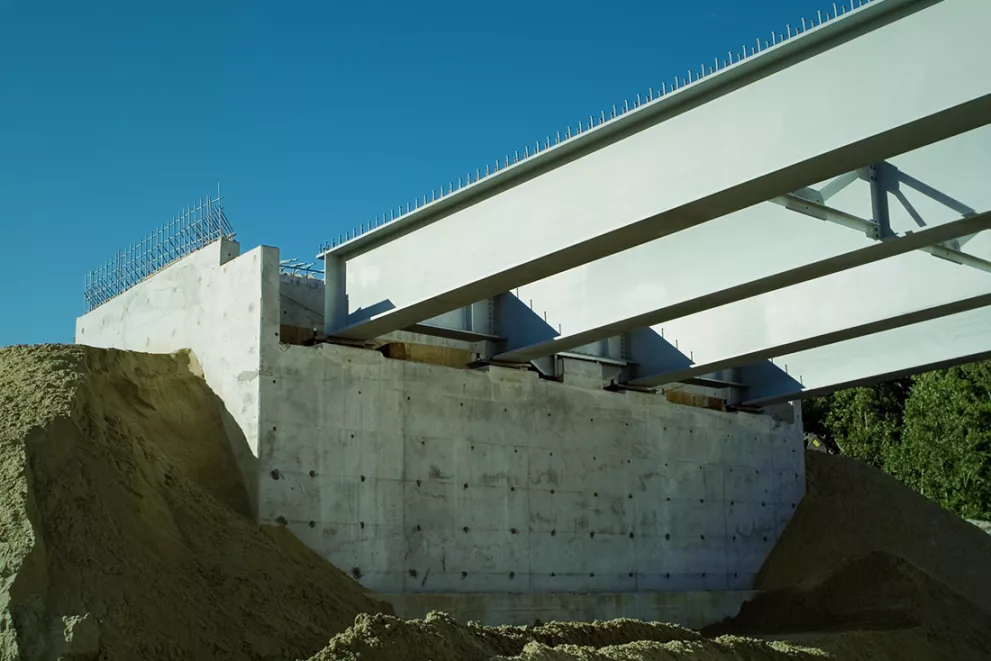
The Abutment: More Than Just a Support
At its core, a bridge abutment is a specialized type of retaining wall that supports the end of a bridge superstructure. It is situated at the beginning and end of a bridge, effectively terminating the span and connecting it to the approach embankment. However, its role extends far beyond simple support. Abutments are engineered to withstand a complex array of forces, ensuring the bridge remains stable under immense loads and varying environmental conditions.
Key Functions of an Abutment
To truly grasp “what is an abutment in a bridge,” we must understand its multifaceted responsibilities:
- Superstructure Support: This is the most obvious function. The abutment directly carries the vertical load from the bridge deck and any traffic traversing it. This load is then transferred to the ground through the abutment’s foundation.
- Lateral Load Resistance: Bridges are not only subjected to vertical forces. Wind, seismic activity, and water currents (in the case of bridges over water) exert significant lateral, or sideways, pressures. Abutments are designed to resist these forces, preventing the bridge from shifting or collapsing.
- Retaining Embankment Loads: The bridge approaches, often constructed as earthen embankments, exert lateral pressure on the abutment. The abutment acts as a retaining wall, preventing the embankment from sloughing or collapsing. This is crucial for maintaining the integrity of the approach roads.
- Anchoring the Bridge: Abutments provide a fixed point, anchoring the bridge structure and controlling its expansion and contraction due to temperature changes. While expansion joints are incorporated into the deck to manage this, the abutment plays a role in defining the overall movement of the span.
- Protection: In bridges over water, abutments can also serve to protect the bridge piers from debris, ice flows, and scour (erosion of the riverbed).
The Anatomy of an Abutment
While the specific design of an abutment can vary significantly depending on the bridge type, location, and the geological conditions, most share common structural elements.
- Footing/Foundation: This is the base of the abutment, which transmits the loads from the superstructure and embankment to the soil or bedrock beneath. Foundations can range from simple spread footings to more complex piles or caissons driven deep into the ground. The type of foundation is paramount to the abutment’s ability to handle the forces it encounters.
- Stem Wall: This is the main vertical component of the abutment that rises from the footing. It’s the primary structure that retains the embankment and provides support for the bridge bearings.
- Wing Walls: These are short walls that extend outwards from the stem wall, perpendicular to the bridge’s centerline. They serve to further retain the embankment and provide a smooth transition from the approach road to the bridge deck. Their length and angle can vary.
- Bearing Shelf/Seat: This is a specialized ledge or pad on the top of the stem wall. It’s designed to accommodate the bridge bearings, which are the interfaces between the superstructure and the abutment. These bearings allow for controlled movement (expansion and contraction) while still transferring the loads.
- Backfill: The material behind the stem wall and wing walls is typically compacted earth or granular material. This backfill is crucial for transferring the embankment loads to the abutment. Drainage systems are often incorporated into the backfill to prevent hydrostatic pressure buildup.
Types of Abutments: Tailoring to the Task
The sheer diversity of bridge designs necessitates a range of abutment types, each optimized for specific challenges and structural requirements. Understanding these variations provides a deeper appreciation for the engineering ingenuity involved.
Common Abutment Configurations
- Closed Abutments: In this design, the wing walls are extended to connect with the face of the stem wall, creating a more box-like structure. This configuration is effective at retaining large volumes of embankment material and is commonly used for bridges with substantial approach fills. The enclosed space behind the stem wall can sometimes be used for utility conduits.
- Open Abutments: Here, the wing walls are shorter and do not connect to the face of the stem wall. This creates an open space behind the stem, allowing for easier inspection and maintenance of the abutment and the bridge bearings. Open abutments are often chosen when the embankment is less extensive or when a more streamlined profile is desired.
- Spill-Through Abutments: This is a less common but important type, particularly for bridges over floodplains or areas prone to high water flow. Instead of solid wing walls, a series of piers or columns support the bridge deck. The embankment material then “spills through” these columns, allowing water to pass with less obstruction. This reduces the risk of scour and debris accumulation.

Specialized Abutment Designs
Beyond these general categories, specialized designs emerge to address unique site conditions and structural demands:
- Integral Abutments: These are a more modern and increasingly popular design where the bridge superstructure is directly connected to the abutment, eliminating the need for separate bearings. This creates a continuous structure, which can offer advantages in terms of reduced maintenance and improved seismic performance. However, they require careful design to manage the significant forces and movements transferred directly to the abutment.
- Counterfort Abutments: For very tall or heavily loaded abutments, counterforts – triangular or trapezoidal buttresses – are often added to the back of the stem wall. These counterforts act as ribs, reinforcing the stem wall and allowing it to retain higher embankment pressures more efficiently.
The Engineering Behind Abutment Stability
The design and construction of an abutment are complex undertakings that demand a thorough understanding of soil mechanics, structural analysis, and material science. The forces acting on an abutment are dynamic and can change over the bridge’s lifespan.
Forces and Design Considerations
- Dead Load: The weight of the bridge superstructure, abutment itself, and any permanent fixtures.
- Live Load: The weight of traffic (vehicles, trains, pedestrians) that uses the bridge. This load is dynamic and can vary significantly.
- Earth Pressure: The lateral force exerted by the retained embankment material. This is influenced by the type of soil, its moisture content, and compaction.
- Hydrostatic Pressure: If the abutment is subjected to water, the pressure exerted by the water must be accounted for. This is why drainage is a critical aspect of abutment design.
- Seismic Forces: In earthquake-prone regions, the abutment must be designed to withstand the inertial forces generated by seismic activity.
- Thermal Expansion/Contraction: Temperature fluctuations cause the bridge deck to expand and contract, and the abutment must accommodate these movements.
Material Selection and Construction Techniques
The materials used for abutments are typically high-strength concrete, reinforced with steel rebar. The quality of the concrete and the precision of the reinforcement are paramount to the abutment’s structural integrity. Construction often involves:
- Excavation: Preparing the site and excavating for the foundation.
- Foundation Construction: Pouring concrete for the footing or driving piles.
- Formwork: Building temporary molds for the stem wall and wing walls.
- Reinforcement Placement: Installing the steel rebar cage within the formwork.
- Concrete Pouring: Filling the formwork with concrete.
- Backfill and Compaction: Carefully placing and compacting the embankment material behind the abutment, ensuring proper drainage layers.

The Abutment’s Role in the Bigger Picture: Tech, Brand, and Money
The importance of abutments extends beyond the purely technical. For businesses and individuals across the Tech, Brand, and Money sectors, understanding these foundational elements offers valuable insights:
-
Tech: Just as a bridge’s abutment provides a stable foundation for its superstructure, robust digital infrastructures require strong foundational components. Think of data centers, cloud computing platforms, or cybersecurity frameworks. A weak link at the foundation – analogous to a compromised abutment – can lead to catastrophic system failures. The principles of load-bearing capacity, redundancy, and resilience in abutment design can inspire innovative approaches to building secure and dependable technological systems. The iterative process of testing and refinement in bridge engineering mirrors the agile development cycles and continuous improvement seen in the tech industry.
-
Brand: The visible strength and reliability of a bridge contribute significantly to a community’s sense of security and pride. A well-maintained bridge, with its solid abutments, projects an image of competence, stability, and progress. For businesses, the concept of a strong brand foundation is analogous to a bridge’s abutment. A solid brand strategy, built on clear values and consistent messaging, acts as the bedrock upon which a corporate identity and reputation are built. Just as an abutment must withstand external pressures, a strong brand must weather market fluctuations and public scrutiny. Case studies of successful bridge projects, where engineering excellence leads to public trust, can inform branding strategies aimed at building long-term credibility.
-
Money: Bridge construction is a colossal financial undertaking, and the cost of each component, including abutments, is significant. Understanding the engineering principles behind abutments helps stakeholders make informed decisions about project feasibility, cost-effectiveness, and long-term investment. The durability and longevity of abutments directly impact the maintenance costs and lifespan of a bridge, representing a crucial aspect of financial planning for infrastructure projects. For investors, understanding the critical role of foundational elements in large-scale projects can provide a more nuanced perspective on risk assessment and return on investment. Personal finance principles also resonate; just as a strong foundation is essential for a stable house, a sound financial plan is crucial for personal security and wealth building. The concept of “spending money to make money” is evident in the substantial investment in robust bridge infrastructure, which ultimately fuels economic growth.
In conclusion, while often overlooked, the abutment is a critical element in bridge engineering. It is the silent guardian at the end of every span, bearing immense responsibility for the safety and longevity of these vital structures. By understanding “what is an abutment in a bridge,” we gain a deeper appreciation for the complex interplay of forces, materials, and design that underpins our modern world, offering valuable parallels and lessons for progress in technology, brand building, and financial stewardship.
aViewFromTheCave is a participant in the Amazon Services LLC Associates Program, an affiliate advertising program designed to provide a means for sites to earn advertising fees by advertising and linking to Amazon.com. Amazon, the Amazon logo, AmazonSupply, and the AmazonSupply logo are trademarks of Amazon.com, Inc. or its affiliates. As an Amazon Associate we earn affiliate commissions from qualifying purchases.