
In the high-stakes world of event planning and personal finance management, the “wedding cocktail hour” represents far more than a simple transition between a ceremony and a reception. From a financial perspective, it is a critical hour of high-density expenditure, strategic budget allocation, and the primary driver of the overall “per-head” cost of a luxury event. Understanding what a cocktail hour is—and more importantly, how it functions as a financial instrument within the wedding industry—is essential for any couple or planner looking to maximize their return on investment (ROI) while maintaining a premium guest experience.

Historically, the cocktail hour was a logistical buffer designed to allow the wedding party time for photographs while guests were transitioned to the reception space. Today, however, it has evolved into a centerpiece of the hospitality budget. It is the period where the highest volume of food and beverage is consumed in the shortest window of time, often accounting for 15% to 25% of the total food and beverage expenditure.
The Financial Framework: Defining the Cocktail Hour in Modern Budgeting
At its core, a cocktail hour is a sixty-minute period of curated hospitality. However, in the context of business finance and personal budgeting, it is a high-margin service provided by venues and caterers. This hour serves as the “hook” of the event’s experiential value, where the perception of luxury is often cemented in the minds of the guests.
The Buffer Zone and Logistics Management
From a logistics management standpoint, the cocktail hour is an essential investment in crowd control. Without it, the flow of guests from a ceremony to a seated dinner becomes a bottleneck, potentially leading to overtime labor costs for staff who must manage a chaotic transition. By investing in a structured cocktail hour, hosts are essentially purchasing an insurance policy on the event’s schedule. This ensures that the high-cost “main event” (the dinner and dancing) starts precisely on time, preventing the “cost creep” associated with hourly venue rentals.
The Psychology of Guest Satisfaction and Value Perception
In behavioral economics, the “Peak-End Rule” suggests that people judge an experience largely based on how they felt at its peak and its end. The cocktail hour often serves as an early “peak.” Because it provides immediate gratification through high-quality food and drink, it creates a “halo effect” for the rest of the evening. For a host, spending more on high-end appetizers during this hour can actually allow for a more modest (and cost-effective) three-course dinner later, as the guest’s perception of “abundance” has already been satisfied.
Budget Allocation: Deconstructing the Cost Structure
To understand the financial weight of a cocktail hour, one must look at the line-item expenses. This is not merely a “social hour”; it is a complex intersection of inventory management and labor costs.
Alcohol and Open Bar Models
The bar is typically the single largest expense during the cocktail hour. Financial planners often look at three primary models:
- Flat-Fee Per Person: This is a predictable cost model where the host pays a set amount (e.g., $25 per guest) for unlimited drinks. This is ideal for risk mitigation in budgets, as it caps the potential expenditure.
- Consumption-Based: The host pays for every bottle opened or drink poured. While this can save money for a light-drinking crowd, it introduces significant financial volatility into the budget.
- Signature Drink Strategy: By limiting the “open bar” to a few curated signature cocktails plus beer and wine, hosts can control inventory costs and reduce the “shelf shrinkage” that occurs with a full premium bar.
Catering and the “Bite-Sized” Economy
Hors d’oeuvres are deceptive from a cost perspective. While small, the labor-to-weight ratio is much higher than that of a standard entrée. Each individual canapé requires manual assembly, often involving multiple kitchen staff. On average, a standard cocktail hour budget allows for 6 to 8 pieces per guest. In premium tiering, “live stations” (such as a raw bar or a carving station) are introduced. These represent significant capital outlays, not just for the product (e.g., oysters or wagyu beef) but for the specialized labor required to man the station.
Hidden Labor and Service Fees
A professional financial analysis of a cocktail hour must include the “burdened labor rate.” This includes the bartenders, servers, busboys, and kitchen staff required to execute a high-speed service. Many venues charge a “Service Fee” (often 20-24%), which is frequently confused with a tip. From a business perspective, this fee covers the overhead of managing the event, and it is a non-negotiable addition to the base price that must be factored into the initial budget to avoid a 20% deficit in the final reconciliation.
Strategies for Financial Optimization

Maximizing the impact of a cocktail hour while minimizing waste is the hallmark of sophisticated financial planning. Several strategies can be employed to optimize this specific hour of the wedding budget.
Consumption vs. Flat-Fee Analysis
Data is your best tool here. If the guest list includes a high percentage of non-drinkers or older guests, a consumption bar is almost always the more fiscally responsible choice. Conversely, for a younger demographic, the flat-fee model prevents the “sticker shock” of a final invoice. Auditing the “pour counts” at the end of the night is a standard practice for corporate event planners and should be adopted by individuals to ensure they are being billed accurately for the inventory used.
Seasonal Sourcing and Inventory Control
Just as in any manufacturing or supply chain business, sourcing ingredients locally and seasonally reduces transportation costs and markup. Opting for a “farm-to-table” cocktail hour in the summer can be significantly cheaper than flying in out-of-season berries or seafood in the winter. Furthermore, limiting the variety of hors d’oeuvres—focusing on three high-quality options rather than six mediocre ones—allows for bulk purchasing discounts and reduces the labor hours needed for preparation.
Streamlining the Menu for Profitability
The “premiumization” of the cocktail hour often leads to excessive waste. Financial experts suggest a “triage” approach to the menu. Select one “hero” item (like a high-end seafood display) and balance it with high-margin, low-cost items (like artisanal breads, cheeses, or seasonal vegetable preparations). This creates a visual of luxury while keeping the average cost per plate within a manageable range.
The Business of Upselling: A Venue’s Perspective
It is important to understand the cocktail hour from the vendor’s financial perspective. For many wedding venues and catering firms, the cocktail hour is the most profitable portion of the contract.
Premium Add-ons and Profit Margins
Venues often offer “enhancements”—a champagne wall, a craft beer flight station, or a late-night snack transition. These are high-margin upsells. For example, a “bubbly bar” may cost the venue $5 in inventory per guest but is sold to the client for $15 per guest. From a business finance standpoint, these add-ons are where the venue finds its true profitability, as the base dinner package often has much tighter margins due to the rising costs of protein and labor.
The Impact on the Total Contract Value (TCV)
When a venue includes the cocktail hour in a “package,” they are utilizing a bundling strategy to increase the Total Contract Value (TCV). By making the cocktail hour seem like an “inclusive” benefit, they can justify a higher per-person rate across the entire six-hour event. Savvy negotiators will often try to “unbundle” these services to see the true cost of each component, allowing them to trim the fat from the budget where the value-to-cost ratio is lowest.
Maximizing Value Without Compromising Experience
The ultimate goal of analyzing the wedding cocktail hour through a financial lens is to achieve “Value for Money.” This does not mean being cheap; it means being efficient with capital.
Smart Scaling and Guest Count Sensitivity
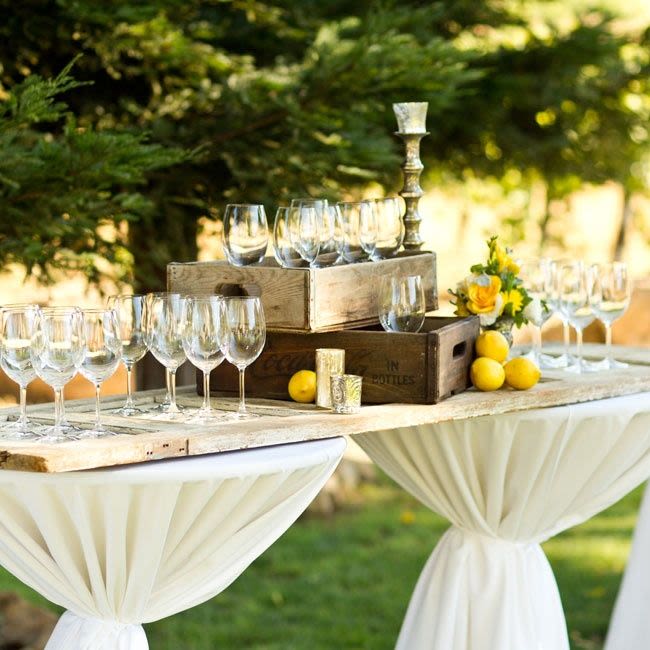
The cocktail hour is highly sensitive to guest count. Unlike the dinner, where seating is fixed, the cocktail hour is fluid. This fluidity allows for “smart scaling.” If the budget is tight, reducing the cocktail hour to 45 minutes can save 25% on beverage costs and labor without significantly detracting from the guest experience. This is a tactical “haircut” to the budget that preserves the overall quality of the event.
The ‘Quality Over Quantity’ Investment
In the world of personal finance, we often talk about the “cost per use.” In a wedding, this translates to “impact per dollar.” Spending $2,000 on a generic open bar may have less impact than spending $1,500 on a highly curated selection of local craft spirits and wines that tell a story. By focusing on the quality of the experience, hosts can often reduce the quantity of the offerings, leading to a more sophisticated event that costs less in raw materials.
Ultimately, a wedding cocktail hour is a microcosm of event economics. It requires a balance of liquidity (the bar), inventory management (the food), and labor optimization. By viewing it through the lens of a financial analyst rather than just a party-goer, one can ensure that this “golden hour” provides a maximum return on both emotional and financial investment. Understanding the underlying costs and the psychological impact of the cocktail hour allows for a celebration that is as fiscally responsible as it is memorable.
aViewFromTheCave is a participant in the Amazon Services LLC Associates Program, an affiliate advertising program designed to provide a means for sites to earn advertising fees by advertising and linking to Amazon.com. Amazon, the Amazon logo, AmazonSupply, and the AmazonSupply logo are trademarks of Amazon.com, Inc. or its affiliates. As an Amazon Associate we earn affiliate commissions from qualifying purchases.