
In the context of the modern smart home, the “walk-in shower” has transcended its origins as a mere plumbing fixture. What was once defined simply by its lack of a tub or a curb is now being redefined as a sophisticated node in the Internet of Things (IoT) ecosystem. Today, when we ask, “What is a walk-in shower?” we are no longer just discussing glass partitions and tile work; we are discussing an integrated technological suite designed for precision, sustainability, and data-driven wellness.
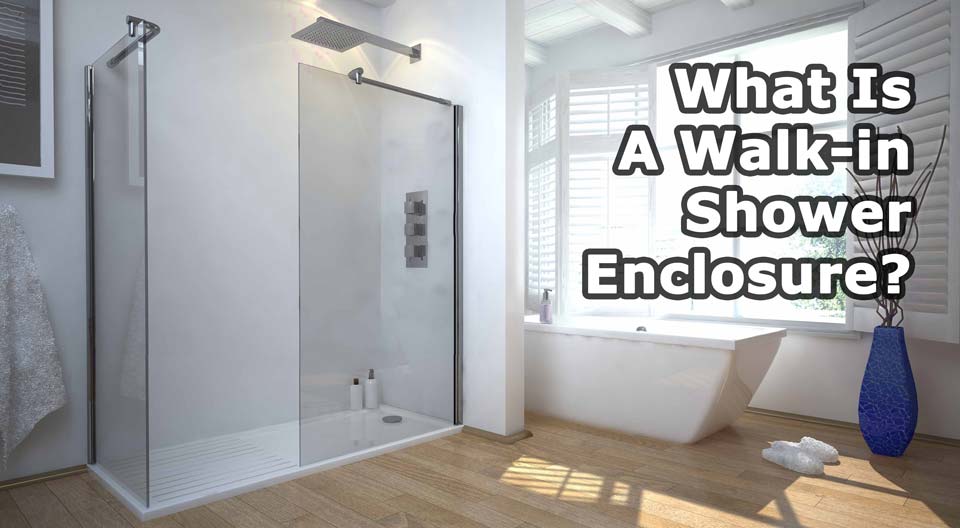
The transition from analog bathroom design to tech-enabled environments represents a significant shift in home automation. As developers and homeowners prioritize seamless living, the walk-in shower has become the focal point of the “Smart Bath” movement. This evolution integrates high-end hardware with complex software layers to provide an experience that is personalized, efficient, and predictive.
Defining the Modern Walk-In Shower through the Lens of Smart Technology
At its technical core, a walk-in shower is a waterproofed architectural space designed for bathing without the physical barrier of a bathtub wall. However, in the realm of modern technology, it is better defined as a controlled environment where fluid dynamics meet digital precision.
The Transition from Analog Plumbing to Digital Systems
The primary differentiator in contemporary walk-in shower tech is the replacement of manual mixing valves with digital thermostatic controllers. In a traditional setup, the user manually adjusts a handle to balance hot and cold water—a process of trial and error. In a tech-forward walk-in shower, a digital processor manages this balance.
Digital valves allow for “set-and-forget” temperature accuracy within 0.5 degrees Fahrenheit. These systems utilize high-speed sensors to monitor incoming water pressure and temperature fluctuations, adjusting the internal actuators in milliseconds to prevent thermal shock. This shift from mechanical to digital control is the foundational step in transforming the shower into a smart device.
IoT Connectivity and the User Experience
Connectivity is what elevates a walk-in shower from a piece of hardware to a service. Modern systems are increasingly equipped with Wi-Fi and Bluetooth modules that allow the shower to communicate with a central home hub. This enables features such as remote pre-heating, where a user can activate their shower via a smartphone app or a voice command to their home assistant (such as Alexa or Google Home).
The user experience (UX) is further enhanced through customizable profiles. Much like a high-end electric vehicle remembers a driver’s seat position and climate settings, a smart walk-in shower stores the preferred temperature, flow rate, and lighting presets for multiple users. This level of personalization is achieved through integrated control panels—often waterproof LED touchscreens—that serve as the interface for the shower’s internal operating system.
The Hardware Revolution: Precision Engineering and Sensor Technology
The physical components of a walk-in shower have undergone a radical transformation to support the demands of modern tech. The “smart” aspect is not just in the screen on the wall, but in the precision engineering of the components that handle water and steam.
Thermal Control Systems and Smart Valves
The “brain” of the modern walk-in shower is the digital mixing valve, usually tucked away in a wall cavity or a nearby closet. These valves utilize solenoid technology to control water flow with extreme granularity. Unlike traditional valves that rely on wax elements to react to temperature, digital valves use thermistors that send electronic signals to a microprocessor.
This hardware allows for multi-outlet control. In a luxury walk-in configuration, a user might have a rain-head, several body sprays, and a handheld wand. A tech-enabled system can program these outlets to fire in specific sequences or intervals, creating “hydrotherapy” programs that are controlled via software-defined protocols rather than manual diverters.
Advanced Drainage and Moisture Detection Tech
A common technical challenge with curbless walk-in showers is water management and flood prevention. To solve this, the industry has turned to advanced linear drainage systems and moisture-sensing technology. Linear drains are engineered with high-capacity troughs that can handle the high GPM (gallons per minute) output of multi-head systems while maintaining a minimalist aesthetic.
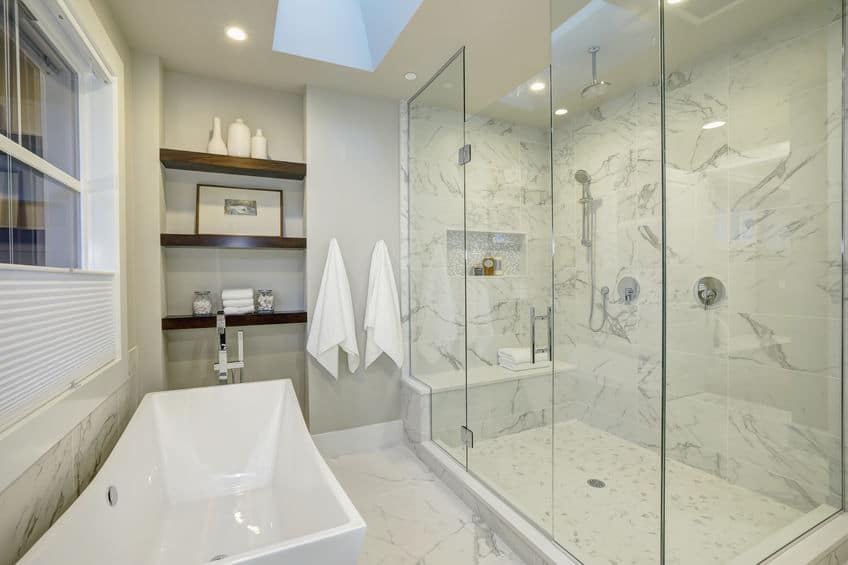
Furthermore, smart walk-in showers are increasingly being integrated with whole-home leak detection systems. Sensors placed beneath the shower pan or near the drain assembly can detect micro-leaks or blockages. Using AI-driven flow monitoring, the system can distinguish between a high-pressure shower and a burst pipe, automatically shutting off the main water supply if an anomaly is detected, thereby protecting the structural integrity of the smart home.
The Software Layer: AI and Personalization in the Bathroom
While the hardware provides the “muscle,” the software provides the “intelligence.” The integration of Artificial Intelligence (AI) and sophisticated algorithms is changing how we interact with water, focusing on both the luxury of the experience and the necessity of conservation.
Voice Control and Ecosystem Integration
The bathroom is a “wet environment,” which makes physical touch-points inherently cumbersome. This has led to the rapid adoption of voice-activated interfaces. Through integration with ecosystems like Matter or Apple HomeKit, a walk-in shower becomes part of a “Morning Routine” automation.
For example, an “Early Meeting” routine could trigger the bedroom lights to wake the user, start the coffee maker, and pre-heat the walk-in shower to a crisp 102 degrees. The software handles the scheduling and synchronization across different hardware brands, ensuring a frictionless transition from sleep to activity. This interoperability is a hallmark of modern tech-centric design.
Water Conservation Algorithms and Sustainable Tech
One of the most significant contributions of technology to the walk-in shower is the advancement of “Green Tech.” As water scarcity becomes a global concern, software is being used to minimize waste without sacrificing the user experience. Smart showers now include “Eco-modes” that use aerated flow patterns—using air to increase the pressure of smaller water droplets—to provide the sensation of a high-pressure shower while using 30% less water.
AI algorithms also monitor usage patterns to provide detailed “sustainability reports” via mobile apps. These systems can gamify water savings or set hard limits on shower duration to ensure household efficiency. Some cutting-edge “closed-loop” walk-in showers even incorporate onboard filtration and UV sterilization tech to recycle water in real-time during a single shower session, a feat of engineering that reduces water consumption by up to 90%.
The Future of the Walk-In Shower: Biometric Integration and Health Monitoring
Looking forward, the definition of a walk-in shower will expand to include “Medical Tech.” The bathroom is one of the few places where a person is in direct contact with sensors without the barrier of clothing, providing a unique opportunity for non-invasive health monitoring.
Hydration and Skin Health Analytics
Future iterations of walk-in showers are expected to incorporate optical sensors and AI-driven skin analysis. By analyzing the skin’s surface during the bathing process, integrated software could potentially detect signs of dehydration, inflammation, or even early indicators of dermatological issues. This data can then be synced with health apps to provide a holistic view of a user’s well-being.
Moreover, the integration of “Infusion Tech” allows the shower to act as a delivery system for wellness. Smart cartridges can be programmed to release specific concentrations of minerals, vitamin C, or essential oils into the water stream based on the user’s current physiological needs—detected via biometrics from their wearable devices (like an Apple Watch or Oura Ring).

VR and Sensory Immersion in Wet Environments
As we move toward the “Metaverse” and highly immersive digital experiences, the walk-in shower is being experimented with as a site for sensory deprivation or enhancement. Waterproof LED walls and integrated surround-sound systems can transform a small walk-in space into a simulated environment—ranging from a tropical rainforest to a serene mountain stream.
These systems use “Chronotherapy” (light therapy) and spatial audio to regulate the user’s circadian rhythm. A cool-toned, high-energy light sequence in the morning can boost cortisol and alertness, while a warm-toned, low-frequency soundscape in the evening can trigger melatonin production. In this capacity, the walk-in shower is no longer just a place to wash; it is a sophisticated bio-hacking chamber.
The walk-in shower, when viewed through the lens of technology, is a testament to how deeply innovation has permeated our private lives. By combining high-performance hardware, intuitive software, and a focus on sustainable health, the modern walk-in shower has become an essential component of the high-tech home, proving that even the most basic human rituals can be optimized through the power of digital transformation.