
The term “sheer wall” often conjures images of imposing, unyielding structures, the silent guardians against lateral forces that threaten stability. While fundamentally an architectural and engineering concept, understanding the sheer wall, and the technologies that enable its creation and optimization, offers a fascinating glimpse into the sophisticated advancements shaping our built environment. In the realm of technology, particularly in the context of structural engineering software, advanced materials, and construction automation, the sheer wall represents a critical component whose design, analysis, and implementation are profoundly influenced by technological innovation. This article delves into the essence of a sheer wall, not just as a physical entity, but as a concept whose realization is increasingly dependent on cutting-edge technological solutions.

Defining the Sheer Wall: A Foundation of Stability
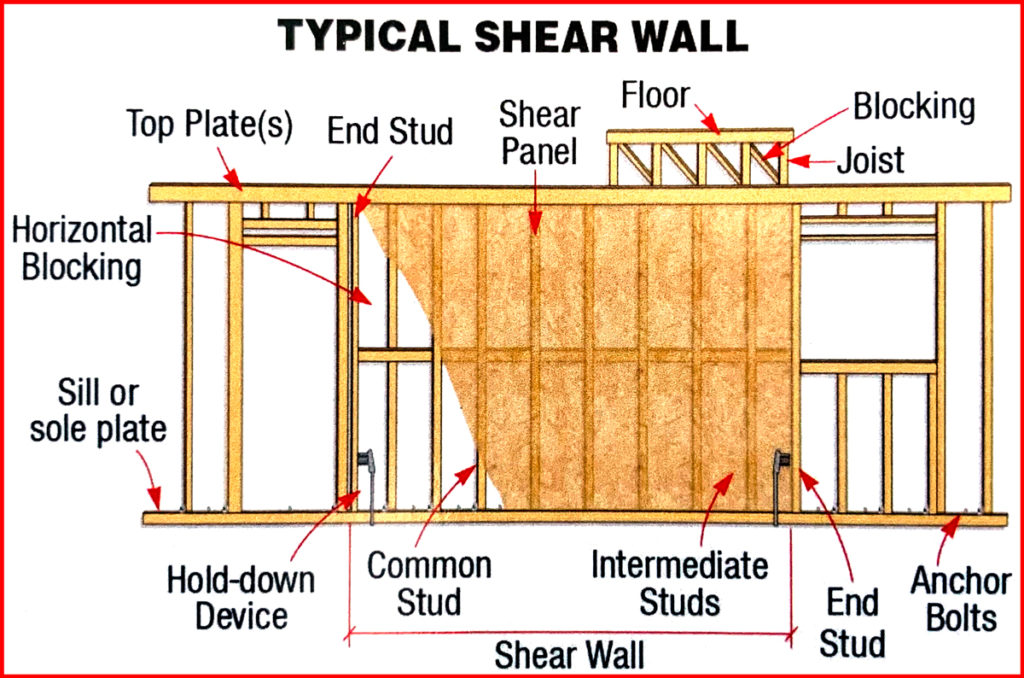
At its core, a sheer wall is a structural element designed to resist lateral loads – forces that act parallel to the plane of a building’s facade. Unlike gravity loads, which are primarily vertical and handled by columns and beams, lateral loads come from sources such as wind, seismic activity (earthquakes), and even impacts. These forces can cause a building to sway, twist, or even collapse if not adequately managed. Sheer walls are the unsung heroes in this battle for structural integrity, acting as rigid vertical diaphragms that transfer these lateral forces down to the foundation.
Understanding Lateral Loads and Their Impact
The forces exerted by wind and seismic events are inherently dynamic and can be immense. Wind pressure can vary significantly with height and terrain, creating fluctuating loads on a building’s exterior. Earthquakes, on the other hand, generate ground accelerations that translate into inertial forces within the structure. Imagine a tall skyscraper being buffeted by hurricane-force winds or shaking violently during an earthquake. Without robust lateral load-resisting systems, the building would be highly susceptible to catastrophic failure. Sheer walls, by their very nature, are designed to absorb and dissipate these energies safely, protecting the occupants and the structure itself.
Materiality and Geometric Principles
Sheer walls are typically constructed from reinforced concrete, although steel and even timber can be used in certain applications. The key characteristic is their considerable thickness relative to their height and width, and their continuous, unbroken nature from foundation to roof. This continuity, coupled with the inherent stiffness of reinforced concrete, provides the necessary rigidity to resist deformation under lateral stress. The geometry of a sheer wall is paramount; its length, height, and thickness are all calculated to provide the optimal resistance to anticipated lateral forces. Think of it as a giant, vertical cantilever beam, fixed at the base and resisting bending and shear forces along its height.
Technological Enablers: From Concept to Concrete Reality
The concept of a sheer wall has existed for centuries, but its sophisticated design, precise analysis, and efficient construction are now inextricably linked to technological advancements. The precision and power of modern technology allow engineers to design sheer walls that are not only structurally sound but also aesthetically pleasing and resource-efficient.
Advanced Structural Analysis Software
The advent of sophisticated structural analysis software has revolutionized the design of sheer walls. Before these tools, engineers relied on simplified calculations and empirical data, which often led to conservative designs that used more material than necessary. Today, powerful finite element analysis (FEA) software can simulate the complex behavior of a building under various lateral load scenarios with remarkable accuracy.
Finite Element Analysis (FEA) in Action
FEA software breaks down a complex structure, like a sheer wall, into a multitude of small, interconnected elements. Each element is then analyzed for its response to applied forces and stresses. This allows engineers to identify critical areas of stress concentration, predict potential deformation, and optimize the wall’s dimensions, reinforcement layout, and material properties. This technology enables the design of thinner, lighter, yet stronger sheer walls, leading to cost savings, reduced material consumption, and greater design flexibility. It also allows for the simulation of dynamic responses to seismic events, ensuring the wall performs as intended during an earthquake.
Building Information Modeling (BIM) Integration
Beyond pure structural analysis, Building Information Modeling (BIM) plays a crucial role in the lifecycle of a sheer wall. BIM software creates intelligent 3D models that contain vast amounts of data about the building’s components, including sheer walls. This integration allows for seamless collaboration between architects, structural engineers, and contractors. Designers can visualize the sheer wall within the overall building context, identify potential clashes with other building systems (like MEP – Mechanical, Electrical, and Plumbing), and generate precise construction documentation. This level of detail and coordination minimizes errors, reduces rework, and streamlines the construction process.
Innovative Material Science and Reinforcement Techniques
While concrete remains the primary material, advancements in material science and reinforcement techniques have further enhanced the capabilities of sheer walls. The focus is on creating stronger, more durable, and more sustainable materials that can withstand extreme forces.
High-Performance Concrete Formulations
Engineers are increasingly utilizing high-performance concrete (HPC) and ultra-high-performance concrete (UHPC) in sheer wall construction. These advanced concrete formulations offer significantly higher compressive and tensile strengths compared to traditional concrete. They also exhibit improved durability, resistance to chemical attack, and reduced permeability, leading to longer-lasting structures. The ability to achieve greater strength with less material is a direct technological benefit, allowing for slimmer sheer walls that still provide the required structural performance.
Advanced Reinforcement Systems
The reinforcement within sheer walls, typically steel rebar, is crucial for its tensile strength and ability to resist cracking. Modern construction technologies offer advanced reinforcement options. This includes the use of high-strength steel rebar, fiber-reinforced polymer (FRP) bars (which are non-corrosive and lightweight), and sophisticated rebar placement techniques. The precise placement and splicing of rebar, often guided by BIM models and automated fabrication processes, ensure the wall’s integrity under load. Robotic reinforcement placement is also emerging, promising increased speed and accuracy on-site.
Construction Automation and Prefabrication
The construction of sheer walls, especially in large-scale projects, is increasingly benefiting from automation and prefabrication technologies. These advancements aim to improve efficiency, safety, and quality control.

Robotic Formwork and Concrete Placement
Robotic systems are beginning to be employed in the complex task of setting up formwork for sheer walls and even in the precise placement of concrete. Automated formwork systems can ensure consistent dimensions and alignment, reducing human error. Robotic concrete pouring and finishing can lead to a more uniform and higher-quality concrete surface. While still an evolving area, these technologies promise to significantly accelerate construction timelines and improve worker safety by reducing the need for manual labor in potentially hazardous environments.
Modular Construction and Off-Site Fabrication
The trend towards modular construction, where building components are fabricated off-site in controlled factory environments and then assembled on-site, also applies to sheer walls. Prefabricated concrete panels, designed and manufactured with high precision, can be delivered to the construction site and erected quickly. This approach offers several advantages, including improved quality control, reduced on-site construction time, less weather dependency, and greater material efficiency. The integration of digital design models with automated manufacturing processes ensures that these prefabricated sheer wall sections fit together seamlessly.
The Future of Sheer Walls: Evolving with Technology
As technology continues its relentless march forward, the sheer wall, as a fundamental structural element, will undoubtedly evolve. The interplay between engineering principles and technological innovation will continue to push the boundaries of what is possible in terms of building resilience, sustainability, and design.
Smart Sheer Walls and Integrated Sensing
The concept of “smart” buildings is gaining traction, and sheer walls are poised to become integral parts of this evolution. Integrating sensors directly into the concrete during the pouring process can provide real-time data on the structural health of the wall.
Structural Health Monitoring (SHM)
Strain gauges, accelerometers, and fiber optic sensors embedded within sheer walls can monitor stress levels, displacement, and vibration. This Structural Health Monitoring (SHM) data can be transmitted wirelessly to a central system, allowing engineers to detect early signs of damage or deterioration, predict potential failures, and plan for timely maintenance. In the event of a seismic event, SHM systems can provide immediate feedback on the wall’s performance, crucial for post-event assessment and safety protocols.
Adaptive Structural Response Systems
Looking further ahead, sheer walls could be integrated with active control systems. These systems, using data from sensors and advanced algorithms, could potentially make minor adjustments to the wall’s stiffness or damping characteristics in response to detected lateral forces, further enhancing their resilience and adaptability to dynamic environmental conditions. This moves beyond passive resistance to an active, intelligent form of structural defense.
Sustainable Construction and Material Innovation
The construction industry is under increasing pressure to adopt more sustainable practices. Technology plays a vital role in developing greener methods for constructing sheer walls.
Recycled and Novel Materials
Research is ongoing into incorporating recycled materials into concrete mixes for sheer walls, reducing reliance on virgin resources. Furthermore, novel materials like geopolymer concrete, which can have a lower carbon footprint than traditional Portland cement concrete, are being explored. The ability of advanced computational tools to simulate the performance of these new materials allows for their confident integration into structural designs.
Energy Efficiency and Integration
While not their primary function, the design and construction of sheer walls can indirectly contribute to a building’s energy efficiency. For instance, their monolithic nature can improve thermal performance. Future technologies might also see sheer walls designed to integrate renewable energy components, such as embedded photovoltaic cells or advanced insulation systems, further blurring the lines between structural elements and functional building systems.
The Role of Digital Twins and Predictive Maintenance
The concept of digital twins – virtual replicas of physical assets – is transforming asset management, and sheer walls are prime candidates for this technology.
Predictive Maintenance Strategies
By creating a digital twin of a sheer wall, fed with real-time sensor data and historical performance information, engineers can move from reactive maintenance to predictive maintenance. This allows for the identification of potential issues before they become critical, reducing costly emergency repairs and extending the lifespan of the structure. The ability to run simulations on the digital twin to test the impact of different maintenance strategies further enhances its value.
Lifecycle Management and Design Optimization
Digital twins also facilitate better lifecycle management of sheer walls. Data collected throughout the building’s operational life can inform future design decisions, leading to more robust and efficient sheer wall solutions in subsequent projects. This iterative process of design, construction, operation, and feedback, enabled by digital technologies, is key to continuous improvement in the built environment.
In conclusion, the sheer wall, while a fundamental architectural and engineering concept, is a powerful testament to the transformative impact of technology on the built environment. From the sophisticated software that models its behavior under immense stress to the innovative materials that compose it and the automated processes that construct it, technology is not merely an enabler but a driving force behind the modern sheer wall. As we look to the future, the integration of smart sensors, novel materials, and digital twin technologies promises to make sheer walls even more resilient, sustainable, and intelligent, ensuring the continued safety and stability of our ever-evolving urban landscapes.
aViewFromTheCave is a participant in the Amazon Services LLC Associates Program, an affiliate advertising program designed to provide a means for sites to earn advertising fees by advertising and linking to Amazon.com. Amazon, the Amazon logo, AmazonSupply, and the AmazonSupply logo are trademarks of Amazon.com, Inc. or its affiliates. As an Amazon Associate we earn affiliate commissions from qualifying purchases.