
In a world increasingly shaped by data and complex systems, the ability to anticipate future events is invaluable. From charting the path of a hurricane to forecasting market trends or identifying the next big tech innovation, prediction plays a pivotal role. However, not all predictions are created equal. A casual guess about tomorrow’s weather differs fundamentally from a meteorologist’s forecast; one is speculative, the other, a product of scientific methodology. This distinction brings us to the core question: what precisely is a scientific prediction?
At its heart, a scientific prediction is far more than mere conjecture or prophecy. It is an informed statement about a future event or outcome, derived from a rigorous application of the scientific method. It is grounded in existing theories, empirical evidence, logical reasoning, and often, sophisticated models. Unlike fortune-telling, which relies on intuition or supernatural claims, a scientific prediction is inherently testable, falsifiable, and quantifiable. It posits an outcome based on a set of conditions and mechanisms, allowing for its verification or refutation through observation, experimentation, or data analysis. This foundational principle empowers not only the advancement of knowledge but also the strategic foresight crucial for navigating the realms of technology, branding, and finance in our modern era.
The Core Mechanics of Scientific Prediction
Understanding what constitutes a scientific prediction requires delving into the fundamental processes that underpin its formulation. It’s a journey from observation to a verifiable statement about potential future states, meticulously guided by the principles of scientific inquiry.
From Hypothesis to Verifiable Outcome
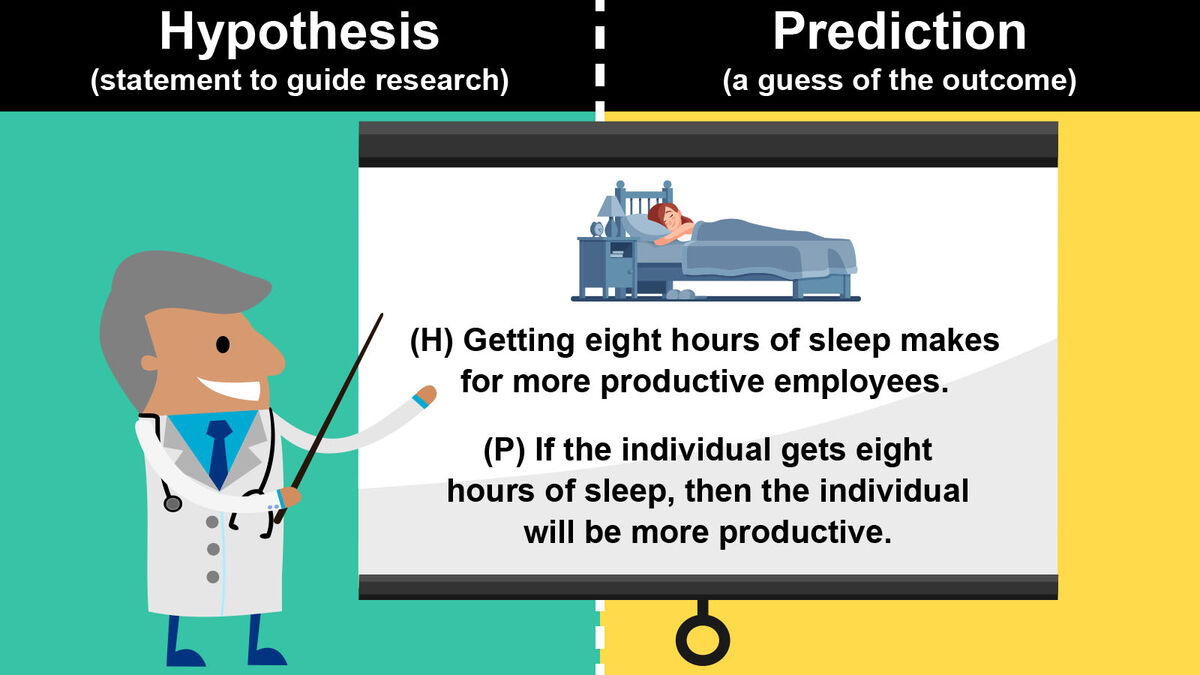
The bedrock of any scientific prediction lies in the scientific method. It begins with observation – noticing a phenomenon or pattern in the natural or engineered world. This observation sparks a question, which then leads to the formation of a hypothesis – a testable explanation for the observed phenomenon. A hypothesis is not an arbitrary guess; it’s an educated proposition based on existing knowledge or preliminary data.
Crucially, a scientific prediction emerges directly from this hypothesis. If the hypothesis is true, then under specific conditions, a certain outcome should occur. This “if…then…” statement is the prediction. For instance, if our hypothesis is “increased exposure to blue light before bed disrupts sleep,” a prediction might be: “then individuals who use electronic devices emitting blue light for two hours before bed will report lower quality sleep than those who do not.” The power of this prediction lies in its testability. We can design an experiment or gather data to see if the predicted outcome materializes.
The next steps involve experimentation or data collection, followed by analysis of the results. The findings then lead to a conclusion that either supports or refutes the initial hypothesis and, by extension, the prediction. If the prediction is consistently accurate, it strengthens the hypothesis and the underlying theory. If not, it prompts a re-evaluation, refinement, or even rejection of the hypothesis, leading to new observations and predictions. This iterative process of refinement is what drives scientific progress, ensuring that our understanding of the world becomes progressively more accurate and reliable.
Precision, Quantifiability, and Replicability
What truly elevates a scientific prediction above a mere guess are its defining characteristics: precision, quantifiability, and replicability.
Precision refers to the specificity of the prediction. A scientific prediction doesn’t just state “it will rain tomorrow”; it might predict “there is a 70% chance of precipitation exceeding 5mm between 2 PM and 4 PM in the city center.” This level of detail makes the prediction far more useful and allows for a clearer assessment of its accuracy. In the realm of technology, a precise prediction might relate to the performance threshold of a new AI algorithm under specific data loads, rather than a vague assertion of its capabilities.
Quantifiability means the prediction can be expressed numerically or measured objectively. This allows for statistical analysis and comparison. Predicting “customer satisfaction will improve” is less scientific than predicting “customer satisfaction scores (on a 1-5 scale) will increase by an average of 0.5 points within three months of implementing the new CRM system.” Quantifiable predictions are essential for data-driven decision-making, particularly in finance where metrics like ROI, growth rates, and risk probabilities are paramount.
Replicability implies that if the same conditions and methods are applied by different researchers, they should arrive at similar results and, consequently, similar predictions. This ensures the robustness and reliability of scientific findings. A prediction based on a unique, non-replicable observation or a proprietary, unshareable algorithm lacks the transparency and verifiability inherent in scientific practice. In the context of brand strategy, for example, if a predictive model suggests a certain marketing campaign will yield specific engagement, other data scientists, given the same parameters and model, should be able to validate that prediction’s basis. These three pillars ensure that scientific predictions are not only useful but also credible and contribute meaningfully to our collective knowledge.
The Role of Models and Theories
Scientific predictions do not emerge in a vacuum; they are deeply rooted in established scientific theories and often formulated through the application of sophisticated models.
Theories serve as comprehensive, well-substantiated explanations of some aspect of the natural world, based on a body of facts that have been repeatedly confirmed through observation and experiment. Examples include the theory of gravity, evolution, or relativity. These theories provide the overarching framework, the fundamental laws and principles, within which specific predictions can be made. For instance, knowing the theory of planetary motion allows astronomers to predict eclipses with astonishing accuracy years in advance. In a business context, economic theories about supply and demand can inform predictions about market pricing or consumer behavior.
Models, on the other hand, are simplified representations of reality designed to help us understand, explain, and predict complex phenomena. These can be conceptual, mathematical, or computational. A climate model, for example, uses a vast array of equations to simulate the interactions between the atmosphere, oceans, land surface, and ice, allowing scientists to predict future climate scenarios. In technology, machine learning models are trained on historical data to predict future outcomes, such as a user’s likelihood to click an ad, a stock’s price movement, or the probability of a system failure. These models abstract relevant variables and relationships from a complex reality, providing a manageable structure for making predictions. The quality of a scientific prediction is often directly proportional to the robustness of the underlying theory and the accuracy and sophistication of the model used to generate it.
Scientific Prediction in the Digital Age: A Technological Lens
The 21st century has ushered in an unprecedented era for scientific prediction, largely fueled by advancements in technology. The convergence of vast data streams, powerful computing capabilities, and intelligent algorithms has transformed prediction from an academic exercise into a practical, indispensable tool across almost every sector.
Harnessing Big Data and AI for Predictive Power
The proliferation of digital data – “Big Data” – is perhaps the single greatest enabler of modern scientific prediction. Every click, transaction, sensor reading, social media post, and scientific experiment contributes to an ever-growing reservoir of information. This data, when properly collected, processed, and analyzed, reveals patterns, correlations, and causal relationships that were previously undetectable.
Artificial Intelligence (AI) and Machine Learning (ML) algorithms are the engines that unlock the predictive power within this Big Data. These algorithms can learn from historical data without being explicitly programmed for every scenario. From forecasting weather patterns with greater precision by processing vast atmospheric data to predicting the spread of infectious diseases using real-time mobility and health records, AI-driven predictive models are revolutionizing our capabilities. In the realm of consumer tech, ML algorithms predict user preferences to personalize content recommendations on streaming platforms, suggest products on e-commerce sites, or even anticipate typing errors on our smartphones. These systems are constantly learning and refining their predictions, showcasing the dynamic and adaptive nature of AI-powered scientific foresight.
Software, Tools, and Infrastructure
Behind every sophisticated scientific prediction lies a robust technological infrastructure of software, tools, and computing power. It’s the digital backbone that processes the data, builds the models, and executes the predictions.
Specialized software is at the forefront. Statistical programming languages like Python and R, along with their extensive libraries (e.g., TensorFlow, PyTorch, Scikit-learn), provide the frameworks for developing, training, and deploying predictive models. Data visualization tools allow scientists and strategists to interpret complex predictive outputs, making them accessible and actionable. Beyond core programming, specialized analytical software for fields like bioinformatics, financial modeling, or climate science enables domain-specific predictions.
The sheer volume of data and the computational intensity of training complex AI models necessitate powerful infrastructure. Cloud computing platforms (AWS, Azure, Google Cloud) offer scalable resources, allowing researchers and businesses to access vast computational power on demand without significant upfront investment. High-performance computing clusters and GPU acceleration are vital for tasks like deep learning, where models with millions of parameters need to be trained on terabytes of data. Furthermore, the advent of the Internet of Things (IoT) has led to an explosion of sensors and gadgets that continuously collect real-time data, feeding into these predictive systems. From smart home devices anticipating our needs to industrial sensors predicting machinery failure, these tools are integral to continuous, dynamic prediction.
Navigating Digital Security and Productivity through Prediction
Scientific prediction also plays a crucial role in safeguarding our digital lives and enhancing our efficiency. In a constantly evolving digital landscape, anticipating threats and optimizing workflows are paramount.
Digital Security: Cybersecurity is an arena where predictive analytics is not just useful, but absolutely critical. Traditional security measures often react to known threats. However, sophisticated cybercriminals are constantly developing new attack vectors. Predictive security models, powered by AI, analyze vast streams of network traffic, user behavior, and threat intelligence data to identify anomalies and predict potential cyberattacks before they occur. They can forecast phishing campaigns, predict the next zero-day exploit based on code vulnerabilities, or anticipate insider threats by detecting unusual employee activity. This proactive approach to digital security moves organizations from a reactive posture to a predictive one, significantly bolstering their defenses against an ever-present digital threat landscape.
Productivity: Scientific prediction tools are also transforming how we manage our time, resources, and tasks, driving unprecedented levels of productivity. Predictive analytics can optimize supply chains by forecasting demand and potential disruptions, minimizing waste and maximizing efficiency. In project management, algorithms can predict project completion times, identify potential bottlenecks, and suggest optimal resource allocation based on historical data. Even personal productivity apps are starting to integrate predictive features, anticipating our needs, scheduling optimal times for tasks, or filtering out distractions based on our habits. By leveraging data to predict future states and outcomes, these tools enable us to make smarter decisions, streamline operations, and ultimately achieve more with less effort.
Strategic Foresight: Scientific Prediction in Branding and Business
Beyond the technical mechanics, scientific prediction has become an indispensable strategic asset in the competitive worlds of branding and business. It provides the foresight needed to navigate complex markets, build robust identities, and connect meaningfully with audiences.
Predicting Consumer Behavior and Market Dynamics
For brands, understanding and predicting consumer behavior is the holy grail. Scientific prediction, powered by data analytics and machine learning, offers unprecedented insights into what customers want, when they want it, and how they will react. By analyzing vast datasets—including purchase history, browsing patterns, social media interactions, demographic information, and even sentiment analysis—brands can build sophisticated predictive models. These models forecast future purchasing decisions, identify emerging trends, and even predict the optimal pricing strategy for products and services.
This predictive capability is fundamental to effective brand strategy and marketing. It enables hyper-personalization, where brands can predict individual customer preferences and tailor content, product recommendations, and advertising messages with remarkable accuracy. This not only enhances the customer experience but also significantly increases conversion rates and customer loyalty. For example, streaming services predict which shows you’ll like, e-commerce sites predict which products you’re most likely to buy, and social media platforms predict what content will keep you engaged. Furthermore, predictive market analysis allows businesses to anticipate shifts in demand, identify new market opportunities, and strategically position their brand ahead of the competition, minimizing risks and maximizing returns on investment.
Building and Protecting Brand Reputation with Predictive Analytics
A brand’s reputation is its most valuable asset, and in the age of instant digital communication, it can be built or shattered in moments. Scientific prediction offers powerful tools for proactively managing and protecting this critical asset. Predictive analytics models can continuously monitor digital conversations across social media, news outlets, forums, and review sites, identifying emerging sentiment patterns and potential reputational risks.
These models can predict the virality of negative feedback, anticipate public reaction to corporate announcements, or even forecast the potential for a social media crisis based on early warning signals. By analyzing historical data of similar situations, and understanding the network dynamics of information spread, brands can receive early alerts and formulate pre-emptive strategies to mitigate damage. For example, if a company is about to launch a controversial product, predictive models can assess public sentiment from pre-launch discussions and advise on communication adjustments to minimize backlash. Conversely, these tools can also predict which positive narratives are likely to resonate most effectively with target audiences, helping brands to amplify their positive impact and strategically build a strong, favorable corporate identity.
The Art of Personal Branding in a Predictable World
While often associated with large corporations, the principles of scientific prediction are equally applicable to personal branding. In today’s digital landscape, individuals—from entrepreneurs and thought leaders to freelancers and job seekers—are increasingly curating their online presence as a personal brand. Understanding how one’s content, messaging, and actions are perceived by an audience is crucial for success.
Predictive insights can help individuals tailor their personal branding strategy. By analyzing engagement metrics (likes, shares, comments), audience demographics, and content performance across various platforms, individuals can gain a scientific understanding of what resonates. For example, an influencer might use data to predict which topics will generate the most interest among their followers, or which content formats (video, written, infographic) are most likely to drive engagement. A job seeker might analyze trends in their industry to predict which skills will be most in demand and focus their learning and self-presentation accordingly. Even subtle cues in language and imagery can be analyzed to predict audience reception. By treating their personal brand as a dynamic system that can be optimized through data-driven predictions, individuals can craft a more impactful, authentic, and successful online identity, ensuring their message reaches and influences the right people.
The Financial Frontier: Predicting Economic and Investment Landscapes
The world of money, finance, and investment has long been fertile ground for predictive efforts. From ancient harvests to modern stock markets, the desire to forecast economic outcomes and secure financial advantage is ingrained. Today, scientific prediction, buttressed by advanced technology, provides unprecedented capabilities in navigating these complex landscapes.
Navigating Financial Markets with Predictive Models
Financial markets are among the most dynamic and complex systems to predict, yet the potential rewards for accurate foresight are immense. Scientific prediction in finance extends far beyond simple trend analysis. It involves sophisticated quantitative finance models, often powered by machine learning and deep learning, to forecast asset prices, market volatility, and economic indicators.
Algorithmic trading firms employ highly complex predictive algorithms that analyze vast quantities of real-time data—including historical prices, trading volumes, news sentiment, and macroeconomic reports—to execute trades at optimal moments, often in fractions of a second. These models can predict short-term price movements, identify arbitrage opportunities, and manage risk by forecasting potential market downturns or geopolitical impacts on specific assets. Economic forecasting, too, relies heavily on scientific prediction, using econometric models to predict GDP growth, inflation rates, employment figures, and interest rate changes. These predictions are vital for central banks, governments, and large corporations in setting policy and making strategic investments. The integration of AI tools, coupled with high-speed data processing, has transformed financial prediction from speculative analysis into a highly data-driven and computationally intensive scientific endeavor.
Empowering Personal Finance and Online Ventures
The benefits of scientific prediction are not limited to institutional finance; they are increasingly accessible to individuals managing their personal finances and pursuing online income streams. Predictive analytics can empower individuals to make smarter decisions about saving, spending, and investing.
For personal finance, predictive tools can analyze spending habits to forecast future cash flow, identify potential shortfalls, and suggest budgeting adjustments to achieve financial goals. AI-driven financial tools can predict the future value of investments based on various market scenarios, helping individuals plan for retirement, education, or other significant life events. For those engaged in online income generation or side hustles, predictive insights are invaluable. Models can analyze market demand for specific skills or products, predict the profitability of different niches, or even forecast the optimal pricing for online services. For instance, an e-commerce entrepreneur might use predictive analytics to identify trending products before they become saturated, or a freelancer might predict which skills will be most sought after in the coming year, allowing them to proactively upskill and position themselves effectively in the market. By leveraging these insights, individuals can turn their financial management and entrepreneurial efforts into more data-informed, predictable paths to success.
The Future of Financial Tools and Prediction
The landscape of financial tools is rapidly evolving, driven by the increasing sophistication of scientific prediction. The future will see even more personalized, proactive, and intelligent financial management systems. Robo-advisors, which already use algorithms to build and manage investment portfolios based on individual risk tolerance and goals, will become even more advanced, incorporating real-time market predictions and personalized behavioral economics insights.
Fintech innovations will continue to leverage AI-driven predictive models to offer services such as hyper-personalized loan rates based on predicted creditworthiness, anticipatory fraud detection that blocks transactions before they even occur, and dynamic financial planning that adapts to life changes and market shifts. We can anticipate tools that not only predict our spending patterns but also proactively offer advice on optimizing expenses or identifying investment opportunities tailored to our unique financial footprint. As data becomes more ubiquitous and AI models grow more intelligent, the distinction between a financial advisor and a sophisticated predictive algorithm will blur, providing individuals and businesses with unprecedented clarity and control over their financial futures, all powered by the rigorous application of scientific prediction.

Conclusion
A scientific prediction, therefore, is a powerful and indispensable tool in our quest to understand and shape the future. It stands distinctly apart from mere guesswork, rooted deeply in the principles of observation, hypothesis, rigorous testing, and data analysis. It is characterized by its precision, quantifiability, and replicability, ensuring its reliability and utility across diverse domains.
In the digital age, the marriage of Big Data, Artificial Intelligence, and advanced computing infrastructure has supercharged our predictive capabilities, transforming every facet of our lives. From the cutting-edge of Tech, where AI-powered models forecast everything from climate change to cyber threats and optimize our productivity, to the strategic battlegrounds of Branding, where predictive analytics helps shape consumer behavior, protect reputations, and refine personal identities. And critically, in the complex world of Money, scientific prediction empowers individuals and institutions alike to navigate volatile markets, make astute investment decisions, and secure their financial futures.
As our world becomes increasingly interconnected and data-rich, the reliance on scientific prediction will only grow. It is not just about foreseeing what might happen, but about understanding the underlying mechanisms, testing our assumptions, and continuously refining our models to make ever more accurate and actionable forecasts. This continuous pursuit of predictive accuracy, grounded in scientific rigor, is what ultimately drives innovation, fosters strategic foresight, and equips us to proactively address the challenges and opportunities of tomorrow.
aViewFromTheCave is a participant in the Amazon Services LLC Associates Program, an affiliate advertising program designed to provide a means for sites to earn advertising fees by advertising and linking to Amazon.com. Amazon, the Amazon logo, AmazonSupply, and the AmazonSupply logo are trademarks of Amazon.com, Inc. or its affiliates. As an Amazon Associate we earn affiliate commissions from qualifying purchases.