
In an age defined by data, precision, and the relentless pursuit of quality, the tools that enable accurate measurement are more vital than ever. Among these unsung heroes of laboratories, production lines, and even hobbyist workshops is the refractometer. Far from being a niche scientific gadget, this instrument plays a crucial role in ensuring consistency, quality, and ultimately, profitability across a vast array of industries. At its core, a refractometer measures the refractive index of a substance, a property that indicates how light bends as it passes through a material. This seemingly simple measurement unlocks a wealth of information, from the concentration of dissolved solids in a liquid to its purity, helping businesses maintain their brand integrity and optimize their financial performance.

The applications of refractometers span from the farm to the pharmaceutical lab, from the brewery to the automotive garage. Whether it’s ensuring the sweetness of a soft drink, the potency of a medication, the effectiveness of an engine coolant, or the quality of a batch of honey, the refractometer provides critical data points that inform decisions, prevent waste, and uphold standards. This article will delve into the fundamental principles behind refractometry, explore its diverse uses, and illustrate how this essential piece of technology underpins quality control, boosts efficiency, and contributes directly to a healthy bottom line for countless enterprises.
The Science Behind the Measurement: How Refractometers Work
To truly appreciate the versatility and importance of a refractometer, one must first grasp the basic scientific principle upon which it operates: the refractive index. This concept is fundamental to understanding how the instrument translates light’s behavior into meaningful data.
Understanding Refractive Index
Light travels at different speeds through different mediums. When light passes from one medium to another (e.g., from air to water, or from water to a sugary solution), it changes speed and, if entering at an angle, it also changes direction – it “bends” or “refracts.” The extent to which light bends is quantified by the refractive index (often denoted as ‘n’). This value is a dimensionless number that describes how fast light travels through a material compared to its speed in a vacuum. A higher refractive index indicates that light slows down more significantly and bends more sharply when entering that material.
Crucially for refractometry, the refractive index of a solution is directly proportional to the concentration of dissolved solids within it. For instance, a liquid with more sugar dissolved in it will have a higher refractive index than the same liquid with less sugar. This predictable relationship allows scientists and quality control personnel to measure the refractive index and then correlate it to a specific concentration, often expressed in units like Brix (for sugar content), specific gravity, or parts per thousand (for salinity). The measurement is typically taken at a specific temperature (usually 20°C) as temperature can also affect the refractive index.
Types of Refractometers
Over time, various types of refractometers have been developed to cater to different needs, balancing accuracy, portability, and cost. Understanding these variations is key to selecting the right tool for a given application.
1. Analog (Optical) Refractometers:
These are the most traditional and often the most affordable type. They work on the principle of critical angle refraction. A sample is placed on a prism, and light is shone through it. The angle at which total internal reflection occurs changes with the refractive index of the sample. The user looks through an eyepiece to see a light-dark boundary line against a scale.
- Abbe Refractometer: A benchtop instrument known for high accuracy and the ability to measure a wide range of refractive indices. It often includes temperature control.
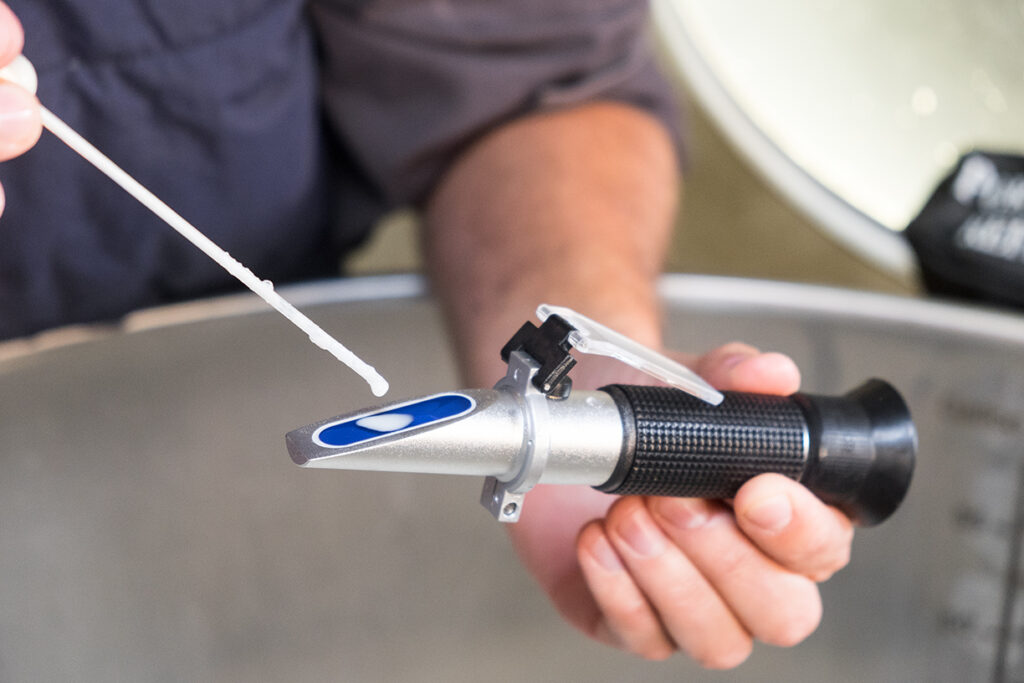
- Handheld Optical Refractometer: Compact and portable, ideal for field use. While less precise than an Abbe, it’s perfect for quick checks of Brix, salinity, or coolant concentration. They are widely used in agriculture, food processing, and automotive maintenance.
2. Digital Refractometers:
Leveraging modern technology, digital refractometers offer enhanced precision, ease of use, and often, automated data logging. Instead of a visual scale, they use a light source (often an LED), a prism, and a digital sensor (like a CCD array) to detect the critical angle. The instrument then electronically calculates and displays the refractive index or a derived value (e.g., Brix) on an LCD screen.
- Handheld Digital Refractometers: Combine the portability of optical models with the accuracy and digital readout of more advanced units. They are battery-powered and highly popular for rapid, on-site measurements.
- Benchtop Digital Refractometers: Offer the highest level of accuracy and often include advanced features like automated temperature compensation, connectivity to computers, and larger sample capacity. They are staples in research and industrial laboratories.
- Process Refractometers: These are designed for continuous, in-line measurement directly within a production pipeline. They provide real-time data, allowing for immediate adjustments to manufacturing processes, crucial for maintaining consistent product quality and optimizing efficiency in large-scale operations.
The evolution from simple optical devices to sophisticated digital and process instruments highlights a significant technological trend in measurement tools: increased automation, data integration, and precision, all contributing to better quality control and operational efficiency.
Applications Across Industries: A Tool for Quality and Consistency
The refractometer’s ability to quickly and accurately determine the concentration of dissolved solids makes it an indispensable tool across an astonishing array of industries. From ensuring the delightful taste of food and beverages to guaranteeing the safety of pharmaceuticals, this instrument is central to quality control and, by extension, brand reputation.
Food and Beverage Industry
Perhaps the most common and widely recognized application of refractometers is within the food and beverage sector. Here, maintaining consistent product quality is paramount to consumer satisfaction and brand loyalty.
- Brix Measurement: Refractometers are primarily used to measure Brix, a scale that indicates the percentage of sugar (sucrose) in a solution. This is vital for:
- Fruit and Vegetable Processing: Determining the ripeness of fruits for harvesting, ensuring consistent sweetness in juices, purees, and concentrates.
- Soft Drinks and Juices: Controlling the sugar content to meet taste profiles and nutritional labeling requirements.
- Jams, Jellies, and Candies: Monitoring sugar levels during cooking to achieve the desired texture and preservation.
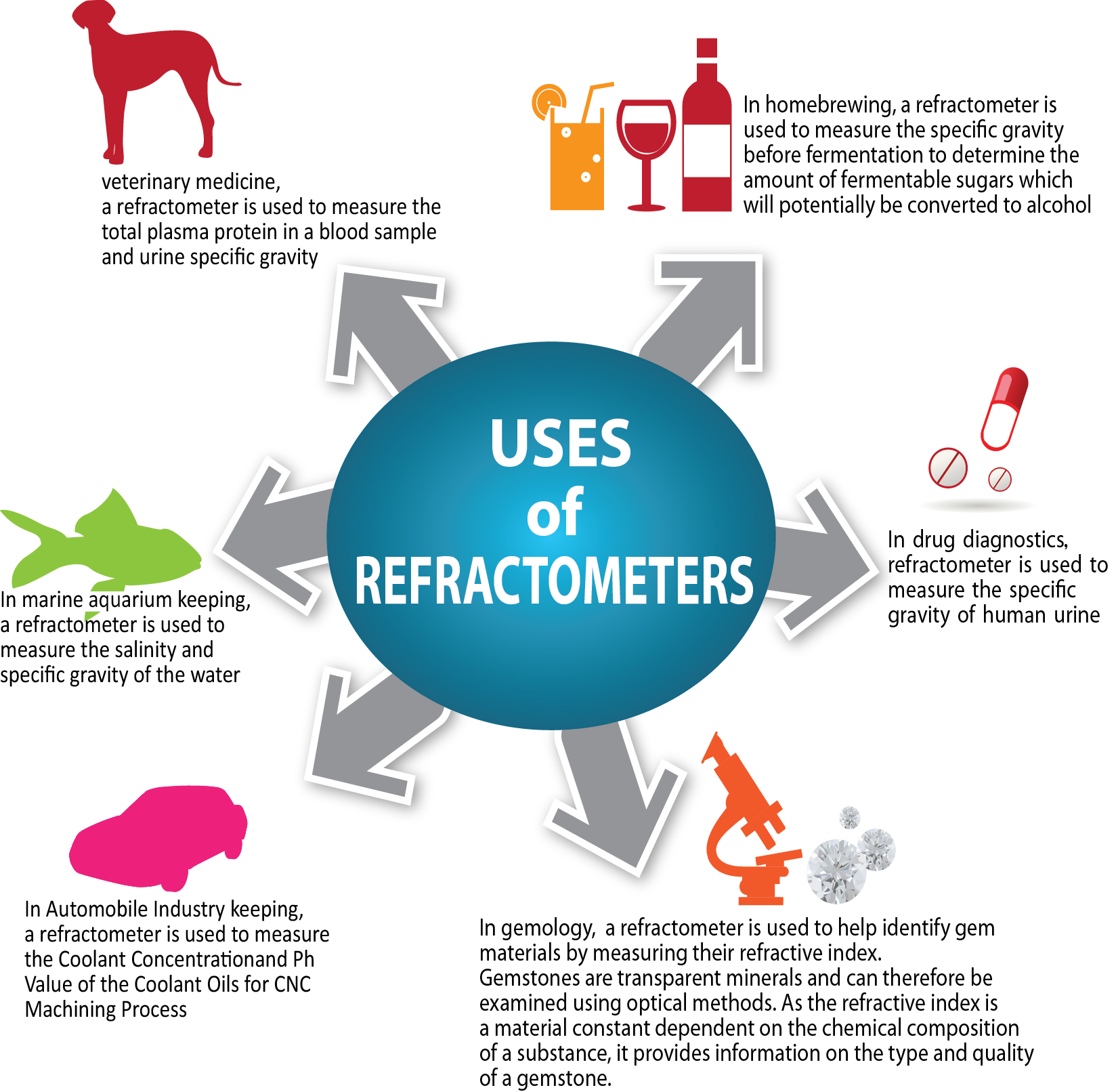
- Wine and Beer Production: Measuring the sugar content of grape must or wort to predict final alcohol content and ensure fermentation is progressing correctly. This is critical for crafting consistent and high-quality alcoholic beverages, directly impacting a brand’s reputation for excellence.
- Honey Quality: Refractometers are used to measure the water content in honey. Low water content is essential for preventing fermentation and ensuring honey’s stability and shelf life, which is a key indicator of its quality and purity for consumers.
- Dairy Products: While less common for Brix, refractometers can be used to check milk solids content or other additives.
In this industry, the refractometer acts as a guardian of taste, texture, and nutritional value. By ensuring products consistently meet established specifications, brands can build trust with their customers, differentiate themselves in a competitive market, and avoid costly quality issues that could tarnish their image.
Automotive and Industrial Fluids
Beyond consumables, refractometers play a critical role in maintaining complex machinery and ensuring operational safety.
- Antifreeze/Coolant Concentration: In automotive maintenance, refractometers are used to check the glycol concentration in engine coolants. This ensures that the coolant provides adequate freeze protection in winter and boil-over protection in summer, preventing engine damage.
- Battery Acid Specific Gravity: For lead-acid batteries, a refractometer can quickly assess the concentration of sulfuric acid, indicating the battery’s state of charge and overall health.
- Cutting Fluids (Machining Coolants): In manufacturing, metalworking fluids are essential for cooling and lubricating tools. Refractometers help maintain the correct concentration of these emulsions, which is vital for tool longevity, machining efficiency, and preventing microbial growth.
- AdBlue/Diesel Exhaust Fluid (DEF): For modern diesel vehicles, refractometers are used to verify the urea concentration in DEF, ensuring proper function of the emissions reduction system and compliance with environmental regulations.
In these industrial settings, refractometers contribute to operational efficiency, prolong the life of expensive equipment, and ensure compliance with safety and environmental standards. Their use helps businesses avoid costly breakdowns, premature wear, and potential penalties, directly impacting their financial health and operational reliability.
Pharmaceutical and Chemical Industries
Accuracy and purity are non-negotiable in the pharmaceutical and chemical sectors, where product quality directly impacts public health and safety.
- Concentration and Purity Checks: Refractometers are routinely used for quality control of raw materials, intermediates, and final products. They can verify the concentration of active pharmaceutical ingredients (APIs), solvents, or other chemical solutions.
- Drug Formulation: During the development and manufacturing of drugs, refractometers help ensure that solutions have the correct concentration, which is critical for drug efficacy and safety.
- Quality Assurance: By providing a quick and non-destructive method to check solution concentrations, refractometers help pharmaceutical companies comply with stringent regulatory requirements, safeguarding patient health and maintaining the integrity of their brand.
The meticulous use of instruments like refractometers in these highly regulated industries is a testament to a brand’s commitment to safety, efficacy, and compliance. Errors in these fields can have devastating consequences, making precise measurement tools not just beneficial, but absolutely essential.
Other Niche Applications
The versatility of the refractometer extends to several other specialized fields:
- Gemology: Gemologists use refractometers to measure the refractive index of gemstones, a key characteristic for identification and authentication, protecting against fraud.
- Aquariums and Marine Biology: Measuring the salinity (salt concentration) of aquarium water or natural seawater is crucial for maintaining healthy aquatic life.
- Medical Diagnostics: Though less common now with more advanced methods, refractometers have been used to measure specific gravity of urine (indicating hydration or kidney function) and total serum protein in blood.
Across all these applications, the underlying principle remains the same: a precise measurement of light’s behavior to reveal vital information about a substance, empowering informed decisions and ensuring desired outcomes.
The Refractometer in the Modern Business Landscape: Tech, Efficiency, and ROI
The refractometer has evolved significantly, transitioning from a purely optical device to a sophisticated piece of technology that integrates into modern business workflows. This evolution is driven by the need for greater precision, automation, and data management, directly impacting operational efficiency and financial returns.
Technological Advancements and Integration
Modern refractometers, particularly digital and process models, embody several key technological trends:
- Digitalization and Automation: Digital refractometers eliminate subjective readings, reduce human error, and provide faster results. Automated temperature compensation ensures accuracy regardless of ambient conditions. Process refractometers take this further by continuously monitoring and controlling parameters in real-time within a production line, enabling truly automated quality control.
- Software Integration and Data Capture: Many digital refractometers can connect to computers or Laboratory Information Management Systems (LIMS). This allows for automated data logging, trend analysis, storage, and easy retrieval of measurement results. Such integration streamlines record-keeping, enhances traceability, and simplifies compliance audits, saving valuable time and reducing administrative burden.
- IoT and Connectivity: The Internet of Things (IoT) is beginning to impact refractometry. Connected refractometers can transmit data wirelessly to cloud platforms, enabling remote monitoring, predictive maintenance, and enterprise-wide data analysis. This allows for proactive decision-making, optimizing resource allocation, and identifying potential issues before they escalate.
- AI’s Potential: While still nascent in direct refractometer application, AI could potentially enhance data analysis from complex samples, predict process deviations based on refractive index trends, or even assist in the automated calibration and troubleshooting of devices. As AI tools become more ubiquitous, their integration with analytical instruments like refractometers will likely grow, offering deeper insights and more intelligent control.
- Mobile Solutions: The advent of smartphone-attachable refractometers or highly portable digital units signifies a trend towards making advanced measurement capabilities accessible in the field. This empowers on-site professionals in agriculture, service industries, or field research to make immediate, data-driven decisions.
These technological enhancements transform the refractometer from a simple measurement tool into an integral component of a smart, data-driven quality assurance and process control system. This aligns perfectly with the “Tech” focus of many modern businesses, demonstrating how even established instruments can be innovated.
Driving Efficiency and Financial Returns
The integration of advanced refractometry into business operations directly translates into tangible financial benefits and increased productivity. For any company, from startups to multinational corporations, the “Money” aspect is paramount, and refractometers contribute significantly to the return on investment (ROI).
- Cost Savings Through Waste Reduction: By accurately monitoring concentrations, businesses can avoid producing off-spec products that would otherwise need to be discarded or reworked. For example, maintaining the correct concentration of cutting fluids extends tool life and reduces the need for frequent fluid changes, minimizing material costs and downtime. In food production, precise Brix measurement prevents batches of juice or jam from being too sweet or not sweet enough, saving ingredients and preventing recalls.
- Productivity Gains: Digital and automated refractometers provide fast, objective readings, significantly speeding up quality control processes. This reduces labor time spent on manual measurements and data entry, allowing personnel to focus on other critical tasks. Real-time process refractometers enable immediate adjustments, preventing entire production runs from going awry and maximizing throughput.
- Quality Assurance and Compliance: Consistent product quality is the cornerstone of brand reputation. Refractometers help brands deliver on their promise of quality by ensuring every batch meets specifications. This proactive quality control prevents costly product recalls, customer complaints, and potential regulatory fines, all of which can severely damage a brand’s image and financial standing. Meeting stringent industry standards (e.g., in pharmaceuticals or food safety) is not just good practice, it’s often a legal requirement, and refractometers provide the necessary verifiable data.
- Optimized Resource Utilization: Knowing the exact concentration of ingredients allows for precise dosing, reducing over-formulation or under-formulation. This optimization of raw materials directly impacts the cost of goods sold and improves profitability.
- Investment Justification: While an advanced digital or process refractometer represents an initial investment, the long-term savings from reduced waste, improved efficiency, enhanced quality, and sustained brand reputation typically yield a strong ROI, making it a sound financial decision for businesses committed to excellence.
In essence, a refractometer is not merely a scientific instrument; it is a financial tool that safeguards investments, enhances operational productivity, and bolsters a brand’s market position by consistently delivering high-quality products.
Choosing and Maintaining Your Refractometer: A Guide for Informed Decisions
To maximize the benefits of a refractometer, businesses and individuals must make informed decisions about its selection, and then diligently follow best practices for its calibration and maintenance. This ensures the instrument remains a reliable source of accurate data.
Key Factors for Selection
Choosing the right refractometer involves considering several practical aspects, linking back to the “Tech” theme of selecting appropriate tools.
- Application-Specific Needs: What exactly are you measuring? What is the expected range of concentrations? What level of accuracy and precision is required? For example, a home brewer might be fine with a basic handheld optical Brix refractometer, while a pharmaceutical lab will require a high-precision benchtop digital model with automated temperature compensation.
- Type of Refractometer: Decide between optical (cost-effective, robust for field use) and digital (more accurate, easier to read, data logging) or a process unit for continuous monitoring. Each has its strengths and weaknesses depending on the environment and criticality of the measurement.
- Measurement Scale(s): Ensure the refractometer provides the specific scale needed (e.g., Brix, Specific Gravity, Refractive Index, Salinity in ppt, % Urea). Some digital models offer multiple scales.
- Temperature Compensation: For accurate readings, especially in varying temperatures, automatic temperature compensation (ATC) is a crucial feature, particularly in digital models. If using an optical model without ATC, manual temperature correction charts must be used.
- Sample Volume: Consider the minimum sample volume required, especially if working with limited or expensive samples.
- Durability and Environmental Factors: For field use or harsh industrial environments, a robust, splash-proof, or water-resistant model is essential.
- Budget Considerations: Refractometers range widely in price. Balancing the required features and accuracy with the available budget is key. While cheaper models can suffice for basic needs, investing in a higher-quality instrument can pay dividends in accuracy, reliability, and longevity, contributing positively to financial aspects in the long run.
Calibration and Maintenance Best Practices
Even the most advanced refractometer is only as good as its last calibration. Proper care and maintenance are critical for ensuring sustained accuracy and extending the lifespan of the instrument.
- Importance of Regular Calibration: Calibration against known standards is paramount. Over time, all instruments drift, and environmental factors can affect readings. Regular calibration (e.g., daily, weekly, or before critical measurements) ensures the refractometer provides consistently accurate data.
- Using Reference Standards: High-quality calibration fluids (e.g., sucrose solutions of known Brix values, distilled water, specialized oils) should be used. The chosen standard should ideally be close to the range of samples being measured.
- Cleaning and Care: The prism and sample plate must be scrupulously clean and dry before and after each use. Residual samples or smudges can significantly affect accuracy. Use lint-free wipes and appropriate cleaning solutions (e.g., distilled water for most samples, alcohol for oily residues) as recommended by the manufacturer. Avoid abrasive materials that could scratch the prism surface.
- Proper Storage: Store refractometers in a clean, dry, and stable environment, ideally in their protective case, away from extreme temperatures, direct sunlight, and corrosive chemicals.
- Troubleshooting Common Issues: Familiarize yourself with common issues like unstable readings (often due to temperature fluctuations or insufficient sample), inconsistent results (due to improper cleaning or calibration), or instrument malfunctions. Consulting the user manual is the first step in troubleshooting.
By diligently adhering to these maintenance guidelines, users can ensure their refractometers remain reliable tools, consistently providing the accurate data necessary for critical decision-making in quality control, process optimization, and ultimately, safeguarding a brand’s reputation and financial stability.
Conclusion
The refractometer, though seemingly a simple device, stands as a cornerstone of quality control, efficiency, and informed decision-making across an incredibly diverse spectrum of industries. From ensuring the precise sweetness of our food and beverages, to guaranteeing the integrity of critical industrial fluids and life-saving pharmaceuticals, its role is undeniably vital.
This sophisticated piece of “Tech” transcends its basic function as a light-bending instrument. It is a sentinel guarding “Brand” reputation, ensuring product consistency, compliance with regulatory standards, and consumer trust. Furthermore, it is a powerful driver of “Money” efficiency, contributing to significant cost savings through waste reduction, optimized resource utilization, increased productivity, and the avoidance of costly errors or recalls. The evolution from basic optical units to advanced digital, connected, and potentially AI-enhanced refractometers exemplifies how fundamental scientific principles are continually refined by technological innovation to meet the demands of modern business.
In an increasingly competitive and data-driven world, where precision is paramount and quality is non-negotiable, the refractometer proves itself to be an indispensable tool. It empowers businesses to not only understand the composition of their products but also to control it, ensuring excellence, safeguarding financial health, and building enduring brands that stand for uncompromising quality.
aViewFromTheCave is a participant in the Amazon Services LLC Associates Program, an affiliate advertising program designed to provide a means for sites to earn advertising fees by advertising and linking to Amazon.com. Amazon, the Amazon logo, AmazonSupply, and the AmazonSupply logo are trademarks of Amazon.com, Inc. or its affiliates. As an Amazon Associate we earn affiliate commissions from qualifying purchases.