
The prime rate is often described as the heartbeat of the consumer lending market. While many people encounter the term when signing for a credit card or applying for a home equity line of credit (HELOC), its significance extends far beyond a simple line item on a loan agreement. It serves as the foundational benchmark for interest rates across the United States financial system. Understanding what the prime rate is today, how it is determined, and how it ripples through your personal and business finances is essential for making informed economic decisions in an era of shifting monetary policy.
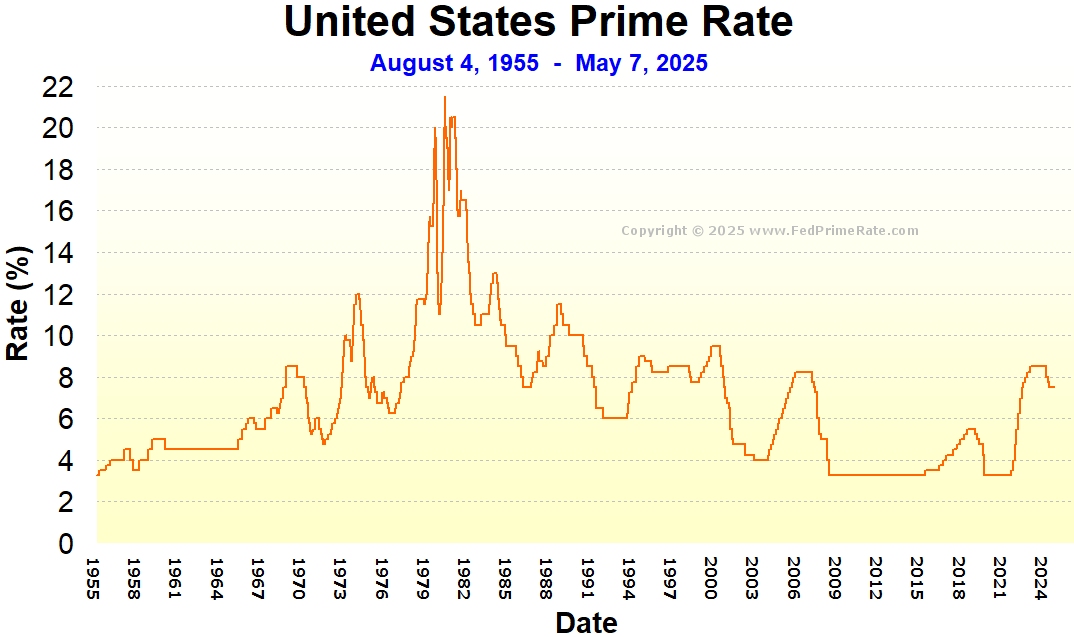
At its core, the prime rate is the interest rate that commercial banks charge their most creditworthy corporate customers. While you might not be a multi-billion dollar corporation, the rate you pay on your personal debt is almost certainly anchored to this figure. In an economic environment defined by inflation management and central bank intervention, tracking the prime rate is no longer just for economists—it is a mandatory practice for anyone looking to optimize their personal balance sheet.
The Mechanics of the Prime Rate: What It Is and How It’s Set
To understand the prime rate today, one must first look toward Washington, D.C., specifically the Federal Reserve. The prime rate does not exist in a vacuum; it is a direct reflection of the “cost of money” as dictated by the nation’s central bank.
The Federal Funds Rate Connection
The most influential factor in determining the prime rate is the Federal Funds Rate. This is the interest rate at which commercial banks borrow and lend their excess reserves to each other overnight. When the Federal Open Market Committee (FOMC) meets and decides to raise or lower the Federal Funds Rate to combat inflation or stimulate the economy, the prime rate moves in lockstep.
By industry standard, the prime rate is typically set at 3 percentage points (300 basis points) above the Federal Funds Target Range. For example, if the Federal Funds Rate is set at 5.25% to 5.50%, the prime rate will generally sit at 8.50%. This 3% spread allows banks to cover their operating costs and manage the risk associated with lending, even to their most stable clients.
The Wall Street Journal Prime Rate Standard
While individual banks have the autonomy to set their own prime rates, the financial world largely follows a consensus known as the “Wall Street Journal (WSJ) Prime Rate.” The WSJ surveys the 30 largest banks in the United States, and when at least 23 of them (about 75%) change their rate, the WSJ updates its published prime rate. This published figure is what most lenders use as the index for variable-rate products. When you see a news headline stating that the prime rate has changed, they are referring to this consensus benchmark.
Why Today’s Prime Rate Matters for Your Personal Finances
For the average consumer, the prime rate is the “index” to which their “margin” is added. If you have a credit card with an APR of “Prime + 15%,” your interest rate is directly tethered to the fluctuations of the prime rate. As the prime rate climbs, the cost of carrying a balance becomes significantly more expensive, often without the consumer receiving a formal notice of a rate hike because the change is baked into the variable-rate agreement.
The Impact on Credit Card Interest Rates
Credit cards are perhaps the most sensitive financial products to prime rate changes. Most credit card issuers adjust their Annual Percentage Rates (APRs) within one or two billing cycles of a prime rate shift. In a high-rate environment, the “cost of delay” increases. For a household carrying $10,000 in credit card debt, a 2% increase in the prime rate translates to an additional $200 per year in interest charges alone, with no increase in the principal paid down. This makes aggressive debt repayment strategies, such as the debt avalanche or debt snowball methods, even more critical when the prime rate is elevated.
Mortgages and HELOCs: The Real Estate Connection
While 30-year fixed-rate mortgages are influenced more by the 10-year Treasury yield than the prime rate, Home Equity Lines of Credit (HELOCs) are almost exclusively tied to the prime rate. Homeowners who used HELOCs to fund renovations or consolidate debt during periods of low interest rates often find themselves facing much higher monthly payments when the prime rate rises.
Unlike a fixed mortgage, where your payment remains constant, a HELOC payment can fluctuate significantly. For those relying on home equity as a financial safety net, a rising prime rate necessitates a tighter budget and a closer look at whether converting a variable HELOC into a fixed-rate home equity loan is a more sustainable path.

Personal Loans and Consumer Credit
Beyond cards and home equity, the prime rate dictates the pricing for personal loans, certain types of auto loans, and private student loans. Lenders evaluate the “risk-free rate” (which is influenced by the prime rate) and add a premium based on the borrower’s credit score. When the prime rate is high, even borrowers with “excellent” credit scores will find themselves paying more for new credit than they would have in a lower-rate environment.
The Ripple Effect on Business Finance and Investing
The prime rate is not only a consumer concern; it is a fundamental pillar of business finance. Small to medium-sized enterprises (SMEs) often rely on lines of credit and short-term loans that are indexed to the prime rate to manage cash flow and invest in growth.
Cost of Capital for Small Businesses
Small businesses are the backbone of the economy, but they are also the most vulnerable to interest rate volatility. Most small business loans, including many SBA (Small Business Administration) loans, are variable-rate instruments. When the prime rate increases, the “cost of capital” goes up. This means a business owner might delay hiring a new employee, postpone purchasing new equipment, or be forced to raise prices for consumers to maintain their profit margins. For entrepreneurs, the prime rate today serves as a barometer for how much risk they can afford to take in their expansion plans.
The Correlation Between Prime Rates and Market Volatility
Investors watch the prime rate closely because of its inverse relationship with asset valuations. When the prime rate is high, the “discount rate” used to value future corporate earnings also rises, which can lead to lower stock prices, particularly for growth and tech companies. Furthermore, as the prime rate increases, fixed-income investments like bonds and high-yield savings accounts become more attractive relative to the stock market. This shift in capital allocation can lead to increased market volatility as investors rebalance their portfolios to chase the higher yields offered by debt instruments.
Navigating a High-Rate Environment: Strategies for Success
When the prime rate is elevated, the financial playbook must change. The strategies that worked in a “zero-interest-rate policy” (ZIRP) environment can be detrimental when borrowing costs are high. Success in today’s economy requires a proactive approach to both debt and savings.
Debt Management and Refinancing Tactics
The first priority in a high-prime-rate environment is to mitigate variable-rate exposure. This may involve:
- Balance Transfers: Moving high-interest credit card debt to a 0% APR introductory card to pause the accrual of interest.
- Debt Consolidation: Taking out a fixed-rate personal loan to pay off variable-rate debts, effectively “locking in” a rate before potential future hikes.
- Prioritizing HELOC Paydowns: Since HELOCs react quickly to prime rate changes, allocating extra capital to these balances can prevent interest costs from spiraling.
Maximizing Returns on Savings and High-Yield Accounts
While a high prime rate is a burden for borrowers, it is a boon for savers. Banks typically increase the interest they pay on savings accounts, Certificates of Deposit (CDs), and Money Market Accounts when the prime rate rises.
- High-Yield Savings Accounts (HYSA): Many online-only banks offer rates that are significantly higher than traditional brick-and-mortar institutions, often hovering just below the federal funds rate.
- CD Ladders: By purchasing CDs with staggered maturity dates, savers can take advantage of high current rates while maintaining liquidity and ensuring they can reinvest at even higher rates if the prime rate continues to climb.

Looking Ahead: The Future of Interest Rates and Economic Indicators
The question of “what is the prime rate today” is inherently linked to “what will the prime rate be tomorrow.” The trajectory of the prime rate is determined by the Federal Reserve’s dual mandate: maintaining price stability (low inflation) and maximizing sustainable employment.
As inflation cools, the pressure on the Fed to maintain high interest rates may subside, leading to a potential reduction in the prime rate. Conversely, if the labor market remains “too hot” and contributes to wage-price spirals, the prime rate could remain elevated for an extended period—a “higher for longer” scenario.
Investors and consumers alike should keep a close eye on the Consumer Price Index (CPI) and employment reports. These data points are the primary drivers of FOMC decisions. By staying informed about these broader economic indicators, you can anticipate shifts in the prime rate and position your finances to either weather the storm of high borrowing costs or capitalize on the benefits of high interest on your savings.
In conclusion, the prime rate is more than just a number on a financial chart; it is a powerful force that shapes the cost of living, the profitability of businesses, and the growth of investment portfolios. By understanding the mechanics of how this rate is set and its direct impact on various financial products, you can navigate the complexities of the modern economy with confidence and strategic foresight.
aViewFromTheCave is a participant in the Amazon Services LLC Associates Program, an affiliate advertising program designed to provide a means for sites to earn advertising fees by advertising and linking to Amazon.com. Amazon, the Amazon logo, AmazonSupply, and the AmazonSupply logo are trademarks of Amazon.com, Inc. or its affiliates. As an Amazon Associate we earn affiliate commissions from qualifying purchases.