
In the world of finance, numbers are the map, but percentages are the compass. Whether you are checking the performance of your 401(k), applying for a mortgage, or simply calculating a tip at a restaurant, the concept of a “percent” is the most fundamental tool for measuring value, growth, and risk. While we are introduced to percentages in elementary school, their application in the adult financial world is both nuanced and powerful. Understanding what a percent truly represents—and how it functions as a relative measurement—is the first step toward achieving financial literacy and long-term wealth.
Understanding the Fundamentals: Why Percentages Rule the Financial World
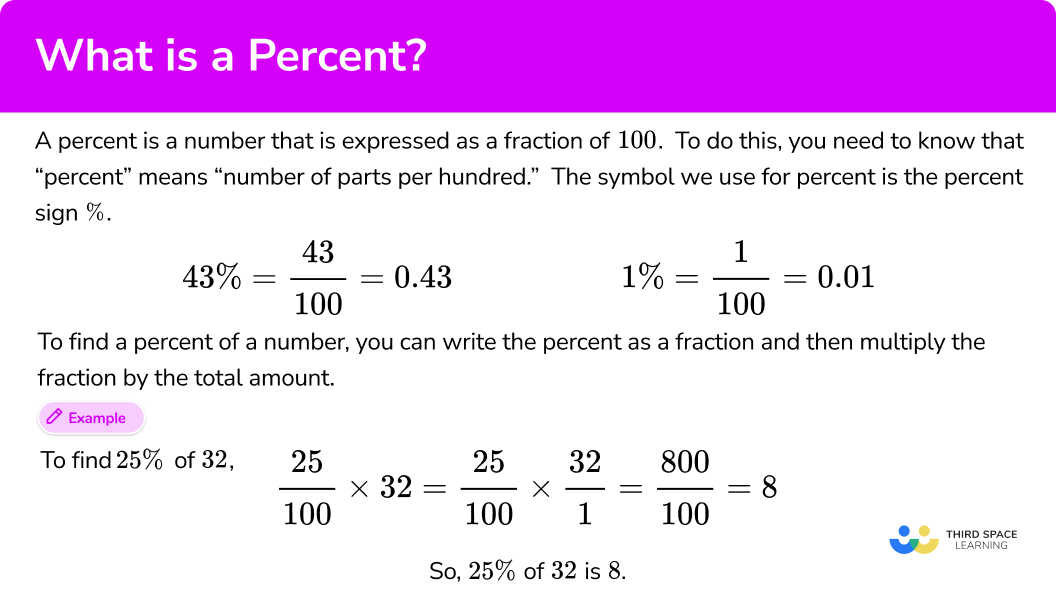
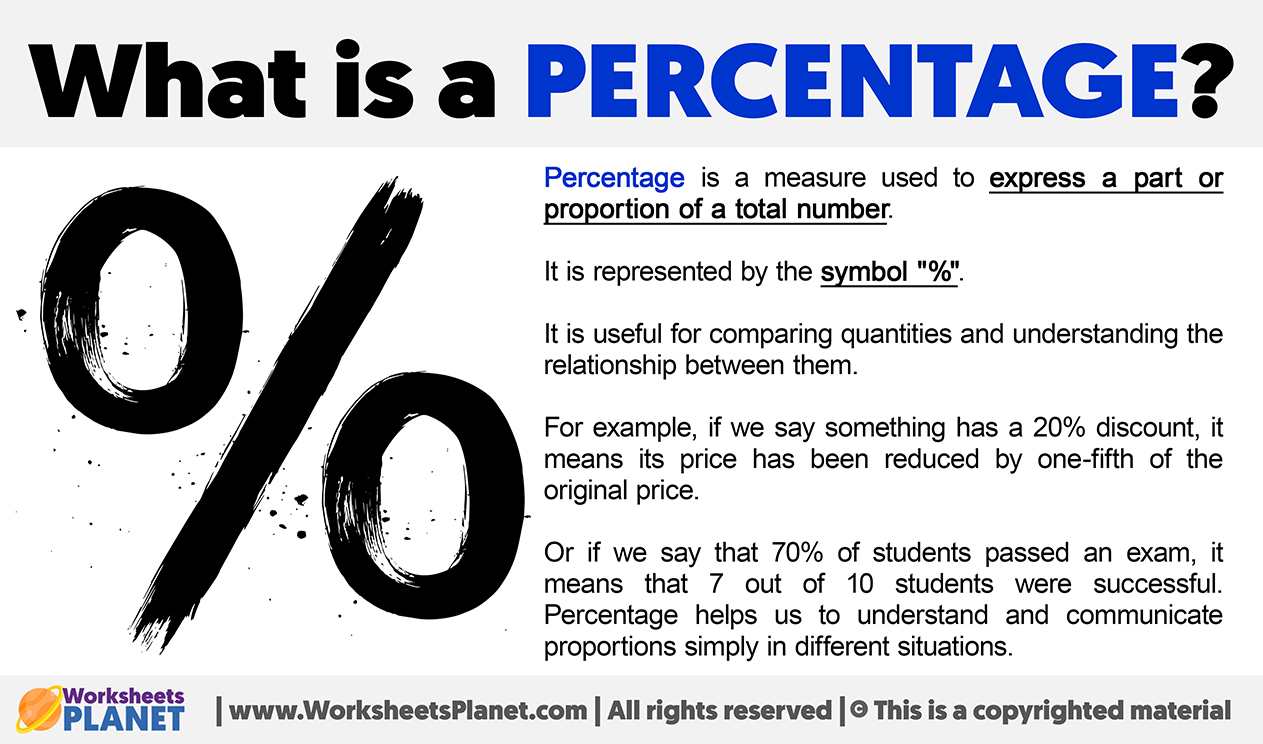
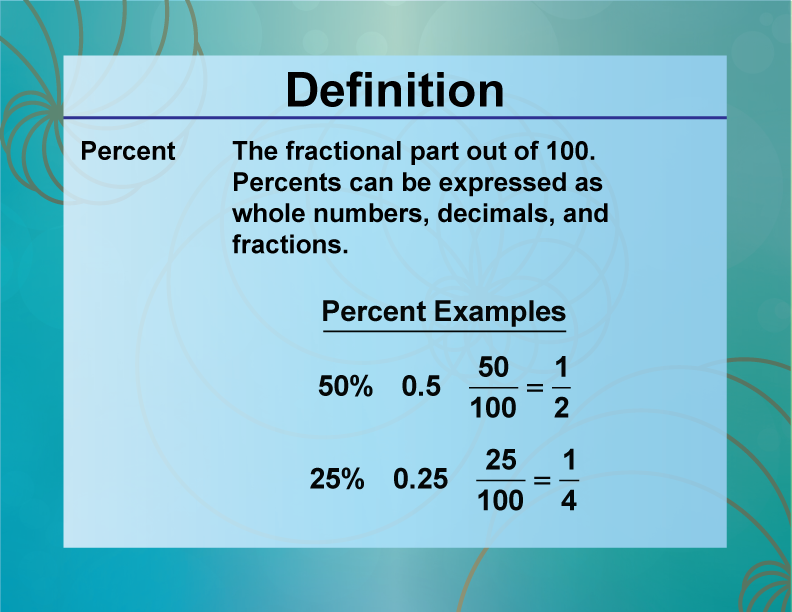
At its most basic level, the word “percent” comes from the Latin per centum, meaning “by the hundred.” It is a way of expressing a number as a fraction of 100. In finance, this standardization is vital because it allows us to compare “apples to oranges” by creating a common denominator.
The Definition of a Percent in Monetary Terms
In money management, a percent is a ratio used to describe the relationship between a part and a whole. If you have $100 and you save $10, you have saved 10 percent. While this seems elementary, the power of the percentage lies in its ability to scale. Whether you are dealing with $1,000 or $1,000,000, a “10 percent” move represents the same relative change in value. In the financial markets, professional traders rarely talk about how many “dollars” a stock went up; they talk about the percentage gain, because that indicates the efficiency of the capital invested.
The Power of Proportions: Moving Beyond Fixed Numbers
Fixed numbers can be deceptive. For example, a $500 profit sounds excellent to a teenager with a lawn-mowing business, but it is catastrophic for a multi-billion dollar corporation. By converting these figures into percentages, we gain a sense of proportion. A $500 profit on a $1,000 investment is a 50% return—a massive success. A $500 profit on a $1,000,000 investment is a 0.05% return—a sign of extreme inefficiency. Percentages allow investors to strip away the noise of total dollar amounts to see the underlying health of a financial move.
The Mechanics of Growth: Interest Rates and Compound Returns
When we discuss building wealth, “percent” is usually followed by the word “yield” or “return.” These percentages represent the price of money over time. If you are a lender (a saver), the percentage is what you are paid for the use of your money. If you are a borrower, the percentage is what you pay for the privilege of using someone else’s capital.
Simple vs. Compound Interest: The Percentage Multiplier
The most transformative application of percentages in money is compound interest. Simple interest is calculated only on the principal amount. However, compound interest is calculated on the principal plus any interest that has already been added.
Think of it this way: if you have $10,000 at a 7% annual percentage rate (APR), you earn $700 in the first year. In the second year, you aren’t just earning 7% on your original $10,000; you are earning 7% on $10,700. This “interest on interest” is the engine of wealth. Over decades, a small percentage difference—such as the difference between a 4% return and a 7% return—can result in hundreds of thousands of dollars in difference in a retirement nest egg. This is why financial advisors obsess over “basis points” (one-hundredth of a percentage point); in the long run, every fraction of a percent counts.
Assessing Risk through Percentage Volatility
In the world of investing, percentages also measure risk. We call this “volatility.” If an asset class, such as Bitcoin, frequently swings by 10% or 20% in a single day, it is considered high-risk. Conversely, a government bond that moves by only 0.1% is considered low-risk. By looking at the percentage standard deviation of an investment, an individual can determine if they have the “stomach” for that specific financial vehicle. Without the language of percentages, it would be nearly impossible to quantify how much risk you are taking relative to your total net worth.
Managing Debt: How Percentages Define Your Financial Health
While percentages can work for you in the form of investments, they can work against you in the form of debt. Understanding how these percentages are structured is the difference between financial freedom and a cycle of poverty.
The Annual Percentage Rate (APR) and the Cost of Borrowing
When you take out a credit card or a car loan, the lender quotes an APR. This is the “cost” of the money you are borrowing, expressed as a yearly percentage. It is crucial to understand that even a “small” number like 18% on a credit card is a massive financial burden. Because credit card interest often compounds daily, a high percentage rate can quickly cause a balance to spiral out of control. When you compare loans, the percentage is the only number that truly matters; it allows you to see which lender is offering the most “efficient” debt, regardless of the monthly payment amount.
Credit Utilization: The 30% Rule of Thumb
Percentages also dictate your creditworthiness. Your credit score is heavily influenced by your “credit utilization ratio.” This is the percentage of your total available credit that you are actually using. Most financial experts recommend keeping this percentage below 30%. For instance, if you have a total credit limit of $10,000 across all cards, carrying a balance of $3,000 puts you at the 30% mark. Once you exceed this percentage, lenders view you as a higher-risk borrower, which can lead to higher interest rate percentages on future loans.
Strategic Allocation: Using Percentages for Budgeting and Portfolio Design
Modern financial planning relies on percentage-based frameworks rather than fixed-dollar budgets. This is because our income and expenses fluctuate, but the ratio of our spending should remain consistent to ensure stability.
The 50/30/20 Rule: A Percentage-Based Budgeting Framework
One of the most popular personal finance strategies is the 50/30/20 rule. This strategy suggests allocating your after-tax income into three percentage categories:
- 50% to Needs: This includes housing, groceries, utilities, and insurance.
- 30% to Wants: This includes dining out, hobbies, and travel.
- 20% to Savings and Debt Repayment: This includes emergency funds, 401(k) contributions, and extra payments on high-interest loans.
By using percentages instead of fixed dollar amounts, this budget remains relevant whether you are earning $40,000 a year or $400,000. It scales with your lifestyle and ensures that as your income grows, your savings grow proportionally.
Asset Allocation: Balancing Your Portfolio
In investing, “asset allocation” refers to the percentage of your total portfolio that is invested in different categories, such as stocks, bonds, and cash. A common “moderate” profile might be 60% stocks and 40% bonds. As the market moves, these percentages will shift (e.g., your stocks might grow to represent 70% of your total wealth). Financial professionals practice “rebalancing,” which involves selling a portion of the over-performing asset to bring the percentages back to the original target. This percentage-based discipline forces investors to “buy low and sell high,” arguably the most important rule in money management.
Real-World Applications: Inflation, Taxes, and Purchasing Power
Finally, percentages are the primary way we measure the macro-economic forces that affect our daily lives. We do not live in a static economic environment; the value of our money is constantly being adjusted by percentage-based variables.
Inflation as a Percentage: The Eroding Value of Cash
Inflation is the percentage rate at which the general level of prices for goods and services is rising. If the inflation rate is 3% per year, a $100 grocery bill this year will cost $103 next year. While 3% sounds small, its cumulative effect is devastating to “lazy” cash. If your savings account is only earning 0.5% interest while inflation is at 3%, you are effectively losing 2.5% of your purchasing power every year. Understanding this percentage gap is why savvy individuals move their money into assets that historically outperform inflation.
Marginal Tax Rates: Understanding the Progressive System
In many countries, income tax is calculated using a “marginal percentage” system. You aren’t taxed a single percentage on your entire income. Instead, different “chunks” of your income are taxed at progressively higher percentages (e.g., 10%, 12%, 22%, etc.). Understanding which tax bracket your next dollar falls into—your “marginal tax rate”—is essential for making smart financial decisions, such as whether to contribute to a traditional IRA (which reduces your taxable income percentage) or a Roth IRA (where you pay the tax percentage upfront).
In conclusion, “what is a percent?” is a question with a simple mathematical answer but a complex financial reality. It is the language of comparison, the engine of growth, and the measurement of risk. By mastering the use of percentages in your personal finances, you move from being a passive observer of your bank account to an active architect of your financial future. Whether you are cutting costs by 5% or seeking a 10% return on an investment, the percentage is the ultimate tool for measuring your progress toward wealth.
aViewFromTheCave is a participant in the Amazon Services LLC Associates Program, an affiliate advertising program designed to provide a means for sites to earn advertising fees by advertising and linking to Amazon.com. Amazon, the Amazon logo, AmazonSupply, and the AmazonSupply logo are trademarks of Amazon.com, Inc. or its affiliates. As an Amazon Associate we earn affiliate commissions from qualifying purchases.