
In the world of technology, software development, and data science, the concept of “nothing” is surprisingly complex. When we look at a spreadsheet, a database table, or a block of code, we often encounter a state that represents the absence of a value. This state is known as “Null.”
While it might seem trivial to represent “nothing,” the implementation and management of null values are foundational to modern computing. Misunderstanding what a null value is—and more importantly, what it is not—can lead to catastrophic software failures, inaccurate data analytics, and security vulnerabilities. This article explores the technical nuances of null values, their behavior across different environments, and the best practices for managing them in the digital age.
1. Defining the Null Value in Modern Computing
To understand a null value, one must first understand that in computing, every piece of data requires a definition. A null value is a special marker used in programming and databases to indicate that a data value does not exist in the system. It is a placeholder for missing, unknown, or inapplicable information.
Null vs. Zero vs. Empty Strings
One of the most common mistakes beginners make in tech is equating Null with 0 or an empty string (""). However, from a technical standpoint, these are fundamentally different:
- Zero (0): This is a numeric value. It represents a specific quantity. If a bank account has a balance of 0, we know exactly how much money is there.
- Empty String (“”): This is a text value with a length of zero. It represents a known state where the user has provided an “empty” input.
- Null: This represents “no value” or “unknown.” If a bank account balance is
Null, it means the system does not know what the balance is. It could be 0, it could be a million, or the account might not even be fully initialized.
The Origins of the Null Concept
The concept of a null pointer or null reference was introduced in 1965 by Tony Hoare as part of the ALGOL W language. Hoare later famously referred to this invention as his “billion-dollar mistake.” His goal was to ensure that the compiler could check for the existence of data, but the implementation led to decades of system crashes and bugs. Despite its “expensive” history, the null value remains a staple of computer science because it provides a necessary way to model the “unknown” in a digital environment that demands binary certainty.
2. Null Values in Database Management Systems (DBMS)
In the realm of databases, particularly Relational Database Management Systems (RDBMS) like SQL Server, MySQL, and PostgreSQL, the null value plays a critical role in data integrity. It allows a database to store a row of data even if some fields are not yet known.
The Role of Null in SQL
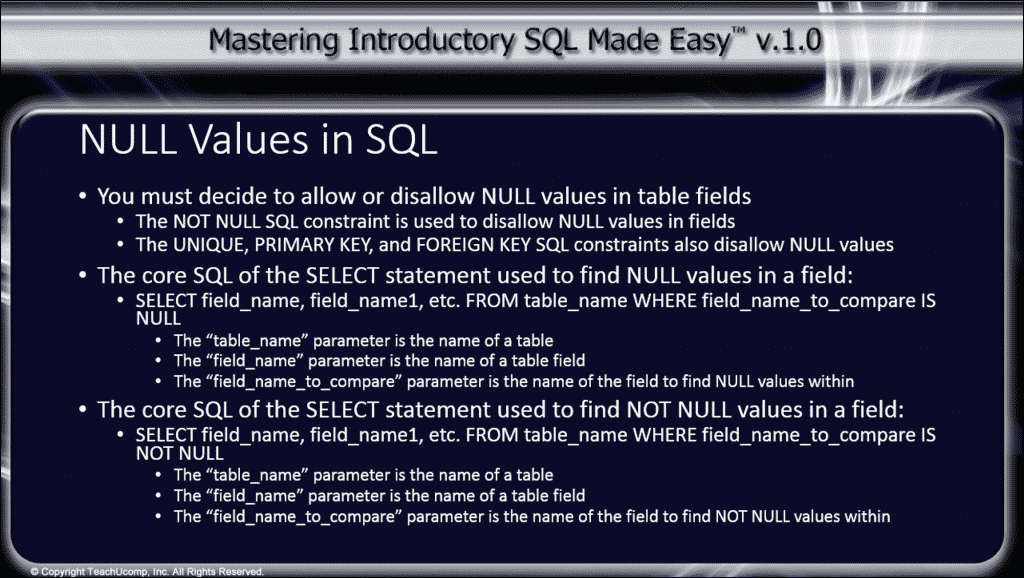
SQL (Structured Query Language) treats null as a special state rather than a value. This leads to what is known as Three-Valued Logic (3VL). In standard logic, a statement is either True or False. In SQL, a comparison involving a null value results in a third state: Unknown.
For example, if you query a database for “Users where Age > 18,” any user with a Null age will be excluded from the results. The system cannot confirm they are over 18, but it also cannot confirm they are under 18; therefore, the result is unknown, and the record is skipped.
Handling Nulls with COALESCE and IS NULL
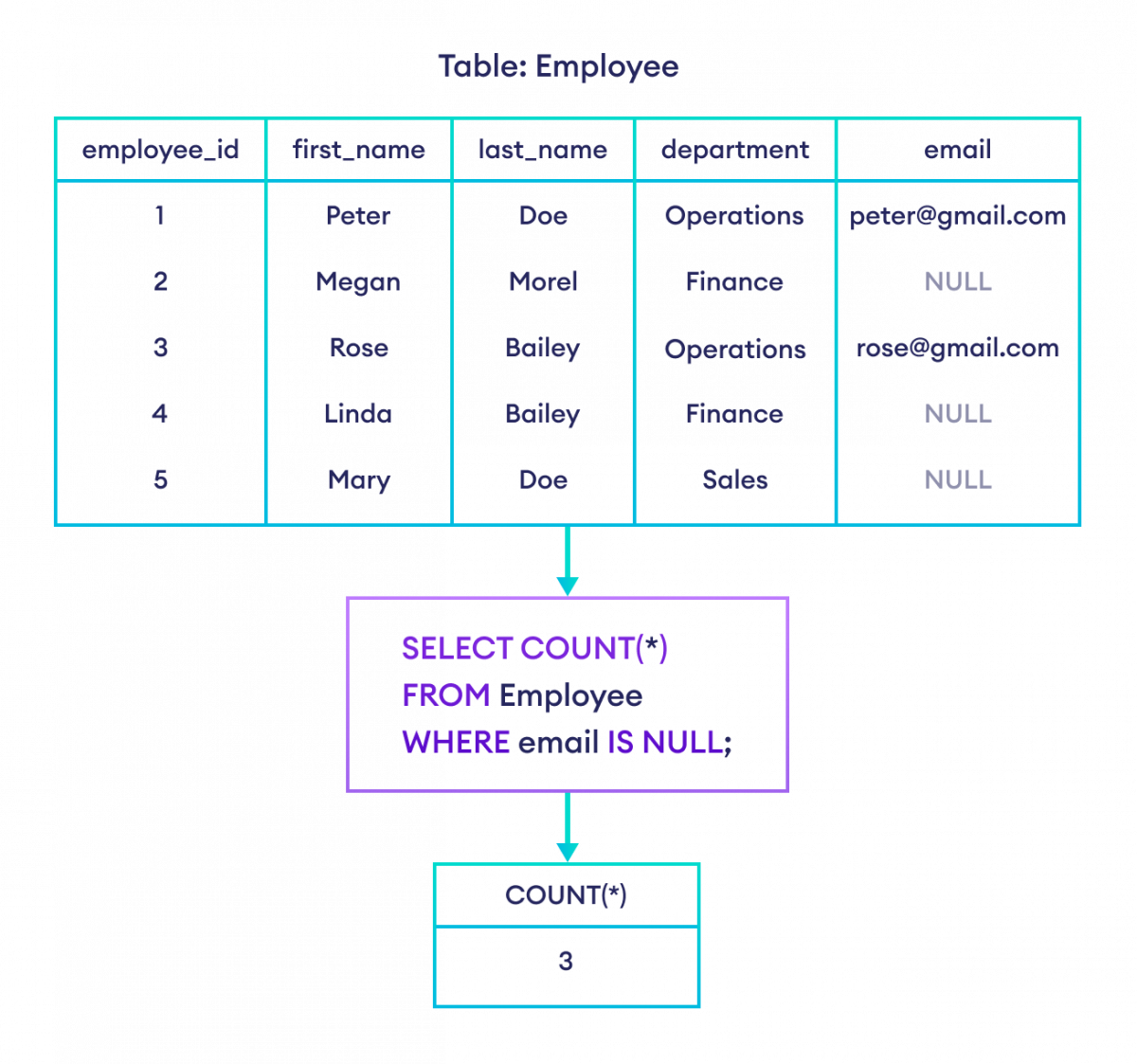
Because nulls behave differently than numbers or strings, developers cannot use standard operators like = to find them. Writing WHERE column = NULL will never return a result. Instead, specialized commands are required:
- IS NULL / IS NOT NULL: These operators are used to explicitly check for the absence of data.
- COALESCE: This function is a powerful tool in a developer’s arsenal. It accepts a list of arguments and returns the first non-null value. For instance,
COALESCE(UserNickname, UserFirstName, 'Guest')would prioritize a nickname, fall back to a first name, and finally default to ‘Guest’ if both are null.
Data Integrity and Constraints
Database architects use “Constraints” to control the presence of nulls. The NOT NULL constraint is applied to columns that must contain data for the system to function—such as a primary key (a unique ID) or a username. Managing these constraints is a vital part of database tuning and ensuring that “garbage data” does not compromise the reliability of an application.

3. Null in Programming and Software Development
While databases use nulls to represent missing records, software developers deal with nulls as memory references. In languages like C++, Java, and C#, a null value indicates that a variable does not point to any object in the computer’s memory.
Language-Specific Implementations
Different programming languages handle the absence of value in unique ways:
- Python: Uses
None. It is an object of its own type (NoneType) and is frequently used as a default argument in functions. - JavaScript: Features both
nullandundefined. In JS,nullis an assignment value (representing “no value”), whileundefinedmeans a variable has been declared but not yet assigned anything. - Java/C#: Use
nullprimarily for object references. Using a null reference where an object is expected is the leading cause of application crashes.
The “Billion-Dollar Mistake”: The Null Pointer Exception
The “Null Pointer Exception” (NPE) is perhaps the most famous error in the tech world. It occurs when a program attempts to access a method or a property of an object that is currently null. Because the variable points to nothing, the CPU cannot execute the command, and the program terminates abruptly. This has led to massive financial losses in the corporate world, as a single unhandled null value in a critical path can take down an entire cloud infrastructure.
Modern Solutions: Optionals and Null Safety
In response to the dangers of nulls, modern languages like Kotlin, Swift, and Rust have introduced “Null Safety” features. These languages distinguish between “Nullable” and “Non-Nullable” types at the compiler level. If a developer tries to use a nullable variable without checking if it is null first, the code will not even compile. This shift in software engineering represents a move toward more robust, “crash-proof” applications.
4. Best Practices for Working with Null Data
Handling null values effectively is a hallmark of a senior developer or data engineer. It requires a balance between allowing for missing data and maintaining strict system logic.
When to Use Null vs. Default Values
One of the most important decisions in software design is deciding whether a missing value should be Null or a default (like 0 or "Unknown").
- Use Null when the absence of data is meaningful. For example, in a medical database, a
Nullfor “Allergies” means we haven’t asked the patient yet. - Use a Default Value when a “missing” state is equivalent to a specific state. For example, if a “DiscountCode” field is empty, it can be treated as an empty string because the logic remains the same (no discount applied).
Null Values in Data Analytics and Machine Learning
In the world of AI and Big Data, null values are a significant hurdle. Machine learning algorithms generally cannot process null values; they require numerical input. Data scientists use a process called “Imputation” to handle this. This involves replacing null values with the mean, median, or most frequent value of the dataset. However, if handled incorrectly, this can introduce bias into the AI model, leading to skewed results.
5. The Future of Null: Types and Safety Trends
As technology evolves, the way we treat “nothing” is becoming more sophisticated. We are seeing a gradual move away from the “naked null” toward more expressive types.
Functional Programming and the “Maybe” Pattern
Functional programming languages (like Haskell or Scala) often use the Maybe or Option pattern. Instead of a variable being a string or null, it is an “Option” container that might contain a string or might be empty. This forces the developer to acknowledge the empty state every time they use the data, effectively eliminating the possibility of unexpected null errors.
The Rise of Static Analysis
Even in older languages like C or Java, modern IDEs (Integrated Development Environments) and static analysis tools now use AI to scan code for potential null-related bugs before the code is even run. These tools provide “Nullability Annotations,” helping developers mark which parts of their apps are safe from the void of null.
In conclusion, a null value is far more than just “nothing.” It is a fundamental tool for representing the unknown in a digital landscape. Whether you are a database administrator ensuring data integrity, a software developer avoiding the dreaded Null Pointer Exception, or a data scientist cleaning a dataset for an AI model, understanding the nuances of null is essential. By treating “nothing” with the same respect as “something,” we build more resilient, reliable, and intelligent technology.
aViewFromTheCave is a participant in the Amazon Services LLC Associates Program, an affiliate advertising program designed to provide a means for sites to earn advertising fees by advertising and linking to Amazon.com. Amazon, the Amazon logo, AmazonSupply, and the AmazonSupply logo are trademarks of Amazon.com, Inc. or its affiliates. As an Amazon Associate we earn affiliate commissions from qualifying purchases.