
The relentless discomfort of gastroesophageal reflux disease (GERD) can significantly impact an individual’s quality of life. For many, the search for lasting relief leads to surgical intervention. Among the most prominent and technologically advanced procedures is the Nissen fundoplication, and when performed laparoscopically, it transforms into “Lap Nissen” surgery. This isn’t just a surgical technique; it’s a testament to the power of technological innovation in modern medicine, offering patients a less invasive, faster-recovering alternative to traditional open surgery. This article delves into the technological underpinnings of Lap Nissen surgery, exploring the advanced instrumentation, imaging systems, and ergonomic designs that make it a cornerstone of gastrointestinal surgical practice today.
The Evolution of Surgical Access: From Open Wounds to Micro-Incisions
Historically, surgical procedures for conditions like severe GERD involved large abdominal incisions. These open surgeries, while effective, carried significant risks, including prolonged pain, extended hospital stays, higher infection rates, and substantial scarring. The advent of laparoscopy, a groundbreaking technological shift, revolutionized surgical access and recovery.
The Foundation: Fiber Optics and Insufflation
The genesis of laparoscopic surgery can be traced back to the early 20th century with the development of rudimentary endoscopic devices. However, it was the refinement of fiber optic technology in the mid-20th century that truly paved the way. These flexible bundles of glass fibers allowed for the transmission of light into the body cavity and the relay of images back to the surgeon, illuminating the surgical field without the need for a large incision.
Complementing the optical advancements was the critical development of insufflation techniques. To create a working space within the abdomen, a gas, typically carbon dioxide, is introduced. This process, known as insufflation, gently distends the abdominal cavity, separating the organs and allowing the surgeon clear visibility and room to maneuver instruments. The sophisticated gas insufflators used in modern laparoscopy provide precise control over the intra-abdominal pressure, ensuring patient safety and optimal surgical conditions.
Minimally Invasive Access: The Port System
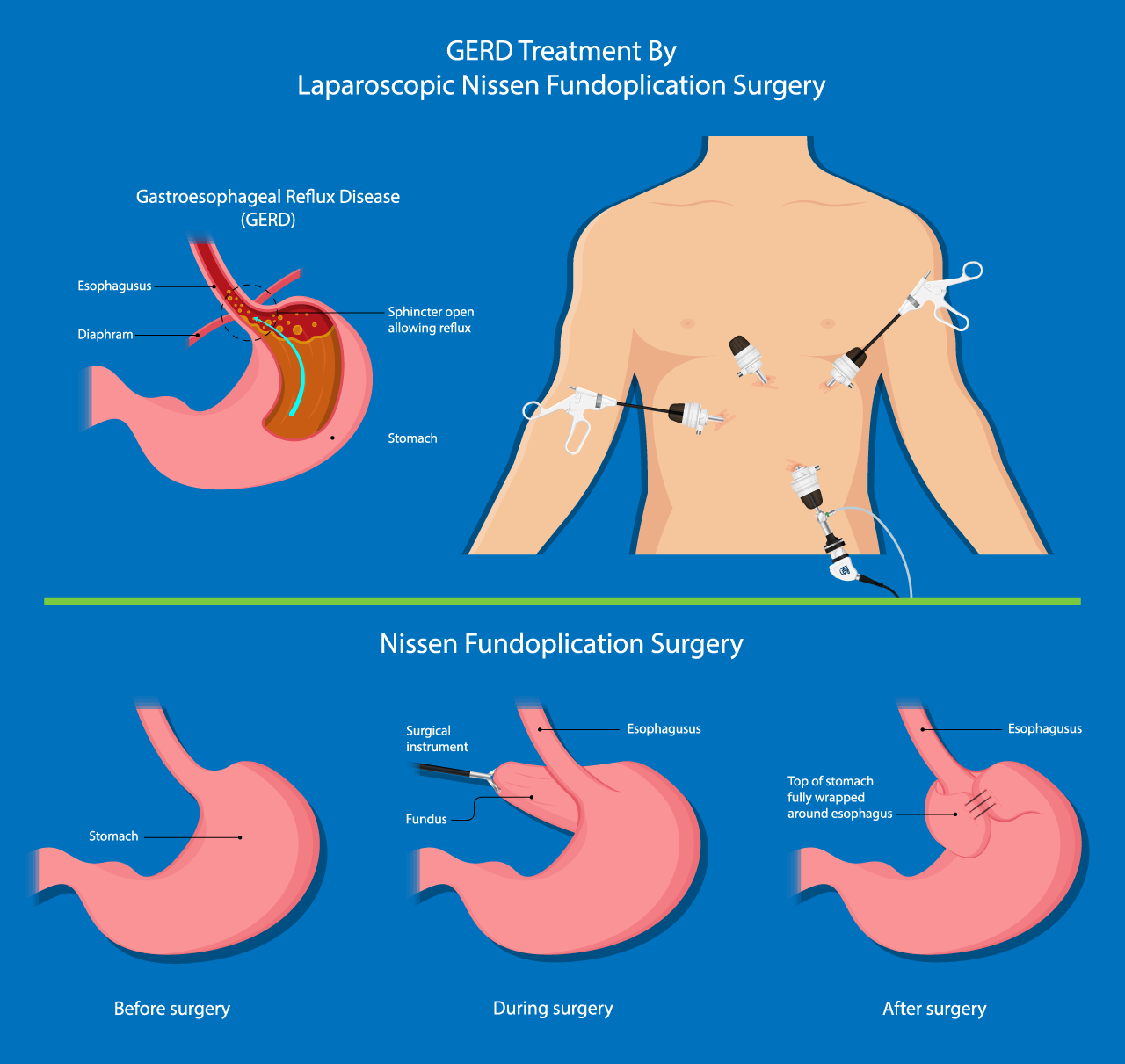
Lap Nissen surgery, like other laparoscopic procedures, relies on a system of small, precisely engineered ports. These are typically cylindrical tubes, ranging in diameter from 5mm to 12mm, that are inserted through small incisions (trocars) in the abdominal wall. These ports serve as conduits for introducing the laparoscopic instruments and the camera into the abdominal cavity, while also maintaining the insufflation pressure. The design of these ports has evolved significantly, with features aimed at minimizing tissue trauma during insertion and maintaining a secure seal to prevent gas leakage. Some advanced port designs even incorporate features to facilitate the passage of larger instruments or specimen retrieval.
The Surgeon’s Eyes and Hands: Advanced Imaging and Instrumentation
The success of Lap Nissen surgery hinges on the surgeon’s ability to see and manipulate tissues with precision, despite the physical distance created by the abdominal wall. This is made possible by a sophisticated suite of imaging and instrumental technologies.
High-Definition Vision: The Laparoscopic Camera System
The “lap” in Lap Nissen surgery refers to the use of a laparoscope, essentially a specialized telescope. Modern laparoscopic cameras are far removed from their early predecessors. They are now high-definition (HD) or even ultra-high-definition (4K) cameras equipped with powerful light sources. These cameras are inserted through one of the ports and provide a magnified, detailed, and brightly illuminated view of the surgical field on video monitors. The ability to zoom in on critical structures, change focal length, and even capture still images or video recordings for documentation and educational purposes represents a significant technological leap.
Furthermore, advanced camera systems often incorporate features such as:
- Chroma Endoscopy: Techniques that enhance the visualization of subtle tissue differences, aiding in the identification of blood vessels, nerves, and pathological changes.
- Stereoscopic Vision (3D Laparoscopy): While not universally adopted, 3D laparoscopic systems provide depth perception, which can be invaluable for complex dissection and intricate maneuvers, mimicking the natural visual experience of open surgery.
- Image Stabilization: Sophisticated software algorithms help to minimize the tremor that can be inherent in hand-held instruments, leading to a steadier and more precise view.
Precision Tools: Laparoscopic Instruments
The instruments used in Lap Nissen surgery are ingeniously designed to translate the surgeon’s hand movements into precise actions within the abdominal cavity. These instruments are long and slender, with articulated tips that allow for a wide range of motion. They are passed through the ports and manipulated by the surgeon from outside the body.
Key instrument categories include:
- Graspers and Forceps: These are used to hold, manipulate, and dissect tissues. They come in various designs, from delicate tissue graspers to more robust dissectors.
- Scissors and Dissectors: Specialized cutting instruments, often with integrated cautery capabilities, allow for precise tissue division.
- Needle Holders: Designed to allow surgeons to suture internally with the same precision as with open surgery.
- Suction and Irrigation Devices: Used to clear the surgical field of blood and fluids and to irrigate tissues.
- Energy Devices: Electrocautery, ultrasonic dissectors, and advanced radiofrequency devices are crucial for cutting tissue, coagulating blood vessels, and minimizing blood loss. The technological advancements in energy devices have allowed for more precise cutting and sealing, reducing thermal spread and protecting surrounding tissues.
The ergonomics of these instruments are also a significant area of technological development. Manufacturers continuously strive to improve the feel, balance, and responsiveness of laparoscopic instruments to reduce surgeon fatigue and enhance dexterity, particularly during lengthy and complex procedures like a Nissen fundoplication.
The Art of Fundoplication: Technological Refinements in Tissue Manipulation
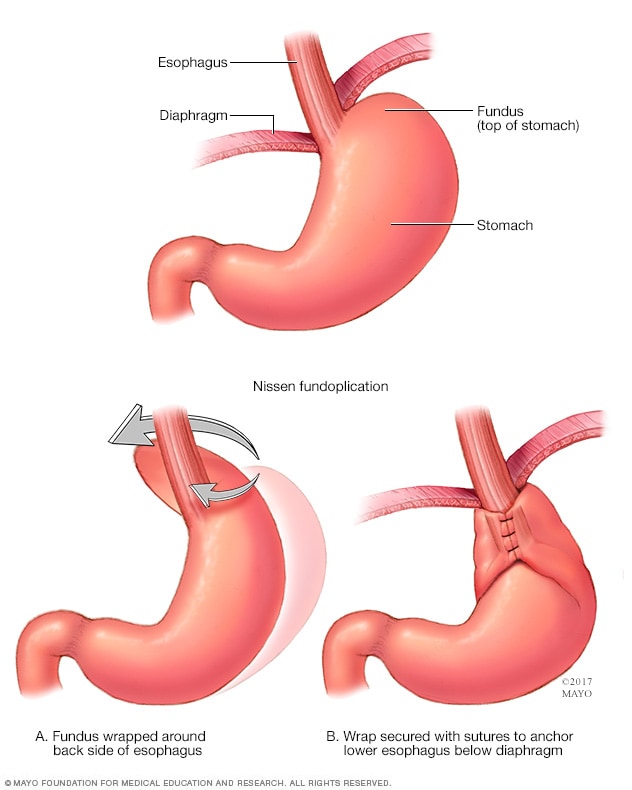
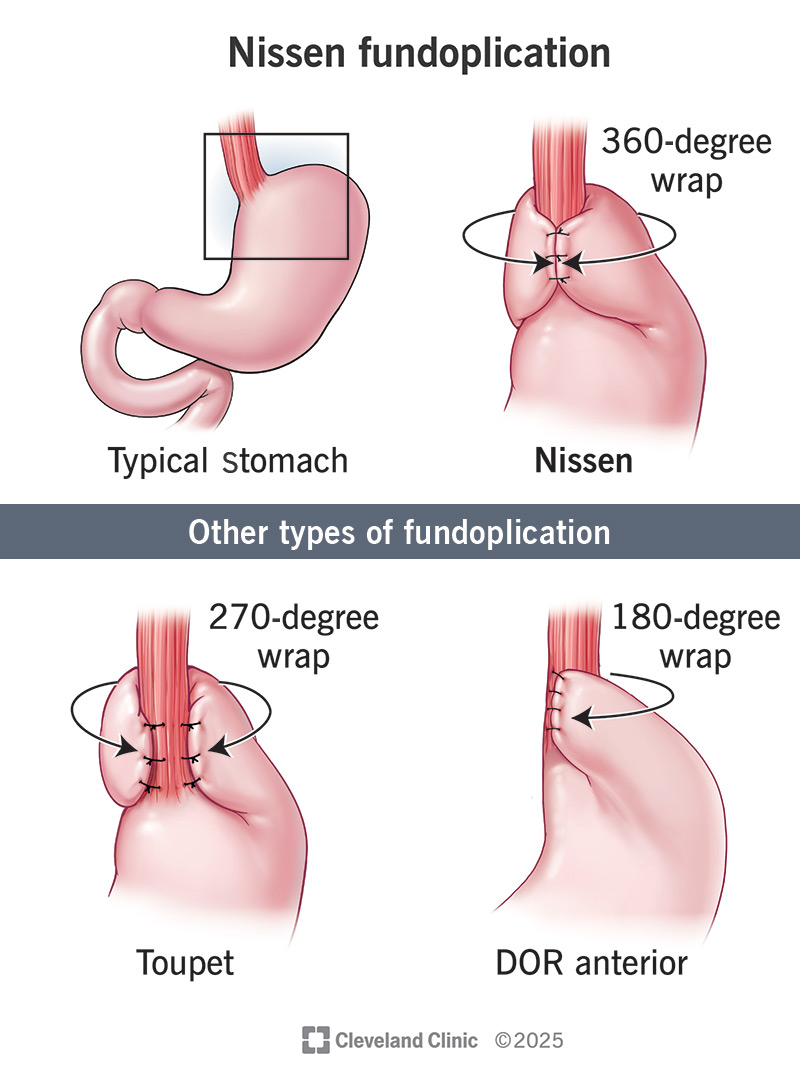
The core of Lap Nissen surgery involves wrapping the upper part of the stomach (the fundus) around the lower esophagus. This process, when performed laparoscopically, requires meticulous tissue handling and precise suturing, all facilitated by advanced technology.
Advanced Suturing Techniques and Devices
Suturing during laparoscopic surgery presents a unique challenge. Traditional hand-sewing is difficult due to the restricted space and the inability to directly feel the tissue. Laparoscopic needle holders are designed to allow surgeons to manipulate needles and tie knots internally. However, significant technological advancements have led to:
- Pre-tied Sutures and Knotless Suturing Devices: These devices simplify the suturing process, reducing operative time and the potential for knot slippage.
- Automated Suturing Devices: For certain applications, automated staplers and ligating devices can be used to create secure anastomoses or to ligate vessels with extreme precision and speed.
- Absorbable and Bio-absorbable Materials: The development of advanced suture materials that dissolve within the body over time eliminates the need for suture removal and reduces the risk of irritation.
Navigation and Robotics: The Future of Laparoscopic Precision
While traditional Lap Nissen surgery is highly effective, the ongoing evolution of surgical technology points towards further enhancements in precision and control.
- Image-Guided Surgery: In more complex cases or for advanced surgeons, augmented reality (AR) or image-guided navigation systems are beginning to emerge. These systems can overlay pre-operative imaging (like CT or MRI scans) onto the live surgical view, providing real-time guidance on critical anatomical structures, tumor margins, or the intended path of dissection. This technology can significantly reduce the risk of iatrogenic injury to adjacent organs.
- Robotic-Assisted Surgery: The integration of robotic platforms (e.g., the da Vinci Surgical System) into laparoscopic procedures represents a significant technological frontier. While a surgeon still controls the robotic arms, the system offers enhanced dexterity, tremor filtration, and a magnified 3D vision. For procedures like Nissen fundoplication, robotic assistance can provide unparalleled precision in grasping delicate tissues, dissecting anatomical planes, and performing intricate suturing, potentially leading to even better outcomes and faster recovery. The robotic console allows surgeons to operate from a seated position, which can reduce fatigue during long procedures.
Conclusion: Technology as the Enabler of Better Patient Outcomes
Lap Nissen surgery stands as a powerful example of how technological innovation can transform invasive procedures into less traumatic, more effective treatments. From the fundamental principles of fiber optics and insufflation to the sophisticated imaging systems, precision instruments, and the emerging frontiers of robotic assistance and image guidance, technology has consistently empowered surgeons to perform complex operations with greater accuracy and minimal disruption to the patient. The continued development and integration of these technologies promise to further refine Lap Nissen surgery, offering even greater benefits in terms of reduced pain, shorter hospital stays, faster return to daily activities, and ultimately, improved long-term relief from the debilitating effects of GERD. The “lap” in Lap Nissen is not just a descriptor; it is a symbol of a technologically driven approach to healing.