
At first glance, a hakama might appear simply as a piece of traditional Japanese clothing – a wide, pleated garment resembling a skirt or baggy trousers worn over a kimono. However, to view it merely as attire is to miss its profound significance. Far more than just fabric and stitching, the hakama is a powerful symbol, a carrier of heritage, and a potent tool for branding identity, both personal and collective, within the rich tapestry of Japanese culture. In the realm of brand strategy, where visual cues and historical resonance forge powerful connections, the hakama stands as a quintessential example of how design, tradition, and symbolism coalesce to create an indelible mark.
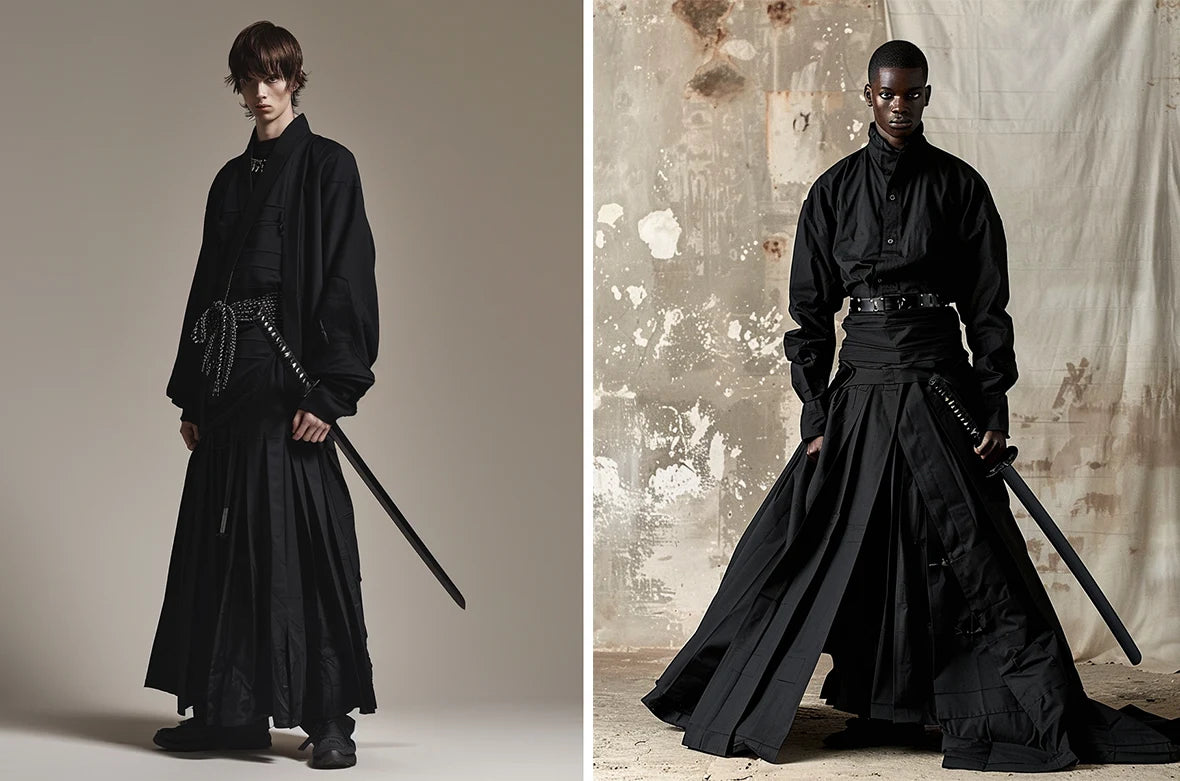
This article delves into the essence of the hakama, not just as an article of clothing, but as a dynamic brand identifier. We will explore its historical trajectory, the intricate design elements that communicate deeply held philosophies, its role in demarcating specific practices and professions, and how it continues to function as a visual cornerstone for personal and corporate identity in both traditional and contemporary contexts. Understanding the hakama is to understand a masterclass in non-verbal communication and cultural brand building.
The Hakama: A Garment of Deep Cultural Significance
The hakama’s journey through Japanese history is a fascinating case study in how a utilitarian item can evolve into a symbol of profound cultural importance, effectively branding its wearers with specific meanings and associations. Its evolution reflects shifts in societal structure, class, and the very identity of the Japanese people.
Origins and Evolution: From Utility to Emblem
The earliest forms of hakama emerged during ancient Japan, designed primarily for horse riders. This original function immediately branded it as an garment of practicality and, by extension, of status, as horseback riding was largely the domain of the aristocracy and later, the samurai class. Its wide legs allowed for ease of movement and protection during equestrian activities, making it an indispensable part of their ensemble.
Over centuries, as Japanese society evolved, so did the hakama. It transitioned from strictly equestrian wear to a more formal and ceremonial garment. Different styles emerged, such as the umanori hakama (horse-riding hakama), which retained a divided, trouser-like form, and the andon bakama (lantern hakama), a skirt-like, undivided version. Each variation, subtle as it might seem to an outsider, carried its own set of connotations, subtly differentiating wearers and their roles. This historical trajectory showcases how a garment’s design and purpose can be strategically adapted to represent evolving identities and societal hierarchies, akin to how modern brands iterate their logos or product lines to remain relevant yet rooted in their core identity.
Beyond Fashion: A Statement of Purpose and Identity
The hakama’s significance transcends mere fashion. It has always been a garment that makes a statement, clearly identifying the wearer’s role, status, and even their intentions. For the samurai, wearing a hakama was not just about compliance with dress codes; it was an integral part of their warrior identity. It concealed foot movements, adding an element of unpredictability in combat training, and visually reinforced their disciplined, formidable brand image.
In the imperial court and among religious practitioners, the hakama symbolized respect, formality, and a connection to ancient traditions. Its distinctive silhouette became a recognizable marker, instantly communicating the wearer’s affiliation with revered institutions or practices. This deliberate use of attire to convey purpose and heritage is a powerful branding strategy, where the garment itself becomes a visual shorthand for a complex set of values and an enduring legacy.
Design and Symbolism: Crafting Identity through Form
The enduring power of the hakama as a brand lies not just in its history, but in its very design. Every pleat, every choice of fabric and color, is imbued with symbolic meaning, transforming the garment into a rich narrative woven in cloth. This meticulous attention to detail and embedded symbolism is a masterclass in brand design, where every element contributes to a cohesive and meaningful identity.
The Seven Pleats: A Philosophy in Fabric
Perhaps the most iconic feature of the hakama are its seven pleats – five in the front and two in the back. These are not merely aesthetic elements; they are profound philosophical statements, embodying the seven virtues of Bushido, the samurai code of conduct:
- Jin (仁): Benevolence, humanity, compassion.
- Gi (義): Rectitude, integrity, justice.
- Rei (礼): Politeness, etiquette, courtesy.
- Chi (智): Wisdom, intellect, sagacity.
- Shin (信): Sincerity, honesty, faithfulness.
- Chū (忠): Loyalty, fidelity.
- Kō (孝): Filial piety, devotion.
By wearing a hakama, practitioners of martial arts and traditional ceremonies are reminded of these foundational principles. The pleats visually represent a commitment to these virtues, effectively branding the wearer as someone who adheres to a disciplined and ethically guided path. This is a sophisticated form of brand communication: the garment itself becomes a mnemonic device, a constant reaffirmation of the identity and values it represents. It’s a silent, yet potent, message to both the wearer and the observer about the “brand” of character and dedication.
Fabric, Color, and Fit: Visual Cues and Brand Messaging
Beyond the pleats, the choices of fabric, color, and fit further refine the hakama’s brand messaging.
- Materials: Silk hakama, with its luxurious drape and sheen, are reserved for the most formal occasions, ceremonial wear, or high-ranking individuals, immediately signaling an elevated status and reverence for tradition. Conversely, durable cotton or polyester blends are favored in martial arts for their practicality and resilience, branding the practitioner as focused on training and discipline rather rather than ostentation.
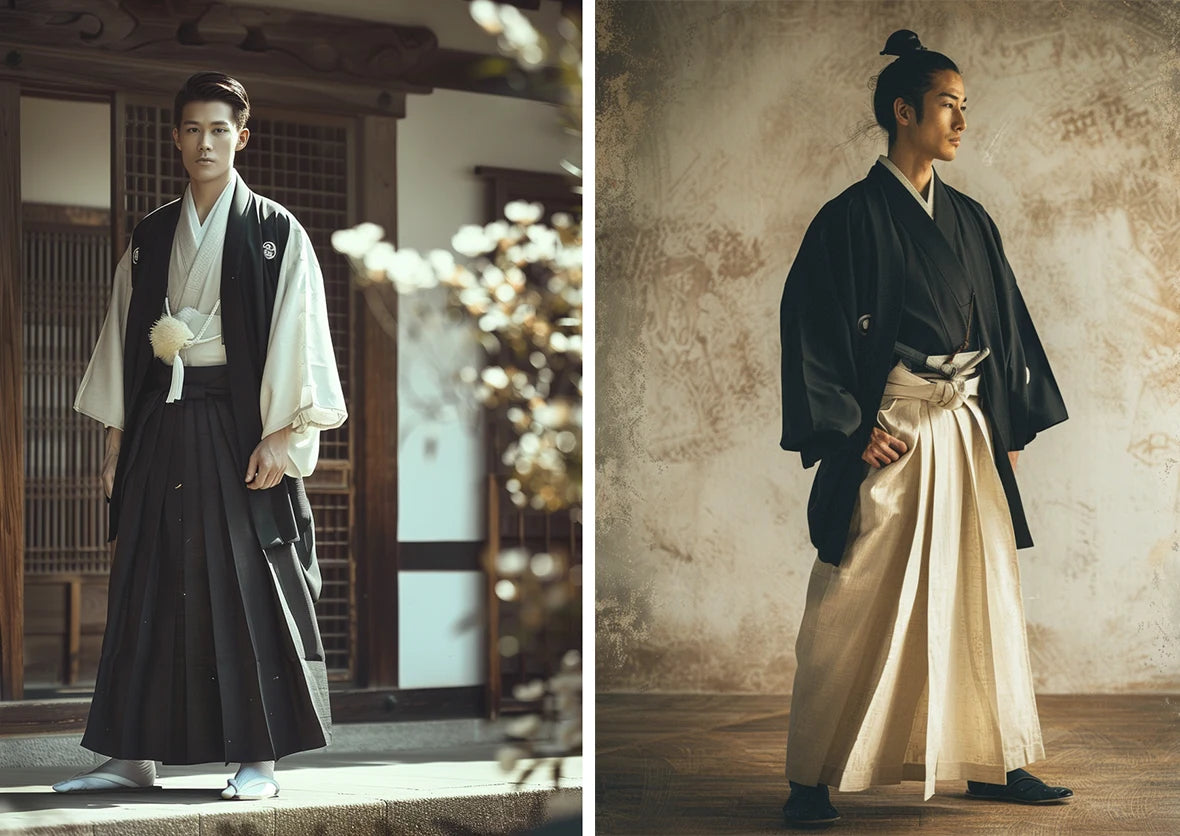
- Colors: Traditional colors like indigo blue, black, white, and various shades of grey are common. Indigo blue, historically derived from natural dyes, is deeply associated with Japanese craftsmanship and tradition. Black often signifies formality, seriousness, and sometimes a higher rank in martial arts. White is frequently seen in Shinto contexts, symbolizing purity. Striped hakama, particularly vertical stripes, were historically worn by samurai to differentiate themselves and convey a sense of power and formality. Each color choice contributes to the overall brand identity, communicating specific attributes or affiliations.
- Fit and Silhouette: The hakama’s distinct, flowing silhouette, despite its varying forms, creates an instantly recognizable “brand mark.” It conceals the body’s contours, emphasizing movement and posture rather than individual physique. This uniform aesthetic reinforces the idea of humility, focus, and adherence to a larger tradition, rather than personal display. It serves as a visual equalizer, uniting wearers under a common “brand” of purpose and discipline.
The Hakama as a Brand Identifier: Tradition in Practice
The hakama’s role as a definitive brand identifier is most evident in its contemporary use across various traditional Japanese practices, where it visually solidifies the identity and ethos of distinct communities and disciplines.
Martial Arts: Embodying Discipline and Heritage
In martial arts such as Kendo, Aikido, Iaido, and Kyudo, the hakama is far more than a uniform; it is an intrinsic part of the practice. For a martial artist, donning the hakama is a ritual that marks a transition from everyday life to the focused, disciplined world of their art. It becomes a physical embodiment of their commitment to their training, their respect for their lineage, and their dedication to the principles taught.
The “brand” of a martial art school is profoundly reinforced by the sight of its members uniformly dressed in hakama. It communicates a sense of seriousness, tradition, and shared purpose. New students often wear a simpler uniform without a hakama, earning the right to wear it as they progress. This journey of earning the hakama itself serves as a powerful personal branding milestone, signifying a deeper integration into the art’s identity and community. It’s a tangible representation of achievement and a commitment to the art’s heritage and brand values.
Shinto Priesthood and Traditional Arts: Sanctity and Authority
Beyond the dojo, the hakama plays a crucial role in religious and performative contexts, solidifying the brand identity of sacred institutions and cultural traditions. Shinto priests (Kannushi) and shrine maidens (Miko) wear specific styles of hakama as essential components of their ritual attire. Here, the hakama symbolizes purity, devotion, and their sacred authority, acting as a clear visual cue of their spiritual role. The distinctive colors—white for priests, and vibrant red for Miko—are potent brand identifiers for Shinto, instantly recognizable and evoking centuries of spiritual tradition.
Similarly, in certain traditional performing arts, such as some forms of Noh theatre or Kagura dance, the hakama is an integral part of the costume. It connects the performers to an unbroken lineage of artistry and ritual, underscoring the authenticity and heritage that define these cultural “brands.” In these contexts, the hakama doesn’t just represent; it is the brand, a visual anchor to the profound depths of Japanese cultural and spiritual identity.
Personal Branding and Corporate Identity through Traditional Attire
While deeply rooted in tradition, the principles of the hakama’s branding power extend into modern interpretations of personal and corporate identity.
Projecting Personal Ethos: The Individual’s Hakama
For individuals, the choice to wear a hakama in appropriate cultural or professional settings is a powerful act of personal branding. It conveys more than just an appreciation for tradition; it projects an image of respect, discipline, and a deep connection to specific cultural values. For example, a scholar specializing in Japanese studies might wear a hakama during a formal lecture or ceremony, not out of obligation, but to embody their immersion in the subject matter and to convey a personal brand built on authenticity and respect for their field.
In a world increasingly seeking genuine connections and rooted identities, the hakama allows an individual to craft a personal brand that stands out. It’s a statement that says, “I am connected to something larger than myself; I embody certain timeless values.” This deliberate projection of ethos through traditional attire is a sophisticated form of non-verbal personal branding, creating an aura of credibility and cultural depth.
Corporate Identity and Cultural Representation
In the corporate world, especially in Japan, traditional attire can be strategically employed to bolster corporate identity and brand messaging. Businesses operating in traditional crafts, hospitality (such as high-end ryokans), or cultural tourism might have their staff wear hakama or hakama-inspired uniforms. This isn’t just about aesthetics; it’s about reinforcing the brand’s commitment to authenticity, heritage, and the high standards associated with Japanese tradition.
A company might use elements of hakama design in its logo or advertising to evoke a sense of timeless quality, craftsmanship, and reliability—core brand values often associated with Japanese products and services. The subtle incorporation of traditional attire can differentiate a brand in a global marketplace, signalling a unique cultural identity and a commitment to values that transcend mere commercialism. It helps build a corporate brand that is perceived as authentic, respectful of its roots, and deeply embedded in a rich cultural narrative.
The Future of the Hakama: Preserving and Evolving a Brand
As societies evolve, so must their cultural expressions. The hakama, as a powerful brand, faces the dual challenge of preserving its deep-rooted significance while remaining relevant in a changing world.
Modern Adaptations and Contemporary Interpretations
Contemporary fashion designers, both in Japan and internationally, are increasingly drawing inspiration from the hakama’s distinctive silhouette and pleating. This involves creating modern garments that echo the hakama’s aesthetic while being adapted for contemporary lifestyles and fashion sensibilities. These adaptations, when executed thoughtfully, can introduce the “brand” of the hakama to new audiences, broadening its appeal without necessarily diluting its essence.
The challenge lies in striking a balance: how to innovate while honoring tradition. For the hakama, this means exploring new fabrics, colors, and cuts that resonate with modern tastes, yet still evoke the sense of grace, dignity, and cultural depth that are intrinsic to its brand. Successful adaptations ensure the hakama remains a living cultural artifact, preventing it from becoming merely a relic of the past.

Safeguarding Cultural Heritage as a Brand Asset
Ultimately, the hakama is a tangible link to intangible cultural heritage—the values, philosophies, and practices that define Japanese identity. Its ongoing use in martial arts, religious ceremonies, and traditional arts serves to safeguard this heritage. Every time a hakama is worn correctly, tied respectfully, and its pleats understood, a piece of this cultural “brand” is preserved and transmitted.
For the institutions and individuals who champion these traditions, the hakama is an invaluable brand asset. It visually communicates their commitment to cultural preservation and ensures that the rich narratives embedded within its folds continue to inspire and educate. Maintaining the hakama’s significance is not just about preserving a garment; it is about preserving a vital part of Japanese identity, a powerful cultural brand that continues to resonate globally as a symbol of discipline, respect, and profound heritage. The question, “what is a hakama?” therefore, is answered by understanding its indelible mark as a timeless brand of cultural significance.
aViewFromTheCave is a participant in the Amazon Services LLC Associates Program, an affiliate advertising program designed to provide a means for sites to earn advertising fees by advertising and linking to Amazon.com. Amazon, the Amazon logo, AmazonSupply, and the AmazonSupply logo are trademarks of Amazon.com, Inc. or its affiliates. As an Amazon Associate we earn affiliate commissions from qualifying purchases.