
The invitation arrives in a premium, heavy-stock envelope, embossed with gold foil and filled with the promise of a celebratory night. But as soon as the initial excitement of seeing a loved one tie the knot fades, a pragmatic financial question inevitably arises: “How much should I spend on the wedding gift?”
In the realm of personal finance, wedding gifting occupies a unique space where social obligation meets budgetary discipline. Unlike a fixed monthly bill or a calculated investment, a wedding gift is a variable expense that can fluctuate wildly based on your relationship with the couple, your current financial standing, and even the local economy. Navigating this landscape requires more than just generosity; it requires a strategic approach to financial etiquette that respects both the couple and your own bottom line.

The Foundations of Wedding Gift Budgeting
Determining a gift amount shouldn’t be a shot in the dark. It should be a deliberate decision based on several core financial principles. While social media and tradition might suggest “rules,” your personal balance sheet is the most important factor.
Assessing Your Personal Financial Health
Before looking at registries or withdrawal limits, you must look at your own discretionary income. A wedding gift is a luxury expense, meaning it should never come at the cost of your emergency fund, high-interest debt payments, or essential bills.
A professional approach to this involves looking at your “celebration budget” for the quarter. If you have three weddings in one summer, your per-gift amount might naturally be lower than if you were attending only one marquee event for the year. The primary rule of personal finance applies here: never go into debt to fund a social expectation.
The Myth of “Covering Your Plate”
One of the most persistent myths in wedding etiquette is the idea that your gift should equal the approximate cost of your meal at the reception. From a financial planning perspective, this is flawed logic. Guests are rarely privy to the exact per-head cost of a wedding, which can range from $50 at a casual backyard gathering to $500 at a high-end metropolitan ballroom.
Basing your gift on the couple’s spending habits is an unstable metric. If a couple chooses an extravagant venue, they are doing so because it fits their budget and vision; they are not placing a mandatory “admission fee” on their guests. Instead of trying to calculate the price of the filet mignon, base your gift on your own financial capacity and your relationship with the couple.
Factoring in Total Cost of Attendance
A wedding gift does not exist in a vacuum. For many, the “cost of attendance” includes flights, hotel stays, attire, and even child care. In the world of personal finance, we call these “associated costs.”
If you are flying across the country and spending $1,000 on lodging and transportation, it is financially acceptable—and often expected—that your physical gift amount may be more modest. The couple is likely aware of the financial burden of travel, and your “presence” truly is a significant part of the contribution. Conversely, if the wedding is five minutes from your home and requires zero travel expenses, you may have more room in your budget to increase the gift amount.
Determinants of the Gift Amount: A Tiered Approach
Once you have established your baseline budget, you can apply a tiered strategy to determine the final number. This helps remove the emotional guesswork and ensures consistency in your financial outgoings.
The Relationship Spectrum: Family, Close Friends, and Acquaintances
The most significant variable in the gift-amount equation is your proximity to the couple.
- The Inner Circle ($150 – $500+): For siblings, best friends, or very close relatives, the gift is often a significant financial gesture. This tier usually reflects long-term emotional investment. If your budget allows, this is where you provide the maximum amount you’ve set aside.
- The Social Circle ($100 – $150): This is the “standard” range for most average weddings. This applies to coworkers you are friendly with, cousins you see occasionally, or friends from your broader social group.
- The Distant Circle ($50 – $100): For acquaintances or “plus-one” situations where you don’t know the couple well, a gift at the lower end of the spectrum is perfectly acceptable. It acknowledges the occasion without overextending your personal finances.
The Impact of Geographic Location and Venue Style
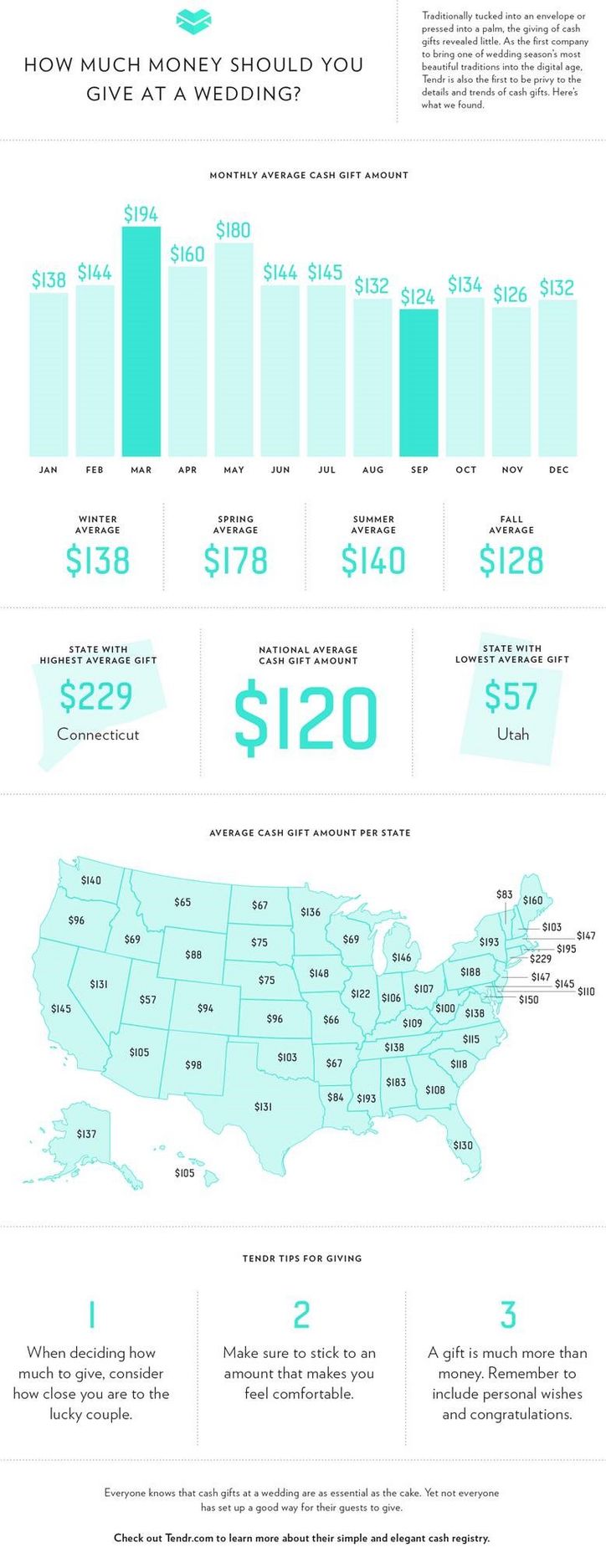
Personal finance is always relative to the cost of living. A $100 gift in a small rural town carries different weight than a $100 gift in New York City or London. When the wedding is held in a high-cost-of-living (HCOL) area, gift amounts tend to skew higher to reflect the local economy. While you shouldn’t feel pressured to match local inflation if your own income doesn’t support it, being aware of these regional norms can help you avoid social friction.
Plus-Ones and Group Gifting Strategies
If you are attending a wedding with a partner or a guest, the gift should generally be higher than if you were attending solo. A common financial strategy is to increase the solo gift amount by 50% to 75% when attending as a couple.

Alternatively, if a group of friends is attending, “group gifting” can be a powerful way to provide a high-value item from the registry without any single person breaking the bank. By pooling $50 each, five friends can purchase a $250 high-end kitchen appliance that the couple will use for years, providing more utility than five separate $50 trinkets.
Modern Financial Trends in Wedding Gifting
As technology and social norms evolve, the way we transfer wealth during weddings is changing. Understanding these trends is key to being a financially savvy guest.
The Rise of Cash Funds vs. Traditional Registries
In previous decades, registries were filled with china and linens because couples were moving into their first homes together. Today, many couples already have established households and instead prioritize “Life Milestone” funds.
From a financial perspective, cash is the most efficient gift. It allows the couple to allocate funds where they are needed most—whether that’s a down payment on a house, an emergency fund, or an investment portfolio. Platforms like Honeyfund or Zola have normalized “Honeymoon Funds,” but guests should be aware that some platforms take a percentage of the transaction. If you want 100% of your money to reach the couple, a well-written check or a direct bank transfer (if appropriate) remains the most fiscally sound method.
Navigating Inflation and Economic Shifts
Inflation affects everything, including the “market rate” for wedding gifts. The $100 check that was standard in 2015 does not have the same purchasing power in 2024. If your salary has kept pace with inflation, consider adjusting your baseline gift amount by 10-20% to account for the rising cost of goods and services. However, if your personal economy is currently under strain due to high interest rates or cost-of-living increases, it is okay to stick to your established budget. A gift is a gesture of goodwill, not a financial transaction that must be adjusted for CPI (Consumer Price Index).
When Your Presence is the Present (Destination Weddings)
The “Destination Wedding” creates a unique financial dilemma. When a couple asks guests to fly to a remote island or an international city, the financial “gift” is often the thousands of dollars spent on the trip itself. In these instances, the gift amount is traditionally lower, or in some cases, omitted entirely. Many couples hosting destination weddings will explicitly state “no gifts, please,” acknowledging the significant financial investment their guests are making just to be there.
Strategic Financial Planning for a “Wedding Season”
If you are at an age where you are attending multiple weddings a year, these expenses can become a significant drain on your annual savings. Professional financial planning involves anticipating these costs before the invitations even arrive.
Creating a Sinking Fund for Celebrations
In personal finance, a “sinking fund” is a strategic way to save for a specific, non-monthly expense. By setting aside a small amount—perhaps $50 to $100—each month into a dedicated “Celebrations” high-yield savings account, you can build a buffer. When wedding season arrives, you aren’t scrambling to find room in your monthly budget; the money is already there, earning interest and waiting to be used.
Leveraging Credit Card Rewards and Cash-Back Portals
If you are purchasing gifts from a registry, you can optimize the expenditure by using the right financial tools. Purchasing through cash-back portals (like Rakuten) or using a credit card with a high rewards rate for department stores can effectively “discount” the gift by 2% to 10%. This allows you to give a gift with a high face value while spending less of your actual capital. Always ensure you pay off the credit card balance immediately to avoid interest charges, which would negate any savings.
The Etiquette of Last-Minute Financial Constraints
Life is unpredictable. You may have accepted an invitation months ago, only to face a sudden job loss or medical expense before the wedding. In these cases, the “gift amount” should be the very last thing you worry about.
Financial transparency (within reason) is better than financial ruin. If you cannot afford a cash gift, a heartfelt, handwritten letter or a small, sentimental item can be far more meaningful than a check you can’t afford to write. True friends will value your presence and your support over the dollar amount on a gift card.
Conclusion
Determining a good wedding gift amount is a balancing act between social grace and financial responsibility. While the “standard” of $100 to $150 serves as a helpful benchmark, it is not a legal requirement. By assessing your personal finances, considering your relationship with the couple, and planning ahead with sinking funds and rewards strategies, you can celebrate your loved ones’ milestones without compromising your own financial future.
Ultimately, the best gift you can give is one that comes from a place of genuine celebration, delivered with a clear conscience and a healthy bank account.
aViewFromTheCave is a participant in the Amazon Services LLC Associates Program, an affiliate advertising program designed to provide a means for sites to earn advertising fees by advertising and linking to Amazon.com. Amazon, the Amazon logo, AmazonSupply, and the AmazonSupply logo are trademarks of Amazon.com, Inc. or its affiliates. As an Amazon Associate we earn affiliate commissions from qualifying purchases.