
The Architect of Interactive Experiences
The phrase “game designer” conjures images of passionate individuals crafting worlds, weaving narratives, and dreaming up challenges that captivate millions. But what does this role truly entail? Beyond the surface-level perception of playing video games all day, the reality of game design is a complex, multifaceted discipline that blends creativity with technical understanding, psychological insight, and a deep appreciation for player experience. A game designer is, in essence, the architect of interactive experiences, responsible for conceptualizing, defining, and overseeing the creation of a game from its initial spark of an idea to its final polished form. They are the custodians of fun, the engineers of engagement, and the storytellers who invite players into new realities.

The core responsibility of a game designer lies in translating abstract concepts into tangible, playable mechanics and systems. This involves a profound understanding of player psychology – what motivates them, what challenges them, and what ultimately makes an experience rewarding. They must consider everything from the fundamental rules of the game to the minutiae of how a player interacts with the interface, how the narrative unfolds, and how the overall aesthetic contributes to the player’s immersion. In the realm of technology, this role has evolved dramatically, moving from the rudimentary logic gates of early arcade games to the sophisticated engines and expansive virtual worlds of modern AAA titles and the accessible platforms of indie development.
The Evolving Landscape of Game Design
The evolution of technology has been inextricably linked to the evolution of game design. Early pioneers worked with severe limitations, pushing the boundaries of what was possible with primitive hardware. Today, game designers have access to incredibly powerful tools and platforms, allowing for unprecedented levels of complexity and fidelity.
From Pixels to Photorealism: Technological Leaps
In the nascent days of video games, designers were often also the programmers and artists. Their canvas was limited to blocky pixels and simple sound effects. Think of Nolan Bushnell and Atari, where the design of Pong was an elegant solution to technological constraints, focusing on core mechanics that were immediately understandable and addictive. As technology advanced, so did the scope of design. The introduction of 3D graphics in games like Virtua Fighter and Super Mario 64 demanded designers to think in three dimensions, conceptualizing level layouts, camera perspectives, and character movement in a way that was previously impossible.
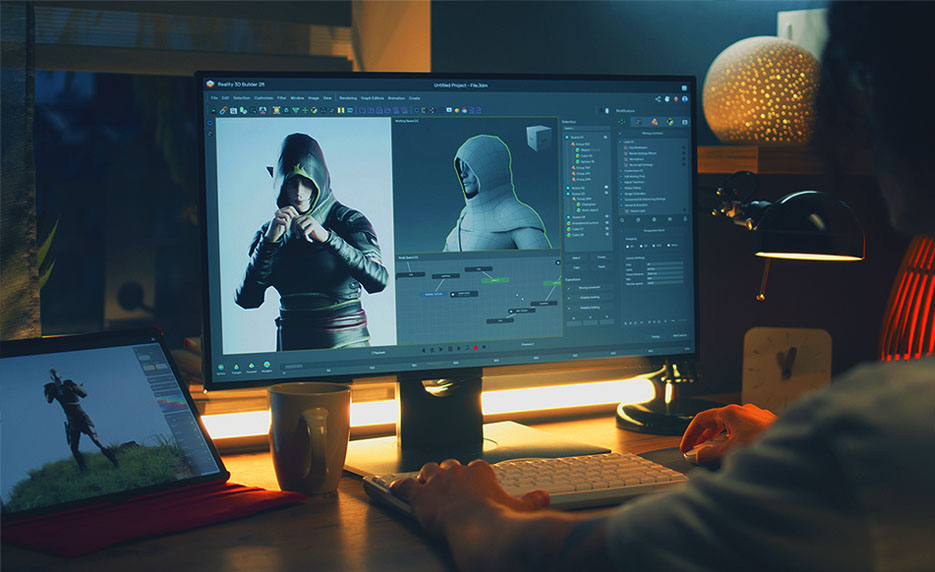
The advent of powerful game engines like Unity and Unreal Engine has democratized game development and simultaneously raised the bar for what is expected in terms of visual fidelity and interactive depth. These engines provide designers with a robust toolkit for prototyping, scripting, and iterating on game mechanics. AI, a rapidly advancing field within technology, is also playing an increasingly significant role. Designers are now leveraging AI for more sophisticated enemy behaviors, dynamic storytelling, procedural content generation, and even to assist in the creative process itself, generating placeholder assets or suggesting design elements. The ability to integrate advanced AI, complex physics simulations, and stunning visual effects means designers must not only be creative but also possess a working knowledge of how these technologies function and how they can be best utilized to enhance the player experience. This constant technological evolution necessitates continuous learning and adaptation from game designers.
The Digital Canvas: Software and Tools
The game designer’s toolkit is now heavily reliant on sophisticated software. Beyond the game engines themselves, a multitude of specialized applications are used throughout the design process. Level design tools allow for the rapid prototyping and iteration of game environments, ensuring pacing, challenge, and flow. Narrative design software helps in structuring storylines, dialogue trees, and character arcs. Tools for creating user interface (UI) and user experience (UX) are critical for ensuring that player interaction is intuitive and enjoyable.
Furthermore, prototyping tools, whether they are built into game engines or standalone applications, are invaluable. These allow designers to quickly test out core mechanics and gameplay loops without needing to commit to full asset creation. This iterative process of prototyping, testing, and refining is central to effective game design. Designers might use visual scripting languages to define character behaviors or gameplay logic, or they might collaborate with programmers who translate their more complex systems into code. The accessibility of these tools, combined with the vast online resources and communities for learning, has made it easier than ever for aspiring game designers to get started, but it also means the competition and the expectations for polished, innovative experiences are higher.
Bridging the Gap: From Concept to Code
A fundamental aspect of being a game designer in the tech sphere is the ability to effectively communicate ideas to a development team. This often involves translating abstract design concepts into concrete specifications that programmers, artists, and audio engineers can understand and implement. This communication bridges the gap between the creative vision and the technical execution.
Design documents, flowcharts, wireframes, and mockups are all crucial tools in this process. A game designer must be able to articulate the intended player experience, the core mechanics, the progression systems, and the overall game flow in a clear and concise manner. This requires not just imagination but also a degree of analytical thinking and the ability to break down complex systems into manageable components. The iterative nature of game development means that designers are constantly collaborating with technical teams, providing feedback on implemented features, and adjusting designs based on technical constraints or playtesting results. Understanding the basics of programming logic or the capabilities of different game engines can greatly enhance a designer’s effectiveness, enabling them to propose solutions that are both innovative and technically feasible. This collaborative dance between creative intent and technical implementation is what ultimately brings a game to life.
The Player-Centric Approach in a Tech-Driven World
At its heart, game design is about creating experiences that resonate with players. In the context of technology, this means leveraging digital tools and platforms to craft compelling interactions that evoke emotions, challenge intellects, and provide entertainment. A successful game designer understands that technology is not an end in itself, but rather a means to facilitate engaging and memorable gameplay.
Understanding Player Psychology and Motivation
The most effective game designers are deeply attuned to human psychology. They understand what makes people tick, what motivates them to continue playing, and what causes them to disengage. This goes beyond simple reward loops; it delves into the innate human desires for mastery, autonomy, social connection, and discovery.
The Science of Engagement: Why Players Play
Why do millions of people spend hours in virtual worlds? The answer lies in a complex interplay of psychological drivers. Game designers tap into these by creating systems that offer clear goals, provide meaningful feedback on progress, and present challenges that are neither too easy nor too difficult. The concept of “flow,” as described by psychologist Mihaly Csikszentmihalyi, is a key target for game designers. Flow occurs when a person is fully immersed in an activity, their skills perfectly matched to the demands of the task. This state of deep engagement is what designers strive to achieve through careful pacing, intuitive controls, and well-designed progression systems.
Furthermore, the drive for achievement is a powerful motivator. Designers craft systems of progression, unlockables, and leaderboards that appeal to our desire to overcome obstacles and demonstrate our competence. Social connection also plays a vital role, especially in multiplayer games. Designers create opportunities for cooperation, competition, and shared experiences, fostering communities around their games. Even the simple act of exploration and discovery, the innate human curiosity, is a powerful draw that designers can leverage by building worlds filled with secrets, lore, and unexpected events.
Designing for Different Player Types

Not all players are the same. Game designers must consider the diverse motivations and playstyles of their target audience. Are they looking for a story-driven single-player experience, a competitive multiplayer showdown, a casual puzzle game to pass the time, or a deep, emergent sandbox to explore?
Understanding player archetypes – such as the Achiever, the Explorer, the Socializer, and the Killer, as popularized by Bartle’s taxonomy – helps designers tailor their creations. For Achievers, designers might focus on robust achievement systems, skill trees, and clear metrics of progress. Explorers will appreciate detailed worlds with hidden lore, secrets to uncover, and emergent gameplay possibilities. Socializers thrive in games that facilitate communication, cooperation, and community building, while Killers might be drawn to competitive combat and strategic dominance. Modern game design often aims to cater to multiple player types within a single game, offering a variety of activities and pathways to engagement, thereby maximizing the game’s appeal and longevity.
The Art of Balancing: Mechanics, Economy, and Difficulty
A core pillar of game design is achieving a delicate balance within the game’s systems. This is particularly crucial in the tech-driven world where complex interconnected mechanics can easily lead to unintended consequences.
Crafting Engaging Mechanics: The Rules of the Game
Game mechanics are the fundamental rules that govern how a player interacts with the game world and how the game world responds. This can range from the simple act of jumping in a platformer to complex combat systems in an RPG or the intricate economic simulations in a strategy game. Designers must ensure that these mechanics are intuitive, responsive, and fun to use.
The process of designing mechanics often involves extensive prototyping and playtesting. A mechanic that sounds great on paper might not feel right in practice. Designers experiment with different values, timings, and interactions to find the optimal combination. The concept of “game feel” is paramount here – the tactile sensation of interacting with the game, the weight of actions, the responsiveness of controls. A well-designed mechanic feels satisfying and contributes to the overall enjoyment of the game. For example, the satisfying “thwack” of a well-aimed shot in a shooter, or the fluid movement of a character in an action-adventure game, are direct results of meticulous mechanical design.
The Digital Economy: Virtual Currencies and Progression
Many modern games, especially those that are free-to-play or online, incorporate intricate in-game economies. These economies involve virtual currencies, resources, crafting systems, and often monetization strategies. Designing a fair, engaging, and sustainable in-game economy is a significant challenge.
The goal is to create a sense of progression and reward without making the game feel like a grind or encouraging exploitative behavior. Designers must consider how players acquire resources, how they spend them, and how these systems interact with the core gameplay. A well-designed economy can enhance player engagement by providing clear goals and pathways for improvement. However, a poorly designed one can lead to frustration, perceived unfairness, and ultimately, player churn. This is where technological understanding becomes crucial, as designers need to consider the implications of data analytics and player behavior in shaping these economic systems.
The Challenge Curve: Keeping Players Hooked
The difficulty of a game is a critical element that designers must carefully manage. Too easy, and players become bored; too hard, and they become frustrated and quit. The ideal is a “challenge curve” that gradually increases as the player progresses, introducing new mechanics and complexities at a pace that allows players to learn and adapt.
This involves understanding the player’s skill development over time. Designers might implement difficulty settings, dynamic difficulty adjustment systems that adapt to player performance, or carefully crafted sequences of challenges that gradually build upon learned skills. The goal is to create a sense of accomplishment and mastery, where players feel a genuine sense of achievement when they overcome difficult obstacles. This is a constant balancing act, informed by playtesting data and an understanding of how players learn and react to increasing pressure.
The Iterative Process: From Concept to Release and Beyond
Game design is rarely a linear process. It is a dynamic, iterative cycle of creation, testing, and refinement. The technological landscape further emphasizes this, with continuous updates and expansions becoming the norm.
Prototyping and Playtesting: The Foundation of Iteration
Before any significant development begins, game designers rely heavily on prototyping. This involves creating simplified versions of core mechanics or gameplay loops to test their viability and fun factor. Prototypes can be anything from paper-and-pencil sketches to simple interactive digital mockups.
The purpose of prototyping is to fail fast and cheap. It’s far easier and more cost-effective to identify flaws in a basic prototype than in a fully developed game. Once a prototype shows promise, it moves into playtesting. Playtesting involves having real people play the game and observing their behavior, collecting feedback, and identifying areas for improvement. This feedback is invaluable for refining mechanics, UI, pacing, and overall player experience. This iterative loop of “build, test, refine” is the engine that drives successful game development.
The Role of Data and Analytics in Modern Design
In today’s tech-driven gaming industry, data and analytics play an increasingly significant role in game design. Developers collect vast amounts of data on player behavior – how long players spend on certain levels, where they struggle, what features they use most, and where they abandon the game.
This data provides objective insights into how players are actually interacting with the game, which can often reveal blind spots or unexpected trends that might not be apparent through traditional playtesting alone. Designers can use this information to make informed decisions about balancing, content updates, and future design directions. For example, if analytics show that a significant portion of players are dropping off at a particular point, designers can investigate that section of the game to identify the cause of the difficulty or disengagement and implement changes. This data-driven approach allows for a more scientific and precise refinement of the player experience.
Post-Launch Iteration and Live Operations
The release of a game is not the end of the design process; for many modern games, it is just the beginning. Live operations, or “live ops,” involve the ongoing support, maintenance, and content updates for a game after its initial launch.
Game designers are integral to live ops, working to keep players engaged through new content, events, bug fixes, and balance adjustments. This requires a continuous feedback loop with the player base, monitoring community sentiment, and using data analytics to inform design decisions for future updates. The ability to adapt and evolve a game post-launch is a testament to the iterative nature of modern game design and its deep integration with technological infrastructure that supports continuous delivery and updates. This ensures that games remain fresh, relevant, and enjoyable for their player communities long after they are first released.
aViewFromTheCave is a participant in the Amazon Services LLC Associates Program, an affiliate advertising program designed to provide a means for sites to earn advertising fees by advertising and linking to Amazon.com. Amazon, the Amazon logo, AmazonSupply, and the AmazonSupply logo are trademarks of Amazon.com, Inc. or its affiliates. As an Amazon Associate we earn affiliate commissions from qualifying purchases.