
In the rapidly evolving landscape of technology, we often focus on the macro-level achievements: the speed of a processor, the resolution of a screen, or the capacity of a solid-state drive. However, the foundations of these advancements rest upon the meticulous measurement of the infinitesimal. At the heart of precision engineering and material science lies a specific unit of force known as the dyne.
While the international scientific community largely pivoted to the SI (International System of Units) and the Newton in the mid-20th century, the dyne remains a critical unit in specialized tech sectors. From the manufacturing of semiconductor wafers to the development of hydrophobic smartphone coatings, understanding what a dyne is—and why it matters—is essential for anyone looking to understand the “under the hood” mechanics of modern hardware.
The Physics of the Dyne: Understanding the Fundamentals of Force
To understand the dyne, we must first look at the history of measurement. The dyne originated within the Centimeter-Gram-Second (CGS) system of units. Introduced in the 19th century, this system was designed to provide a framework for scientific calculation before the modern Newton-based system became the global standard.
Defining the Centimeter-Gram-Second (CGS) System
The dyne is formally defined as the amount of force required to accelerate a mass of one gram at a rate of one centimeter per second squared ($1text{ g}cdottext{cm/s}^2$). In the hierarchy of physics, it represents a “small-scale” force. Because the tech industry is increasingly obsessed with miniaturization, the CGS system—and the dyne specifically—often provides a more granular and intuitive scale for engineers working at the micro-level than the larger SI units.
Dyne vs. Newton: Why Scale Matters in Tech
One Newton is equivalent to 100,000 dynes. In heavy industries like automotive or aerospace engineering, the Newton is the preferred unit because the forces involved are massive. However, in the world of micro-electronics, measuring force in Newtons would be akin to measuring the thickness of a human hair in kilometers; the numbers would be too small to be practical.
By using dynes, tech researchers can work with whole numbers when measuring the surface tension of a liquid or the adhesion of a micro-thin film. This precision is not just a matter of mathematical convenience; it is a requirement for the reliability of high-end consumer electronics.
The Dyne in Micro-Technology and Nanotechnology
As technology moves toward the “nano” scale, the behavior of materials changes. At this level, gravity becomes less significant, while surface forces—often measured in dynes—become the dominant players. This shift is where the dyne finds its most modern and sophisticated applications.
Surface Tension and Material Science
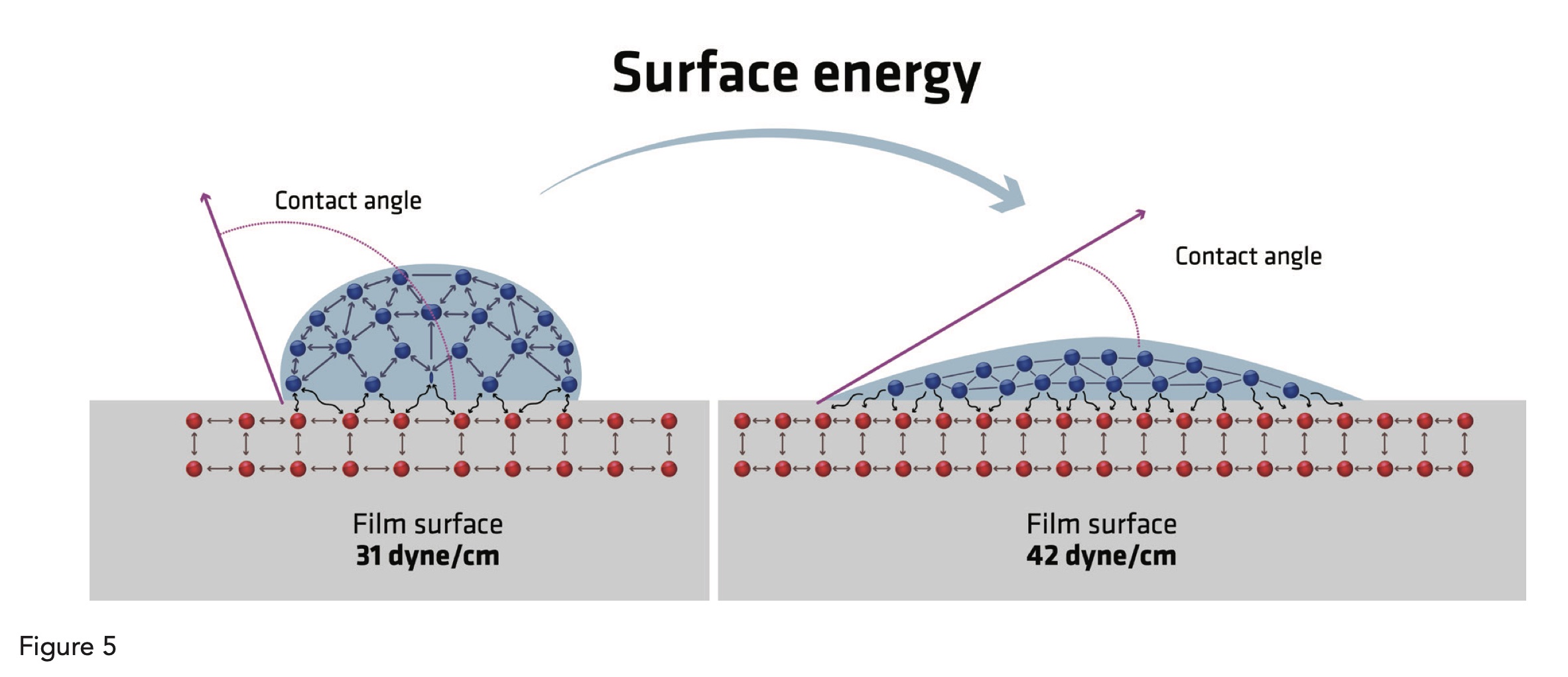
If you have ever marveled at how water beads up and rolls off a modern smartphone screen, you have seen dyne measurements in action. Manufacturers use “dyne levels” to measure the surface energy of materials. For a coating to be effectively “oleophobic” (oil-repelling) or “hydrophobic” (water-repelling), the surface energy of the glass must be precisely calibrated.
Engineers use dyne pens—specialized markers filled with fluids of known surface tensions—to test these materials. If the fluid beads up, the surface energy is lower than the dyne level of the fluid. This testing ensures that the fingerprint-resistant coatings on our devices are uniform and durable. Without the ability to quantify these forces at the dyne level, the mass production of high-durability touchscreens would be nearly impossible.
Microfluidics and Lab-on-a-Chip Innovations
One of the most exciting frontiers in medical tech is microfluidics, often referred to as “Lab-on-a-Chip” technology. These devices use tiny channels to move microscopic amounts of fluid for rapid medical testing. At this scale, the force required to move a droplet is measured in dynes.
Understanding the dyne-level interactions between the fluid and the channel walls allows tech companies to design sensors that can detect diseases from a single drop of blood. By manipulating surface tension—measured in dynes per centimeter—engineers can create “pumps” that have no moving parts, relying instead on the physics of force at the micro-scale.

Practical Applications in Modern Hardware Manufacturing
Beyond the theoretical and the microscopic, the dyne plays a “blue-collar” role in the factories where our favorite gadgets are assembled. It is a vital metric for quality control and structural integrity.
Semiconductor Fabrication and Precision Engineering
The production of silicon chips involves layering materials at an atomic level. Each layer must adhere perfectly to the one beneath it. If the surface energy is off by even a few dynes, the layers may delaminate, leading to chip failure.
In cleanrooms across the globe, automated systems monitor the “dyne level” of silicon wafers before chemical vapor deposition (CVD) or lithography occurs. This ensures that the intricate pathways of a CPU or GPU—which may be only a few nanometers wide—remain stable and functional over the lifespan of the device. In this context, the dyne is a guardian of hardware longevity.
Adhesion Testing and Consumer Electronics
Modern hardware design has largely moved away from screws and toward high-performance adhesives to create thinner, lighter devices. Whether it is a tablet battery or a laptop display, these components are held together by “force.”
Tech companies use dyne-level testing to determine the “wettability” of a surface before applying industrial-strength glues. If a surface has been contaminated by microscopic oils or dust, its dyne level changes. By verifying the dyne count, manufacturers can ensure that the adhesive will bond correctly, preventing the “screen peeling” or “battery swelling” issues that plagued earlier generations of hardware.
The Future of Precision: Beyond the Dyne
As we look toward the future of technology, the way we measure force is being transformed by software and artificial intelligence. While the physical unit remains constant, our ability to simulate and manipulate these forces is entering a new era.
AI-Driven Simulation and Force Modeling
The next generation of tech hardware is being designed in “digital twins”—virtual environments where every physical property is simulated. AI algorithms are now capable of predicting dyne-level interactions between new composite materials before a single physical prototype is built.
By feeding data about molecular structures into AI models, engineers can determine the ideal dyne level for a new foldable screen or a flexible circuit board. This accelerates the R&D cycle, allowing tech firms to bring more durable and innovative products to market faster than ever before.
Quantum Mechanics and Sub-Atomic Forces
We are approaching a point where even the dyne might be “too large” for certain applications. As we delve into quantum computing and sub-atomic engineering, we are beginning to deal with forces that make the dyne look gargantuan. However, the transition from the dyne to even smaller measurements like the femto-Newton is currently being bridged by the same principles of precision that the dyne established.
For the foreseeable future, the dyne will remain the gold standard for surface-level tech. It represents the bridge between the world we can see and the invisible world of molecular force that makes our digital lives possible.

Conclusion: The Invisible Force of Progress
The dyne may not be a household name like the Gigahertz or the Terabyte, but it is no less fundamental to the tech ecosystem. It is the unit of force that defines the boundaries of material science, the reliability of our hardware, and the future of medical diagnostics.
In an industry that often prioritizes “bigger, faster, and more,” the dyne serves as a reminder that true innovation often happens at the smallest possible scale. By mastering the dyne, tech companies can manipulate the very surface of reality, creating materials that repel water, chips that process trillions of calculations, and devices that fit the power of a supercomputer into the palm of a hand. As we continue to push the limits of what is possible, the humble dyne will remain a critical tool in the engineer’s arsenal, proving that even the smallest force can move the world of technology forward.
aViewFromTheCave is a participant in the Amazon Services LLC Associates Program, an affiliate advertising program designed to provide a means for sites to earn advertising fees by advertising and linking to Amazon.com. Amazon, the Amazon logo, AmazonSupply, and the AmazonSupply logo are trademarks of Amazon.com, Inc. or its affiliates. As an Amazon Associate we earn affiliate commissions from qualifying purchases.