
In an increasingly interconnected and information-saturated world, the ability to establish trust and authority is paramount for any brand, be it personal or corporate. Amidst the cacophony of voices vying for attention, a meticulously crafted credibility statement emerges as a potent tool. It’s more than just an introduction; it’s a strategic declaration designed to assure your audience that you possess the expertise, experience, and integrity necessary to deliver value. Within the expansive realm of brand strategy, a credibility statement serves as a foundational pillar, validating your claims, reinforcing your identity, and ultimately, building the essential bridge of trust with your target market.

This article delves into the essence of a credibility statement, exploring why it’s indispensable for modern branding, how to construct one effectively, and where its strategic deployment can yield the greatest impact for individuals and organizations alike.
The Cornerstone of Trust: Defining a Credibility Statement
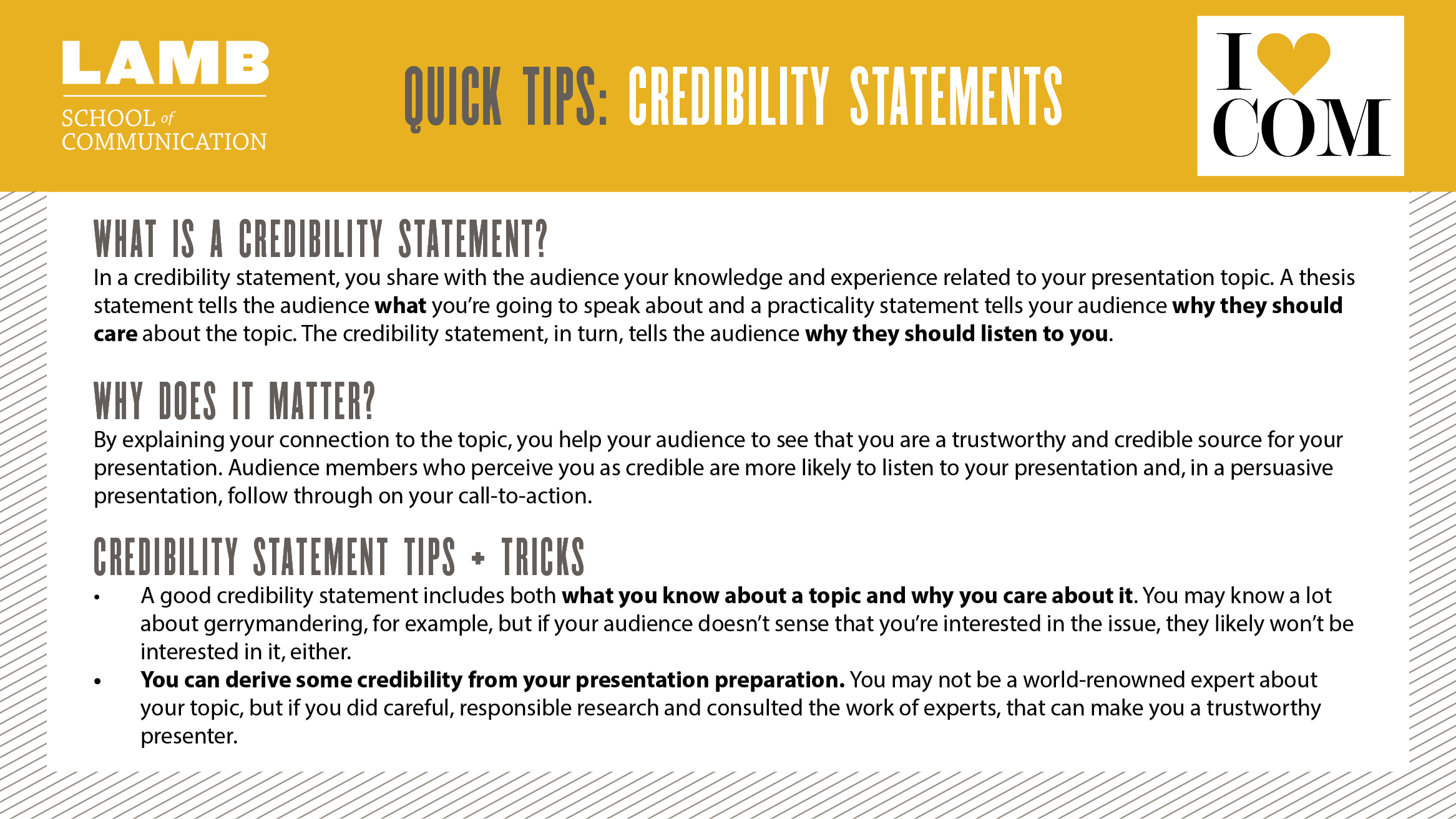
At its core, a credibility statement is a concise, intentional communication designed to establish a speaker’s, writer’s, or organization’s authority, trustworthiness, and competence on a particular subject or within a specific domain. Its primary purpose is to answer the unspoken question in any audience’s mind: “Why should I listen to you?” or “Why should I trust you?” By proactively addressing this, a credibility statement disarms skepticism and primes the audience to be receptive to your message, product, or service.
It’s not merely a list of achievements; rather, it’s a strategically framed narrative that highlights relevant qualifications in a way that resonates with the audience’s needs and expectations. In the context of branding, it’s a critical component that helps shape perceptions, influence attitudes, and ultimately drive desired actions. Without a clear declaration of why you are credible, even the most brilliant ideas or innovative products can fall flat, lost in a sea of unverified claims and untested promises.
More Than Just a Claim: The Essence of Credibility
The true power of a credibility statement lies in its ability to transcend simple self-promotion. It shifts the focus from simply what you offer to why you are uniquely qualified to offer it. This distinction is vital in branding. A brand isn’t just a logo or a product; it’s a promise, an experience, and a relationship built on trust. A credibility statement underpins this relationship by demonstrating:
- Expertise: Proof of deep knowledge, skills, and understanding in a specific area. This might come from academic qualifications, specialized training, or extensive practical experience.
- Experience: A track record of practical application, successful projects, and navigating real-world challenges. Experience lends weight to theoretical knowledge.
- Reliability: Consistency in delivering on promises, maintaining high standards, and acting with integrity over time.
- Empathy/Understanding: Showing that you comprehend the audience’s challenges, aspirations, and context, making your solutions more relevant.
When these elements are effectively communicated, a credibility statement doesn’t just inform; it persuades. It reassures your audience that they are in capable hands, fostering a sense of security and confidence that is invaluable for any brand seeking to build lasting relationships.
Key Components of an Effective Credibility Statement
While the specifics will vary based on context, an effective credibility statement typically weaves together several critical elements:
- Relevant Experience and Track Record: Quantifiable achievements, years in the industry, successful projects, significant milestones, or specific challenges overcome.
- Specialized Knowledge and Expertise: Highlight unique skills, certifications, advanced degrees, proprietary methods, or areas of deep understanding.
- Unique Insights or Perspective: What distinct viewpoint or approach do you bring that adds value?
- Understanding of the Audience’s Needs: Demonstrate that you’ve done your homework and grasp their pain points or aspirations.
- Affiliations and Endorsements: Mentioning reputable organizations, professional bodies, or industry leaders you’ve worked with or are recognized by. This provides valuable social proof.
- Values and Mission Alignment: Briefly touching upon the guiding principles that underpin your work, reinforcing integrity and purpose.
The most impactful statements are those that selectively choose the most pertinent of these components, tailoring them to the specific audience and the immediate purpose of communication, always with an eye towards establishing genuine, verifiable trust.
Why Credibility Statements Are Indispensable for Your Brand
In today’s highly competitive market, where consumers are increasingly discerning and skeptical, a strong brand presence is synonymous with a credible brand presence. Credibility statements are not merely good practice; they are a strategic imperative for individuals building their personal brand, startups aiming to disrupt, and established corporations striving to maintain their market leadership.
Building Brand Authority and Thought Leadership
A well-crafted credibility statement is a direct pathway to positioning your brand as an authority and thought leader within its niche. By articulating your expertise and experience, you signal to your audience, industry peers, and potential collaborators that you are a go-to source for reliable information, innovative solutions, and insightful perspectives. This positioning is invaluable for:
- Media Coverage: Journalists and media outlets seek out credible experts for commentary and insights.
- Speaking Engagements: Conferences and industry events invite thought leaders to share their knowledge.
- Industry Influence: Becoming a recognized voice capable of shaping conversations and setting trends.
Brands that successfully establish authority don’t just sell products; they lead movements, educate markets, and inspire loyalty.
Enhancing Persuasion and Influence
The ability to persuade is directly proportional to one’s perceived credibility. Whether you’re pitching an idea, selling a service, or advocating for a cause, your audience is far more likely to be influenced if they believe you are knowledgeable, trustworthy, and capable. A strong credibility statement does much of the persuasive heavy lifting even before you delve into the specifics of your offer.
It reduces resistance, builds an immediate foundation of trust, and makes your arguments or proposals more compelling. This is particularly crucial in sales, marketing, and public relations, where the goal is to shift perceptions and drive specific actions. Without credibility, even the most logical arguments can be met with skepticism, hindering your ability to influence decisions and achieve your branding objectives.
Fostering Audience Engagement and Loyalty
People are naturally drawn to brands and individuals they trust. A strong credibility statement helps to forge an initial connection based on respect and confidence. When an audience believes in your qualifications and integrity, they are more likely to:
- Engage with your content: Read your articles, watch your videos, attend your webinars.
- Seek your advice: Consult you for solutions to their problems.
- Become loyal advocates: Recommend your brand to others and stick with you over competitors.
This loyalty isn’t just transactional; it’s emotional. It’s built on a consistent demonstration of value and trustworthiness, elements that a powerful credibility statement initially introduces and subsequently reinforces throughout the brand journey.
Differentiating Your Brand in a Crowded Market
In many industries, the marketplace is saturated with similar products, services, and content. Differentiation becomes a critical survival strategy. While innovation and unique selling propositions are vital, showcasing your distinct credibility can be an equally powerful differentiator.
A well-articulated credibility statement highlights what makes your brand uniquely qualified and trustworthy compared to others. It can emphasize a distinct methodology, unparalleled experience in a niche area, a superior track record, or a deeply embedded commitment to certain values that resonate with a specific audience. In a world of fleeting attention spans, clearly stating “why us” through a powerful credibility statement can cut through the noise and capture the attention of those who value substance and assurance.
Crafting a Powerful Credibility Statement: A Practical Guide
Developing an effective credibility statement is an art and a science. It requires introspection, strategic thinking, and precise communication. It’s not about boasting, but about strategically illuminating your relevant strengths in a way that serves your audience.
Know Your Audience and Purpose
The first and most crucial step is to understand who you’re talking to and why. A statement for potential investors will differ significantly from one aimed at new customers or a general public audience.
- Audience Analysis: What are their existing perceptions, knowledge levels, pain points, and aspirations? What do they value most in a solution or an expert?
- Purpose Clarity: Is the goal to secure funding, attract clients, land a job, or establish thought leadership? The purpose dictates which aspects of your credibility to emphasize.
Tailoring your statement ensures its relevance and impact. A generic credibility statement risks being forgettable and ineffective.
Highlight Relevant Experience and Expertise
Don’t just list your resume; interpret it for your audience. Select experiences and areas of expertise that directly relate to the specific context.
- Quantify whenever possible: Instead of “experienced marketer,” say “increased client conversion rates by 30% over two years.”
- Be specific: “Specialized in ethical AI development for healthcare” is more impactful than “knowledgeable in technology.”
- Focus on results and impact: How did your expertise benefit others or solve problems?
This shows not just what you’ve done, but the value you bring to the table.
Showcase Achievements and Results
Tangible accomplishments speak louder than abstract claims. Provide evidence of your success.
- Case Studies: Brief examples of how you or your brand helped others achieve their goals.
- Awards and Recognitions: Industry accolades, certifications from respected bodies.
- Testimonials and Endorsements: Quotes from satisfied clients, colleagues, or reputable figures.

These elements provide social proof, which is incredibly persuasive. They demonstrate that your claims of expertise are backed by verifiable outcomes.
Leverage Endorsements and Affiliations
Partnering with or being recognized by credible entities instantly transfers some of that credibility to you.
- Professional Organizations: Membership or leadership roles in industry associations.
- Academic Institutions: Degrees from reputable universities or research contributions.
- Strategic Partnerships: Collaborations with well-known brands or experts.
These affiliations act as third-party validators, signaling to your audience that others already trust and respect your capabilities.
Articulate Your Unique Value Proposition
What makes your approach or solution distinct and superior? Your credibility statement should hint at this unique advantage.
- Specialized Niche: “The only consultant focusing on sustainable supply chains for organic produce.”
- Innovative Methodology: “Developed a proprietary framework that guarantees a 20% efficiency increase.”
- Distinct Philosophy: “Committed to human-centered design principles that prioritize user experience above all else.”
This helps your brand stand out and offers a compelling reason for the audience to choose you.
Be Authentic and Concise
A credibility statement should feel genuine, not boastful. Overstating or exaggerating will backfire and erode trust.
- Be Truthful: Stick to verifiable facts and actual accomplishments.
- Be Concise: Get to the point quickly. Attention spans are short. Focus on impact, not lengthy descriptions.
- Use Clear Language: Avoid jargon unless your audience is highly specialized and expects it.
Authenticity resonates, while pretense repels. A brief, impactful statement is far more effective than a rambling one.
Where and How to Deploy Your Credibility Statement
The power of a credibility statement lies not just in its construction, but also in its strategic dissemination. It’s a versatile tool that can be adapted and integrated into various touchpoints of your brand’s presence.
Personal Branding Platforms
For individuals, a robust credibility statement is essential across all professional online and offline platforms.
- LinkedIn Profile: Integrate it into your headline, summary, and experience sections.
- Professional Bios: Use it for speaker introductions, guest articles, or author pages.
- Personal Websites/Portfolios: Feature it prominently on your “About Me” page or homepage.
- Email Signatures: A concise version can add authority to every communication.
- Networking Events: Practice a brief, impactful version for your elevator pitch.
Corporate Communications
For businesses, credibility statements are integral to establishing corporate identity and trust.
- “About Us” Pages: Detail the company’s mission, history, and the expertise of its leadership team.
- Press Releases and Media Kits: Provide a succinct overview of the company’s achievements and unique position.
- Investor Relations Documents: Crucial for building confidence among potential investors.
- Sales Proposals and Pitches: Reinforce why your company is the best solution for the client.
- Annual Reports: Highlight key milestones and leadership expertise.
Marketing and Content Strategy
A well-placed credibility statement enhances the effectiveness of marketing efforts.
- Blog Posts and Articles: A brief author bio can boost the perceived authority of the content.
- Webinars and Online Courses: Speaker introductions immediately establish their expertise.
- White Papers and Ebooks: Position the author and organization as experts in the field.
- Ad Copy and Landing Pages: Convince potential customers that your brand delivers on its promises.
- Social Media Profiles: A concise version can define your brand’s expertise.
Public Speaking and Presentations
When addressing an audience directly, a strong credibility statement sets the stage for a compelling delivery.
- Opening Remarks: Begin by briefly establishing why you are qualified to speak on the topic.
- Introductions: Provide a concise bio to the person introducing you, highlighting relevant credentials.
This immediately commands attention and respect, making the audience more receptive to your message.
Networking and Relationship Building
Even in informal settings, a subtle yet confident display of credibility can open doors.
- Elevator Pitches: A brief, compelling statement of who you are and what unique value you offer.
- Initial Conversations: Naturally weave in relevant experiences or insights that demonstrate your expertise.
Building relationships often starts with establishing mutual respect, and credibility is a key ingredient for this.
Common Pitfalls and Best Practices
While the benefits of a strong credibility statement are clear, pitfalls exist. Navigating them ensures your efforts genuinely enhance your brand, rather than detracting from it.
Avoiding Overstatement and Exaggeration
The fastest way to lose credibility is to make claims you cannot support. Exaggeration, hyperbole, or outright falsehoods will inevitably be exposed in today’s transparent world. Always prioritize authenticity and integrity. It’s better to be understated and let your work speak for itself than to overstate and risk appearing dishonest. Honesty builds long-term trust; puffery destroys it.
Keeping it Current and Relevant
Credibility is not a static state; it’s an ongoing journey. As your career or business evolves, so too should your credibility statement. Regularly review and update it to reflect new achievements, expanded expertise, and evolving industry trends. A statement that was powerful five years ago may feel outdated or irrelevant today. Staying current ensures your brand always presents its most compelling and accurate self.
Balancing Humility with Confidence
There’s a fine line between confidently stating your qualifications and appearing arrogant. An effective credibility statement walks this line gracefully. Focus on demonstrating value and sharing knowledge rather than simply boasting. Frame your accomplishments in terms of the problems you solve or the value you provide to others. A confident, service-oriented tone is much more engaging than an overly self-promotional one.
Integrating it Naturally into Your Brand Narrative
A credibility statement should not feel like an isolated, tacked-on paragraph. It should be seamlessly integrated into your broader brand narrative, reinforcing your brand story and values. Ensure consistency in tone, message, and visual identity across all platforms where your credibility is asserted. When your credibility statement aligns with the overall brand experience, it strengthens the entire brand ecosystem, creating a cohesive and trustworthy image.
Conclusion
A credibility statement is far more than a mere biographical sketch; it is a strategic branding asset. In a landscape where trust is currency and attention is fleeting, the ability to clearly, concisely, and authentically articulate why you or your brand deserve belief is indispensable. By diligently crafting, strategically deploying, and consistently updating your credibility statement, you don’t just communicate your qualifications – you actively build authority, enhance influence, foster deep engagement, and carve out a distinctive and trusted position in the market. It’s an ongoing investment in your brand’s most valuable commodity: its reputation.
aViewFromTheCave is a participant in the Amazon Services LLC Associates Program, an affiliate advertising program designed to provide a means for sites to earn advertising fees by advertising and linking to Amazon.com. Amazon, the Amazon logo, AmazonSupply, and the AmazonSupply logo are trademarks of Amazon.com, Inc. or its affiliates. As an Amazon Associate we earn affiliate commissions from qualifying purchases.