
In the realm of technology, we often interact with devices powered by electricity. From the smartphones in our pockets to the complex servers that drive the internet, electricity is the invisible force that makes it all possible. But have you ever wondered about the fundamental building blocks of this power? What exactly is it that flows through circuits and makes our gadgets hum? At the heart of understanding electrical phenomena lies the concept of electric charge, and its standard unit of measurement is the Coulomb.
While the title “what is a coulumb” might initially seem like a niche question for physicists or electrical engineers, understanding this fundamental unit has surprising relevance across the diverse topics covered by this website, from cutting-edge tech and brand strategies to personal finance and business. After all, advancements in technology are driven by our ability to manipulate and measure electricity, efficient branding often relies on understanding consumer behavior (which can be influenced by technology), and even our personal and business finances are increasingly intertwined with digital transactions and energy consumption.
The Genesis of the Coulomb: A Legacy of Scientific Discovery
The Coulomb is named after Charles-Augustin de Coulomb, an 18th-century French physicist and military engineer. His groundbreaking work in the 1780s laid the foundation for our understanding of electrostatic forces. Before Coulomb, scientists had a qualitative understanding of electrical attraction and repulsion, but lacked a precise way to quantify these forces.
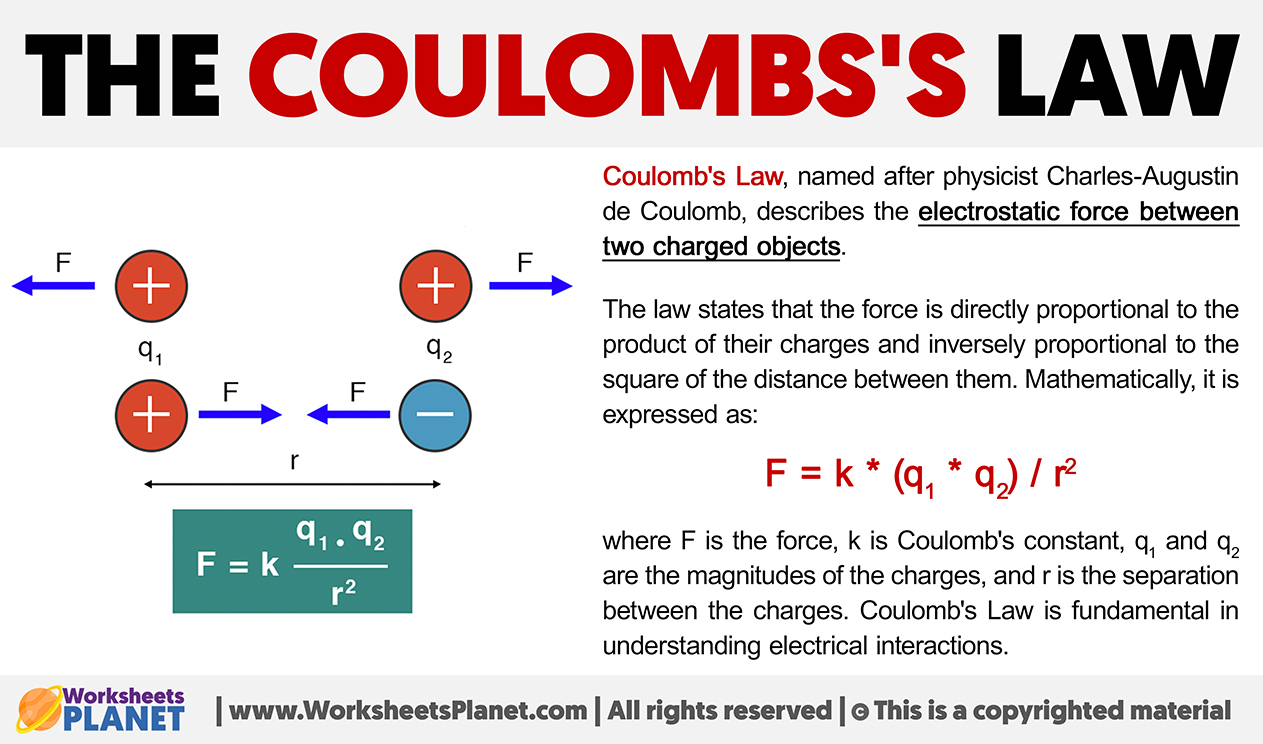
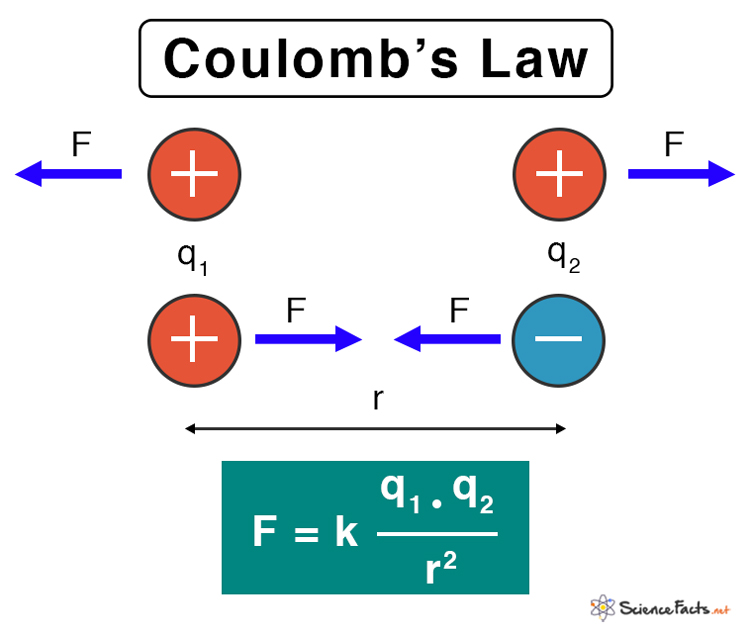
Coulomb’s most significant contribution was his meticulous experimental investigation into the relationship between electric charge and the force it exerts. Using a highly sensitive torsion balance – an ingenious device he refined – he was able to measure the minute forces between charged objects. Through these experiments, he discovered that the force between two point charges is directly proportional to the product of their magnitudes and inversely proportional to the square of the distance between them. This principle, now known as Coulomb’s Law, is a cornerstone of electrostatics.
His experiments, characterized by their precision and rigor, established the very concept of quantifying electric charge. The unit of electric charge was eventually named the Coulomb in his honor, solidifying his place in the annals of scientific history. This dedication to precise measurement and theoretical formulation is a testament to the scientific method, a principle that echoes in the development of new technologies and the strategic growth of brands.
Coulomb’s Law: Quantifying Electric Interaction
To truly grasp what a Coulomb represents, we must delve into Coulomb’s Law, the mathematical expression of the forces between electric charges. The law states:
$F = k * (|q1 * q2|) / r^2$
Where:
- F is the magnitude of the electrostatic force between the two point charges.
- k is Coulomb’s constant, a proportionality constant that depends on the medium. In a vacuum, it is approximately $8.98755 * 10^9 N m^2/C^2$.
- q1 and q2 are the magnitudes of the two electric charges.
- r is the distance between the centers of the two charges.
This law is fundamental because it allows us to predict how charges will interact. It tells us that larger charges exert stronger forces, and as charges get farther apart, the force between them weakens rapidly (following the inverse square law). Understanding these fundamental interactions is not just an academic exercise; it’s the basis for designing everything from microchips to large-scale electrical grids.
Defining the Coulomb: The Flow of Electrons and Beyond
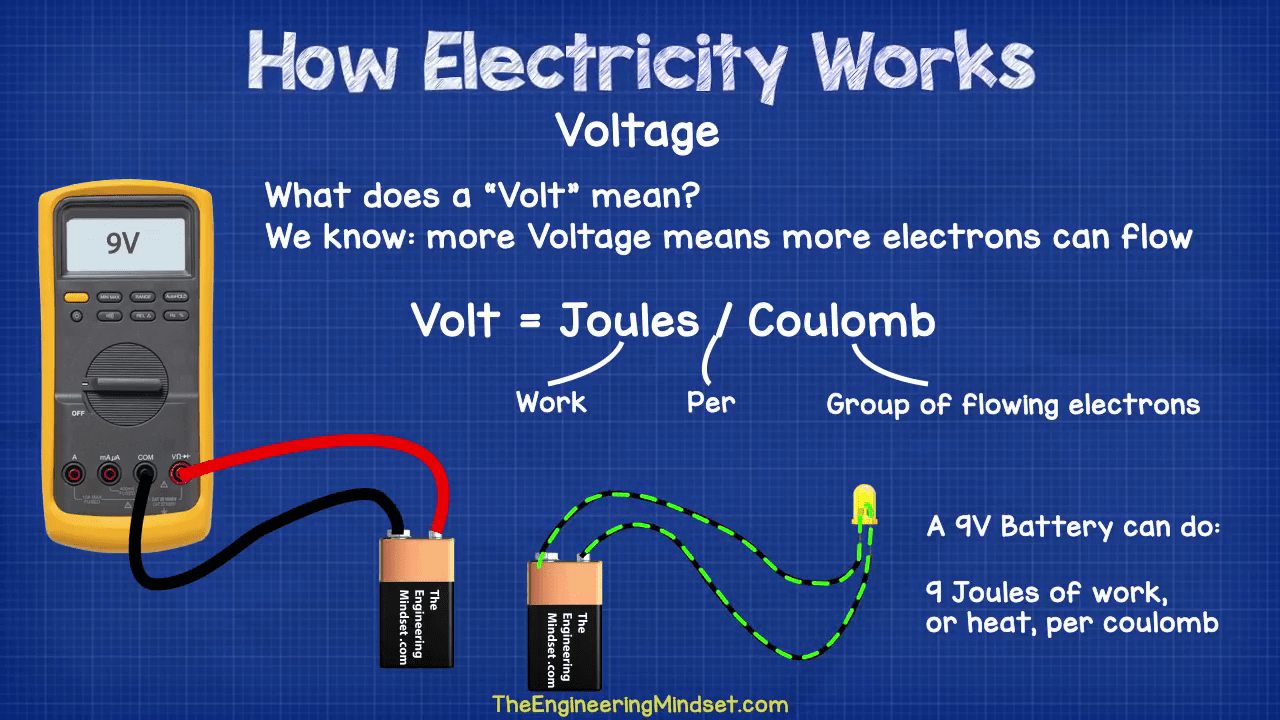
At its most basic, one Coulomb (C) is defined as the amount of electric charge transported by a constant current of one Ampere in one second. This definition directly links the Coulomb to another fundamental electrical unit, the Ampere (A), which measures electric current.
To put this into perspective, consider the subatomic particles that carry electric charge:
- Electrons: These negatively charged particles possess a fundamental charge of approximately $-1.602 * 10^{-19}$ Coulombs. This value is often denoted as “-e”.
- Protons: These positively charged particles found in the nucleus of atoms have a charge equal in magnitude but opposite in sign to that of an electron, approximately $+1.602 * 10^{-19}$ Coulombs, denoted as “+e”.
This means that a single Coulomb of charge is an immense quantity of elementary charges. You would need approximately $6.24 * 10^{18}$ electrons (or protons) to accumulate a charge of one Coulomb. This staggering number highlights the microscopic nature of charge carriers and the macroscopic scale at which electrical phenomena are often discussed and utilized.
The Practical Implications of Charge Measurement
The ability to measure and quantify charge in Coulombs has profound practical implications across various domains:
Tech: Powering Innovation and Understanding Performance
In the world of technology, understanding Coulombs is crucial for engineers and developers.
- Battery Technology: The capacity of batteries is often measured in milliampere-hours (mAh). To convert this to Coulombs, we use the relationship between Amperes, seconds, and Coulombs. A battery with a capacity of 1 Ah can deliver 1 Ampere for 1 hour. Since 1 hour = 3600 seconds, 1 Ah is equivalent to $1 A * 3600 s = 3600$ Coulombs. Understanding battery capacity in Coulombs allows for more precise comparisons and calculations of how long a device can operate, or how much energy it can store. This is vital for designing longer-lasting smartphones, more efficient electric vehicles, and robust power backup systems.
- Semiconductor Design: The performance of microprocessors, memory chips, and other semiconductor devices is dictated by the precise control of electron flow. Understanding the charge carriers and their movement, measured in Coulombs, is essential for designing efficient and high-speed circuits. The tiny transistors within a chip manipulate individual electrons, and their collective behavior, measured in Coulombs, determines the processing power of your devices.
- Data Storage: The density of data storage in solid-state drives (SSDs) and other memory technologies is related to the number of electrons or holes (absence of electrons) used to represent bits of information. While not directly measured in Coulombs at the consumer level, the underlying physics of charge manipulation is fundamental to how much data can be stored in a given space.
- Digital Security: Understanding how electrical signals are transmitted and manipulated is indirectly relevant to digital security. While not about Coulombs specifically, the principles of electrical engineering underpin the secure design and operation of communication networks and encryption algorithms.
Brand: Consumer Behavior and Technological Adoption
While not a direct application of Coulomb measurements, understanding the underlying electrical principles can inform brand strategy.
- Product Longevity and User Experience: Brands that develop products with reliable battery life or efficient power consumption benefit greatly from this understanding. Consumers value products that “just work” and last through the day. This requires engineers to accurately calculate charge requirements and battery capacities, ultimately impacting customer satisfaction and brand loyalty.
- Innovation and “Wow” Factor: Breakthroughs in battery technology or power efficiency can be significant selling points and generate considerable buzz for a brand. Companies that push the boundaries in these areas can create a perception of innovation and cutting-edge technology.
- The “Smart” Ecosystem: The proliferation of smart devices – from smart home appliances to wearable tech – is all powered by electricity. Brands that successfully integrate their products into this ecosystem, ensuring seamless connectivity and power management, leverage a deep understanding of electrical principles, even if their marketing focuses on user benefits rather than technical specifications.
Money: Energy Costs, Financial Transactions, and Business Efficiency
The financial implications of electricity are undeniable.
- Energy Bills and Cost Management: The electricity you consume is billed based on kilowatt-hours (kWh). However, the fundamental unit driving this consumption is the flow of charge, measured in Coulombs, which translates to current (Amperes) over time. Understanding the relationship between charge, current, voltage, and power ($P = V * I$) helps consumers and businesses make informed decisions about energy efficiency to reduce costs. For instance, a more efficient appliance draws less current for the same amount of work, thus consuming fewer Coulombs of charge over time.
- Financial Transactions and Digital Infrastructure: The entire global financial system relies on electricity to power servers, communication networks, and point-of-sale terminals. The seamless and secure transfer of money, whether through online banking, credit card transactions, or cryptocurrency, is dependent on reliable electrical systems. The underlying data packets and signals carrying these transactions are electrical phenomena.
- Business Finance and Operational Costs: For businesses, particularly those with high energy consumption (e.g., manufacturing, data centers), understanding the electrical units and their relationship to costs is critical for financial planning and profitability. Optimizing energy usage can lead to significant cost savings, directly impacting a company’s bottom line.
- Investment in Renewable Energy: The growing investment in solar, wind, and other renewable energy sources is a direct response to the need for efficient and sustainable electricity generation. Understanding the electrical output of these sources, often discussed in terms of power (Megawatts) and total energy produced (Gigawatt-hours), is fundamental to their economic viability and investment potential.
The Coulomb in Context: From Subatomic Particles to Cosmic Scales
While one Coulomb might seem like an abstract quantity, it’s the bedrock upon which our understanding of electricity is built. From the microscopic dance of electrons within a silicon chip to the vast electrical currents that power our cities, the Coulomb provides a consistent and universal measure.
The challenges and opportunities presented by electricity are constantly evolving, driving innovation in technology, shaping how brands connect with consumers, and influencing the flow of global finance. By grasping the fundamental units, like the Coulomb, we gain a deeper appreciation for the forces that shape our modern world and the potential they hold for the future. Whether you’re a tech enthusiast optimizing your gadgets, a brand manager crafting a compelling narrative, or an investor analyzing energy markets, the foundational principles of electricity, rooted in units like the Coulomb, offer valuable insights.
aViewFromTheCave is a participant in the Amazon Services LLC Associates Program, an affiliate advertising program designed to provide a means for sites to earn advertising fees by advertising and linking to Amazon.com. Amazon, the Amazon logo, AmazonSupply, and the AmazonSupply logo are trademarks of Amazon.com, Inc. or its affiliates. As an Amazon Associate we earn affiliate commissions from qualifying purchases.