
In the rapidly shifting landscape of social media technology, Meta continues to experiment with features that bridge the gap between private messaging and public content consumption. One of the most significant recent developments in this arena is “Blend.” While Instagram has long been a platform for sharing life updates and curated aesthetics, the introduction of Blend marks a pivot toward algorithmic synergy between users.
But what exactly is a Blend on Instagram, and how does it function within the complex architecture of the platform’s recommendation engine? From a technological standpoint, Blend is more than just a shared folder; it is a sophisticated, AI-driven collaborative feed designed to synchronize the interests of two users into a single, seamless stream of Reels.

Understanding the Technology Behind Instagram’s Blend Feature
To understand Blend, one must first understand the fundamental shift in how social media platforms are moving away from chronological feeds toward interest-based graphs. Traditionally, your Instagram experience was dictated by who you followed. Today, it is dictated by what the machine learning models predict you will watch.
The Mechanics of Collaborative Discovery
At its core, Blend is a private, shared feed created for two people. It utilizes a specific subset of Instagram’s recommendation algorithm to find the “middle ground” between two distinct user profiles. When two users opt into a Blend, the software analyzes the historical data of both participants—including likes, watch time, shares, and saves—and cross-references this data to identify overlapping interests.
The technology doesn’t simply alternate between User A’s preferences and User B’s preferences. Instead, it attempts to predict content that both users would find engaging simultaneously. This requires a high level of computational power to process dual-user preference vectors in real-time, ensuring that the content served remains fresh and relevant to both parties.
Algorithmic Integration: How Blend Learns From You
The technical beauty of Blend lies in its recursive learning loop. As both users interact with the content within the Blend feed, the algorithm receives new signals. If both users “Like” a specific Reel within the Blend, the weight of that content category increases within the shared feed. Conversely, if one user skips a video while the other watches it, the algorithm must calculate whether to continue showing similar content or pivot to a different interest cluster.
This feature represents a move toward “Social AI,” where the software is not just serving an individual but is attempting to facilitate a shared digital experience. It mirrors the technology pioneered by Spotify’s “Blend” feature for music, adapting those same principles to the high-bandwidth, short-form video format of Instagram Reels.
How to Create and Navigate a Blend: A Comprehensive Tutorial
While the backend of Blend is complex, the user interface (UI) is designed for frictionless interaction. Navigating the feature requires understanding where it sits within the Instagram ecosystem—primarily tucked within the Direct Messaging (DM) framework.
Setting Up Your First Blend
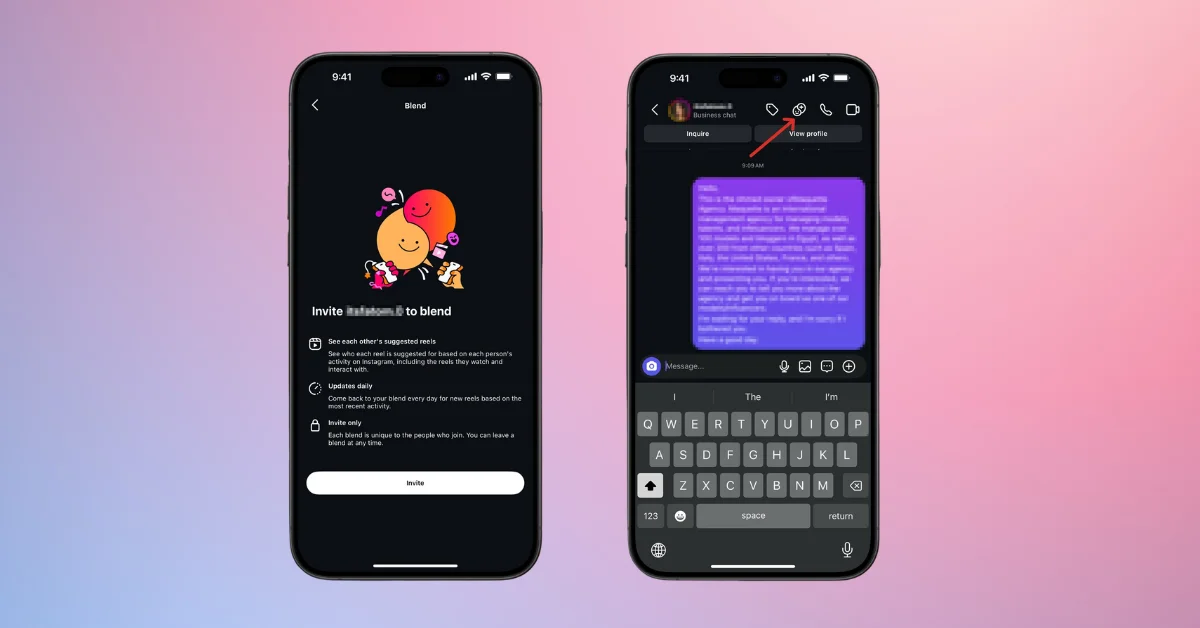
Currently, the Blend feature is accessed through a direct invitation system between two users. Unlike a Group Chat or a broadcast channel, a Blend is strictly a 1-on-1 experience.
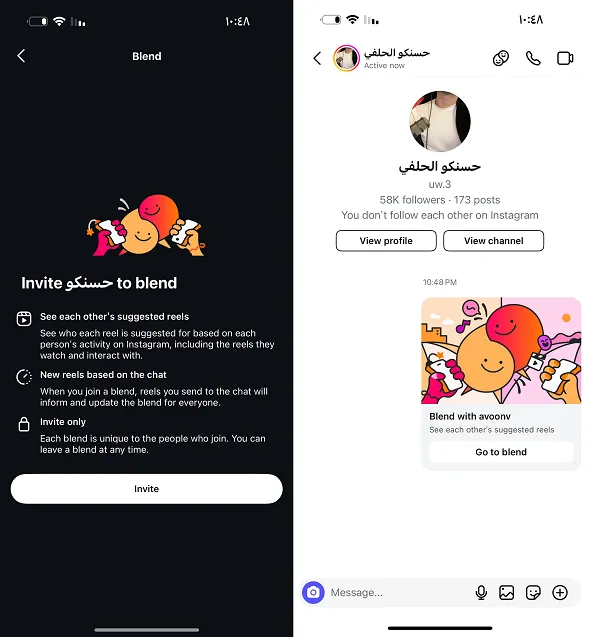
- Initiation: Users typically find the option to “Invite to Blend” within their DM settings with a specific friend.
- Acceptance: Once the invitation is sent, the recipient must manually opt-in. This is a critical privacy gate, ensuring that your algorithmic data isn’t being scraped or shared without explicit consent.
- The Interface: Once active, a “Blend” icon appears within the DM thread. Tapping this icon launches a full-screen Reels player that looks similar to the standard Reels tab but is strictly populated by the shared recommendation engine.
Managing Privacy and Control Within the Interface
From a technical and security perspective, control is paramount. Users have the ability to “Leave” a Blend at any time, which immediately severs the algorithmic connection and deletes the shared feed.
It is important to note that a Blend does not give your friend access to your private search history or your “Saved” folders. Instead, it uses anonymized data points to curate the feed. For tech-savvy users concerned about data privacy, Instagram has built-in barriers to ensure that while the outputs (the Reels) are shared, the inputs (your specific user behavior data) remain siloed within your individual account profile.
The Evolution of Reels and Recommendation Engines
The introduction of Blend highlights a broader trend in software development: the gamification of the discovery process. By turning the algorithm into a shared experience, Instagram is attempting to increase “stickiness”—the amount of time a user spends within the app.
Moving Beyond Solo Scrolling
For years, the critique of social media has been its isolating nature; two people sitting on a couch, both scrolling through entirely different worlds. Blend is a technological solution to this social problem. By creating a shared “content reality,” Meta is leveraging its recommendation engine to foster real-world interaction.
Technically, this involves “co-occurrence” filtering. If the system knows that User A enjoys tech reviews and User B enjoys architectural design, the Blend algorithm will prioritize high-quality videos that sit at the intersection—such as “smart home” technology or “minimalist desk setups.”
Competitive Landscape: Instagram vs. TikTok’s Shared Feed
In the competitive landscape of app development, Blend is a clear response to TikTok’s “Friends” tab and “repost” culture. However, Blend goes a step further by automating the curation. While TikTok relies on users manually sharing or reposting videos to a feed, Instagram’s Blend uses automated AI to predict what should be shared.
This move signals a transition in the tech industry from “Active Sharing” (where a user must physically click a button to send a video) to “Passive Synchronization” (where the software anticipates the share). For developers and tech enthusiasts, this represents a significant leap in how we perceive user agency vs. algorithmic autonomy.
Technical Troubleshooting and Optimization Tips
As with any feature in its early stages or beta rollout, users may encounter technical hurdles. Understanding the software requirements is essential for a smooth experience.
Why Your Blend Might Not Be Updating
If a Blend feels stagnant or repetitive, it is usually due to one of three technical factors:
- Signal Scarcity: If one user has not been active on the app, the algorithm lacks the fresh data points needed to update the shared feed.
- Cache Limitations: Instagram’s mobile app relies heavily on cached data to ensure fast loading times. Sometimes, the Blend feed requires a manual refresh or a clearing of the app cache to pull the latest recommendations from Meta’s servers.
- Version Mismatch: Because Blend is a newer feature, both users must be running the latest version of the Instagram APK (on Android) or the latest iOS build. Discrepancies in app versions can lead to synchronization errors where one user sees a different feed than the other.
Maximizing Engagement Through Feedback Loops
To “train” your Blend for better results, users should engage with the content aggressively. The algorithm prioritizes “Explicit Signals” (Likes, Saves, and Shares) over “Implicit Signals” (Watch time). If you want your shared feed to shift away from a certain topic, both users should utilize the “Not Interested” feature. This sends a strong negative signal to the Blend-specific model, forcing it to recalculate the interest graph.
The Future of AI-Driven Social Interaction on Meta Platforms
The “what” of a Blend is simple—a shared feed. But the “why” is much deeper. It represents Meta’s investment in collaborative AI. We are moving toward a future where our digital experiences are no longer individual silos but are interconnected through smart software that understands our relationships.
Looking forward, we can expect the technology behind Blend to expand. It is not hard to imagine “Group Blends” for families or “Event Blends” for people attending the same conference. The underlying architecture—taking multiple user preference profiles and merging them into a cohesive, real-time content stream—is a powerful tool that could eventually be applied to Threads, Facebook, or even VR environments like Horizon Worlds.
In conclusion, a Blend on Instagram is a masterclass in modern recommendation technology. It takes the solitary act of scrolling and transforms it into a collaborative digital space. By leveraging advanced machine learning and intuitive UI design, Instagram is ensuring that as the world becomes more digital, our social connections remain integrated into the very code of the platforms we use every day. Whether you are a casual user or a tech enthusiast, Blend offers a fascinating glimpse into how algorithms are evolving to become more social, more intuitive, and more personal than ever before.
aViewFromTheCave is a participant in the Amazon Services LLC Associates Program, an affiliate advertising program designed to provide a means for sites to earn advertising fees by advertising and linking to Amazon.com. Amazon, the Amazon logo, AmazonSupply, and the AmazonSupply logo are trademarks of Amazon.com, Inc. or its affiliates. As an Amazon Associate we earn affiliate commissions from qualifying purchases.