
In the landscape of modern technology, we often focus on the processors in our pockets or the cloud networks that power our businesses. However, one of the most significant technological leaps of the last 50 years resides not in a silicon chip in a smartphone, but in a small, rugged transducer located within the exhaust systems of our vehicles: the Oxygen (O2) sensor. Far from being a simple mechanical component, the O2 sensor is a sophisticated piece of hardware that represents the intersection of chemistry, electrical engineering, and real-time data processing.

The O2 sensor is the unsung hero of the digital combustion era. It serves as the primary feedback mechanism for the Electronic Control Unit (ECU), allowing a vehicle to “breathe” with precision. By analyzing the chemical composition of exhaust gases, it converts chemical information into a digital-ready voltage signal, enabling a closed-loop system that optimizes performance, saves fuel, and minimizes environmental impact.
The Evolution and Engineering of Oxygen Sensors
To understand the O2 sensor, one must look at it through the lens of material science. The technology was pioneered in the late 1960s and early 1970s, primarily by Robert Bosch GmbH, as environmental regulations began to demand more efficient combustion. The challenge was to create a sensor that could withstand the extreme heat and corrosive environment of an exhaust manifold while delivering lightning-fast data.
How the Zirconia Sensor Revolutionized Combustion
The core of most modern O2 sensors is a ceramic element made of zirconium dioxide (zirconia), coated with a thin layer of platinum. This isn’t just a physical barrier; it’s an electrochemical cell. When the sensor reaches its operating temperature—typically around 600°F (315°C)—the zirconia becomes a solid-state electrolyte.
The tech works on the principle of oxygen ion concentration. One side of the zirconia element is exposed to the ambient air (reference air), and the other side is exposed to the exhaust gases. The difference in oxygen concentration between these two points creates a voltage. This is known as the Nernst Principle. In tech terms, the O2 sensor acts as a generator, producing its own voltage (usually between 0.1 and 0.9 volts) based on the “richness” or “leanness” of the fuel mixture.
The Role of the Electronic Control Unit (ECU)
While the sensor generates the signal, the true “tech” happens in the ECU. The ECU is the vehicle’s central computer, and it treats the O2 sensor as its most critical data input for fuel management. This relationship creates what engineers call a “Closed-Loop Feedback System.”
In this loop, the ECU receives the voltage from the O2 sensor. If the voltage is high (indicating a rich mixture with little oxygen), the ECU instructs the fuel injectors to decrease the fuel flow. If the voltage is low (indicating a lean mixture with too much oxygen), the ECU increases the fuel. This cycle happens dozens of times per second, representing an early and highly successful implementation of real-time automated processing in consumer hardware.
Types of O2 Sensors in the Digital Age
As automotive technology transitioned from basic transportation to high-performance computing on wheels, the sensors had to evolve. We have moved from simple “on/off” style sensors to sophisticated wideband sensors that provide a granular stream of data.
Narrowband Sensors: The Binary Precursor
The traditional O2 sensor is often referred to as a “Narrowband” sensor. In the world of data, this functions almost like a binary switch. It is highly sensitive near the stoichiometric ratio (the ideal air-to-fuel ratio of 14.7:1). However, as soon as the mixture deviates slightly from this ideal, the voltage “flips” or “flops” rapidly.
While effective for basic emission control, narrowband sensors lack the resolution required for modern high-efficiency turbocharged engines or performance-tuned software. They tell the computer that the mixture is wrong, but they aren’t very good at telling the computer exactly how wrong it is.
Wideband A/F Sensors: Precision Data for High-Performance Tech
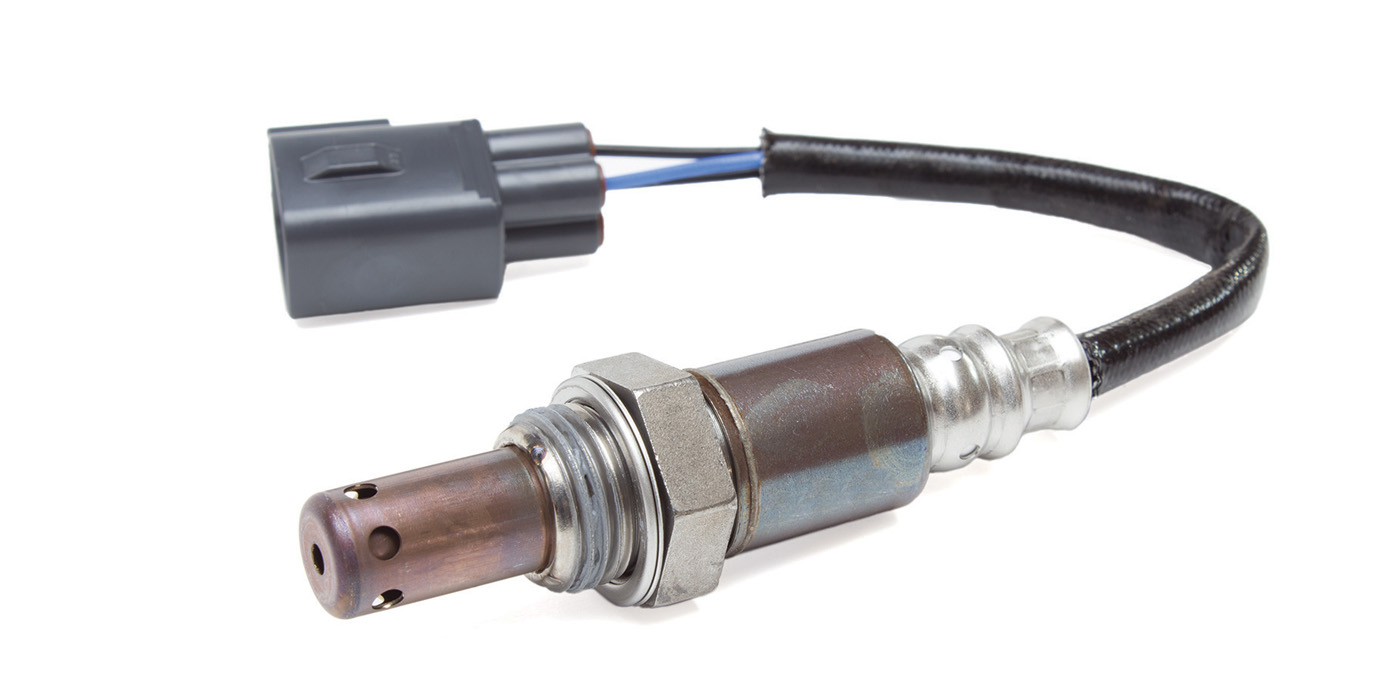
To solve the resolution issue, engineers developed the Wideband Air/Fuel (A/F) Ratio Sensor. This is a significantly more complex gadget. Instead of just producing a voltage, a wideband sensor uses a “pump cell” and sophisticated internal circuitry to maintain a specific balance within the sensor itself.
The output of a wideband sensor is a linear signal that allows the ECU to know the exact air-fuel ratio across a vast range. From a tech perspective, this is the difference between a thermostat that only knows “hot” or “cold” and a digital thermometer that provides a precise degree reading. This high-fidelity data is what allows modern sports cars and fuel-efficient hybrids to achieve such impressive specs, as the software can map fuel delivery with surgical precision.
The Integration of O2 Sensors in Smart Diagnostics
The O2 sensor was one of the first components to be integrated into the standardized On-Board Diagnostics (OBD) protocols. This integration turned the sensor from a silent hardware component into a data-rich diagnostic tool that can be accessed via apps, scanners, and remote telematics.
OBD-II Protocols and Real-Time Data Streaming
Since the mid-90s, the OBD-II standard has required O2 sensors to be monitored for efficiency. Tech enthusiasts and mechanics use “Live Data” streams to visualize what the sensor is seeing. By connecting a Bluetooth or Wi-Fi OBD-II dongle to a vehicle, users can see the O2 sensor’s voltage plotted on a graph in real-time on their smartphones.
This data streaming allows for advanced troubleshooting. For instance, if a sensor signal is “lazy”—meaning it switches voltage too slowly—the software can flag a diagnostic trouble code (DTC) before the driver even notices a change in performance. This is a prime example of edge computing, where the sensor and the local controller handle immediate tasks, but the data is available for higher-level analysis.
Predictive Failure Analysis and Machine Learning
In the most recent iterations of automotive tech, O2 sensor data is being fed into machine learning algorithms. Manufacturers are using the historical data from millions of sensors to predict when a component is likely to fail. By analyzing the “noise” or signal degradation over time, the vehicle’s software can alert the owner to a needed “gadget” replacement before a breakdown occurs. This shift from reactive maintenance to predictive maintenance is a hallmark of the modern digital transformation in the tech world.
Environmental Impact and Future Tech Trends
As we look toward the future of technology, the O2 sensor stands at a crossroads. With the rise of Electric Vehicles (EVs) and the refinement of Internal Combustion Engines (ICE), the role of sensing technology is shifting from hardware-heavy solutions to software-defined ecosystems.
Minimizing the Carbon Footprint via Hardware Optimization
The O2 sensor remains the single most important piece of tech for reducing the carbon footprint of fossil-fuel vehicles. By maintaining the perfect combustion ratio, the O2 sensor ensures that the catalytic converter—another high-tech chemical processor—can operate at peak efficiency. Without the precise data from the O2 sensor, modern emission standards would be technologically impossible to achieve. The sensor essentially acts as a gatekeeper for environmental compliance, translating physical pollutants into actionable digital data.
The Shift from Hardware Sensors to Virtual Sensor Algorithms
Perhaps the most fascinating trend in “sensor tech” is the move toward “Virtual Sensors.” As ECU processing power increases, some manufacturers are experimenting with using complex mathematical models to estimate oxygen levels based on other data points like mass airflow, throttle position, and engine temperature.
While physical O2 sensors aren’t going away anytime soon—especially because they provide a necessary “ground truth” for the system—the integration of virtual sensing shows how software is beginning to augment or even replace hardware. In the tech industry, this is known as “software-defined hardware,” where the capabilities of a device are determined more by the algorithms running it than by the physical components themselves.
Conclusion: More Than Just a Car Part
When we ask “What is an O2 sensor?”, we are really asking about the history of automated feedback systems. It is a piece of technology that paved the way for the smart devices we use today. It taught us how to use sensors to monitor an environment, how to use a computer to make micro-adjustments in real-time, and how to use data to solve complex problems like fuel efficiency and pollution.
Whether it is the zirconia element generating a millivolt signal or an AI algorithm predicting the sensor’s lifespan, the O2 sensor remains a cornerstone of industrial tech. It proves that some of the most impactful “gadgets” aren’t the ones we carry in our pockets, but the ones that work silently under the hood, turning the chaos of combustion into a stream of perfect, actionable data.
aViewFromTheCave is a participant in the Amazon Services LLC Associates Program, an affiliate advertising program designed to provide a means for sites to earn advertising fees by advertising and linking to Amazon.com. Amazon, the Amazon logo, AmazonSupply, and the AmazonSupply logo are trademarks of Amazon.com, Inc. or its affiliates. As an Amazon Associate we earn affiliate commissions from qualifying purchases.