
The Fortune 500 is more than just a list of names; it is the ultimate scoreboard for the American corporate landscape and a primary barometer for the global economy. For investors, financial analysts, and business professionals, the list serves as a definitive ranking of the largest corporations in the United States, sorted by their total revenue for their respective fiscal years. Since its inception in 1955 by Fortune magazine editor Edgar P. Smith, the list has evolved from a directory of industrial giants to a diverse catalog encompassing technology, healthcare, and financial services.
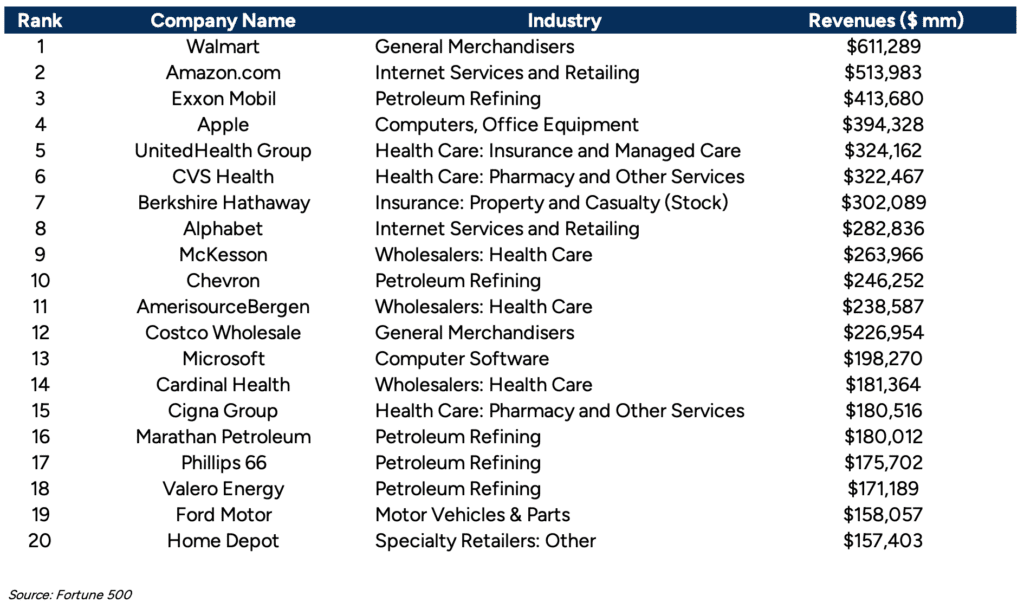
To understand the Fortune 500 is to understand the flow of capital. These companies represent a massive share of the U.S. Gross Domestic Product (GDP) and dictate market trends through their massive spending power and investment capabilities. This article explores the financial mechanics behind the list, its significance to the investment community, and the evolving economic trends that determine who stays at the top.
The Financial Foundation of the Fortune 500
The core of the Fortune 500 lies in its strict adherence to financial data. Unlike other rankings that might prioritize brand recognition or “influence,” the Fortune 500 is built on hard, audited numbers. This transparency allows for a consistent year-over-year analysis of corporate health across various sectors.
Eligibility and Ranking Criteria
To be eligible for the Fortune 500, a company must be incorporated and operate within the United States and file financial statements with a government agency. The primary metric for ranking is total revenue. This includes consolidated subsidiaries and reported revenues from discontinued operations, but it excludes excise taxes.
While revenue is the primary filter, the list also tracks other critical financial indicators, such as profits, assets, and shareholder equity. However, it is important to note that a company can be high on the Fortune 500 list while still being unprofitable. For example, a massive retailer may move hundreds of billions of dollars in inventory (high revenue) but operate on razor-thin margins, resulting in lower net income compared to a smaller software company with massive profit margins.
Revenue vs. Market Capitalization
A common point of confusion for novice investors is the difference between the Fortune 500 and the S&P 500. While they often feature the same companies, they serve different purposes. The Fortune 500 ranks by revenue (the money coming in), whereas the S&P 500 is an index based on market capitalization (the total value of a company’s shares).
From a business finance perspective, revenue is a measure of “size” and market footprint, while market cap is a measure of “value” and investor sentiment. A company like Walmart may top the Fortune 500 due to its staggering sales volume, even if a high-growth tech company with lower revenue has a higher market valuation. Understanding this distinction is vital for anyone analyzing the financial stability versus the growth potential of a corporation.
Why the Fortune 500 Matters to Investors
For those involved in personal finance and professional investing, the Fortune 500 serves as a map of the “Blue Chip” universe. These are the companies perceived as reliable, stable, and financially sound, often forming the bedrock of retirement portfolios and institutional funds.
The Fortune 500 as a Benchmark for Market Health
Analysts use the aggregate performance of the Fortune 500 to gauge the health of the broader economy. If the total revenue of the list is growing, it indicates strong consumer and B2B spending. Conversely, when the list’s total profits stagnate, it can signal an impending economic slowdown or rising costs of production.
Investors often look for “Fortune 500 status” as a seal of institutional approval. Being on the list implies a level of operational scale and financial maturity that suggests the company can weather economic downturns better than smaller “penny stocks” or mid-cap companies. For many, these companies represent lower-risk investments that provide steady dividends and long-term capital appreciation.
Sector Diversification in Modern Portfolios
The composition of the Fortune 500 has shifted dramatically over the decades, reflecting changes in how money is made in the modern world. In the 1950s, the list was dominated by manufacturing and oil. Today, the list is heavily weighted toward the service sector, technology, and healthcare.
By studying the sectors represented in the top 100 of the Fortune 500, investors can identify where the “smart money” is flowing. For instance, the rise of financial technology (FinTech) and healthcare services within the rankings points toward long-term demographic and technological shifts. Diversifying a portfolio across various Fortune 500 sectors allows an investor to capture the growth of the American economy while mitigating the risk associated with any single industry.

The Financial Lifecycle and Corporate Growth
Maintaining a spot on the Fortune 500 is a grueling financial challenge. The “churn” of the list—the rate at which companies fall off and are replaced—provides deep insights into corporate finance and the lifecycle of a business.
The Dynamics of Scale and Debt Management
To reach the top of the Fortune 500, companies must master the art of scaling. This often involves aggressive capital expenditure (CapEx) and strategic Mergers and Acquisitions (M&A). A significant portion of the growth seen in the Fortune 500 is funded through debt markets.
In business finance, the ability of a Fortune 500 company to manage its debt-to-equity ratio is what separates the survivors from those that face bankruptcy. Large corporations use their status to secure lower interest rates, allowing them to borrow billions of dollars to acquire competitors or buy back shares, which in turn can boost their earnings per share (EPS). This cycle of “cheap money” and expansion is a hallmark of the modern Fortune 500 company.
Creative Destruction and Financial Innovation
The concept of “creative destruction” is vividly displayed in the Fortune 500. Every decade, roughly 20% to 25% of the companies on the list disappear due to mergers, acquisitions, or financial failure. This constant turnover is a sign of a healthy, competitive financial ecosystem.
When a legacy giant falls off the list, it is usually because it failed to innovate its financial model or lost its competitive edge to a more efficient newcomer. For example, the decline of traditional retail giants in favor of e-commerce platforms represents a massive shift in how revenue is generated and captured. For the astute observer of business finance, these shifts are early warning signs of which industries are becoming obsolete and which are the new engines of wealth creation.
Economic Significance and Macroeconomic Stability
The Fortune 500 is not just a list of companies; it is a collection of the most significant tax-paying entities and employers in the world. Their collective financial decisions have a “multiplier effect” on the global economy.
Concentration of Wealth and Productivity
The sheer concentration of wealth within the Fortune 500 is staggering. These 500 companies often account for approximately two-thirds of the U.S. GDP. Because they control such a vast portion of the nation’s capital, their decisions regarding employee wages, capital investments, and dividend payouts dictate the financial reality for millions of people.
From a macroeconomic perspective, the Fortune 500 companies are the primary drivers of Research and Development (R&D). Their ability to reinvest billions of dollars into new technologies and processes ensures that the economy continues to find new ways to generate value. This reinvestment of profit into future productivity is what sustains long-term economic growth and keeps the U.S. competitive on the global stage.
Supply Chain Influence and Fiscal Responsibility
The financial health of a Fortune 500 company extends far beyond its own balance sheet. Each of these giants sits at the center of a vast ecosystem of smaller suppliers, vendors, and service providers. When a Fortune 500 company is financially healthy, it pays its vendors on time, invests in new projects, and supports a massive web of economic activity.
However, this also means that financial instability at the top can lead to systemic risks. If a top-tier financial institution or a major manufacturer faces a liquidity crisis, the repercussions are felt across the entire economy. This is why financial regulators and central banks monitor the fiscal health of “too big to fail” Fortune 500 entities with such scrutiny. Their fiscal responsibility—or lack thereof—is a matter of national economic security.
Conclusion: The Fortune 500 as a Financial North Star
The Fortune 500 serves as a definitive roadmap for understanding the mechanics of high-level business finance. It is a testament to the power of revenue, the necessity of scale, and the relentless pace of economic evolution. For anyone looking to master their personal finances or understand the complexities of corporate investing, the list provides essential data on where value is being created and where the economy is headed.
While the names on the list may change as new industries emerge and old ones fade, the underlying financial principles remain the same. The Fortune 500 will continue to be the standard by which corporate success is measured, offering a window into the financial engines that drive the modern world. By analyzing these giants through the lens of revenue, profit, and market influence, one can gain a sophisticated understanding of the global financial landscape.
aViewFromTheCave is a participant in the Amazon Services LLC Associates Program, an affiliate advertising program designed to provide a means for sites to earn advertising fees by advertising and linking to Amazon.com. Amazon, the Amazon logo, AmazonSupply, and the AmazonSupply logo are trademarks of Amazon.com, Inc. or its affiliates. As an Amazon Associate we earn affiliate commissions from qualifying purchases.