
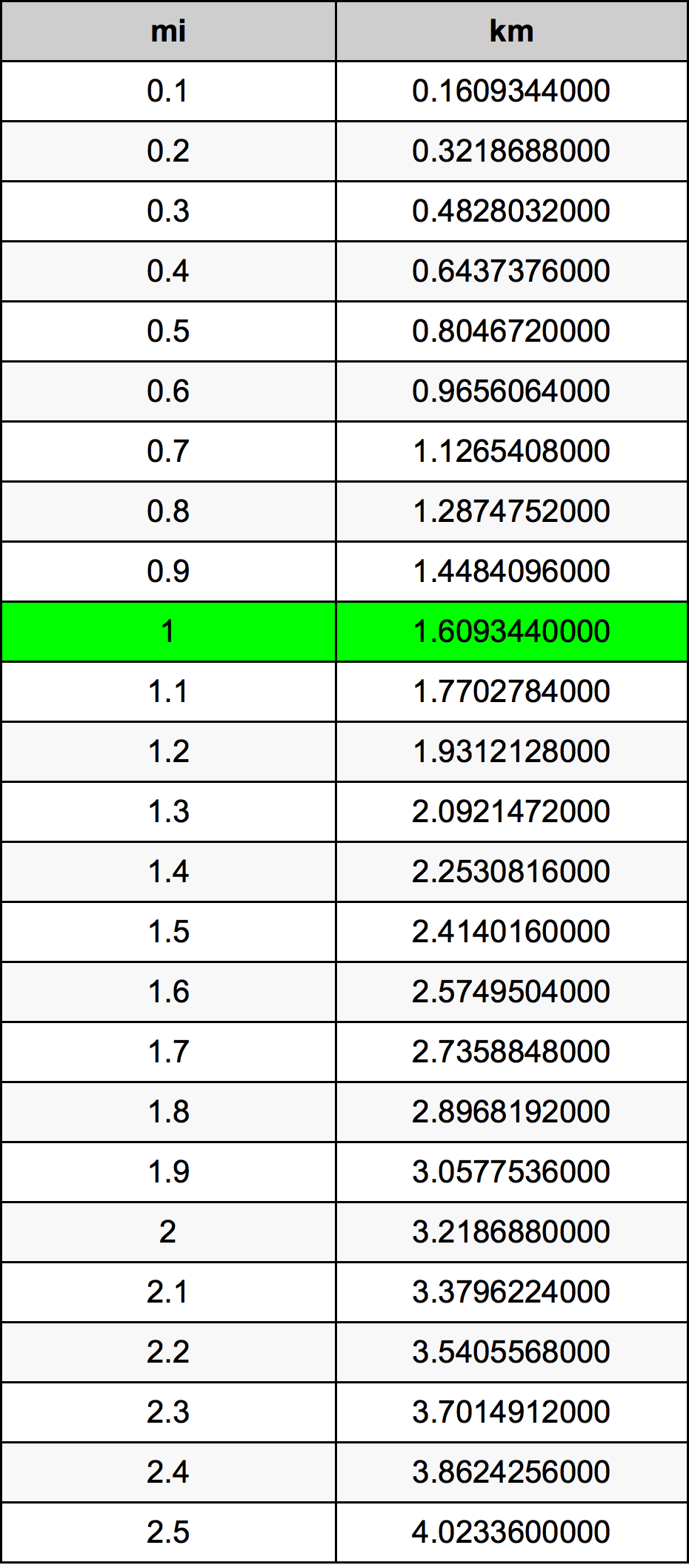
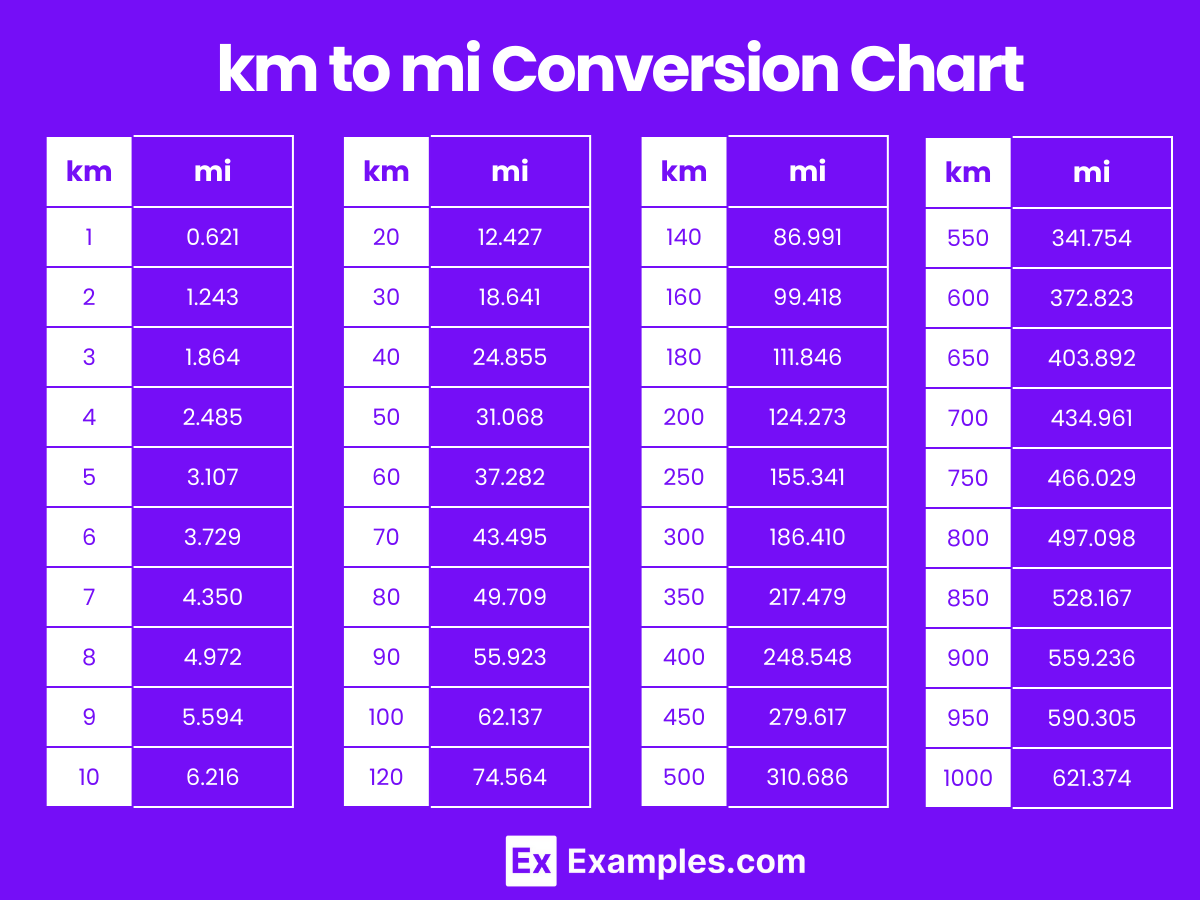
At first glance, the question “what is 1 km in miles” appears to be a simple mathematical query. The answer is straightforward: 1 kilometer is approximately 0.621371 miles. However, in the realm of modern technology, this conversion is far more than a static ratio. It represents a complex interplay of software engineering, geospatial data processing, and user interface design. In a world driven by globalized data, the ability to translate measurements seamlessly between the metric and imperial systems is a foundational requirement for everything from fitness trackers and autonomous vehicles to international logistics software.

To understand how 1 km becomes 0.621 miles in the digital age, we must look behind the screen at the algorithms, APIs, and hardware that facilitate our understanding of distance.
The Digital Architecture of Unit Conversion
In the early days of computing, unit conversion was a manual hard-coding task. If a programmer needed to display miles for an American user and kilometers for a European one, they would write a specific function for that purpose. Today, the “Tech Stack” for measurement is far more sophisticated, relying on standardized libraries and high-level logic to ensure precision.
Floating-Point Precision and Mathematical Accuracy
When a computer calculates “1 km to miles,” it isn’t just looking at a rounded figure. It uses floating-point arithmetic to handle the long string of decimals required for high-precision tasks. In software development, particularly in fields like aerospace or civil engineering, the difference between 0.62 and 0.62137119 can be the difference between a successful landing and a catastrophic error. Tech frameworks like IEEE 754 provide the standard for how these floating-point numbers are stored and calculated, ensuring that the conversion remains consistent across different hardware architectures.
Unit Conversion Libraries and APIs
Modern software developers rarely write conversion formulas from scratch. Instead, they utilize robust libraries such as Pint for Python, JS-Quantities for JavaScript, or the Units of Measurement API for Java. These libraries treat units as objects rather than mere numbers. This “Dimensional Analysis” prevents bugs where a developer might accidentally add a kilometer to a mile. By using these tech-driven tools, applications can automatically detect a user’s locale and serve the correct distance measurement, transforming the raw data of a kilometer into the relevant mile-based metric for the end-user.
The Role of Cloud-Based Microservices
Large-scale platforms like Google Maps or Uber do not perform every conversion on the local device. They often use microservices—small, specialized programs—that handle geospatial calculations. When you ask a digital assistant “What is 1 km in miles?”, the request is sent to a server, processed through a conversion engine, and returned in milliseconds. This ecosystem ensures that even the simplest conversion is backed by the massive computing power of the cloud.
GPS, Satellites, and the Geospatial Tech Stack
The conversion of 1 km to miles is perhaps most relevant in the world of Global Positioning Systems (GPS). While the conversion factor is a constant, the data it acts upon is dynamic and derived from an intricate network of satellites and ground stations.
The WGS 84 Standard
Almost all modern GPS technology relies on the World Geodetic System (WGS 84). This is a mathematical model of the Earth that provides the frame of reference for coordinates. Interestingly, WGS 84 uses meters as its base unit. Therefore, every time a fitness app in the United States tells a runner they have completed one mile, the underlying technology has actually calculated that distance in meters and kilometers first. The tech stack performs a real-time conversion from the metric “source of truth” to the imperial “display preference.”
The Haversine Formula and Geodesic Calculations
Calculating distance on a sphere (or an ellipsoid like Earth) is more complex than a straight line on a flat map. Software developers use the Haversine formula or Vincenty’s formulae to calculate the distance between two sets of latitude and longitude coordinates. If a user moves 1 kilometer across the Earth’s surface, the software calculates this “Great Circle” distance in meters. For users in the UK or the US, the software then applies the 0.621371 conversion factor. This process happens dozens of times per second as you drive or run, showcasing the high-speed processing power of modern mobile processors.
Telematics and Fleet Management
In the world of logistics tech (Telematics), the conversion of 1 km to miles is a critical data point for international shipping. Fleet management software must track vehicles crossing borders—for example, a truck moving from Mexico (metric) to the United States (imperial). The software must handle “Odometer Logic,” where the digital twin of the vehicle tracks maintenance intervals. If a truck requires service every 10,000 miles, but the vehicle’s internal computer tracks kilometers, the software’s conversion algorithm becomes a vital tool for preventative maintenance and operational safety.
User Experience (UX) and the Interface of Measurement
Tech is not just about the “back-end” math; it is also about how that information is communicated to the human user. The conversion from 1 km to miles is a classic problem in Localization (L10n) and Internationalization (i18n).
Localization and Regional Settings
Software “Internationalization” is the process of designing a product so that it can be adapted to various languages and regions without engineering changes. A well-designed app uses “locale-aware” formatting. When the operating system (iOS or Android) detects that the region is set to “United States,” it triggers a global override. Every “kilometer” data point in the database is piped through a conversion filter before it reaches the UI (User Interface). This ensures that the user sees “0.62 miles” without the developer having to manually change the code for every market.
Voice Assistants and Natural Language Processing (NLP)
With the rise of AI-driven voice assistants like Alexa, Siri, and Google Assistant, the query “what is 1 km in miles” is processed through Natural Language Processing. The AI must parse the intent of the question, identify the units involved, and query a knowledge graph or a calculator tool to provide the answer. This is an evolution from simple search results to “semantic understanding,” where the technology understands that the user is asking for a conversion of length, not weight or volume.
Wearables and Haptic Feedback
Smartwatches and fitness trackers represent the “edge” of measurement tech. These devices use accelerometers and GPS to track movement. The challenge for these gadgets is to provide “glanceable” information. For a marathon runner, seeing “1.0 km” versus “0.62 miles” matters for their pacing strategy. High-end fitness tech allows for “Split Conversion,” where a runner can track their total distance in miles but view their laps in kilometers, requiring the device’s firmware to handle dual-unit processing simultaneously without draining battery life.
The Future of Spatial Data and the Internet of Things (IoT)
As we move toward a future dominated by autonomous vehicles and the Internet of Things (IoT), the precision of unit conversion becomes even more paramount.
Autonomous Vehicle Navigation
Self-driving cars rely on LiDAR and Radar to “see” the world. These sensors operate with extreme precision, usually measured in centimeters or millimeters. However, the car must still interact with a world designed around human units. A car programmed in a metric-standard environment must be able to interpret a speed limit sign in miles per hour or a “1-mile ahead” exit sign when crossing into an imperial-standard country. The technology must perform these conversions with zero latency to ensure passenger safety.
Edge Computing and Real-Time Data
The future of IoT involves “Edge Computing,” where data is processed closer to where it is gathered (on the device itself) rather than in a central cloud. This is vital for real-time distance tracking. If an industrial drone is told to fly 1 kilometer, its internal flight controller processes that in metric units. However, if the operator’s dashboard is set to miles, the “Edge” device must provide a low-latency conversion to the mile-based interface. This seamless transition is made possible by increasingly powerful microcontrollers and efficient conversion algorithms.
Smart Cities and Digital Twins
Urban planners are now creating “Digital Twins”—virtual replicas of entire cities. These models are used to simulate traffic flow, energy consumption, and emergency response times. Because these models often incorporate data from global consultants and manufacturers, they frequently mix metric and imperial data. The “Tech Solution” is a unified data layer that can ingest “1 km” of fiber optic cable data and “0.62 miles” of road data, normalizing them into a single, cohesive digital environment.
Conclusion: The Invisible Layer of Conversion
The simple conversion of 1 km to 0.621371 miles is a microcosm of the broader tech landscape. It demonstrates how software acts as a bridge between different human standards, creating a world where data is portable and universally understood. Behind every “simple” calculation lies a vast infrastructure of floating-point math, satellite triangulation, localization logic, and high-speed processing.
As technology continues to evolve, the distinction between kilometers and miles will become even less noticeable to the end-user. We are moving toward a “unit-agnostic” digital experience, where the tech stack handles the complexities of measurement in the background, allowing us to focus on the journey rather than the math. Whether you are tracking a 1 km walk on your watch or navigating a 1,000-mile road trip via GPS, you are witnessing the quiet, efficient power of modern computational technology at work.
aViewFromTheCave is a participant in the Amazon Services LLC Associates Program, an affiliate advertising program designed to provide a means for sites to earn advertising fees by advertising and linking to Amazon.com. Amazon, the Amazon logo, AmazonSupply, and the AmazonSupply logo are trademarks of Amazon.com, Inc. or its affiliates. As an Amazon Associate we earn affiliate commissions from qualifying purchases.