
The history of global finance and international trade is often written in the boardrooms of powerful corporations long before it is signed into law by politicians. Perhaps no event in American history illustrates the overwhelming influence of private industry on national foreign policy more clearly than the annexation of Hawaii. While historical narratives often focus on the strategic military value of the islands, the primary engine driving the integration of Hawaii into the United States was the sugar industry.
This was not merely a diplomatic expansion; it was a calculated business move designed to protect profit margins, eliminate trade barriers, and secure long-term capital stability for a handful of powerful agricultural conglomerates. By examining the financial mechanics of the 19th-century sugar trade, we can see how economic interests successfully lobbied for the overthrow of a sovereign monarchy to ensure their place in the American domestic market.

The Economics of the Sugar Boom: Building a Corporate Empire
The mid-to-late 19th century saw Hawaii undergo a radical transformation from a subsistence-based economy to a high-output industrial powerhouse focused on a single commodity: sugar. This shift was fueled by massive inflows of American capital and the realization that Hawaii’s climate offered a competitive advantage that few other regions could match.
The Reciprocity Treaty of 1875: A Financial Catalyst
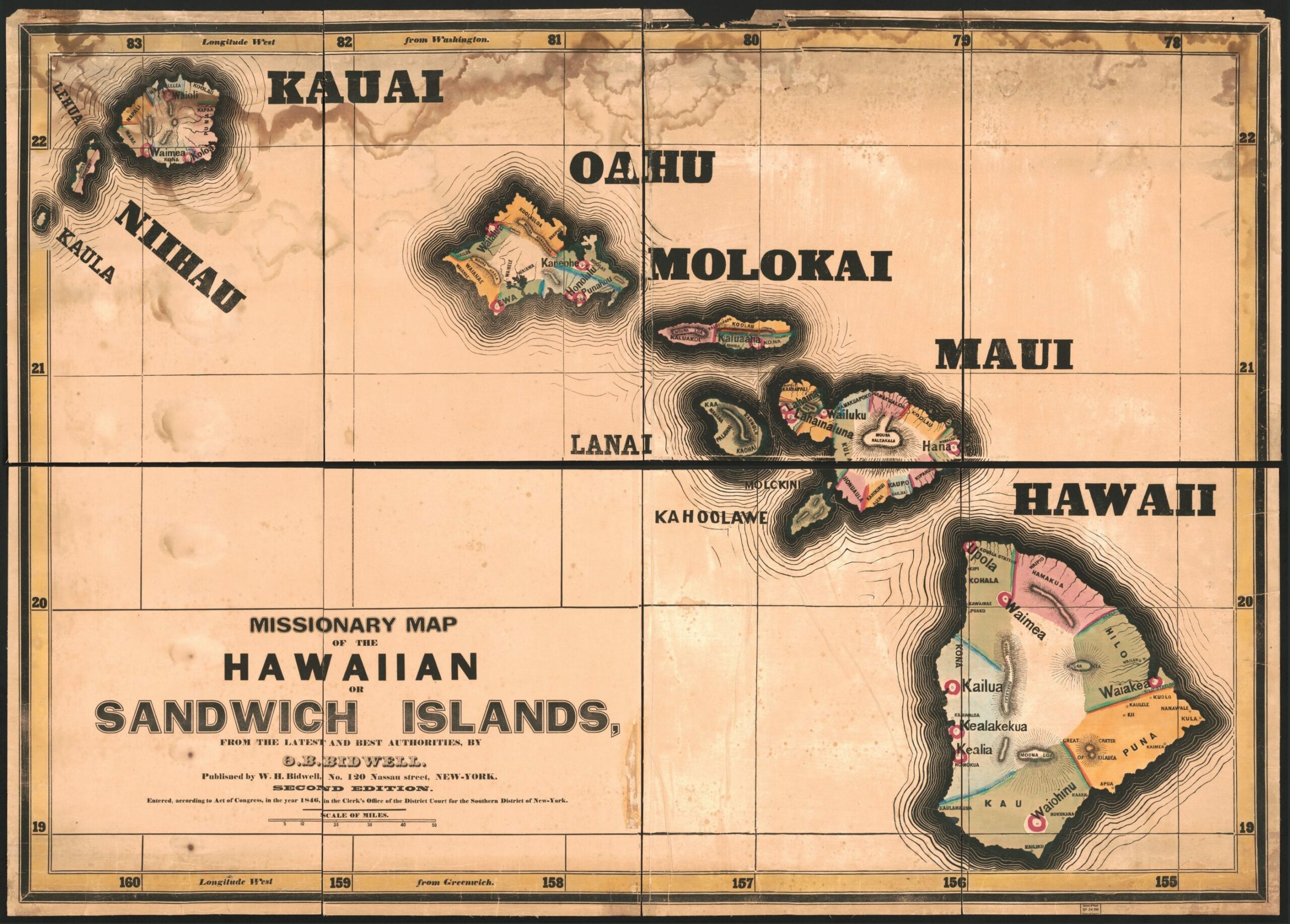
In the 1870s, the Hawaiian sugar industry faced a significant hurdle: high United States tariffs. To remain competitive with domestic producers in Louisiana and the emerging beet sugar industry in the West, Hawaiian planters needed a trade advantage. The Reciprocity Treaty of 1875 was the ultimate financial breakthrough. Under this agreement, Hawaiian sugar was allowed to enter the U.S. market duty-free.
The economic impact was immediate and staggering. Between 1875 and 1890, sugar exports to the U.S. increased by nearly tenfold. The treaty effectively tethered the Hawaiian economy to the American market, creating a symbiotic—yet dangerously dependent—financial relationship. For investors, Hawaii became a “sure bet,” leading to a surge in land acquisition and infrastructure development funded by American banks.
The Rise of the “Big Five” Conglomerates
As the industry scaled, power became concentrated in the hands of five major corporations, known as the “Big Five”: Castle & Cooke, Alexander & Baldwin, C. Brewer & Co., American Factors (now Amfac), and Theo H. Davies & Co. These were not just farming operations; they were sophisticated business agencies that managed everything from labor recruitment and shipping to banking and insurance.
These firms functioned as an oligarchy, controlling nearly every facet of the Hawaiian economy. By the late 1880s, these corporations realized that their massive investments were vulnerable to the whims of the Hawaiian Monarchy and, more importantly, the volatility of U.S. trade policy. The “Big Five” didn’t just want to influence the government; they wanted to become the government to protect their balance sheets.
The McKinley Tariff and the Resulting Financial Crisis
The stability of the Hawaiian sugar industry was shattered in 1890 with the passage of the McKinley Tariff by the U.S. Congress. This single piece of legislation serves as a classic case study in how domestic trade policy can trigger geopolitical upheaval.
Protecting Domestic Markets vs. Island Exports
The McKinley Tariff removed the duty-free status of all raw sugar entering the U.S., effectively nullifying the advantages of the Reciprocity Treaty. Furthermore, it granted a two-cent-per-pound bounty to domestic U.S. sugar producers. Overnight, Hawaiian sugar—which had been the dominant player in the Pacific market—became more expensive than sugar grown on the American mainland.
The financial fallout in Hawaii was catastrophic. Property values plummeted, sugar stock prices crashed, and the islands were plunged into a severe economic depression. The “Big Five” and other American investors faced a grim reality: their capital was trapped in a sovereign nation that was now excluded from its primary market.
The Profit Margin Squeeze and the Case for Annexation
From a business perspective, the solution to the McKinley Tariff was simple: if Hawaii were to be annexed by the United States, Hawaiian sugar would be classified as “domestic.” This would not only eliminate the tariff but would also qualify Hawaiian planters for the lucrative two-cent bounty.
The drive for annexation was, therefore, an attempt at regulatory arbitrage. The business elite calculated that the loss of national sovereignty was a small price to pay for the restoration of profit margins. The political unrest that followed was not a grassroots movement of the Hawaiian people, but a coordinated effort by the “Committee of Safety”—a group of businessmen and lawyers—to protect their financial interests against a Queen (Liliʻuokalani) who sought to restore power to the native population and reduce foreign corporate influence.
Corporate Coup: The Corporatization of Governance
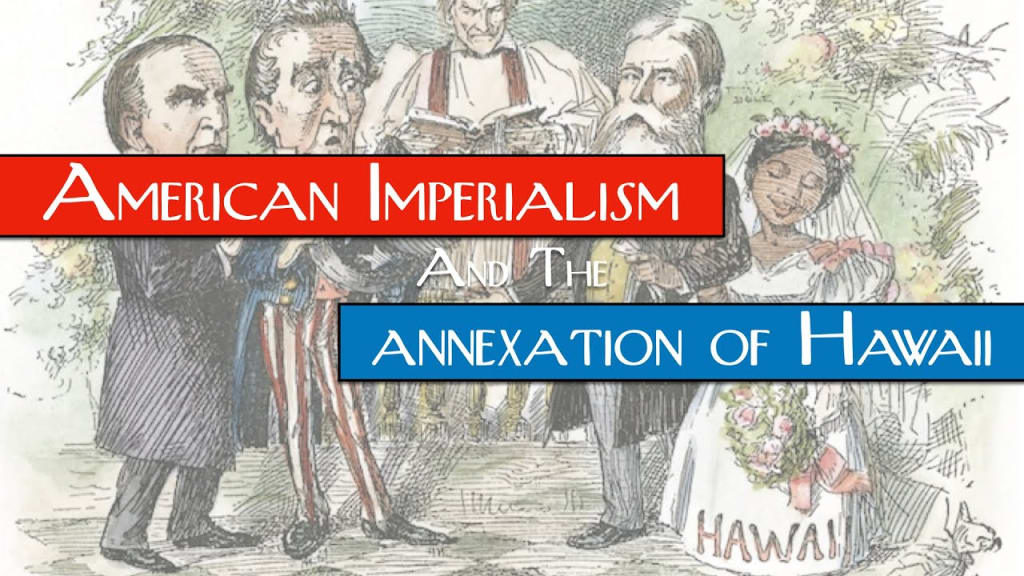
The 1893 overthrow of Queen Liliʻuokalani was, in essence, a hostile takeover of a government by corporate interests. This transition from a monarchy to a “Provisional Government,” and later the Republic of Hawaii, was led by individuals who were deeply embedded in the sugar industry.
Business Interests Over Sovereignty
Sanford B. Dole, who became the president of the Republic of Hawaii and later its first territorial governor, came from a family synonymous with agricultural commerce. The leadership of the new government was a “who’s who” of the sugar industry’s legal and financial advisors. Their primary objective was to maintain order and secure a treaty of annexation with the United States.
During this period, the Republic of Hawaii functioned more like a corporate subsidiary than a democratic state. Policies were enacted to ensure a steady supply of cheap immigrant labor—primarily from China, Japan, and the Philippines—which was essential for maintaining the high-volume, low-margin production requirements of the sugar mills. By controlling the state apparatus, the industry could suppress labor organizing and ensure that land remained in the hands of the large estates.
Dole and the Institutionalization of Agribusiness
While sugar was the primary driver, the diversification into other tropical fruits, most notably pineapples, solidified the corporate structure of the islands. The Dole Food Company (originally the Hawaiian Pineapple Company) leveraged the same political connections and land-use policies established by the sugar barons. The annexation in 1898 finally provided the legal and financial “wrapper” the industry had been seeking. With the U.S. flag flying over Honolulu, the risk of foreign interference or domestic nationalization disappeared, and Hawaii was fully integrated into the American capitalist framework.
The Geopolitical Investment: Why Washington Bit
While the sugar industry provided the push, the United States government had its own financial and strategic reasons for accepting the “gift” of Hawaii. The annexation represents a moment where private corporate goals aligned perfectly with national economic expansionism.
Strategic Assets and Long-term ROI
By the late 1890s, the U.S. was looking to expand its reach into Asian markets, particularly China. Hawaii was viewed as the “Crossroads of the Pacific,” an essential refueling station and naval outpost. From a financial perspective, the “return on investment” (ROI) for the U.S. government included the acquisition of Pearl Harbor, which would protect American merchant shipping across the Pacific.
The annexation was an exercise in securing maritime trade routes. By bringing Hawaii under the U.S. banking and legal system, the American government ensured that no other global power—such as Japan or Great Britain—could establish a competing commercial hub in the region.
Market Expansion and the Pacific Strategy
The annexation also served as a catalyst for broader Pacific investment. It gave American businesses a secure “home base” for operations in the Philippines and Guam, which were acquired shortly after following the Spanish-American War. The economic infrastructure built by the sugar industry—the ports, the railways, and the banking systems—became the foundation for American commercial dominance in the Pacific for the next century.
Conclusion: Lessons from a Commodity-Driven Annexation
The annexation of Hawaii remains a stark reminder of how industrial needs can reshape the map of the world. It was not a movement of the people, but a movement of capital. The sugar industry, faced with the existential threat of the McKinley Tariff, leveraged its financial might to force a political union that guaranteed its survival and growth.
For modern business leaders and investors, the story of Hawaii’s annexation offers several key insights:
- Policy Risk is Real: A single change in tariff or tax law (like the McKinley Tariff) can render an entire industry’s business model obsolete.
- Corporate Lobbying as Strategy: When market forces fail, industry leaders often turn to political restructuring to protect their assets.
- The Intersection of Trade and Sovereignty: Economic dependency is often the precursor to political integration.
The “Big Five” and their sugar empires may have evolved into modern real estate and diversified holding companies, but their legacy is etched into the very existence of Hawaii as the 50th state. The annexation was, at its heart, a business merger—one that prioritized the stability of the sugar trade over the sovereignty of a nation, proving that in the world of high-stakes finance, the bottom line often dictates the course of history.
aViewFromTheCave is a participant in the Amazon Services LLC Associates Program, an affiliate advertising program designed to provide a means for sites to earn advertising fees by advertising and linking to Amazon.com. Amazon, the Amazon logo, AmazonSupply, and the AmazonSupply logo are trademarks of Amazon.com, Inc. or its affiliates. As an Amazon Associate we earn affiliate commissions from qualifying purchases.