
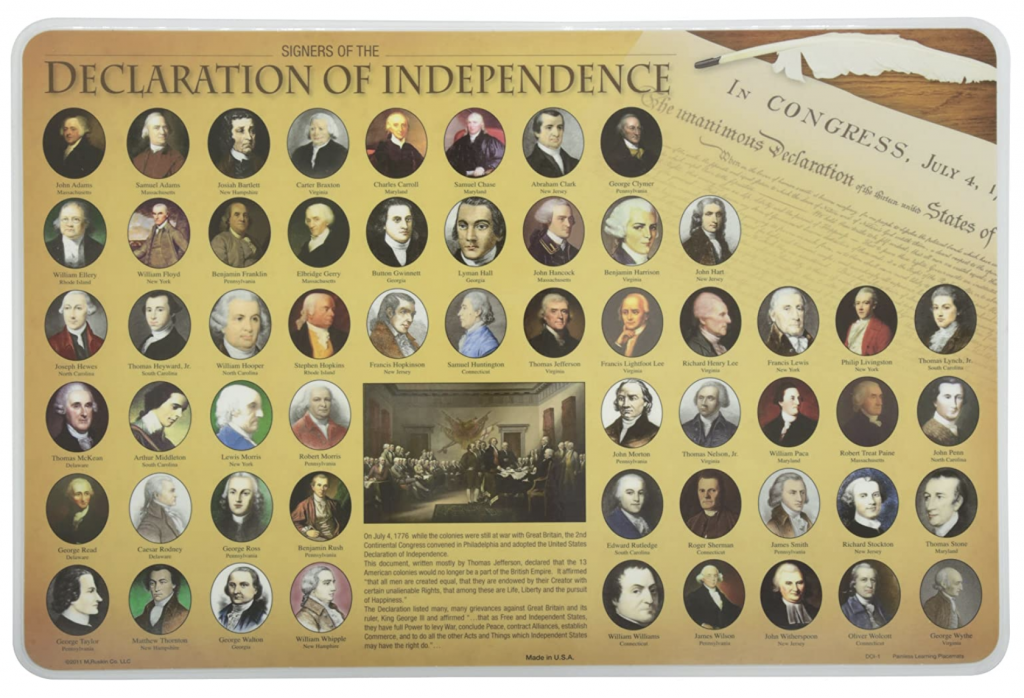
The stroke of a quill on parchment, an act of defiance against a global empire, forever etched the names of fifty-six men into the annals of history. On July 4, 1776, these courageous individuals, representing thirteen disparate colonies, formally declared their intention to sever ties with Great Britain, giving birth to the United States of America. But while we celebrate the Declaration of Independence as a pivotal moment, the document itself was just the beginning of a perilous journey. What became of these visionary, yet often flawed, individuals who staked their lives, fortunes, and sacred honor on the radical notion of self-governance? Their stories, often overlooked in the grand narrative of national independence, reveal a complex tapestry of sacrifice, resilience, political foresight, and personal struggle, echoing themes of risk, financial upheaval, nation-building, and the enduring power of a foundational “brand.”

Beyond the iconic signatures, the lives of these men unfolded against a backdrop of war, economic uncertainty, and the immense task of forging a new national identity. Their experiences offer profound insights into the true cost of revolution, the nascent stages of American governance, and the personal and financial sacrifices required to establish a new order. In an era before instant communication or digital archives, their challenges were immense, yet their actions laid the groundwork for a nation that would eventually embrace innovation and global leadership. Understanding their fates allows us to appreciate not just the Declaration itself, but the living, breathing commitment behind it – a commitment that resonates even in our technologically advanced, brand-conscious, and financially intricate modern world.
The Perilous Path: Sacrifices and Consequences of Revolution
Signing the Declaration of Independence was not merely a symbolic gesture; it was an act of treason punishable by death. King George III considered these men rebels, and the full might of the British military was deployed to crush their insurgency. Consequently, the signers faced immediate and severe repercussions, transforming their lives from those of comfortable gentry, lawyers, or merchants into fugitives or targets. The war that followed was not just a conflict of armies but a personal crucible for each man who dared to challenge the Crown.
Personal and Financial Ruin: The Cost of Conviction
For many signers, the commitment to independence came at an astronomical personal and financial cost. Their properties were often targeted by British forces or Loyalist sympathizers. Farms were plundered, homes were burned, and businesses were destroyed. Consider the cases of figures like Thomas Nelson Jr. of Virginia, who personally financed a significant portion of the war effort, even ordering the bombardment of his own home when it was occupied by British General Cornwallis. He died nearly bankrupt, a testament to his profound sacrifices.
Others, like Arthur Middleton of South Carolina, had their estates devastated. His magnificent home, Middleton Place, was ransacked, and his valuable library destroyed. Many slaveholders, including some signers, faced the flight or seizure of enslaved people by British forces, leading to substantial economic losses. The currency depreciation during and after the war further exacerbated their financial woes. The nascent American government’s inability to consistently pay its debts meant that loans and contributions from patriots often went unrepaid, leading to widespread personal insolvency among those who had funded the revolution. The concept of “Money” for these individuals was often tied directly to their land and personal credit, both of which were severely compromised by the conflict. Their struggles highlight the immense financial risk involved in building a new “Brand” of nationhood, where personal wealth was directly leveraged against a collective ideal.
Imprisonment, Exile, and Health Declines
The war also brought the constant threat of capture, imprisonment, and even torture. Richard Stockton of New Jersey, for instance, was captured by the British in late 1776. He was subjected to brutal treatment, held in deplorable conditions, and his health never fully recovered, leading to his early death just a few years later. His estate was plundered, and his library, one of the finest in the colonies, was burned. Similarly, Matthew Thornton of New Hampshire had his home confiscated.
The rigors of war, the stress of leadership, and often inadequate living conditions took a heavy toll on the signers’ physical and mental health. Many suffered from chronic ailments that were either exacerbated by their experiences or directly contracted during the conflict. The average lifespan for the signers, while varied, was often cut short by the immense pressures and hardships they endured. Their stories are a stark reminder that the fight for freedom was not an abstract political debate but a visceral struggle with profound consequences for individual well-being and longevity.
The Human Cost of Revolution
Beyond the tangible losses, there was an immeasurable human cost. Families were displaced, relationships strained, and lives irrevocably altered. The signers, whether serving in Congress, leading troops, or rebuilding their shattered livelihoods, lived under a constant shadow of uncertainty and danger. The early “Tech” of communication – handwritten letters, couriers, and the printing press – meant that news traveled slowly, and anxiety over loved ones and the course of the war was a constant companion.
This era lacked the digital safety nets or robust financial markets we take for granted today. Their “Money” was their land, their goods, their personal reputation. Losing these meant total destitution. Their actions established the “Brand” of American courage, but at a price that few modern citizens can truly comprehend. It was a time when standing for an ideal meant risking everything, down to the last scrap of personal comfort and security.
Shaping a New Nation: Their Post-War Contributions
Despite the tremendous personal toll, the commitment of many signers did not end with the Treaty of Paris in 1783. Having fought for independence, they understood that the harder task of building a functional, stable republic lay ahead. A significant number of them continued to serve the fledgling nation, playing critical roles in establishing its political, economic, and social infrastructure.
Architects of Government: Crafting the American Brand
Many signers transitioned from revolutionaries to statesmen, becoming the foundational architects of the American government. John Adams, Thomas Jefferson, and Benjamin Franklin, though not all signers, were key figures, but numerous signers contributed directly to the new constitutional order. Roger Sherman of Connecticut was the only person to sign all four great state papers of the United States: the Continental Association, the Declaration of Independence, the Articles of Confederation, and the Constitution. His pragmatic approach was crucial in bridging divides during the Constitutional Convention.
James Wilson of Pennsylvania was another influential voice at the Constitutional Convention, advocating for a strong executive and popular sovereignty. These men dedicated themselves to defining the “Brand” of American governance, outlining its principles, structures, and systems. They wrestled with complex issues of federalism, representation, and individual rights, ultimately creating a framework that would endure for centuries. Their legal expertise and political acumen were indispensable in crafting a system of laws and institutions that could transform thirteen disparate states into a unified nation. The early “Brand” of the U.S. government was directly shaped by their debates, compromises, and vision.
Economic Revival and Early Innovation
The challenge of establishing a stable economy was paramount after the war. The new nation was burdened with war debts, a lack of sound currency, and significant trade disruptions. Some signers, like Robert Morris of Pennsylvania, the “Financier of the Revolution” (though he struggled financially later in life), were instrumental in attempting to stabilize the nation’s “Money” supply and public credit. Others returned to their fields, developing agricultural innovations or establishing new industries, fostering local economic growth.
The entrepreneurial spirit that characterized many signers contributed to the economic recovery. While not “Tech” in the modern sense, their improvements in farming techniques, manufacturing processes, and trade routes represented the cutting edge of economic innovation for their time. They understood that political independence had to be underpinned by economic viability, and they worked to cultivate the conditions for future prosperity. Their efforts laid the groundwork for the future American economy, demonstrating an early understanding of how “Money” and innovation (even rudimentary “Tech”) would be critical to national strength.
Legacy and Leadership: Sustaining the Brand
Through their continued public service—as governors, senators, congressmen, judges, and ambassadors—these men further solidified the national “Brand” of a republic founded on principle and popular sovereignty. Their personal conduct, even in the face of political disagreements and factionalism, often set precedents for civic duty and leadership. They were the living embodiment of the Declaration’s ideals, demonstrating that the pursuit of liberty and self-governance required ongoing vigilance and dedication.
Their correspondence, speeches, and writings became essential historical documents, providing insights into the challenges and triumphs of the early republic. These artifacts, now often digitized and accessible through modern “Tech” platforms, continue to inform our understanding of their leadership and the evolving “Brand” of American democracy. They were not just signers; they were the first generation of American leaders, tasked with turning revolutionary ideals into a stable, functioning reality.
Diverse Destinies: Beyond Public Service and into the Digital Age
While many signers continued in public life, others retreated from the national stage, returning to their private affairs. Yet, even in their personal capacities, they often left lasting marks on their communities and on the broader historical record. Their diverse post-war lives highlight the varied paths taken by those who had pledged everything for a common cause.
Return to Private Life and Entrepreneurship
After the war and the intense period of nation-building, some signers chose to return to their former professions or pursue new entrepreneurial ventures. Lawyers resumed their practices, farmers rebuilt their estates, and merchants re-established their trade networks. For many, this was a necessary step to recover their personal “Money” and secure their families’ futures after years of financial strain. For example, George Clymer of Pennsylvania became a successful businessman and advocated for financial reforms, serving on the first board of directors of the First Bank of the United States.
Their efforts to rebuild and innovate in their private lives were crucial for local economies. They often became leaders in their communities, promoting education, infrastructure, and local industry. These endeavors, while not always recorded in national histories, were vital in solidifying the social and economic fabric of the nascent nation from the ground up. Their perseverance in the face of personal financial hardship demonstrated a fundamental belief in the future prosperity of the United States.
Education and Philanthropy: Investing in the Future
A number of signers dedicated their later years to education and philanthropy, understanding that a well-educated populace was essential for the survival of a republic. Benjamin Rush of Pennsylvania, a physician and social reformer, championed public education and advocated for humane treatment of the mentally ill. Thomas Jefferson, of course, founded the University of Virginia, a testament to his belief in the power of knowledge.
These philanthropic efforts extended beyond formal institutions. Many signers used their influence and remaining “Money” to support local schools, churches, and other community projects. They understood that the “Brand” of America was not just about political structures but also about the character and enlightenment of its citizens. Their investments in education and social welfare were forward-looking, laying foundations for future generations to thrive intellectually and civically.
The Evolving Narrative and Digital Preservation
Today, the stories of the Declaration’s signers are preserved and reinterpreted through modern “Tech.” Digital archives, online databases, and AI-powered historical analysis tools allow scholars and the public to delve deeper into their lives, correspondence, and contributions than ever before. For instance, the papers of the Founding Fathers, including many signers, are meticulously digitized, searchable, and cross-referenced, offering unprecedented access to the primary sources that shaped their world. This digital accessibility ensures that their “Brand” and the complex journey they undertook remain relevant and understandable to new generations.
Historians can now use “Tech” to analyze linguistic patterns in their writings, map their financial networks, and even reconstruct their physical environments, providing a richer, more nuanced understanding of their experiences. This digital preservation not only honors their legacy but also makes their struggles and triumphs a living narrative, continually open to new interpretations and connections, thereby deepening our appreciation for the enduring “Brand” of American independence and the profound “Money” and human costs involved.
The Enduring Brand of Liberty and its Digital Echoes
The legacy of the Declaration of Independence and its signers transcends their individual fates. Together, they forged an enduring “Brand” for a nation built on revolutionary ideals, a brand that continues to inspire and challenge.
Crafting a National Identity: The Brand of America
The Declaration itself is arguably the most powerful piece of “Brand” messaging in American history. It articulated core values – liberty, equality, self-governance – that became the cornerstone of the nation’s identity. The signers, through their collective act, their sacrifices, and their subsequent service, were the primary custodians and promoters of this nascent national “Brand.” They instilled in the American psyche a sense of purpose and a belief in the power of the individual, tempered by the necessity of collective action.
The narratives of their courage, perseverance, and often their martyrdom became foundational myths, shaping how Americans viewed themselves and their place in the world. This “Brand” of America, born out of revolutionary fervor and enshrined in a simple yet profound document, has been adapted, debated, and reinterpreted across centuries, but its core tenets remain remarkably consistent, a testament to the clarity and power of the original vision.
Modern Relevancy and Digital Preservation: Tech’s Role
In the 21st century, “Tech” plays a crucial role in maintaining the relevancy of the Declaration and its signers. From virtual reality tours of historical sites to sophisticated educational apps that bring their stories to life, technology ensures that their contributions are not relegated to dusty textbooks. Online educational platforms, digital museums, and interactive exhibits allow global audiences to engage with these foundational figures, understanding their struggles, their “Money” challenges, and their vision for a new republic.
Furthermore, digital security tools safeguard these precious historical archives, preventing loss and ensuring their authenticity for future study. The ongoing digitization projects for historical documents are a massive technological undertaking, securing the intellectual “property” of the nation’s founding and ensuring its continued accessibility for generations to come, allowing us to perpetually re-examine the origins of the American “Brand.”

A Financial and Ideological Inheritance: Money and Principles
The signers’ personal sacrifices, often including their financial ruin, laid the groundwork for an economic system that would eventually lead to unprecedented prosperity. They understood that political freedom was intertwined with economic opportunity, even if they themselves suffered financially in the process. Their experiences highlight the profound link between “Money,” liberty, and governance. The economic systems they established, though rudimentary, provided a framework for future growth, trade, and eventually, financial innovation.
Their ideological inheritance, enshrined in the Declaration, continues to inform debates about governance, individual rights, and economic justice. The principles they articulated—about human rights and the consent of the governed—are a timeless “Brand” promise that America constantly strives to fulfill. Their lives and legacies serve as a potent reminder that the pursuit of liberty comes with both profound costs and immeasurable rewards, a complex interplay of principle and pragmatism that continues to shape the nation they helped create.
The signers of the Declaration of Independence were not monolithic figures; they were a diverse group of individuals who, despite their varied backgrounds and post-war trajectories, were united by an extraordinary act of courage. Their lives after July 4, 1776, were a testament to the immense personal cost of revolution, the formidable challenge of nation-building, and the enduring power of a shared ideal. Their sacrifices—financial, personal, and familial—paved the way for the establishment of a republic whose “Brand” of liberty, though often tested, continues to resonate globally. In an age of advanced “Tech” and complex “Money” systems, their stories remind us that the foundations of freedom were built not just on grand pronouncements, but on the profound, often arduous, personal journeys of real men committed to an extraordinary vision.
aViewFromTheCave is a participant in the Amazon Services LLC Associates Program, an affiliate advertising program designed to provide a means for sites to earn advertising fees by advertising and linking to Amazon.com. Amazon, the Amazon logo, AmazonSupply, and the AmazonSupply logo are trademarks of Amazon.com, Inc. or its affiliates. As an Amazon Associate we earn affiliate commissions from qualifying purchases.