
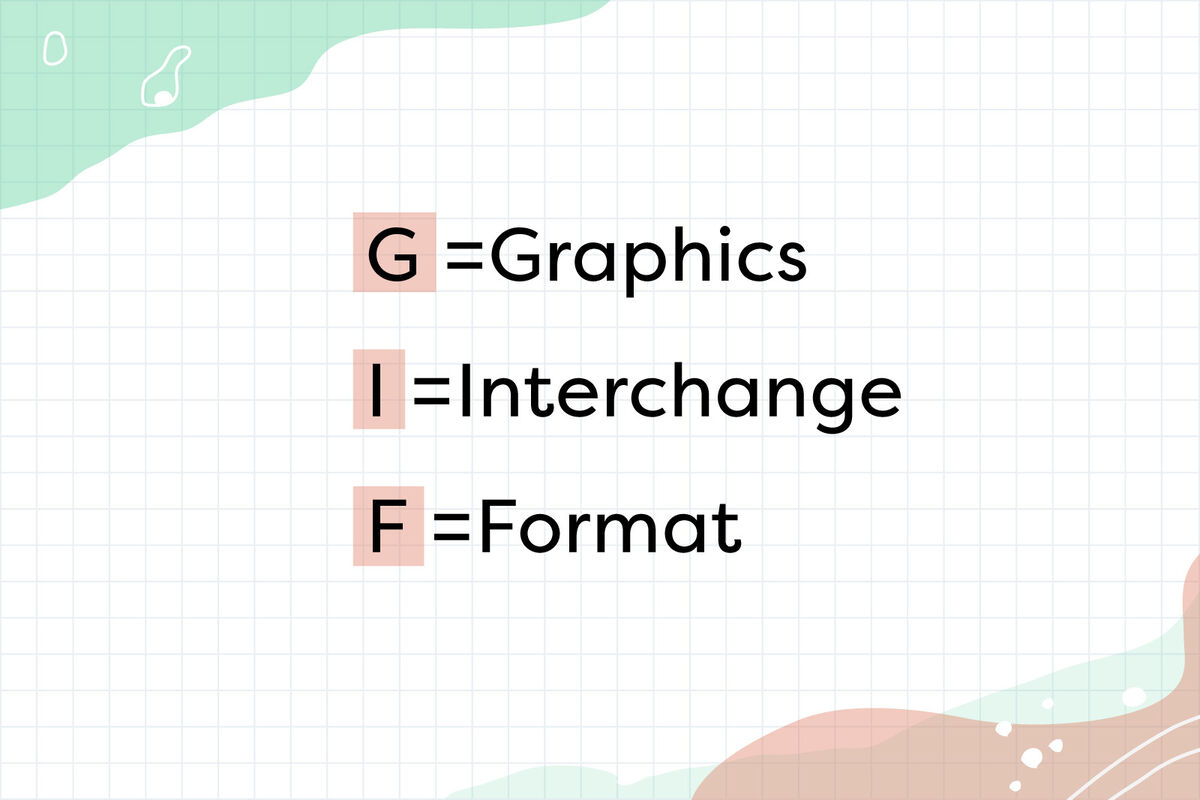
In the rapidly shifting landscape of digital media, few technologies have demonstrated the staying power of the GIF. To the casual user, a GIF is a silent, looping animation used to convey emotion or humor in a text message. However, from a technical perspective, the “Graphics Interchange Format” represents a pivotal moment in the history of data compression and internet standards. Understanding what GIF stands for is only the beginning; to truly appreciate this format, one must explore the architecture, the compression algorithms, and the historical milestones that allowed an 8-bit file format from the 1980s to dominate the modern social web.
The Technical Foundations of the Graphics Interchange Format
The GIF was introduced in 1987 by Steve Wilhite and his team at CompuServe, an early leader in online services. At the time, the digital world was a fragmented landscape of proprietary hardware and incompatible display standards. The GIF was designed to solve a specific problem: how to transmit color images over slow dial-up connections while ensuring they could be rendered on any computer system, regardless of the manufacturer.
The Origin Story: Steve Wilhite and CompuServe
Before the GIF, images were often hardware-dependent. An image created on an Apple II might not display correctly on an IBM PC. CompuServe needed a platform-independent format that was efficient enough for the 1200 baud modems of the era. Wilhite developed the Graphics Interchange Format to provide a “universal” language for visual data. By using a sophisticated compression technique, the GIF allowed users to download high-quality (for the time) images in seconds rather than minutes.
How LZW Compression Works
The secret to the GIF’s early success was the Lempel-Ziv-Welch (LZW) compression algorithm. Unlike “lossy” compression formats like JPEG—which discard data to reduce file size—LZW is a “lossless” algorithm. It works by identifying repetitive patterns in the data and replacing them with shorter codes.
In a digital image, large areas of the same color (such as a blue sky or a white background) contain highly redundant data. LZW builds a dictionary of these patterns on the fly as it processes the file. When the decoder encounters a previously indexed pattern, it simply refers back to the dictionary. This was revolutionary in 1987 because it allowed for significant file size reduction without any degradation in image quality, making it ideal for graphics with sharp lines and solid colors.
8-bit Color and the Limitation of the Palette
While the GIF was efficient, it had a technical ceiling: it is limited to an 8-bit color palette. This means that a single GIF file can contain a maximum of 256 distinct colors. These colors are chosen from a 24-bit RGB space (which allows for millions of colors), but the specific “palette” for any given image is capped at 256.
This limitation is the reason why GIFs often appear “grainy” or “dithered” when used for high-resolution photography. To compensate for the lack of colors, software uses dithering—a process of placing pixels of different colors close together to trick the eye into seeing a gradient. While this makes the GIF unsuitable for professional photography, it is perfectly adequate for the simple graphics, logos, and short animations that define its modern usage.
The Evolution of Animation and Web Standards
The GIF we recognize today—the looping animation—was not actually part of the original 1987 specification. The initial version, known as 87a, was strictly for static images. It wasn’t until the 1989 update, known as 89a, that the format introduced features like transparent backgrounds and, most importantly, the ability to store multiple images (frames) within a single file.
From Static Images to Loop Culture
The 89a specification allowed for “control blocks” that told the software how long to wait between displaying frames. However, the most iconic feature of the GIF—the infinite loop—was actually popularized by Netscape. In 1995, Netscape Navigator 2.0 introduced a version of the GIF that supported an application extension block which told the browser to restart the animation once it reached the final frame.
This technical addition transformed the GIF from a simple data-sharing format into a medium for storytelling. Suddenly, the web was alive with “Under Construction” signs, rotating logos, and the infamous dancing baby. The loop became the GIF’s defining characteristic, separating it from traditional video formats that required a “Play” button.
Netscape and the Power of the Loop
Netscape’s implementation of the looping GIF was a masterclass in software influence. By baking the looping logic into the browser itself, they ensured that users didn’t need external plugins like Flash or Java to see motion. This low barrier to entry is a recurring theme in the GIF’s history; because it was supported natively by every major browser, it became the default tool for web animation, outlasting many “superior” technologies that required proprietary players.
GIF vs. PNG and JPEG: Choosing the Right Format
As the web matured, other formats emerged to challenge the GIF. The JPEG was developed for photography, offering 16 million colors and much higher compression ratios for complex scenes. The PNG (Portable Network Graphics) was later developed as a direct, patent-free successor to the GIF.
Technically, PNG is superior to GIF in almost every way: it supports 24-bit color, better transparency (alpha channels), and more efficient compression. However, the PNG specification did not include native support for animation (though a separate format, APNG, exists). Because the GIF held the monopoly on simple, browser-native animation, it survived the “format wars” of the late 90s and early 2000s, carving out a niche that no other format could quite fill.
The Technical Resurgence in the Social Era
After a brief period of being considered “tacky” or “retro,” the GIF experienced a massive resurgence with the rise of social media and mobile messaging. This wasn’t just a cultural shift; it was supported by a massive upgrade in the technical infrastructure that manages and delivers these files.
The Rise of Giphy and Tenor
Modern GIF usage is powered by sophisticated APIs (Application Programming Interfaces). Companies like Giphy and Tenor (now owned by Google) created massive databases where GIFs are indexed with metadata and tags. When you search for a “happy” GIF on WhatsApp or Slack, you are interacting with an API that fetches a compressed file from a global server network. These platforms solved the “discovery” problem, making it technically seamless to find and share specific animations in real-time.
Why GIF Outlived Higher-Quality Formats
From a pure engineering perspective, the GIF is inefficient compared to modern video codecs like H.264 or VP9. A 10-second GIF can often be ten times larger in file size than the equivalent MP4 video file. Why, then, does it persist?
The answer lies in its technical ubiquity. A GIF is treated as an image file (<img> tag) rather than a video file (<video> tag). This means it autoplays, loops, and remains silent by default across every platform without requiring complex code. In the world of tech, “it just works” is often more important than “it is technically superior.”
Mobile Integration and Keyboard APIs
The integration of GIF search into mobile keyboards (like Gboard or iOS Keyboard) represented a major technical milestone. Developers had to create lightweight preview versions of GIFs to ensure that browsing thousands of animations didn’t crash the user’s mobile data or slow down their device. Today, when you scroll through a GIF library, you are often viewing low-resolution thumbnails that only load the full-quality file once selected, demonstrating the sophisticated caching and delivery systems behind the scenes.
Modern Alternatives and the Future of Compressed Media
Despite its longevity, the original .gif file format is slowly being phased out in favor of “GIF-like” experiences powered by more efficient tech. If you look closely at the “GIFs” on Twitter or Imgur, you will often find that they aren’t actually .gif files at all.
The Move Toward WebP and Animated WebP
Developed by Google, WebP is a modern image format that provides superior lossless and lossy compression. Crucially, it supports animation and transparency while maintaining much smaller file sizes than traditional GIFs. Many high-traffic websites now automatically convert uploaded GIFs into Animated WebP files on the backend to save bandwidth while delivering the same visual experience to the user.
MP4 and Video-based “GIFs”
Most major platforms now use “video-GIFs.” When a user uploads a GIF to a platform like Instagram or Twitter, the server transcodes the file into an H.264 or H.265 (HEVC) video loop. These files are significantly smaller and support millions of colors. By using the <video> tag with the autoplay, loop, and muted attributes, developers can mimic the behavior of a GIF while utilizing the hardware acceleration found in modern smartphones. This reduces battery drain and data consumption significantly.

The Paradox of Pronunciation
Finally, no technical overview of the GIF would be complete without mentioning the debate over its name. Steve Wilhite, the format’s creator, famously stated that it should be pronounced with a “soft G” (like the peanut butter brand, Jif). However, many in the tech community argue for a “hard G” because the first word of the acronym is “Graphics.” From a technical standpoint, the debate highlights the format’s transition from a niche engineering tool to a fundamental pillar of popular culture.
The Graphics Interchange Format is a testament to the idea that in technology, longevity is often a result of simplicity and compatibility. While its 256-color limit and LZW compression may seem like relics of a bygone era, the GIF’s ability to standardize visual communication across the globe ensures that its place in the history of tech is both secure and permanent. Whether it’s a 1980s static icon or a high-speed 2024 meme, the GIF remains the undisputed language of the internet.
aViewFromTheCave is a participant in the Amazon Services LLC Associates Program, an affiliate advertising program designed to provide a means for sites to earn advertising fees by advertising and linking to Amazon.com. Amazon, the Amazon logo, AmazonSupply, and the AmazonSupply logo are trademarks of Amazon.com, Inc. or its affiliates. As an Amazon Associate we earn affiliate commissions from qualifying purchases.