
Plastic. It’s ubiquitous, woven into the very fabric of our daily lives. From the smartphones we scroll on to the packaging that protects our food, plastic is an undeniable force in the modern world. But have you ever stopped to wonder what exactly makes up this versatile material? Beyond its obvious utility, understanding the elemental composition of plastic offers a fascinating glimpse into material science, a field deeply intertwined with the technological advancements that drive our society.
The website’s focus on Tech, Brand, and Money isn’t just about the latest gadgets or marketing strategies; it’s fundamentally about understanding the materials and innovations that enable these sectors. In the realm of technology, advancements in computing power, artificial intelligence, and digital security are often facilitated by the clever design and engineering of plastic components. Brands leverage the visual and functional appeal of plastic to create compelling products, while the economics of plastic production, its recycling, and the development of more sustainable alternatives have significant implications for personal and business finance.

Therefore, delving into “what elements are in plastic” isn’t just a chemistry lesson; it’s an exploration of a foundational material that underpins so much of our technologically driven, brand-conscious, and financially-interconnected world.
The Carbon Backbone: The Core of Every Plastic
At its heart, plastic is a polymer. The term “polymer” itself is derived from Greek words meaning “many parts.” These “parts” are small molecules called monomers, which link together in long chains to form the macromolecule we recognize as plastic. The fundamental element that forms the backbone of almost every synthetic polymer used in plastics is carbon (C).
Carbon’s unique ability to form strong covalent bonds with itself and with other elements is what makes the formation of long, stable polymer chains possible. This forms the basis of organic chemistry, and indeed, plastics are often referred to as “organic compounds.”
Hydrocarbons: The Simplest Building Blocks
The simplest polymers, and therefore the most basic forms of plastic, are made from hydrogen (H) and carbon. These are known as hydrocarbons. When monomers consisting of only carbon and hydrogen link together, they form hydrocarbon polymers.
Example: Polyethylene
Perhaps the most common plastic in the world is polyethylene (PE). It’s used in everything from plastic bags and films to milk jugs and toys. Its monomer is ethene (also known as ethylene), a simple molecule with the chemical formula C₂H₄. When ethene monomers link together, they form long chains of repeating units of –[CH₂–CH₂]–. The “plastic” we interact with is essentially a vast collection of these incredibly long carbon-hydrogen chains.
The different types of polyethylene (like HDPE, LDPE, LLDPE) arise from subtle differences in how these chains are arranged and branched, leading to variations in their physical properties – think the rigidity of a detergent bottle versus the flexibility of a plastic wrap. This highlights how even with just two elements, carbon and hydrogen, a wide spectrum of material properties can be achieved.
Beyond Hydrocarbons: Introducing Other Elements for Enhanced Properties
While carbon and hydrogen form the fundamental skeleton, many plastics incorporate other elements to modify and enhance their properties. These additional elements can drastically alter a plastic’s strength, flexibility, transparency, heat resistance, flame retardancy, and many other characteristics, making them suitable for a wider array of sophisticated applications.
Oxygen (O) is another common element found in many plastics. It often appears as part of functional groups attached to the carbon backbone. For example, in polyesters and polycarbonates, oxygen atoms play a crucial role in linking the monomer units together, contributing to their strength and durability.
Example: Polyethylene Terephthalate (PET)
PET is a widely used plastic for beverage bottles, food containers, and synthetic fibers (like polyester). Its name reveals the presence of oxygen within its structure. The repeating unit involves ester groups, which contain oxygen atoms. These oxygen atoms contribute to PET’s clarity, strength, and its barrier properties, preventing gases from escaping or entering, which is crucial for preserving the freshness of food and drinks.
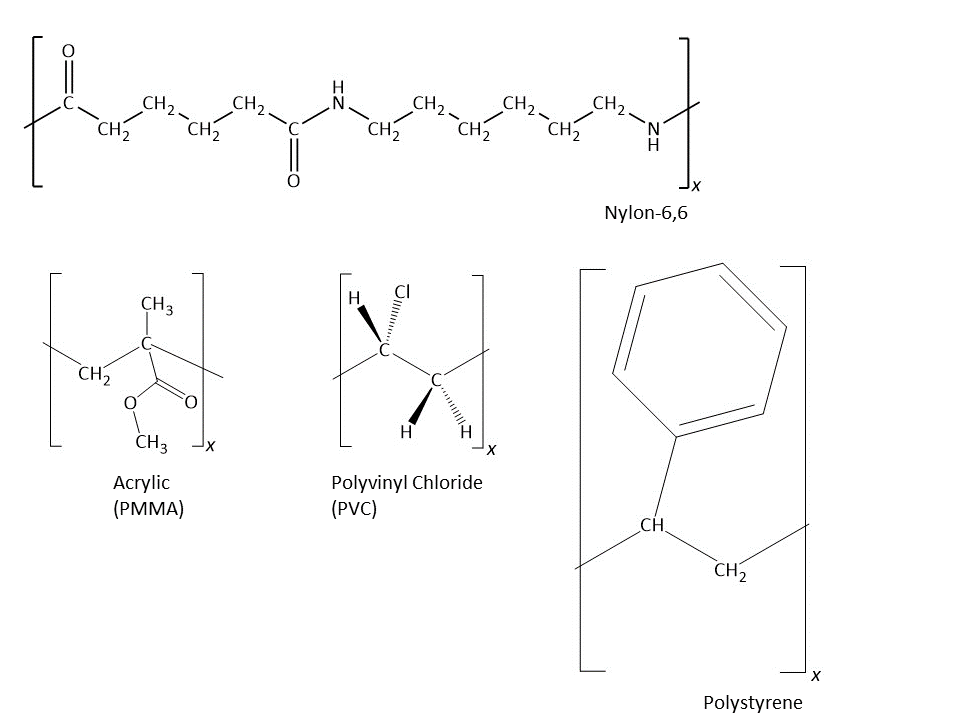
Nitrogen (N) is also a frequent participant in plastic chemistry. It’s often found in the form of amine groups within the polymer chain. Polyamides, commonly known as nylons, are a prime example.
Example: Nylon
Nylon, a staple in textiles for its strength and resilience (think stockings, ropes, and carpets), is a polyamide. The amide linkage (–CONH–) in its structure contains nitrogen. This nitrogen atom, along with the carbon and hydrogen atoms, creates a polymer with excellent tensile strength, abrasion resistance, and elasticity. The introduction of nitrogen into the polymer chain fundamentally alters its properties, making it suitable for demanding applications where hydrocarbons alone would fail.
The Role of Additives: Tailoring Plastic Performance
It’s crucial to understand that the “plastic” we encounter in everyday life is rarely just a pure polymer. To achieve specific performance characteristics required for diverse applications, manufacturers incorporate a wide range of additives. These additives are chemical compounds that are mixed into the plastic resin during processing, and they often contain a variety of elements, significantly expanding the elemental landscape of plastic beyond the core carbon, hydrogen, oxygen, and nitrogen.
Enhancing Strength and Durability
To make plastics stronger, more rigid, or more resistant to wear and tear, various reinforcing agents and fillers are added. These can include inorganic materials, which introduce a host of new elements into the plastic matrix.
Example: Glass Fibers and Mineral Fillers
Many high-performance plastics used in automotive parts, electronics casings, and sporting goods are reinforced with glass fibers. These fibers are made primarily of silicon (Si) and oxygen (O), forming silica. When incorporated into a plastic matrix, these silica-rich fibers significantly increase the material’s tensile strength and stiffness. Similarly, mineral fillers like calcium carbonate (CaCO₃), talc (Mg₃Si₄O₁₀(OH)₂), and kaolin clay (Al₂Si₂O₅(OH)₄) are added to improve rigidity, reduce cost, and enhance fire resistance. These introduce elements like calcium (Ca), magnesium (Mg), aluminum (Al), and further silicon and oxygen into the composite material.
Providing Color and UV Resistance
The vibrant colors of plastic products, from toys to car interiors, are achieved through the addition of pigments and dyes. These colorants are complex chemical compounds, often containing metallic elements.
Example: Titanium Dioxide and Iron Oxides
Titanium dioxide (TiO₂) is a common white pigment that provides opacity and brightness to plastics. It’s a compound of titanium (Ti) and oxygen. Iron oxides (Fe₂O₃, Fe₃O₄) are used to create reds, yellows, and browns, introducing iron (Fe) into the plastic. Other pigments can introduce elements like chromium (Cr) for green hues, cobalt (Co) for blues, and cadmium (Cd) (though its use is increasingly restricted due to toxicity concerns) for bright yellows and reds.
To protect plastics from degradation caused by exposure to ultraviolet (UV) radiation from sunlight, UV stabilizers are added. These often contain complex organic molecules that can include elements like halogens (chlorine, bromine) in some older formulations, though newer, more environmentally friendly stabilizers are being developed.
Improving Flexibility and Processability
Plasticizers are compounds added to make rigid plastics more flexible. Common plasticizers are often phthalates, which are esters derived from phthalic acid. These compounds introduce carbon, hydrogen, and oxygen, but the specific structure of the phthalate molecule allows it to disrupt the polymer chains, increasing flexibility.
Flame retardants are another critical class of additives. These are designed to inhibit or delay the spread of fire. Many traditional flame retardants contain bromine (Br), chlorine (Cl), phosphorus (P), and antimony (Sb). For example, brominated flame retardants are highly effective but have raised environmental concerns. Phosphorous-based flame retardants are becoming more prevalent, introducing phosphorus into the plastic.
The Elemental Breakdown: A Spectrum of Possibilities
When we ask “what elements are in plastic,” the answer is not a single, simple list. Instead, it’s a spectrum, starting with the fundamental building blocks and extending to a vast array of elements introduced through intentional modification.
The Core Elements:
- Carbon (C): The absolute foundation of almost all plastics, forming the backbone of polymer chains.
- Hydrogen (H): Typically bonded to carbon in hydrocarbon polymers.
- Oxygen (O): Present in many polymers (e.g., polyesters, polycarbonates) and common additives like titanium dioxide.
- Nitrogen (N): A key element in polyamides (nylons) and other nitrogen-containing polymers.
Elements Introduced Through Additives (Examples):
- Silicon (Si): Primarily from glass fiber reinforcement and mineral fillers.
- Calcium (Ca): From calcium carbonate fillers.
- Magnesium (Mg): From talc fillers.
- Aluminum (Al): From kaolin clay fillers and some pigments.
- Titanium (Ti): From titanium dioxide pigment.
- Iron (Fe): From iron oxide pigments.
- Chromium (Cr), Cobalt (Co): From certain colored pigments.
- Phosphorus (P): From phosphorous-based flame retardants.
- Bromine (Br), Chlorine (Cl): From some flame retardants and stabilizers (use is declining).
- Antimony (Sb): Used in conjunction with halogenated flame retardants.
The precise elemental composition of a plastic product is a testament to the ingenuity of material science and chemical engineering. It’s a carefully orchestrated combination of elements, chosen and manipulated to achieve specific functional, aesthetic, and safety requirements.
The Broader Implications: Tech, Brand, and Money
Understanding the elemental makeup of plastic has profound implications that resonate with the core topics of Tech, Brand, and Money.
Tech: Enabling Innovation
The ability to precisely control the elemental composition and molecular structure of plastics has been a driving force behind technological advancements.
- Electronics: Lightweight, durable, and electrically insulating plastics are essential for the casings of our smartphones, laptops, and countless other gadgets. The development of specialized plastics with specific thermal conductivity, flame retardancy, and electromagnetic shielding properties allows for smaller, more powerful, and safer electronic devices.
- Aerospace and Automotive: High-strength, low-weight plastics reinforced with various elements are crucial for reducing fuel consumption and improving performance in vehicles and aircraft. Advanced composites, often incorporating carbon fibers (pure carbon) or glass fibers (silicon and oxygen), have revolutionized these industries.
- Biomedical Devices: The biocompatibility and specific chemical properties of certain plastics, achieved through careful elemental selection and control, are vital for implants, prosthetics, and medical equipment.
Brand: The Tangible Experience
For brands, plastic is the physical embodiment of their products and values.
- Aesthetics and Design: The ability to mold plastics into virtually any shape and color them with a vast palette of elemental pigments allows brands to create distinctive and appealing visual identities. The texture and feel of plastic also contribute to the user experience.
- Functionality and Performance: A brand’s reputation can be built on the durability, reliability, and performance of its products. The choice of plastic materials, dictated by their elemental composition and additive packages, directly impacts how well a product functions over time.
- Sustainability Narratives: As consumer awareness of environmental issues grows, brands are increasingly focused on using recycled plastics or developing biodegradable alternatives. This involves a deeper understanding of the elemental breakdown of these materials and the chemical processes involved in their creation and decomposition, influencing brand perception and market positioning.

Money: The Economics of Materials
The elemental composition of plastics has significant financial ramifications.
- Raw Material Costs: The availability and cost of the base elements and additives directly influence the price of plastic production. Fluctuations in the price of oil (a primary source of carbon for many plastics) and other essential elements can impact manufacturing costs.
- Processing and Manufacturing: The energy required to process plastics and the complexity of incorporating specific additives are economic considerations. Developing new plastics with novel elemental compositions can require significant R&D investment.
- Recycling and Circular Economy: The elemental composition of plastics dictates their recyclability and the economic viability of recycling processes. Understanding what elements are present is crucial for developing efficient sorting and reprocessing technologies, driving the move towards a circular economy and potentially creating new revenue streams from waste materials.
- Innovation and Market Opportunities: Developing plastics with unique properties through novel elemental combinations or advanced additive technologies can create entirely new markets and provide a competitive edge, translating directly into financial success.
In conclusion, the seemingly simple question, “what elements are in plastic,” opens a door to a complex and fascinating world of material science. It reveals how a handful of fundamental elements, meticulously combined and enhanced with a diverse array of others, create the versatile materials that define our modern, technologically driven, brand-conscious, and economically interconnected lives. The ongoing innovation in plastic chemistry, driven by the pursuit of enhanced performance, sustainability, and cost-effectiveness, promises to continue shaping our world in profound ways.
aViewFromTheCave is a participant in the Amazon Services LLC Associates Program, an affiliate advertising program designed to provide a means for sites to earn advertising fees by advertising and linking to Amazon.com. Amazon, the Amazon logo, AmazonSupply, and the AmazonSupply logo are trademarks of Amazon.com, Inc. or its affiliates. As an Amazon Associate we earn affiliate commissions from qualifying purchases.