
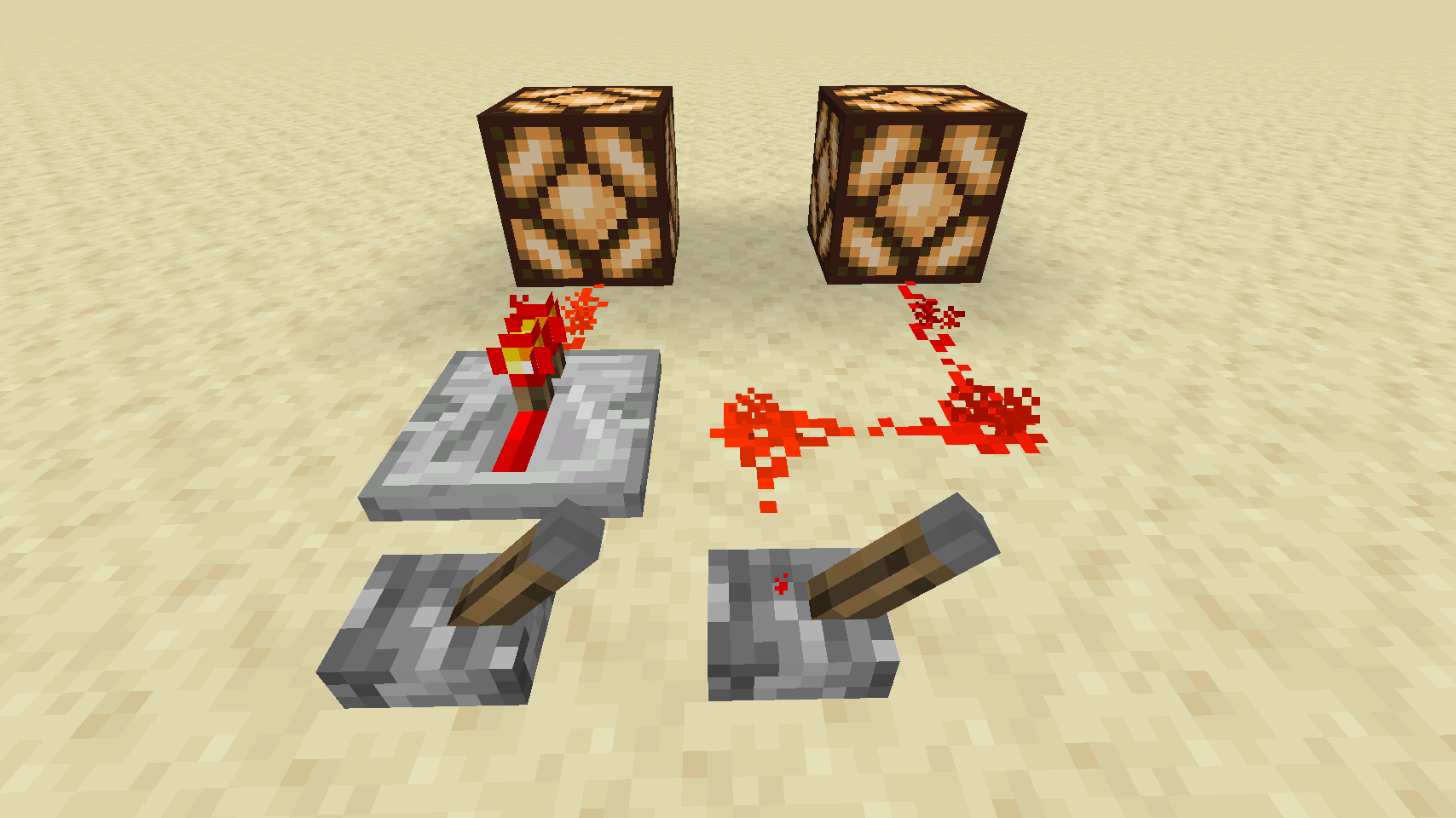
In the landscape of modern sandbox gaming and digital logic simulation, few tools offer as much depth and versatility as Minecraft’s Redstone system. Often described as the “electricity” of the game, Redstone allows players to build complex machines, from simple automated doors to fully functioning 8-bit computers. At the heart of this system lies a critical component: the Redstone Repeater. While it may appear as a simple stone slab with two torches, the repeater is a multi-functional device that governs signal strength, timing, and directionality. Understanding the Redstone Repeater is not merely about playing a game; it is an exercise in basic electrical engineering and digital logic design.
1. The Core Functions of the Redstone Repeater
To understand what a Redstone Repeater does, one must first understand the limitations of raw Redstone dust. In its base state, a Redstone signal can only travel 15 blocks from its power source before it fades completely. This decay mirrors the voltage drop seen in physical electrical circuits. The Redstone Repeater serves as the primary solution to this limitation, acting as both an amplifier and a directional gate.
Signal Strengthening and Boosting
The most fundamental use of a repeater is to “refresh” a signal. When a Redstone signal enters a repeater—regardless of whether that signal is at strength 15 or strength 1—it exits the other side at a full strength of 15. This allows engineers to transmit signals over vast distances. In large-scale technical builds, such as a sprawling automated farm or a base-wide security system, repeaters act as the relay stations that keep the “power grid” operational.
One-Way Signal Flow (The Diode Effect)
In electronics, a diode is a component that allows current to flow in only one direction. The Redstone Repeater functions as a digital diode. It only accepts input from the back and outputs to the front. This is crucial for “compacting” circuits. Without repeaters, Redstone dust placed side-by-side would bleed into adjacent lines, causing interference. By using repeaters, a technician can run parallel lines of logic without the risk of cross-talk, ensuring that Signal A never accidentally triggers Signal B.
Block Powering and Signal Extraction
Unlike Redstone dust, which simply “sits” on top of a block, a repeater can “strongly power” a solid block in front of it. This means that any Redstone component attached to that block (such as a lamp, a piston, or another repeater) will receive power. This ability to pass a signal through a solid wall is essential for aesthetic design, allowing players to hide complex machinery behind decorative facades.
2. Temporal Control: Managing Signal Delay and Ticks
Beyond its role as a signal booster, the Redstone Repeater is the primary tool for managing time within a digital circuit. In the Minecraft engine, time is measured in “ticks,” with one Redstone tick equaling 0.1 seconds of real-world time.
Adjustable Delay Settings
Every repeater can be toggled through four distinct delay settings, ranging from one to four ticks (0.1s to 0.4s). By right-clicking the component, a player can move the secondary torch to increase the time it takes for the signal to pass through the device. This temporal control is the foundation of sequential logic. For instance, if you want a door to open and then a light to turn on one second later, you would chain multiple repeaters together to create a 10-tick delay.
Synchronizing Complex Movements
In advanced engineering, timing is everything. Consider a “Piston Bolt” transportation system or a 3×3 piston door. These machines require dozens of components to move in a precise, choreographed sequence. If one piston fires a fraction of a second too early, the entire machine could jam or break. Repeaters allow the designer to “tune” the circuit, ensuring that every component receives its signal at exactly the right micro-moment.
Pulse Lengthening and Sustenance
While a repeater primarily delays the start of a signal, it also delays the end of a signal. When the input power is cut, the repeater remains active for the duration of its set delay before turning off. By combining multiple repeaters in a loop, engineers can create “pulse extenders,” which keep a signal active for several seconds or even minutes—useful for keeping a hidden entrance open long enough for a player to walk through before it automatically resets.

3. Advanced Logic: Locking Mechanisms and Memory
One of the more sophisticated features of the Redstone Repeater—and one that is often overlooked by novices—is its ability to be “locked.” This transforms the repeater from a simple transmission device into a piece of digital memory, similar to a flip-flop or a latch in computer science.
The Locking Mechanism Explained
A repeater is locked when it receives a Redstone signal into its side from another repeater or a Redstone comparator. When locked, a small gray bar appears across the device, and its current state is frozen. If it was “on,” it stays on even if the input is removed. If it was “off,” it stays off even if it receives a new input.
Creating Basic Memory Cells (Latches)
This locking function allows for the creation of an SR Latch (Set-Reset Latch). This is a circuit that “remembers” a single bit of data (1 or 0). In a tech-focused application, this could be used to create a “toggle” button: press once to turn the lights on (setting the latch), and press again to turn them off (resetting the latch). This is the fundamental building block of all digital storage; by scaling this concept, players have built functional hard drives and RAM within the game environment.
Truth Tables and Conditional Logic
The interaction between repeaters allows for the construction of “logic gates” (AND, OR, NOT, NAND, etc.). While some gates can be made with torches and dust, repeaters offer a more compact and reliable way to handle conditional logic. For example, a “Security Gate” might only open if Input A (a keycard) is active AND Input B (a hidden lever) is active. The repeater’s ability to handle signals without interference makes these logical computations much more stable over long-term operation.
4. Practical Engineering: Troubleshooting and Optimization
In any technical field, efficiency and reliability are paramount. As Redstone circuits grow in complexity, they become prone to “lag” (computational delays) and “ghost signals.” The strategic use of repeaters is the primary method for optimizing these digital systems.
Managing Latency (Tick Lag)
Every repeater adds at least one tick of delay. In massive computational builds, such as a Redstone calculator, hundreds of repeaters can result in several seconds of “latency” before an output is produced. Tech-focused builders must balance the need for signal boosting with the need for speed. This often involves using “Instant Wire” techniques or Redstone Comparators where appropriate, though the repeater remains the gold standard for reliability.
Signal Isolation and Compact Design
As circuits become smaller, the risk of “signal bleed” increases. Because repeaters are directional and do not interact with the blocks beside them unless specified, they are used to “isolate” sensitive parts of a machine. This allows for high-density logic, where different parts of a CPU or an automated sorting system are packed tightly together without interfering with one another’s operations.
Dealing with Pulse Burnout
In certain fast-firing circuits (clocks), Redstone torches can “burn out” if they toggle too quickly. Repeaters are immune to this mechanic. They can handle high-frequency pulses indefinitely, making them the preferred choice for “Clock Generators”—circuits that produce a constant, rhythmic pulse used to drive automated machinery like item elevators or concrete factories.

Conclusion: The Bridge Between Play and Engineering
The Redstone Repeater is far more than a simple game mechanic; it is a profound educational tool that mirrors the logic of the real world. By mastering its three primary functions—boosting, delaying, and locking—users gain a practical understanding of how signals are processed in modern electronics.
Whether you are building a simple automated door or architecting a complex digital processor, the repeater is your most reliable ally. It provides the structure, timing, and memory necessary to turn a static world into a living, breathing machine. In the intersection of technology and creativity, the Redstone Repeater stands as a testament to the power of simple components to build infinitely complex systems.
aViewFromTheCave is a participant in the Amazon Services LLC Associates Program, an affiliate advertising program designed to provide a means for sites to earn advertising fees by advertising and linking to Amazon.com. Amazon, the Amazon logo, AmazonSupply, and the AmazonSupply logo are trademarks of Amazon.com, Inc. or its affiliates. As an Amazon Associate we earn affiliate commissions from qualifying purchases.