
In the intricate world of telecommunications and mobile technology, numerous identifiers play crucial roles in ensuring seamless connectivity and robust security. While we often interact with our smartphones and their cellular capabilities daily, the underlying mechanisms are often a mystery. One such critical identifier, though rarely discussed outside of technical circles, is the ICCID. Understanding what the ICCID is, where to find it, and its significance, offers a fascinating glimpse into the sophisticated infrastructure that powers our mobile lives.
The ICCID: Unpacking Your SIM Card’s Unique Fingerprint
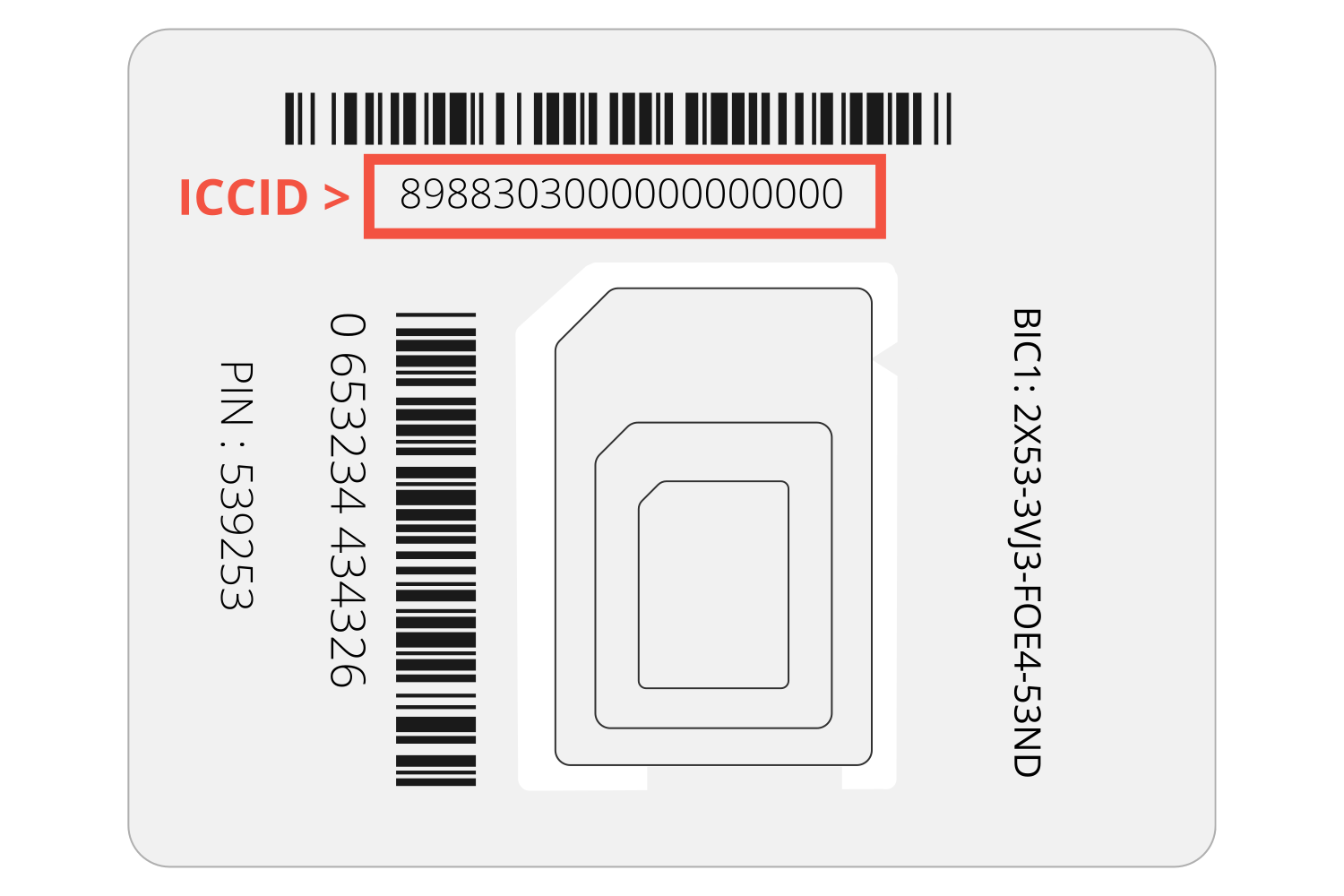
The Integrated Circuit Card Identifier, or ICCID, is a unique serial number assigned to each SIM card manufactured globally. Think of it as the SIM card’s individual passport number. It’s a globally unique 19-digit or 20-digit number that serves as a primary key for identifying and provisioning your SIM card within a mobile network. Unlike your phone number, which is assigned by the carrier and can change, the ICCID is an intrinsic property of the physical SIM card itself and remains constant throughout its lifespan.
What Constitutes the ICCID? Decoding the Number
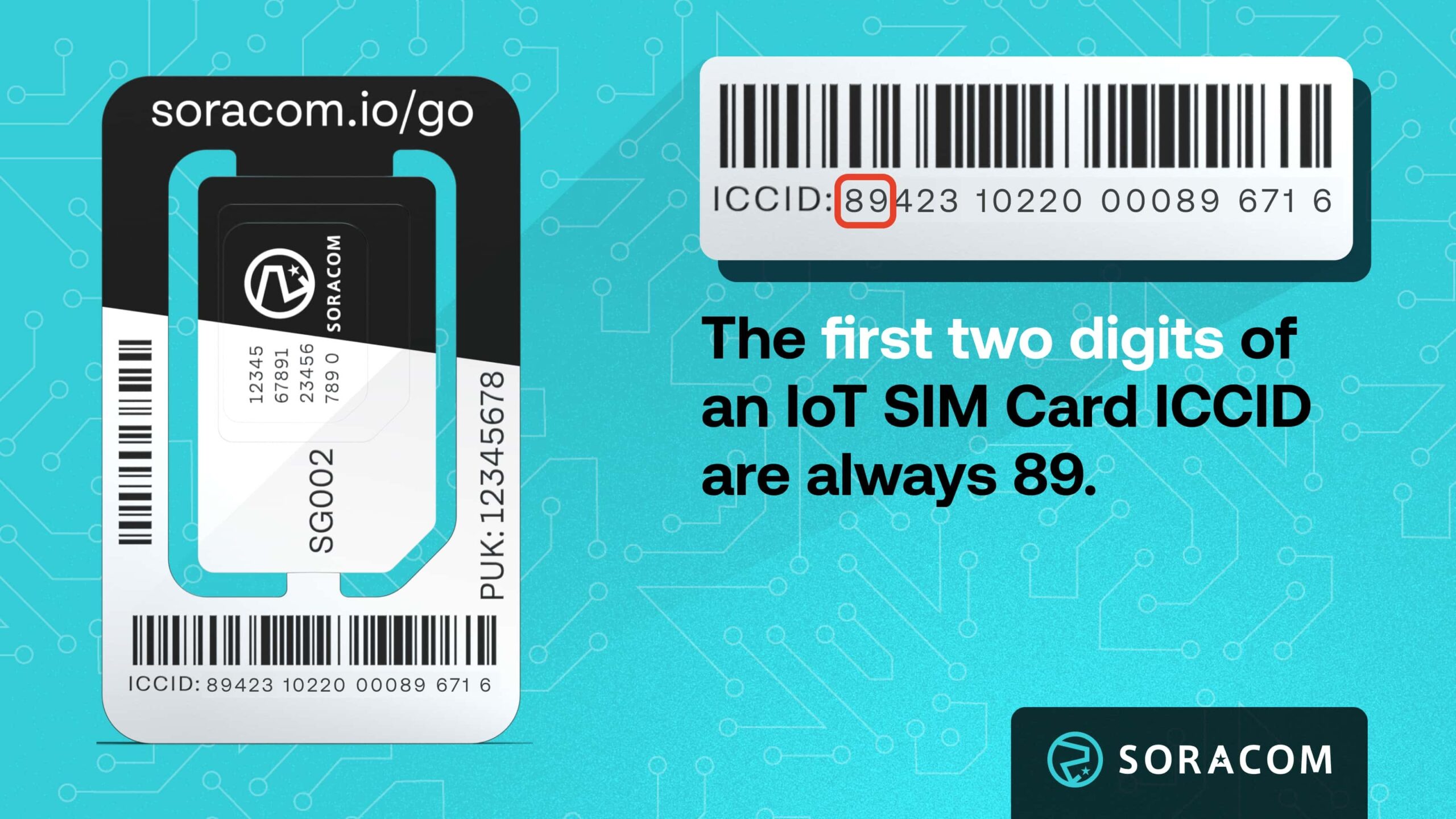
The structure of an ICCID, while seemingly a random string of digits, is actually quite informative and follows a standardized format established by the International Telecommunication Union (ITU) and the International Organization for Standardization (ISO). While the exact format can vary slightly depending on the SIM card generation and the issuing authority, a typical ICCID can be broken down into several key components:
- Major Industry Identifier (MII): The first two digits usually indicate the industry. For SIM cards, this is typically “89” for telecommunications.
- Country Code: The next few digits (often 2-3) represent the country of origin or the country where the SIM card was issued. For example, a U.S. issued SIM might start with “31” after the MII.
- Issuer Identification Number (IIN): This segment identifies the specific mobile network operator (MNO) or SIM card manufacturer that issued the card. Each carrier and manufacturer has a unique IIN assigned to them.
- Individual Account Identification: The longest portion of the ICCID is dedicated to the unique serial number of the SIM card itself. This is the part that distinguishes one SIM card from another, even those issued by the same carrier. This serial number is typically generated by the issuer and is unique to each SIM.
- Check Digit: The final digit of the ICCID is a check digit, calculated using a specific algorithm (often the Luhn algorithm). This digit is used to detect errors in the transmission or transcription of the ICCID.
The 19-digit format has been the most common for many years, but with the increasing number of SIM cards being manufactured and the evolution of SIM technology (like eSIMs), a 20-digit format has become more prevalent. The additional digit often expands the capacity for unique serial numbers, ensuring that every SIM card can have its own distinct identifier.
Why is the ICCID So Important? Beyond a Simple Serial Number
The ICCID’s importance extends far beyond its role as a mere serial number. It’s a cornerstone of mobile network operations, security, and customer service. Here are some of its critical functions:
- SIM Card Provisioning: When you activate a new SIM card or switch carriers, the mobile network needs to identify and authenticate your specific SIM. The ICCID is the primary piece of information used to link your SIM card to your subscriber profile and the carrier’s network. This process, known as provisioning, ensures that your phone is authorized to connect to a particular network and access its services.
- Network Authentication and Security: The ICCID, in conjunction with other SIM card elements like the IMSI (International Mobile Subscriber Identity), plays a vital role in authenticating your device to the mobile network. This process helps prevent unauthorized access and ensures that only legitimate subscribers can use the network’s services.
- Device Management and Tracking: Mobile network operators use the ICCID to manage their SIM card inventory and track active SIM cards. This can be crucial for various operational aspects, including fraud detection, service provisioning, and even in cases of lost or stolen devices.
- Troubleshooting and Customer Support: When you encounter issues with your mobile service, customer support representatives often ask for your ICCID. This identifier allows them to quickly locate your SIM card’s information within their system, diagnose the problem, and provide the correct support. It’s a more direct and reliable way to identify your specific SIM than relying solely on your phone number.
- eSIM Technology and Portability: With the advent of eSIMs, the ICCID’s role has evolved. While an eSIM doesn’t have a physical card, it still has an embedded ICCID that functions identically to a physical SIM’s ICCID. This digital identifier is crucial for downloading and activating eSIM profiles remotely, further streamlining the provisioning process and enabling greater flexibility in device management.
Where Can I Find the ICCID on My SIM Card? Locating the Identifier
The physical location of the ICCID depends on the type of SIM card you have and its form factor. In most cases, it’s printed directly on the card itself, making it relatively easy to find.
Physical SIM Cards: The Traditional Approach
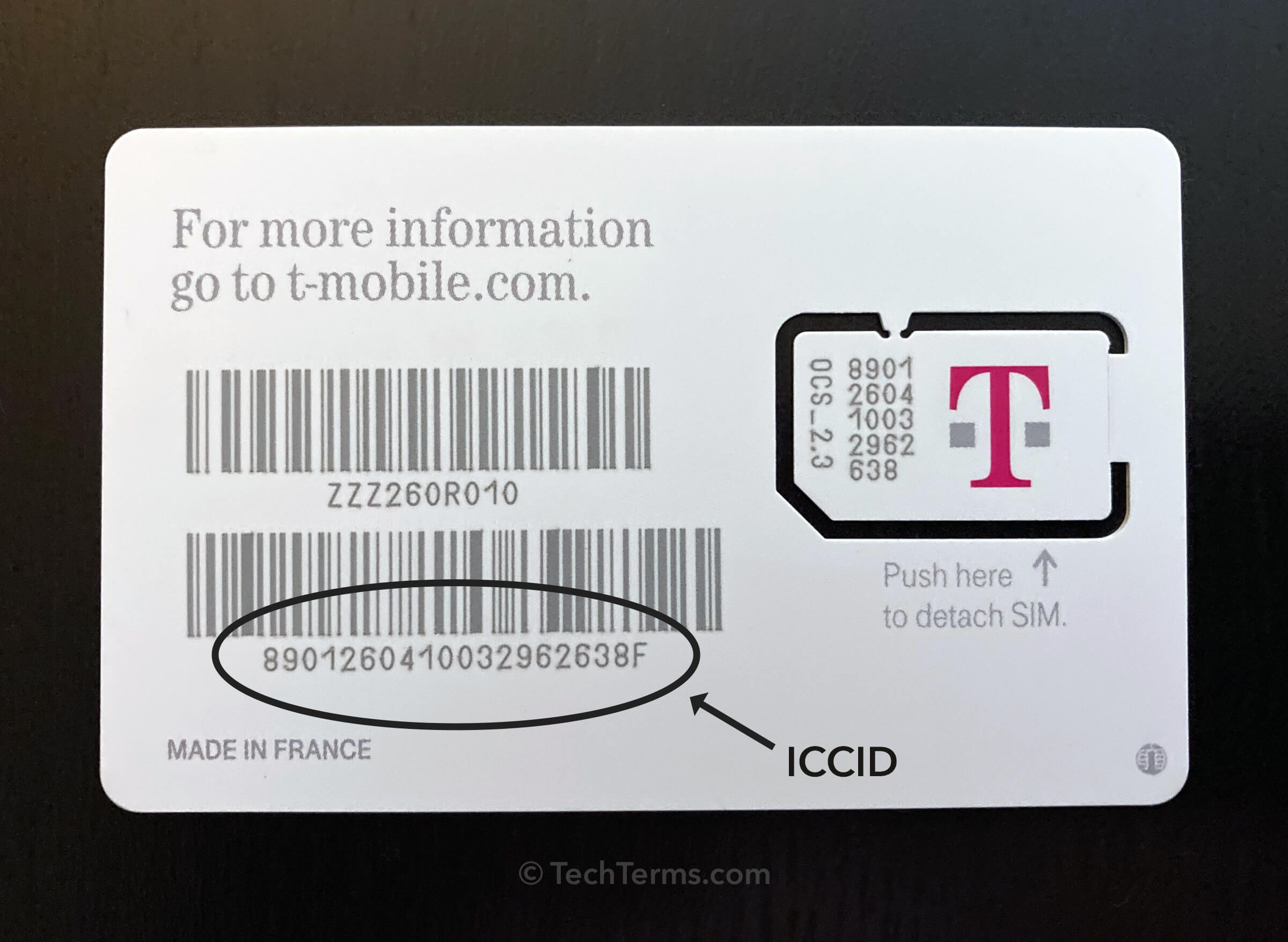
For traditional physical SIM cards (Standard, Micro, and Nano SIMs), the ICCID is almost always printed on the card itself. You’ll typically find it on the side of the SIM card that has the gold-colored contact chip. The printing is usually in small, often light-colored text against a darker background.
- Location on the Card: Look for a series of numbers etched or printed on the plastic surface of the SIM card. It’s often near the edge, and you might need to tilt the card under good lighting to read it clearly.
- Challenges: The font size can be quite small, and the printing might wear off over time, especially on older SIM cards. If you’re having trouble reading it, a magnifying glass can be incredibly helpful.
SIM Trays and Devices: Accessing the ICCID
When your SIM card is inserted into your phone, you can access the ICCID through your device’s settings menu. This is often the easiest and most reliable way to find it, especially if the printing on the card is faded or illegible.
-
Android Devices: The exact path can vary slightly between Android versions and manufacturers, but it generally involves going to:
- Settings
- About Phone (or System > About phone)
- Status (or SIM status)
- SIM card status (or look for “ICCID” directly)
-
iOS Devices (iPhones): For iPhones, the process is consistent across most models:
- Go to Settings
- General
- About
- Scroll down until you find “ICCID” listed.
-
Other Devices: For other mobile devices, such as tablets with cellular capabilities, or mobile hotspots, the method for accessing the ICCID will be similar – typically found within the device’s network or status settings. Consult your device’s user manual for precise instructions if you can’t locate it.
eSIMs: The Digital Identifier
With the rise of eSIM technology, the concept of a physical card is bypassed. An eSIM is an embedded SIM chip that is integrated directly into your device’s hardware. While there’s no physical card to look at, the ICCID still exists and is crucial for managing your eSIM profiles.
- Accessing eSIM ICCID: You can typically access the ICCID of an eSIM through your device’s settings, similar to how you would for a physical SIM. The exact location might differ, but it’s usually found within the cellular or mobile data settings, often under a section dedicated to eSIM management. For example, on an iPhone, you might find it under Settings > Cellular > your eSIM plan > eSIM Information. On Android, it could be under Settings > Network & internet > SIMs > your eSIM > eSIM details.
Beyond the Basics: Understanding ICCID Variations and Their Impact
While the core function of the ICCID remains consistent, there are nuances and evolving aspects that are worth understanding for a comprehensive grasp of this essential identifier.
The 19-Digit vs. 20-Digit ICCID: A Matter of Scale
As mentioned earlier, the shift from 19-digit to 20-digit ICCIDs is a significant development driven by the sheer volume of SIM cards in circulation and the need for a broader range of unique identifiers.
- Evolution of Capacity: The older 19-digit format was sufficient for a substantial period. However, the exponential growth of mobile devices, IoT (Internet of Things) devices, and the increasing use of SIM cards in various applications necessitated an expansion of the numbering scheme. The 20-digit format provides a vastly larger pool of unique serial numbers, ensuring that future demand can be met.
- Impact on Devices and Networks: Most modern devices and network infrastructure are designed to handle both 19-digit and 20-digit ICCIDs. When provisioning a SIM, the network system reads the ICCID and interprets it regardless of its length, as long as it conforms to the overall ICCID structure. If you encounter an older device or system, there might be a slight possibility of compatibility issues, but this is increasingly rare.
The Role of the ICCID in Device Replacement and Portability
The ICCID plays a pivotal role in scenarios involving device changes, SIM card replacements, and number porting.
- SIM Card Replacement: If your SIM card is damaged, lost, or you’re upgrading to a new type of SIM (e.g., from a standard SIM to a nano-SIM), you’ll receive a new SIM card with a new ICCID. When you activate this new SIM, the carrier uses the new ICCID to link your existing phone number and subscriber profile to the new physical card.
- Device Swaps: When you purchase a new phone and intend to use your existing SIM card, you simply transfer the SIM card. The ICCID remains the same, and your phone number and service remain connected to that specific SIM. If you need to get a new SIM card for your new device, the process is similar to a SIM card replacement, where the new SIM’s ICCID is provisioned to your account.
- Number Portability: The process of transferring your phone number from one carrier to another (number portability) also relies on identifiers like the ICCID. While your mobile number is the primary identifier being ported, the originating and destination carriers will use the ICCID of your current SIM card to verify your account and ensure a smooth transfer of service.
ICCID and the Future of SIM Technology: eSIMs and Beyond
The evolution of SIM technology, particularly the advent of eSIMs, has further solidified the ICCID’s importance as a digital identifier.
- eSIM Provisioning: As discussed, eSIMs don’t have a physical card, but they still possess an embedded ICCID. This ICCID is essential for downloading and activating carrier profiles onto your device remotely. When you scan a QR code or manually enter details to set up an eSIM, you are essentially linking the device’s embedded ICCID to your chosen carrier’s network.
- Remote SIM Provisioning (RSP): The ICCID is a key element in Remote SIM Provisioning (RSP) systems, which allow carriers to manage and update SIM profiles over the air without requiring physical interaction. This capability is fundamental to the flexibility and convenience offered by eSIM technology.
- IoT and M2M Communications: The proliferation of Internet of Things (IoT) devices and Machine-to-Machine (M2M) communications, which often utilize embedded SIMs (eSIMs or iSIMs), further highlights the ICCID’s enduring relevance. Each connected device requires a unique identifier for network access and management, and the ICCID serves this purpose efficiently in a digital realm.
In conclusion, the ICCID, while a seemingly obscure number, is a fundamental component of our mobile ecosystem. It acts as the unique fingerprint of your SIM card, enabling secure network access, efficient device management, and seamless customer service. Whether you’re dealing with a physical SIM or a digital eSIM, understanding what the ICCID is and where to find it empowers you with greater knowledge of the technology that keeps you connected. It’s a testament to the intricate and robust systems that underpin our modern digital lives.
aViewFromTheCave is a participant in the Amazon Services LLC Associates Program, an affiliate advertising program designed to provide a means for sites to earn advertising fees by advertising and linking to Amazon.com. Amazon, the Amazon logo, AmazonSupply, and the AmazonSupply logo are trademarks of Amazon.com, Inc. or its affiliates. As an Amazon Associate we earn affiliate commissions from qualifying purchases.