
The iconic image adorning the Mexican flag is far more than just a decorative emblem; it is a potent symbol deeply rooted in history, mythology, and the very identity of the nation. At its core, the eagle on the Mexican flag represents the fulfillment of an ancient prophecy and the establishment of a great civilization. This powerful visual narrative, intricately woven into the fabric of Mexican heritage, continues to resonate and inform national pride.
The Mythological Origins: A Divine Mandate
The genesis of the eagle symbol lies in the Aztec creation myth, a foundational story that dictated the destiny of the Mexica people, later known as the Aztecs. This narrative is central to understanding the profound significance of the eagle’s presence.

The Prophecy of Huitzilopochtli
According to legend, the god Huitzilopochtli, the patron deity of the Mexica, commanded his people to embark on a long and arduous journey to find a new homeland. He provided them with a clear sign: they were to settle in a place where they would find an eagle perched on a nopal cactus, devouring a snake. This divine directive marked the beginning of their migration from their ancestral home of Aztlán, a mythical land to the north.
The quest for this prophesied location was not an easy one. It involved years of wandering, hardship, and conflict. The Mexica, guided by their priests and their faith in Huitzilopochtli’s word, meticulously searched for the prescribed sign. This arduous journey forged their resilience and strengthened their collective identity as a people destined for greatness.
The Founding of Tenochtitlan
The culmination of this epic migration was the discovery of the prophesied site on a small island in Lake Texcoco. There, precisely as foretold, they found an eagle, majestic and powerful, perched atop a prickly pear cactus, with a serpent in its beak. This divine confirmation was the catalyst for the founding of their magnificent capital city, Tenochtitlan, in 1325 CE. Tenochtitlan, meaning “place of the prickly pear cactus,” became the heart of the Aztec Empire, a civilization renowned for its advanced architecture, complex social structure, and sophisticated understanding of astronomy and mathematics.
The eagle, therefore, embodies the divine favor and the sacred mandate that led the Aztecs to their destined land, marking the very foundation of their civilization and influencing their cultural and religious worldview for centuries. It is a testament to faith, perseverance, and the belief in a predetermined destiny.
The Symbolism of the Eagle and its Attributes
Beyond its role in the founding myth, the specific depiction of the eagle on the Mexican flag is imbued with further symbolic meaning, highlighting its inherent power, wisdom, and predatory prowess. Every element of the eagle’s posture and actions contributes to its rich symbolism.
The Eagle as a Symbol of Power and Dominion
The eagle, universally recognized as a formidable predator, is a potent symbol of power, strength, and authority. In the context of the Mexican flag, it represents the inherent strength and sovereignty of the Mexican nation. Its sharp talons and keen eyesight signify its ability to observe, strategize, and act decisively. The eagle’s dominance over the serpent further reinforces this theme of power and triumph.
The serpent, often representing earthly forces or chaos, is being vanquished by the eagle, symbolizing the victory of order, civilization, and the righteous over destructive or subjugating elements. This dynamic portrayal communicates the nation’s ability to overcome challenges and maintain its integrity.

The Serpent in the Eagle’s Beak: A Dual Interpretation
The serpent held in the eagle’s beak is a crucial element with layers of meaning. While it primarily represents the defeated enemies or obstacles that the Mexica overcame to establish their civilization, it also carries deeper religious connotations.
In Mesoamerican cosmology, the serpent was often associated with the underworld and with divine beings. However, in this specific depiction, it is being held captive by the eagle, signifying the subjugation of negative forces or perhaps even the integration of dualities within the Mexican worldview. Some interpretations suggest the serpent represents the earthly realm or primal instincts, which are now brought under control by the soaring, celestial power of the eagle.
The Nopal Cactus: The Foundation of Existence
The nopal cactus, or prickly pear cactus, upon which the eagle is perched, is equally significant. This plant is native to Mexico and is a vital part of its ecosystem and cultural heritage. It symbolizes sustenance, resilience, and the very land of Mexico itself.
The nopal cactus is known for its ability to thrive in arid conditions, reflecting the resilience of the Mexican people. It also provides food and resources, underscoring its importance to survival and prosperity. The eagle’s perch upon it signifies the nation’s deep connection to its land and its ability to draw strength and sustenance from it.
Evolution and Representation on the Mexican Flag
The image of the eagle and serpent has been a recurring motif throughout Mexican history, evolving in its artistic representation while maintaining its core symbolic meaning. Its inclusion on the national flag is a direct continuation of this rich visual tradition.
From Aztec Codices to National Symbol
The earliest depictions of the eagle and serpent can be found in ancient Aztec codices, intricate manuscripts that chronicled their history, mythology, and religious beliefs. These early artworks laid the groundwork for the iconography that would become so central to Mexican identity.
During the Spanish colonial period, the indigenous symbolism was often suppressed or altered. However, the image of the eagle and serpent persisted in popular art and religious iconography, demonstrating its deep cultural resonance. With the independence of Mexico in the 19th century, there was a conscious effort to reclaim and reaffirm indigenous heritage. The eagle and serpent motif was revived and adopted as a national symbol, representing the newly formed nation’s distinct identity, free from colonial rule.
The Seal of the United Mexican States
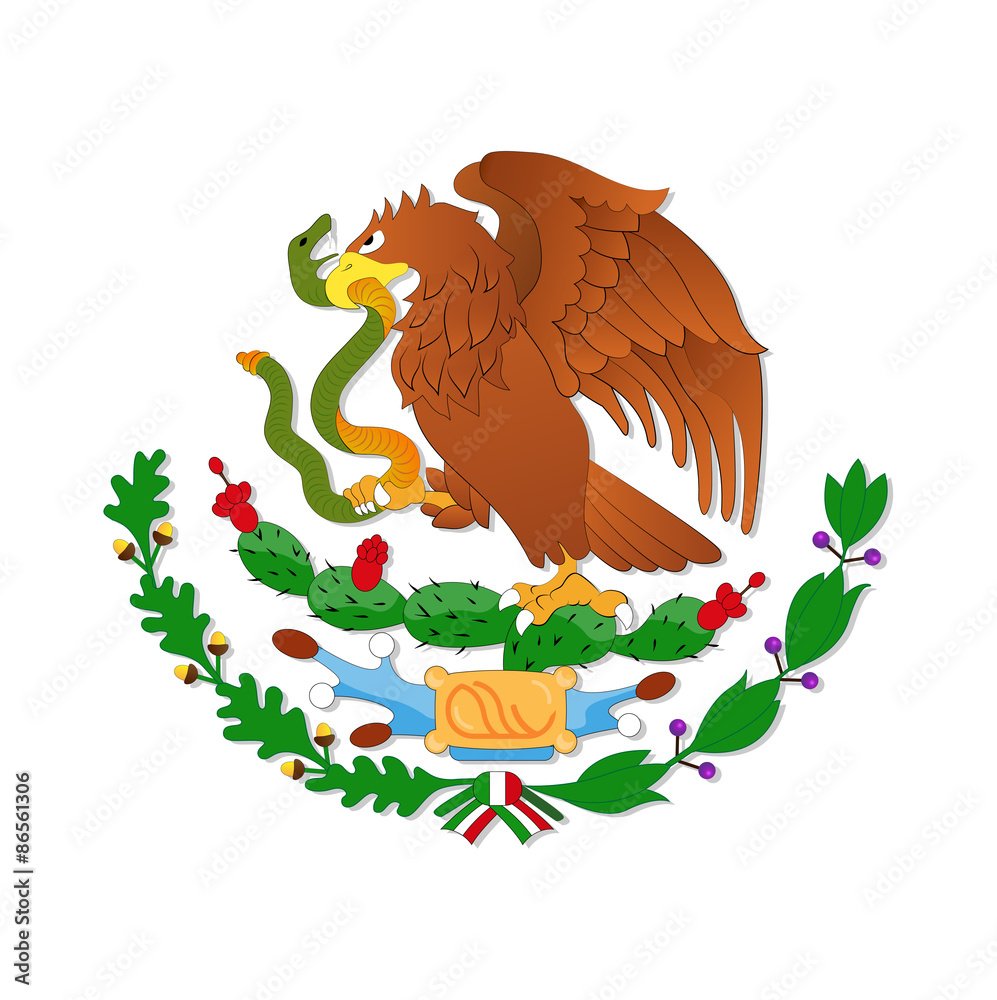
The current emblem on the Mexican flag is officially known as the Seal of the United Mexican States. It is a highly stylized representation of the Aztec legend. The design has undergone several revisions throughout Mexican history, with different governments and artistic interpretations shaping its precise appearance.
The most recognizable modern rendition features a golden eagle with its wings spread wide, perched on a nopal cactus. It clutches a rattlesnake in its beak and grasps it with its talons. The eagle is looking towards its left (from its perspective), a detail that has been a subject of discussion and occasional alteration in different iterations of the seal. The seal is surrounded by a laurel wreath, symbolizing victory and achievement, and an oak branch, representing strength and fortitude. Below the seal, a banner proclaims “Estados Unidos Mexicanos” (United Mexican States).
Modern Significance and National Pride
Today, the eagle on the Mexican flag serves as a powerful reminder of Mexico’s indigenous past, its resilience, and its national sovereignty. It is a symbol that evokes pride and unity among Mexicans, both within the country and in the diaspora. When Mexicans see their flag, they are reminded of the ancient prophecy, the founding of their civilization, and the enduring spirit of their nation. The eagle, in its majestic flight and resolute stance, embodies the aspirations and identity of Mexico.
aViewFromTheCave is a participant in the Amazon Services LLC Associates Program, an affiliate advertising program designed to provide a means for sites to earn advertising fees by advertising and linking to Amazon.com. Amazon, the Amazon logo, AmazonSupply, and the AmazonSupply logo are trademarks of Amazon.com, Inc. or its affiliates. As an Amazon Associate we earn affiliate commissions from qualifying purchases.