
The phrase “the buck stops here” is a potent declaration of ultimate responsibility, famously associated with U.S. President Harry S. Truman. While its historical roots are firmly planted in political leadership, its essence resonates powerfully within the modern business landscape, particularly concerning Brand and the intricate dynamics of corporate identity and marketing. In an era where brand reputation can be forged or shattered with a single tweet, and customer trust is a fiercely guarded commodity, understanding and embodying the principle of “the buck stops here” is no longer a mere leadership ideal – it’s a critical component of brand resilience and success.

This article will explore the multifaceted meaning of “the buck stops here” within the context of brand strategy, corporate identity, marketing, and the crucial role of leadership accountability in building and protecting a brand’s integrity. We will delve into how this philosophy shapes decision-making, influences customer perception, and ultimately contributes to a brand’s long-term viability.
The Genesis and Evolution of Ultimate Responsibility
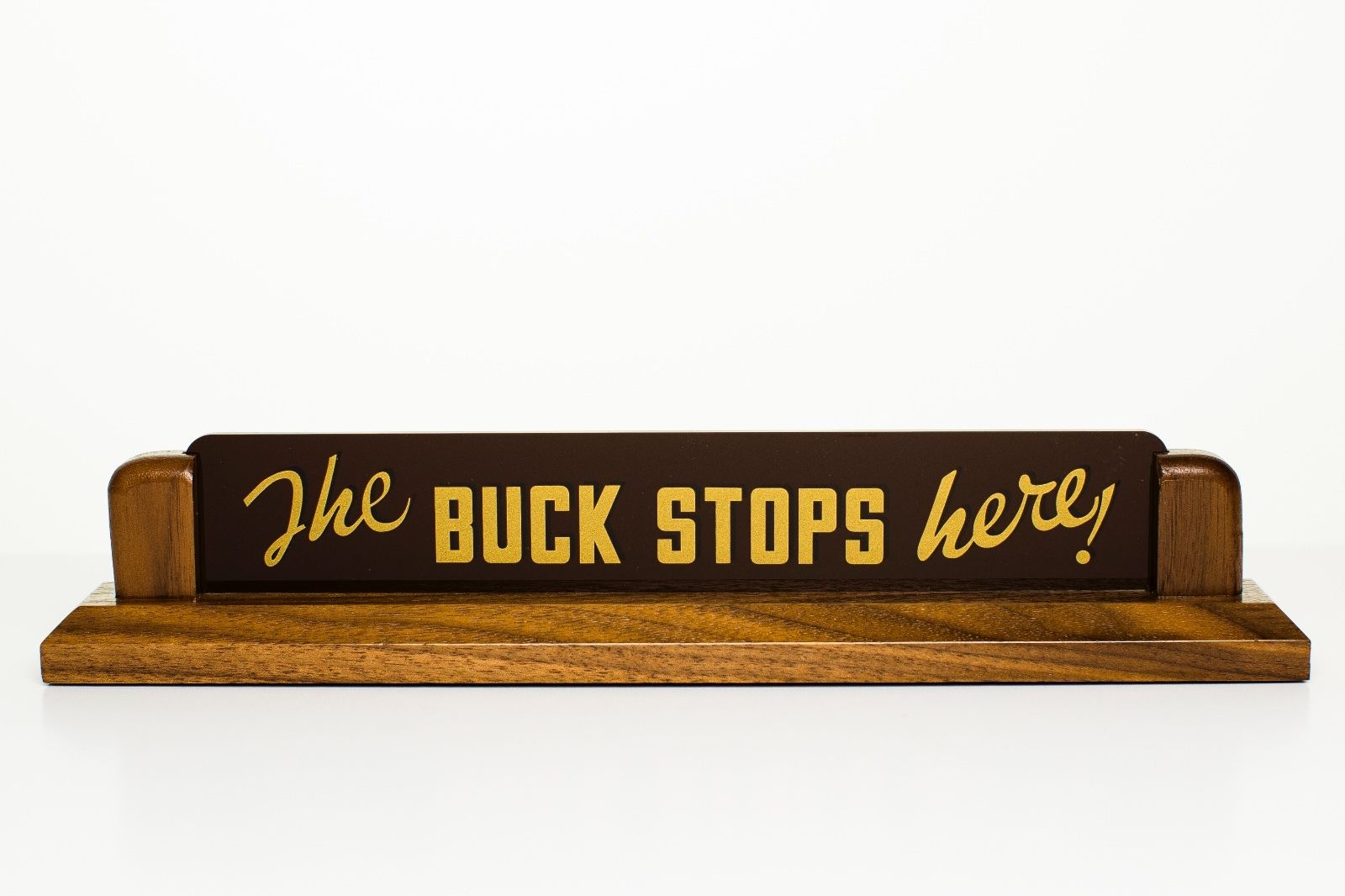
The phrase “the buck stops here” originates from the American game of poker, where a marker, often a knife with a buckhorn handle, was passed to signify whose turn it was to deal. This “buck” represented the responsibility of dealing the cards. The person holding the buck was the dealer and had to fulfill that role. President Truman kept a sign with this inscription on his desk in the Oval Office, symbolizing his willingness to accept full responsibility for the decisions made during his presidency, without passing blame to subordinates or external factors.
From Political Rhetoric to Corporate Imperative
While Truman’s use of the phrase was undeniably political, its translation into the corporate world is a natural and necessary progression. In business, the “buck” can represent anything from a product recall, a marketing campaign misstep, a customer service crisis, a data breach, or a strategic pivot that doesn’t yield the expected results. The leader who truly embodies “the buck stops here” is the one who, when faced with such challenges, does not deflect, does not blame, and does not make excuses. Instead, they own the situation, take decisive action, and commit to finding a resolution.
This acceptance of ultimate responsibility is foundational to building a strong corporate identity. A brand’s identity is not just its logo or its tagline; it’s the sum total of its actions, its values, and the trust it cultivates with its stakeholders. When a brand consistently demonstrates accountability, especially during difficult times, it reinforces its credibility and strengthens its position in the market. Conversely, a pattern of blame-shifting or avoidance erodes trust and can inflict irreparable damage on a brand’s reputation.
The Psychological Impact of Leadership Accountability
The psychological impact of a leader who embraces “the buck stops here” is profound, both internally and externally. Internally, it fosters a culture of transparency and empowerment. When employees see their leaders taking ownership, they are more likely to feel secure in their own roles and less fearful of making mistakes. This, in turn, encourages innovation and a proactive approach to problem-solving. It signals that the organization is a place where challenges are met head-on, rather than being swept under the rug.
Externally, for customers and the wider public, this unwavering accountability builds confidence. It assures them that the brand is reliable and that their concerns will be taken seriously. In an era where consumers have more power than ever to voice their opinions and scrutinize corporate behavior, a brand’s ability to demonstrate genuine accountability is a significant competitive advantage. It transforms potential crises into opportunities to showcase resilience and integrity, thereby deepening customer loyalty and enhancing brand equity.
The Pillars of Brand Accountability: From Strategy to Execution
Embracing “the buck stops here” is not a passive stance; it requires a proactive and robust approach to brand management. This commitment must be woven into the fabric of the organization, influencing everything from high-level strategic decisions to the day-to-day execution of marketing and customer engagement initiatives.
H3: Strategic Alignment and Decision-Making
At the strategic level, “the buck stops here” means that the ultimate responsibility for the brand’s direction and its impact on stakeholders lies with the leadership team. This involves making tough decisions, even when they are unpopular or carry inherent risks. It means investing in long-term brand health rather than chasing short-term gains at the expense of integrity.
- Risk Assessment and Mitigation: A leader who embodies this principle will ensure that thorough risk assessments are conducted for all significant brand initiatives. Crucially, they will also be prepared to accept responsibility if those risks materialize, having already put contingency plans in place. This isn’t about avoiding risks, but about managing them with a clear understanding of potential consequences.
- Ethical Decision-Making Frameworks: The “buck stops here” philosophy demands an unwavering commitment to ethical conduct. Leaders must establish and uphold clear ethical frameworks that guide all decision-making processes, ensuring that the brand’s actions align with its stated values. When ethical lapses occur, the leader is the first to acknowledge the failing and implement corrective measures.
- Long-Term Vision vs. Short-Term Pressures: In the fast-paced business environment, there’s constant pressure to deliver immediate results. However, a leader who accepts ultimate responsibility will prioritize the long-term health and integrity of the brand, even if it means foregoing quick wins or enduring short-term criticism. This long-term perspective is crucial for building sustainable brand equity.
H3: Marketing and Communications Integrity

The marketing and communications arms of a brand are often the most visible touchpoints with the public. In this domain, “the buck stops here” translates to absolute honesty, transparency, and responsiveness in all messaging and customer interactions.
- Authenticity in Messaging: Brands that claim to be one thing but consistently act another will eventually face scrutiny. A leader committed to accountability will ensure that marketing messages are not only compelling but also genuinely reflective of the brand’s products, services, and ethos. Misleading or exaggerated claims, even if unintentional, become the leader’s responsibility to correct.
- Crisis Communication Preparedness: No brand is immune to crises. A leader who understands “the buck stops here” will have robust crisis communication plans in place. This includes identifying potential scenarios, designating spokespeople, and having pre-approved messaging frameworks ready to be deployed swiftly and transparently when a crisis strikes. The response, or lack thereof, during a crisis is a direct reflection of leadership accountability.
- Customer Feedback and Complaint Resolution: Every customer interaction is a brand touchpoint. When a customer has a negative experience or a complaint, it’s not just an issue for the customer service department; it’s an opportunity for the brand to demonstrate its commitment to resolution. A leader who embodies “the buck stops here” will ensure that customer feedback is valued, acted upon, and that complaints are addressed with empathy, efficiency, and a genuine desire to make things right. The ultimate responsibility for customer satisfaction, or dissatisfaction, rests at the top.
H3: Building a Culture of Accountability
The true power of “the buck stops here” is amplified when it’s not just a personal mantra of the leader, but a deeply ingrained cultural value throughout the organization. This requires deliberate effort and consistent reinforcement.
- Empowerment with Responsibility: Leaders must empower their teams to make decisions and take ownership of their work. However, this empowerment must be coupled with clear expectations and a framework for accountability. When mistakes happen, the focus should be on learning and improvement, not on punishment. The leader, however, remains accountable for the overall outcomes of their team’s efforts.
- Openness to Feedback and Learning: A culture that embraces “the buck stops here” is one that is open to feedback, both positive and negative. Leaders must actively solicit feedback from their teams and be willing to learn from their experiences. This creates a continuous improvement cycle that strengthens the brand over time.
- Leading by Example: The most effective way to instill a culture of accountability is for leaders to embody it themselves. When leaders are visible in their willingness to take ownership, admit mistakes, and champion solutions, it sets a powerful precedent for the entire organization. This authenticity is a cornerstone of strong personal and corporate branding.
The Tangible Benefits of Embracing “The Buck Stops Here” for Brand Equity
The philosophical commitment to “the buck stops here” is not merely an exercise in good governance; it yields significant, tangible benefits that directly impact a brand’s equity and long-term success. In today’s competitive landscape, where trust and authenticity are paramount, this principle acts as a powerful differentiator.
H3: Enhanced Customer Loyalty and Trust
Customers are increasingly discerning. They are not just buying products or services; they are investing in brands that align with their values and demonstrate a commitment to integrity. When a brand consistently takes responsibility, especially during challenging times, it builds a reservoir of trust.
- Resilience in the Face of Crisis: A brand that handles crises with transparency and accountability is more likely to emerge stronger. Instead of being defined by the problem, it is defined by its response. This builds deep loyalty among customers who appreciate a brand that stands by its commitments and rectifies its errors. Think of companies that have successfully navigated product recalls or data breaches with honesty – their customer base often rallies around them.
- Perceived Reliability and Dependability: A consistent demonstration of accountability signals that the brand is reliable and dependable. Customers can feel confident that if something goes wrong, the brand will address it. This sense of security fosters long-term relationships and reduces customer churn.
H3: Stronger Corporate Identity and Reputation
A brand’s reputation is its most valuable asset. The “buck stops here” philosophy is instrumental in shaping a positive and resilient corporate identity.
- Positive Public Perception: When leadership takes ownership, it signals a mature and responsible organization. This perception translates into a stronger public image, which can attract investors, partners, and top talent. A brand that is known for its accountability is often seen as more stable and trustworthy.
- Mitigating Negative Publicity: While negative events can be damaging, a proactive and accountable response can significantly mitigate their long-term impact. By addressing issues head-on and taking responsibility, a brand can often control the narrative and prevent minor setbacks from spiraling into major reputational crises.
- Attracting and Retaining Talent: Employees want to work for organizations that are ethical, transparent, and led by individuals who take responsibility. A brand that lives by the “buck stops here” principle is more attractive to high-caliber professionals, and this can lead to a more engaged and committed workforce, further bolstering the brand’s internal strength and external image.
H3: Driving Innovation and Continuous Improvement
Counterintuitively, a culture of accountability can foster greater innovation. When employees feel supported and believe that mistakes are learning opportunities, they are more likely to take calculated risks and experiment with new ideas.
- Reduced Fear of Failure: If the ultimate responsibility rests with leadership, employees can feel more secure in proposing innovative solutions and implementing new approaches. This reduces the paralyzing fear of failure that can stifle creativity in less accountable environments.
- Learning from Setbacks: Every setback, when met with accountability, becomes a valuable lesson. Leaders who embrace “the buck stops here” will ensure that these lessons are systematically integrated into future strategies and processes, leading to continuous improvement and a more agile brand.
- Proactive Problem-Solving: An accountable organization doesn’t wait for problems to escalate. The willingness to take ownership encourages teams to identify potential issues early on and proactively seek solutions, leading to a more robust and resilient brand.
In conclusion, the phrase “the buck stops here” is far more than a historical quote; it’s a vital operational philosophy for building and sustaining a powerful brand in the modern era. It underpins ethical decision-making, fosters trust, strengthens corporate identity, and drives long-term success. By embracing this principle, leaders position their brands not just to navigate the complexities of the market, but to thrive within them, solidifying their reputation and earning the enduring loyalty of their customers.