
The Book of Mormon, a foundational scripture for The Church of Jesus Christ of Latter-day Saints, contains narratives and prophecies that have been historically interpreted as relating to the skin color of its peoples. These interpretations have had a significant and complex impact on the religious and social branding of the Church, influencing its public perception, internal policies, and the lived experiences of its members throughout history. Understanding these passages is crucial for appreciating the evolving narrative and brand identity of this faith tradition. This exploration will delve into the textual elements, historical interpretations, and the subsequent shifts in the Church’s approach to race and its associated symbolism.
Scriptural Passages and Early Interpretations
The Book of Mormon presents a narrative of ancient peoples migrating from Jerusalem to the Americas, whose descendants are described in various ways. Certain passages have been consistently referenced when discussing the topic of skin color, leading to specific, and at times controversial, interpretations.
The Curse of Cain and its Connection to Skin Color
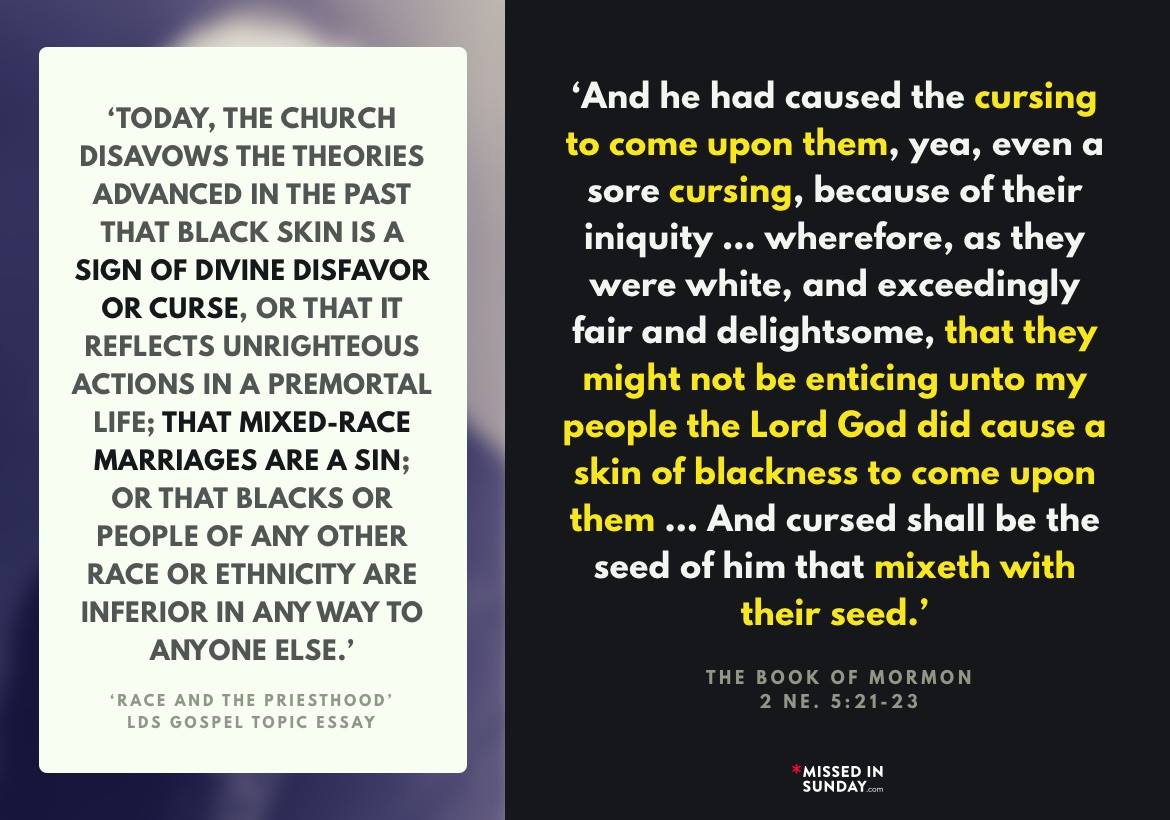
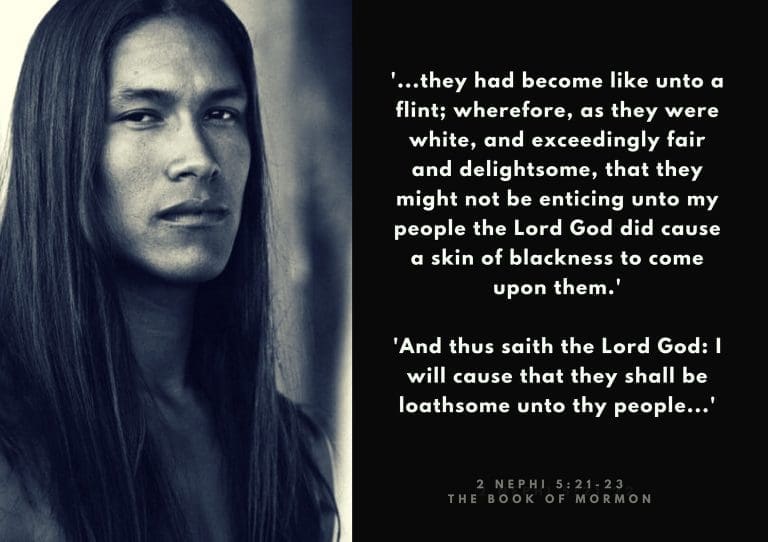
One of the most frequently cited passages relates to the descendants of Cain, who, in the biblical narrative, is associated with a curse that marks his lineage. While the Book of Mormon does not explicitly mention Cain by name in this context, certain scriptural accounts have been understood to allude to this lineage and its association with a darkened skin. For instance, 2 Nephi 5:21-23 describes how the Lamanites, a principal group within the Book of Mormon narrative, became a “dark, and loathsome, and filthy people.” The text states that this condition was a sign, or curse, placed upon them by God due to their wickedness, so that they might be “distinguished from the children of Nephi.”
Similarly, the book of Alma, in Alma 3:6-9, describes a distinction made between the Nephites and the Lamanites, noting that the Lamanites were “a wild and savage and a ferocious people,” and that the Lord had “cursed them as to the flesh upon their bodies, in the which they were marked.” The markings are described as “a skin of whiteness” or “a skin of red.” The common historical interpretation within the Church was that this “darkness” or “whiteness” referred to skin color, and that the Lamanites, often depicted as the ancestors of Native Americans and, by extension, peoples of African descent, were marked with a curse that manifested as dark skin. This interpretation served as a significant element in the early doctrinal and symbolic branding of the Church, distinguishing between the righteous Nephites and the cursed Lamanites.
Prophecies of Redemption and the Removal of the Curse
Crucially, the Book of Mormon also contains prophecies of redemption and the eventual removal of this curse. These passages are vital for understanding the Church’s narrative of eventual reconciliation and the inclusion of all peoples. The book of 1 Nephi, for example, speaks of a time when the Lamanites would be “restored unto the knowledge of their Redeemer,” and that “their stain shall be taken from them” (1 Nephi 10:11). Ether 13:30-31 similarly prophesies of a time when “the seed of the righteous shall be preserved,” and that “the Lord shall bring forth the remnant of the seed of Jacob.”
These prophetic elements are key to the Church’s long-term brand strategy of universal redemption and the eventual unity of all God’s children. While early interpretations focused on the curse and its outward manifestations, the overarching narrative arc of the Book of Mormon points towards a future where such distinctions are overcome through faith and repentance. This duality – the description of a marked people alongside prophecies of their eventual redemption – has shaped how the Church has presented itself, moving from a perceived separation to an eventual embrace.
Historical Interpretations and Policy Implications
The scriptural passages and their early interpretations had profound implications for the Church’s social policies and its public image, particularly concerning the racial segregation that characterized much of 19th and 20th-century American society. These interpretations informed the Church’s stance on temple access and priesthood ordination for Black members.
Priesthood Ban and Temple Exclusion
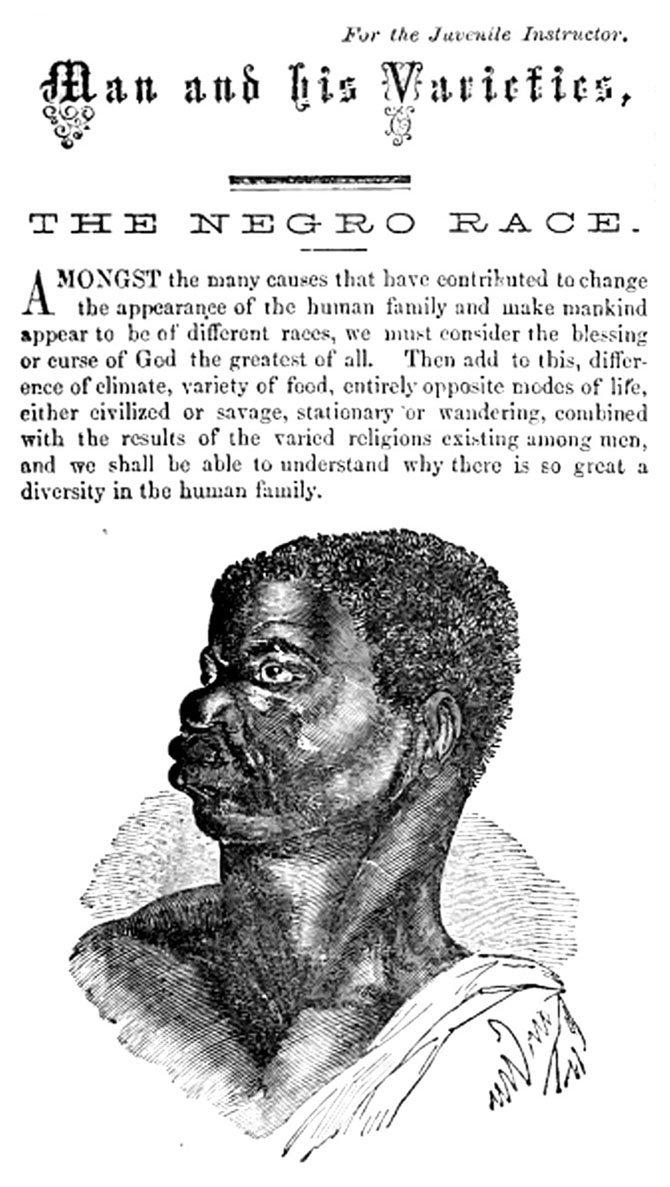
From the mid-19th century until 1978, The Church of Jesus Christ of Latter-day Saints prohibited men of Black African descent from holding the priesthood and from participating in temple ordinances. This policy was widely understood to be a direct consequence of the scriptural interpretations linking dark skin to the curse of Cain. While Church leaders at the time often stated that the reasons for the ban were not fully understood by them, they consistently affirmed its divine origin. This practice was a deeply ingrained part of the Church’s institutional branding, aligning it with other religious and social structures that perpetuated racial discrimination.
The rationale, though not always explicitly articulated in official pronouncements, was that individuals of Black African descent were “descendants of Cain” and therefore, according to their understanding of scripture, not eligible for the priesthood or temple blessings. This created a distinct brand for the Church as a community that, while preaching universal love, practiced segregation in its highest ordinances. This exclusionary branding was a significant point of contention and criticism for the Church, both internally and externally. It created a visible disconnect between its theological claims of equality and its lived realities for Black members.
Social and Cultural Context
It’s crucial to understand that these interpretations did not occur in a vacuum. They were deeply embedded within the prevailing racial attitudes and scientific theories of the 19th and 20th centuries. Racism was pervasive in American society, and many religious and scientific institutions offered justifications for racial hierarchy. The Book of Mormon’s passages were interpreted through this lens, reinforcing existing prejudices. The Church’s branding, therefore, was not solely determined by its scriptures but also by its assimilation into and interaction with a racially stratified society. This made the issue of race and the Book of Mormon’s pronouncements particularly sensitive, as it reflected broader societal challenges within a religious context.
Evolving Interpretations and Brand Recalibration
In the latter half of the 20th century, significant shifts occurred within the Church, leading to a re-evaluation of its policies and a recalibration of its brand identity regarding race. This evolution reflects a broader trend in many religious institutions to address historical injustices and embrace more inclusive doctrines.
The 1978 Revelation and the Lifting of the Ban
On June 8, 1978, the First Presidency of The Church of Jesus Christ of Latter-day Saints announced an official revelation extending priesthood and temple blessings to all worthy male members, regardless of race. This event marked a monumental shift in the Church’s history and its public branding. The revelation, as described by Church leaders, was a divine directive to remove the prohibition, essentially rectifying previous interpretations and policies. This move was widely celebrated and seen as a significant step toward greater inclusivity, fundamentally altering the Church’s brand image from one that practiced racial exclusion to one that embraced universal access to its ordinances.
The Church subsequently issued statements and publications that sought to distance itself from past racial theories and reinterpret scriptural passages. The emphasis shifted from the idea of a curse on specific lineages to a focus on individual worthiness and the universal atonement of Jesus Christ. This recalibration was essential for aligning the Church’s brand with its core theological tenets of equality and salvation for all.
Contemporary Understanding and Nuance
Today, The Church of Jesus Christ of Latter-day Saints officially disavows the interpretation that the Book of Mormon taught that any race was cursed. Church leaders and scholars now emphasize that the passages concerning skin color were symbolic and metaphorical, or that they referred to specific divisions within the ancient Nephite and Lamanite societies, not to inherent racial inferiority. The focus is placed on the historical context of the Book of Mormon narrative and the understanding that “darkness” and “whiteness” could refer to spiritual states or social distinctions rather than purely biological attributes.
The Church’s contemporary branding actively promotes its commitment to racial harmony and inclusivity. This is evident in its public messaging, its support for anti-racism initiatives, and the increasing visibility of members from diverse ethnic and racial backgrounds within its leadership and membership. The Book of Mormon’s passages on skin color, while still present in the text, are now interpreted through a lens of unity and universal brotherhood, reinforcing a brand that strives to be welcoming and equitable to all people. This ongoing process of interpretation and communication is vital for maintaining a brand identity that is both faithful to its scriptures and relevant to a diverse global community.
aViewFromTheCave is a participant in the Amazon Services LLC Associates Program, an affiliate advertising program designed to provide a means for sites to earn advertising fees by advertising and linking to Amazon.com. Amazon, the Amazon logo, AmazonSupply, and the AmazonSupply logo are trademarks of Amazon.com, Inc. or its affiliates. As an Amazon Associate we earn affiliate commissions from qualifying purchases.