
The concept of “work” permeates the biblical narrative, offering profound insights that extend far beyond mere productivity or a means to an end. While not a monolithic treatise on employment, the Bible presents a rich tapestry of principles, admonitions, and encouragements regarding human labor, its purpose, and its ethical dimensions. From the foundational accounts in Genesis to the apocalyptic visions of Revelation, the sacred texts provide a comprehensive framework for understanding our role as co-creators and stewards in the world through our endeavors. This exploration delves into the biblical perspective on work, not as a secular topic, but through the lens of its implications for our personal finances, our approach to earning, and the potential for work to be a conduit for spiritual growth and divine purpose.

The Divine Mandate for Labor and Its Purpose
The Genesis creation account immediately establishes work as an intrinsic part of the human experience, ordained by God Himself. This foundational understanding informs the purpose of labor, suggesting it is not a curse, but a calling.
From Creation to Stewardship: The Original Intent
In the opening chapters of Genesis, God’s creative activity is described as work. He labored for six days, bringing forth the heavens and the earth, light, land, vegetation, celestial bodies, and living creatures. On the seventh day, He rested, sanctifying it. This sets a precedent: God is a worker, and His work is good. Following this, humanity is created in God’s image and given a direct commission: “Be fruitful and multiply and fill the earth and subdue it, and have dominion over the fish of the sea and over the birds of the heavens and over every living thing that moves on the earth” (Genesis 1:28).
This mandate is not about exploitation or selfish gain, but about responsible stewardship. It implies engagement with the created order, bringing forth its potential, managing its resources wisely, and contributing to its flourishing. This original intent highlights work as a participatory act with God in shaping and sustaining His creation. It suggests that through our labor, we reflect God’s creative nature and participate in His ongoing work in the world. This perspective elevates work from a mere transaction to a form of worship and service, inherently tied to our identity and purpose. It lays the groundwork for viewing our professional lives as extensions of our spiritual lives, opportunities to bring order, value, and goodness into existence.
The Fall and the Toil of Labor
The introduction of sin into the world through Adam and Eve’s disobedience brought about a significant shift in the experience of work. The consequence of their rebellion, as stated in Genesis 3:17-19, was that the ground would be cursed, and humanity would eat from it only through painful toil. “By the sweat of your face you shall eat bread, till you return to the ground, for out of it you were taken; you are dust, and to dust you shall return.” This passage is often cited as evidence of work being a burden. However, it’s crucial to understand that the curse was not on work itself, but on the conditions under which it would henceforth be performed.
The inherent goodness and purpose of work remained, but its execution became fraught with difficulty, frustration, and often, injustice. This biblical narrative acknowledges the realities of hardship, exhaustion, and the struggle for sustenance that many experience in their professional lives. It provides a theological framework for understanding why work can be challenging, even when performed with diligence and integrity. It also underscores the importance of perseverance and the need for grace and community to mitigate the effects of this fallen state on our labor. Furthermore, this perspective can inform how we approach financial struggles, recognizing that hardship is not necessarily a sign of personal failure but can be an unfortunate consequence of a broken world.
Principles for Ethical and Kingdom-Focused Work
Beyond its purpose and inherent challenges, the Bible offers a robust ethical framework for how work should be conducted. These principles are not merely guidelines for personal success but are rooted in the desire to honor God and love one’s neighbor, with significant implications for our financial practices and dealings.
Diligence, Honesty, and Integrity in All Undertakings

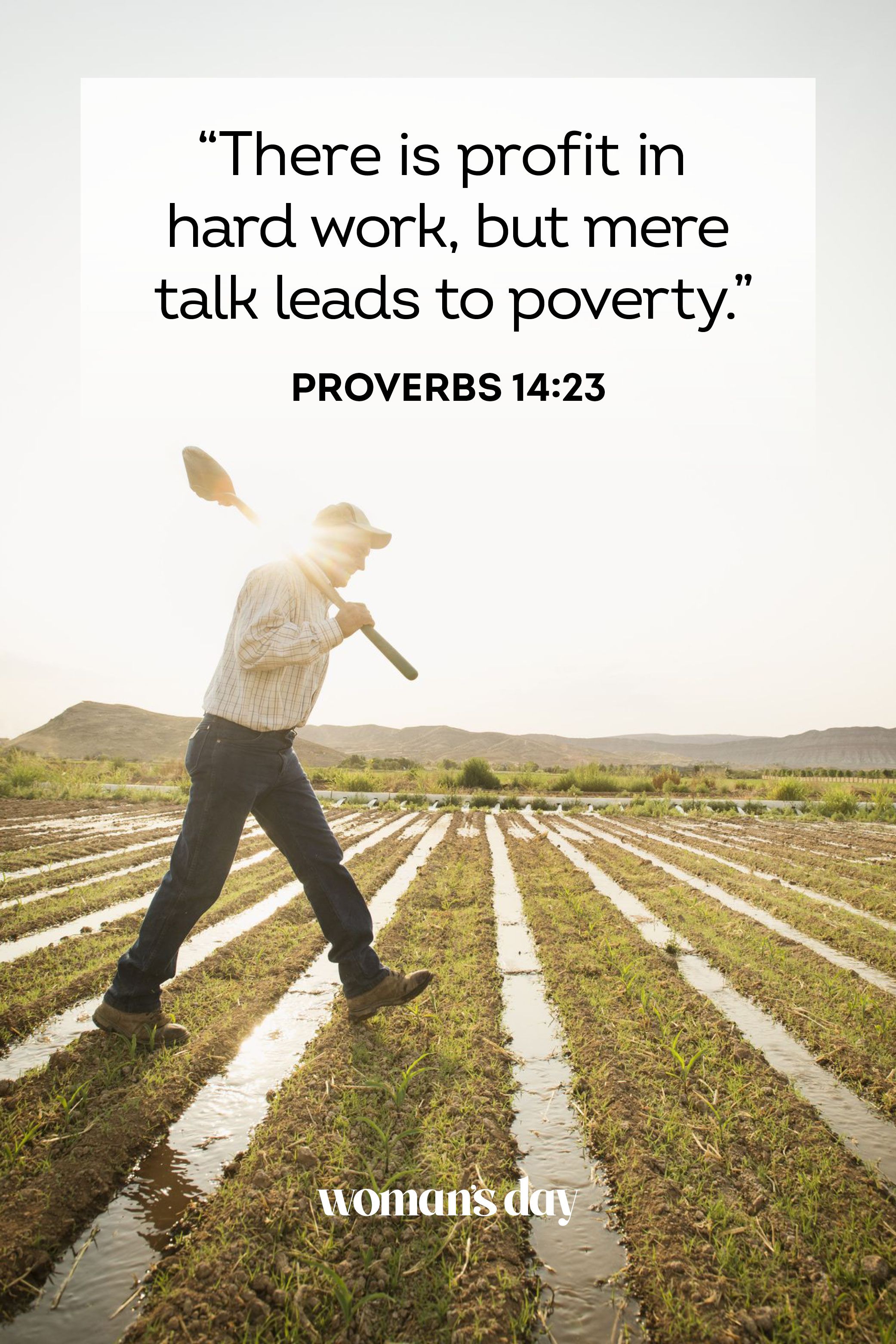
Throughout the Proverbs, the virtues of diligence and hard work are consistently extolled, contrasted with the folly of laziness and sloth. “A hard worker’s hunger is his motivation; the full stomach is the reason he is satisfied” (Proverbs 16:26). This verse highlights the natural and positive outcomes of diligent effort, linking it directly to provision and satisfaction. The Bible strongly condemns dishonesty in business and employment. Concepts like “false scales are an abomination to the LORD, but a just weight is his delight” (Proverbs 11:1) underscore the importance of integrity in all financial transactions and dealings.
This emphasis on honesty extends to fair wages and equitable treatment of employees. The book of Deuteronomy includes clear commands regarding timely payment for laborers: “You shall not oppress a hired servant who is poor and needy, whether he is one of your brothers or one of the sojourners who are in your land within your towns. You shall give him his wages on his day, before the sun sets, for he is poor and counts on it, lest he cry against you to the LORD, and you be guilty of sin” (Deuteronomy 24:14-15). These verses reveal a deep concern for the vulnerable and a command to ensure that honest work is met with just compensation. This directly impacts personal finance by encouraging righteous earning and advocating for fairness in economic exchange.
The Dangers of Greed and the Pursuit of Wealth
While the Bible acknowledges the necessity of work for provision and the potential for legitimate financial success, it issues strong warnings against the corrupting influence of greed and the idolatry of wealth. Jesus Himself stated, “No one can serve two masters… You cannot serve God and money” (Matthew 6:24). This iconic declaration highlights the fundamental conflict between prioritizing material accumulation and devotion to God. The pursuit of wealth for its own sake, or as the ultimate source of security and fulfillment, is presented as a spiritual danger that can alienate individuals from God and distort their priorities.
The parable of the rich fool (Luke 12:16-21) serves as a potent illustration of this warning. The man’s immense success in his harvest leads him to plan for self-indulgent comfort, only to be told, “You fool! This night your soul will be required of you; and the things to which you have looked, to whom will they belong?” This story emphasizes that true wealth is not measured by possessions but by one’s spiritual standing before God. The Bible consistently advocates for contentment, generosity, and a balanced perspective on material possessions, reminding believers that their ultimate security lies not in earthly riches but in their relationship with God. This perspective directly influences how one approaches financial goals and the pursuit of online income or business ventures, urging caution against making money an idol.
Work as a Means of Blessing and Service
The biblical perspective on work transcends the mere act of earning a living. It offers a vision of work as a means to bless others, contribute to society, and even serve God directly, thereby enriching our financial lives through purpose and generosity.
Providing for Self and Others: The Foundation of Responsibility
The Apostle Paul’s admonition in 1 Timothy 5:8 is clear: “But if anyone does not provide for his relatives, and especially for members of his household, he has denied the faith and is worse than an unbeliever.” This verse underscores the fundamental responsibility of work: to ensure the provision and well-being of oneself and one’s family. This is a foundational aspect of personal finance, establishing the ethical imperative to earn a living and manage resources responsibly to meet the needs of those entrusted to one’s care.
This principle extends beyond immediate family to encompass the broader community. The concept of tithing and offering, ingrained in Old Testament law and continued in the New Testament church, is a testament to using one’s earnings to support ministry, care for the poor, and advance God’s purposes. The generosity advocated by the Bible is not a passive act but an active response to God’s blessing, transforming work from a solitary pursuit into a conduit for communal blessing. This has direct implications for how individuals manage their income, allocate funds, and engage in charitable giving.
Work as Worship and Kingdom Advancement
Perhaps the most profound aspect of the biblical perspective on work is its potential to be an act of worship and a tool for advancing God’s kingdom. When work is undertaken with a right heart, with diligence, integrity, and a desire to serve, it becomes more than just secular employment; it becomes a spiritual discipline. Whether one is a farmer, a teacher, a doctor, or a software developer, the work itself can be offered to God.
Colossians 3:23-24 states, “Whatever you do, work heartily, as for the Lord and not for men, knowing that from the Lord you will receive the inheritance as your reward. You are serving the Lord Christ.” This powerful exhortation encourages believers to view their professional lives as opportunities to honor God in every aspect of their endeavors. It shifts the focus from external validation to internal motivation and ultimate accountability to God. This perspective can transform mundane tasks into acts of devotion, infuse the workplace with ethical excellence, and inspire individuals to use their skills and resources for divine purposes. In this light, even the pursuit of online income or the development of innovative technologies can be seen as avenues through which God’s goodness and order are brought into the world, contributing to His eternal kingdom. Ultimately, the Bible presents work not as a mere economic necessity, but as a divinely appointed and purposeful aspect of human existence, offering rich implications for our financial stewardship and spiritual journey.
aViewFromTheCave is a participant in the Amazon Services LLC Associates Program, an affiliate advertising program designed to provide a means for sites to earn advertising fees by advertising and linking to Amazon.com. Amazon, the Amazon logo, AmazonSupply, and the AmazonSupply logo are trademarks of Amazon.com, Inc. or its affiliates. As an Amazon Associate we earn affiliate commissions from qualifying purchases.