
The Ford F-150 is more than just a truck; it’s an institution, a cultural touchstone, and an undisputed titan in the automotive industry. Its presence on roads and job sites worldwide is ubiquitous, and its name is instantly recognizable. Yet, for many, the “150” appended to the iconic “F” series remains an enigma. It’s not a direct representation of horsepower, torque, or even precisely 150 units of anything tangible in its current form. Instead, understanding the “150” requires a deep dive into the strategic world of brand identity, corporate nomenclature, and market positioning. Within the realm of brand strategy, the “150” is a masterclass in how numbers can transcend mere specification to become potent symbols of capability, legacy, and market segmentation, anchoring a brand’s promise to its audience.
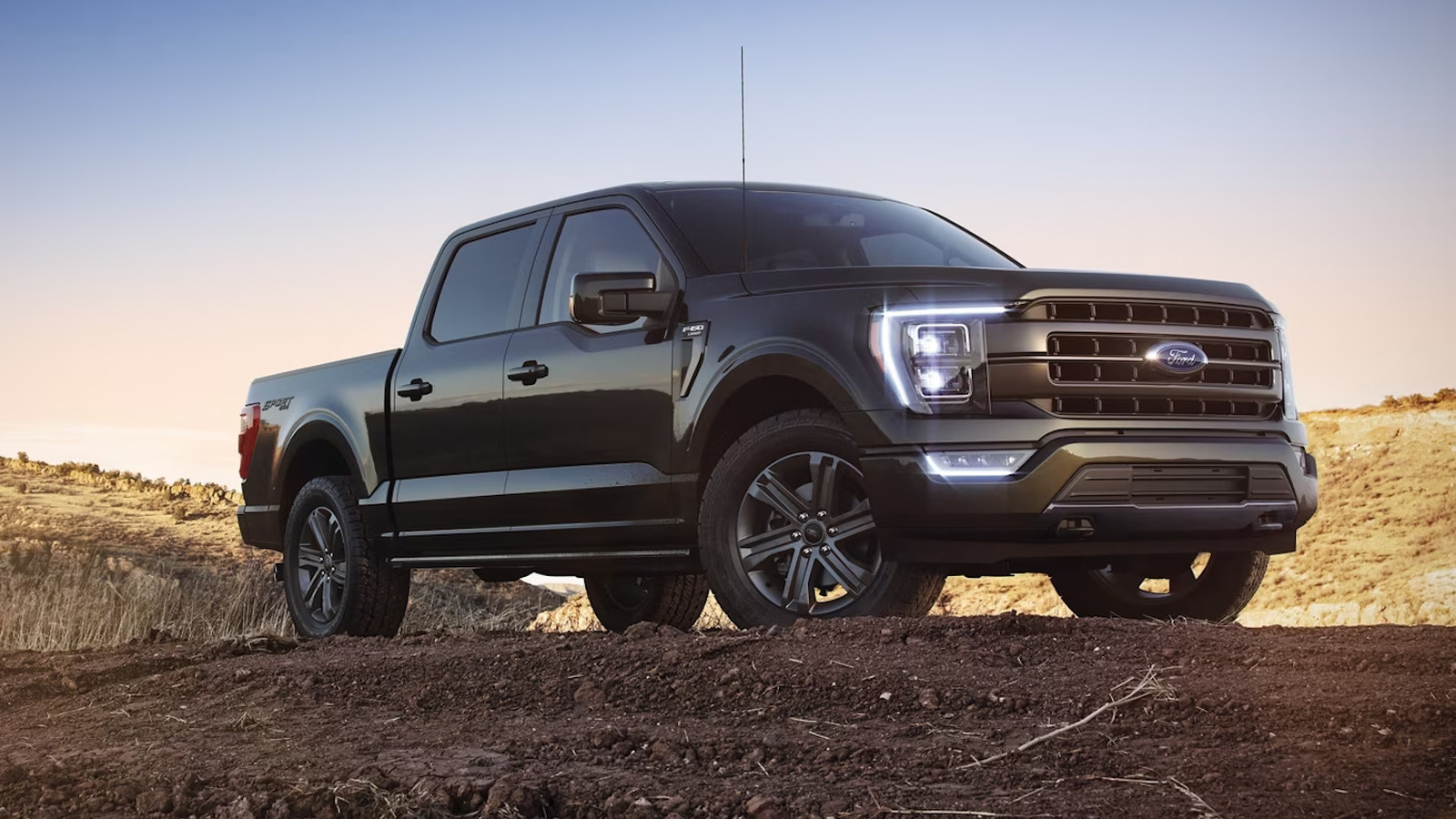
Decoding Ford’s Naming Strategy: A Brand Cornerstone
The foundation of any successful brand lies in clear communication and a coherent identity. For an automotive giant like Ford, this extends to every letter and number in a product’s name. The F-series, first introduced in 1948, wasn’t just a line of trucks; it was a carefully constructed brand ecosystem designed to meet diverse customer needs, and its numbering system was integral to this vision from the outset.
The Legacy of Nomenclature in Automotive Branding
In the fiercely competitive automotive sector, names are not chosen lightly. They are deliberate decisions aimed at conveying specific attributes, establishing market hierarchy, and fostering emotional connections. From simple alphanumeric codes to evocative mythological creatures, automotive nomenclature serves as a shorthand for a vehicle’s character, performance, and target demographic. Early car manufacturers, including Ford, quickly realized the power of consistent naming conventions to differentiate products within their own lineups and against rivals. The goal was to create a system that was intuitive, memorable, and reflective of a vehicle’s intended purpose. This strategic approach to naming ensures that a vehicle’s identity is not just about its engineering, but also about the narrative it tells and the position it occupies in the consumer’s mind.
The F-Series Lineup: A Hierarchy of Capability and Identity
The F-Series pickup truck range is an exemplary case study in systematic branding. Ford developed a clear, ascending numerical scale to distinguish between different levels of capability within its truck line. The “F-150” sits at the entry point of the full-size truck spectrum, indicating it is the lightest-duty offering. Moving up the scale, one encounters the F-250, F-350, F-450, and even F-550, F-650, and F-750 for their heavy-duty commercial applications. This numerical progression is not arbitrary; it’s a deliberate brand strategy to segment the market and guide customers to the truck that best suits their needs, whether it’s for light personal use, demanding construction work, or extreme towing. Each number represents a distinct tier of payload, towing capacity, and structural robustness, immediately communicating to the customer what they can expect from that particular model in terms of its work ethic and durability. This hierarchical branding simplifies the decision-making process for consumers, allowing them to intuitively understand where each truck fits in the Ford family and what its primary function is designed to be.
The “150” as a Strategic Brand Descriptor
Far from being a mere technical code, the “150” in F-150 operates as a powerful brand descriptor. It’s a numerical anchor that communicates the truck’s core identity, positions it within a diverse market, and ultimately helps forge a lasting connection with its vast customer base.
Communicating Core Identity: Payload, Class, and Market Position
Historically, the “150” was indeed more directly tied to a vehicle’s payload capacity, often signifying a “half-ton” truck (where 1,500 pounds was an approximate, albeit not precise, representation of its capability). Over decades, as trucks grew larger, more powerful, and more sophisticated, the literal “half-ton” designation became less accurate in terms of exact payload but remained critically important as a brand signifier. Today, the “150” primarily communicates that the F-150 belongs to the light-duty, full-size pickup truck class. It immediately tells a potential buyer that this truck is designed for a broad range of tasks – from daily commuting and family transport to towing trailers and hauling moderate loads – without being overbuilt for extreme commercial use. This positioning is crucial; it helps Ford carve out a clear niche for the F-150, distinguishing it from both smaller, less capable trucks and larger, more specialized heavy-duty variants. The number defines its class and its primary functional role in the marketplace.
Target Audience Alignment: The Everyday Workhorse and Lifestyle Vehicle
The strategic brilliance of the “150” lies in its ability to align with an incredibly diverse target audience. The F-150’s “light-duty” designation, as communicated by the “150,” positions it as the ideal choice for individuals who need the utility of a truck but also desire comfort, fuel efficiency (for a truck), and versatility for everyday life. This includes small business owners, contractors who don’t require the heaviest hauling capabilities, outdoor enthusiasts, and families who appreciate the spaciousness and rugged appeal of a pickup. By branding it as the “150,” Ford implicitly suggests a balance of capability and usability that appeals to both the working professional and the weekend adventurer. It speaks to a demographic that values a truck’s functionality without wanting the often-excessive capacity or higher operating costs of a heavy-duty model. This precise alignment with consumer needs has been a cornerstone of the F-150’s sustained dominance in the market.
Establishing Brand Recall and Differentiation
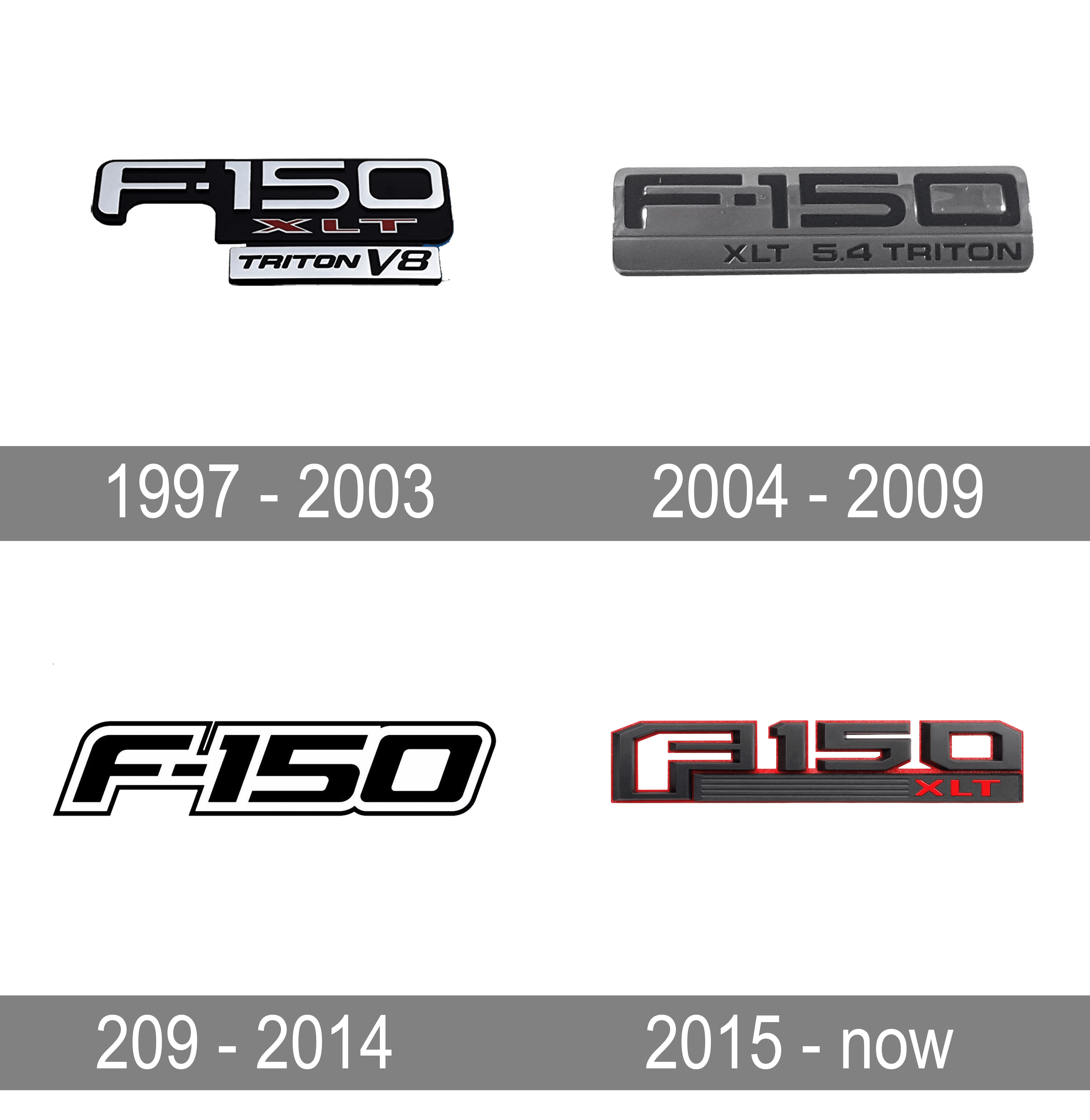
In a saturated market, brand recall is paramount. The “F-150” naming convention, with its consistent numerical logic across the F-Series, fosters immediate recognition and strengthens brand recall. When someone hears “F-150,” they instantly associate it with Ford, and furthermore, with a specific segment of Ford’s truck offerings. This consistency acts as a powerful differentiator. While competitors might use different naming strategies, Ford’s sequential numbering provides a clear, understandable framework that helps customers navigate its product line and reinforces the collective identity of the F-Series brand. The “150” isn’t just a number; it’s a badge that represents a commitment to a particular level of utility, reliability, and brand heritage that customers have come to trust. This strong brand recognition translates directly into customer loyalty and a competitive edge.
Evolution of a Brand Number: From Payload Rating to Icon
The meaning and perception of the “150” have evolved significantly over the decades, mirroring the transformation of the F-150 itself from a utilitarian work vehicle into a sophisticated, multi-purpose machine. This evolution underscores the dynamic nature of corporate identity and brand storytelling.
Historical Context: The Origins of the F-Series Numbering
When the F-Series first debuted, numerical designations like “F-1” (the original half-ton), “F-2” (three-quarter-ton), and “F-3” (heavy-duty) were fairly direct indicators of their gross vehicle weight rating (GVWR) or payload capacity. As the years passed and truck technology advanced, these original classifications became less precise. The “F-100” eventually replaced the “F-1” as the half-ton designation, which then gave way to the “F-150” in 1975. This transition wasn’t just a numerical change; it was a response to evolving regulations, market demands for greater capability, and the need for a fresh brand identity. While the “150” was still conceptually linked to the half-ton class, its literal meaning in terms of pounds became more symbolic. The strategic decision to standardize the “F-150” designation marked a pivot towards a branding strategy where the number conveyed a class of truck rather than an exact historical payload figure. This allowed for greater flexibility in engineering and marketing while maintaining a consistent and recognizable brand identity.
Modern Interpretation: Beyond Mere Specification to Brand Equity
Today, the “150” is far more than a specification; it’s steeped in brand equity. It carries the weight of decades of trust, innovation, and market leadership. When consumers see “F-150,” they don’t necessarily calculate a precise payload capacity; rather, they recognize a symbol of American ruggedness, capability, and unwavering dependability. The number has transcended its original functional meaning to become a cultural icon. This brand equity is invaluable, allowing Ford to innovate and introduce new features—like advanced powertrains, luxurious interiors, and cutting-edge technology—under the familiar “F-150” banner, confident that the core brand promise remains intact. The “150” has become a shorthand for a certain caliber of truck, a benchmark against which all other light-duty full-size pickups are measured. It embodies the brand’s commitment to quality, performance, and durability, turning a simple numerical designation into a powerful and recognizable brand asset.
The F-150’s Brand Narrative: A Case Study in Corporate Identity
The enduring success of the F-150, largely underpinned by its consistent branding, offers a compelling case study in effective corporate identity. It illustrates how a well-managed brand narrative can withstand market shifts, embrace innovation, and maintain unparalleled loyalty.
Consistency in a Dynamic Market
The automotive market is notoriously dynamic, characterized by rapid technological advancements, evolving consumer tastes, and intense competition. Despite these pressures, Ford has maintained the F-150 branding with remarkable consistency. While the truck itself has undergone countless redesigns, engineering upgrades, and feature additions, the “F-150” nameplate has remained a constant. This steadfastness in branding signals stability and reliability to consumers. It reinforces the idea that while the product continually improves, its core identity and brand promise—of being a capable, trustworthy, and versatile light-duty truck—remain unchanged. This consistency in naming, especially for a flagship product, is a critical component of Ford’s corporate identity, fostering long-term brand recognition and trust in a constantly shifting landscape.
Extending the Brand: From “Built Tough” to “Smart Tough”
The “150” serves as the anchor for a broader brand narrative that has skillfully evolved over time. Ford’s iconic “Built Tough” slogan, deeply ingrained in the F-Series identity, speaks to the inherent durability and strength communicated by the F-150’s class designation. More recently, as trucks have become increasingly sophisticated, the narrative has expanded to “Smart Tough,” incorporating themes of technological innovation, intelligent design, and advanced safety features. The “150” allows Ford to seamlessly integrate these new brand messages without diluting the core identity. It provides a stable platform upon which new layers of brand meaning can be built, showing how a foundational piece of corporate identity can be flexible enough to accommodate modern advancements while still honoring its heritage. This ability to adapt its narrative around a consistent brand element is a testament to effective brand management.
The Role of ‘150’ in Brand Extensions and Future Models
The numerical branding of the F-Series also provides a robust framework for brand extensions and the introduction of new models. Variants like the high-performance F-150 Raptor or the all-electric F-150 Lightning leverage the immense brand equity of the “F-150” name. By retaining the “150” designation, these innovative models instantly inherit the trust, recognition, and perceived capability associated with the standard F-150, while simultaneously communicating their unique attributes through their sub-names. This strategic approach ensures that even as Ford pushes the boundaries of what a truck can be, the new offerings are firmly rooted in the established and respected F-Series corporate identity. It’s a prime example of how a well-established numbering system can act as a powerful launchpad for future product development and market expansion, reinforcing the overall brand architecture.
In conclusion, the “150” in F-150 is far from a simple number. It is a strategically chosen element of Ford’s corporate identity, a powerful descriptor that communicates the truck’s class, capabilities, and target audience within a meticulously designed brand hierarchy. It has evolved from a historical indicator of payload into a symbol of unparalleled brand equity, embodying decades of trust, innovation, and American ruggedness. Through its consistent use and the deliberate narrative built around it, the “150” remains a pivotal component of the F-150’s enduring legacy and its continued dominance as a global automotive icon, standing as a testament to the profound impact of thoughtful brand strategy.
aViewFromTheCave is a participant in the Amazon Services LLC Associates Program, an affiliate advertising program designed to provide a means for sites to earn advertising fees by advertising and linking to Amazon.com. Amazon, the Amazon logo, AmazonSupply, and the AmazonSupply logo are trademarks of Amazon.com, Inc. or its affiliates. As an Amazon Associate we earn affiliate commissions from qualifying purchases.