
In the rapidly evolving landscape of technology, the word “relation” takes on multifaceted meanings, far beyond its common everyday usage. Within the tech sphere, a relation is not merely a connection between two entities, but rather a fundamental concept underpinning how systems, data, and even artificial intelligence interact and function. Understanding these technical definitions of “relation” is crucial for anyone seeking to grasp the intricacies of modern software, databases, AI algorithms, and the digital infrastructure that powers our lives. This exploration will delve into the core technological interpretations of “relation,” focusing on its implications in data management, software architecture, and the burgeoning field of artificial intelligence.
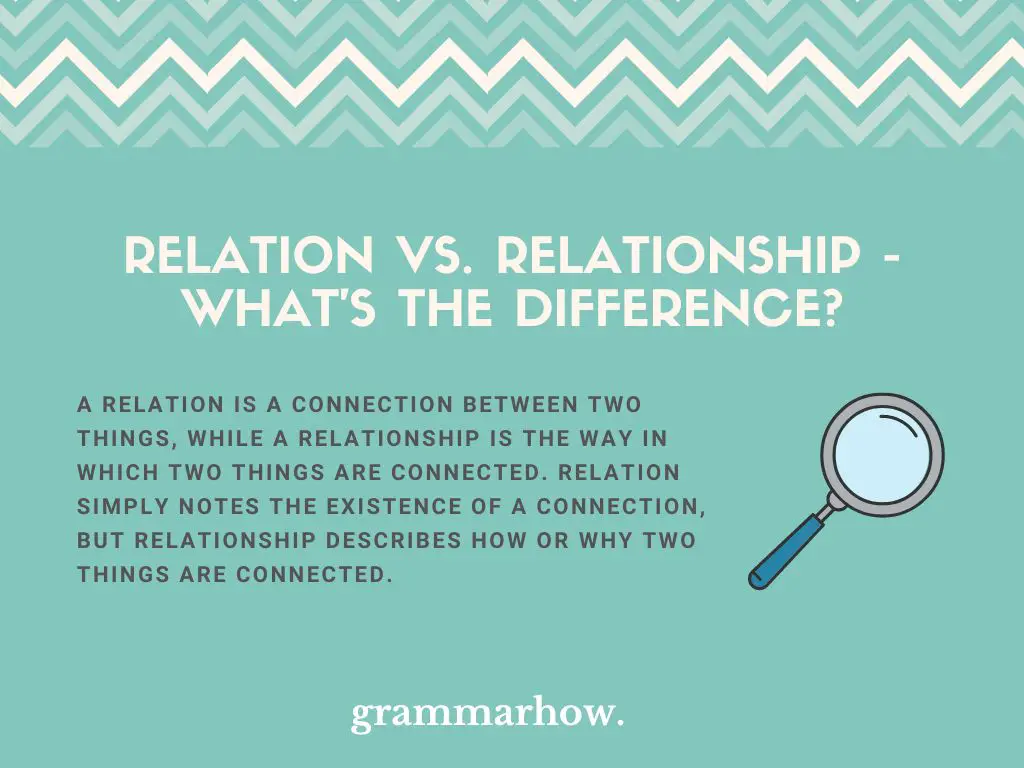
Relations in Data Management: The Bedrock of Information
At the heart of almost every digital system lies data, and the way this data is structured and interconnected is paramount. In this domain, “relation” is most commonly associated with relational databases, a foundational technology that has shaped how we store, organize, and retrieve information for decades.
Relational Databases and the Power of Structured Connections
The term “relational” in “relational database” directly refers to the relational model, a theoretical framework developed by E.F. Codd. This model posits that all data can be represented in tables, also known as relations. Each table consists of rows (tuples or records) and columns (attributes or fields). The “relation” here is the table itself, acting as a structured container for a specific type of information.
The true power of the relational model lies not just in storing data, but in defining and enforcing relationships between these tables. These relationships are established through keys: primary keys, which uniquely identify a row within a table, and foreign keys, which are columns in one table that refer to the primary key of another. This mechanism allows for the creation of complex networks of data, where information about customers, orders, products, and suppliers, for example, can be linked seamlessly.
For instance, a Customers table might have a CustomerID as its primary key. An Orders table could then include a CustomerID as a foreign key. This foreign key establishes a direct relation between an order and the customer who placed it. This relational integrity ensures that an order cannot exist without a valid customer, and conversely, a customer can have multiple orders. This structured approach to relating data is what enables efficient querying, data integrity, and the ability to derive meaningful insights from vast datasets.
Beyond the Table: The Concept of Relationships
While relational databases are the most prominent example, the concept of relationships in data extends beyond the formal structure of tables. In data modeling, a “relationship” describes how different entities or concepts within a system are connected. These can be one-to-one (e.g., one person has one social security number), one-to-many (e.g., one customer can have many orders), or many-to-many (e.g., many students can enroll in many courses).
These relationships are not just abstract ideas; they have tangible implications for how data is accessed, processed, and utilized. Understanding these connections allows developers to design more efficient queries, build more robust applications, and ensure that data remains consistent and accurate across different parts of a system. Without well-defined relations, data can become siloed, leading to redundancy, inconsistencies, and a significant impediment to effective decision-making.
Relations in Software Architecture: Building Interconnected Systems
In software development, “relation” is a fundamental concept that dictates how different components of an application interact with each other. This involves not just how code modules connect, but also how services communicate and how users engage with the software.
Inter-Process Communication and Service Dependencies
Modern software applications are often not monolithic entities but are composed of numerous smaller, independent services that communicate with each other. The “relation” here refers to the dependencies and communication channels between these services. Technologies like APIs (Application Programming Interfaces), message queues, and remote procedure calls (RPC) define these relations, dictating how services request information, send commands, and exchange data.
For example, a microservices architecture relies heavily on well-defined relations between services. An e-commerce platform might have separate services for user authentication, product catalog management, order processing, and payment. The “relation” between the order processing service and the payment service is crucial; the former needs to send payment details to the latter to complete a transaction. The reliability and efficiency of these inter-service relations directly impact the overall performance and stability of the application. Misunderstandings or failures in these connections can lead to cascading errors and system downtime.
User Interface Design and User Experience
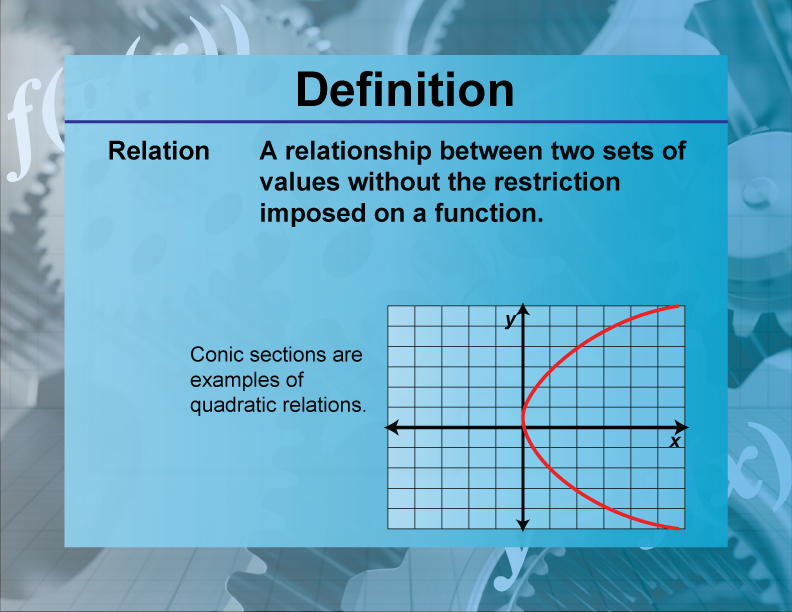
Beyond the backend, the “relation” also plays a significant role in how users interact with software. User interface (UI) design is all about establishing intuitive and effective relations between the user and the system’s functionalities. This includes how buttons are linked to actions, how information is presented in a logical sequence, and how different screens or modules are navigated.
A well-designed UI creates a smooth and predictable “relation” for the user. For instance, clicking a “shopping cart” icon should predictably lead to a view of selected items, and a “checkout” button should initiate the payment process. The relation here is one of cause and effect, where user actions have expected outcomes. A poor or confusing UI, conversely, breaks these relations, leading to user frustration, errors, and a negative user experience. The concept of affordance in UI design – where the design of an object suggests how it should be used – is a direct manifestation of establishing appropriate user-system relations.
Relations in Artificial Intelligence: The Fabric of Understanding
As AI systems become more sophisticated, the concept of “relation” takes on new and profound meanings. In AI, relations are not just about static connections but about dynamic understanding, inference, and the ability to learn complex patterns.
Knowledge Graphs and Semantic Relationships
One of the most impactful applications of “relation” in AI is through knowledge graphs. These are structured representations of information that describe entities and the relations between them. Unlike traditional databases, knowledge graphs focus on the semantic meaning of these connections. For example, a knowledge graph might represent that “Paris” is the “capital of” “France,” and that “France” is “located in” “Europe.”
These semantic relations enable AI systems to perform more sophisticated reasoning and inference. By traversing these relations, an AI can answer complex questions, discover new insights, and provide more contextually relevant information. Search engines like Google utilize knowledge graphs to understand the intent behind user queries and provide direct answers rather than just a list of links. Recommender systems often leverage relations between users and items (e.g., “user X likes movie Y”) to suggest new content. The accuracy and richness of these relations are critical for the AI’s ability to “understand” the world.
Machine Learning and Pattern Recognition
In machine learning, the concept of “relation” is implicitly explored through pattern recognition. Algorithms learn to identify and exploit patterns and correlations within data. These patterns represent inherent “relations” between different features or variables. For example, in a spam detection algorithm, the relation between certain keywords (e.g., “free,” “offer,” “urgent”) and the classification of an email as spam is learned.
Supervised learning models are explicitly trained to predict a target variable based on input features, essentially learning the relation between them. Unsupervised learning algorithms, like clustering, aim to discover inherent relations and group similar data points together based on their shared characteristics. Deep learning models, with their complex neural network architectures, are adept at learning highly intricate and hierarchical relations within data, enabling breakthroughs in areas like image recognition, natural language processing, and autonomous systems. The more sophisticated the learned relations, the more powerful and accurate the AI becomes.
The Evolving Meaning of Relation in Tech
The term “relation” in technology is not static; it continues to evolve as new paradigms emerge. From the rigid structure of relational databases to the dynamic, semantic connections in knowledge graphs and the implicit patterns learned by AI, the concept underpins how we organize, process, and understand information in the digital age.
From Structured to Unstructured: The Shifting Landscape
Historically, the focus was on structured data and well-defined relations, epitomized by relational databases. However, the explosion of unstructured data – text, images, audio, video – has led to new approaches. While the fundamental concept of connection remains, the methods of identifying and utilizing these relations are becoming more nuanced. Techniques like natural language processing (NLP) aim to extract semantic relations from unstructured text, and computer vision algorithms identify visual relations within images. This signifies a move towards understanding and exploiting relations in a more flexible and context-aware manner.

The Future of Relations: Interoperability and Explainability
As technology becomes more interconnected, the importance of clearly defined and interoperable relations will only grow. This means ensuring that different systems and AI models can effectively communicate and share information, understanding the “relations” that bind their respective data. Furthermore, in the realm of AI, there is an increasing demand for “explainable AI” (XAI), which aims to make the decision-making processes of AI systems transparent. This often involves understanding the specific “relations” that an AI model has identified and utilized to reach a particular conclusion, moving from a black-box approach to a more interpretable one.
In conclusion, the meaning of “relation” in technology is a vast and critical subject. It is the invisible thread that connects data, powers software, and enables intelligence. Whether it’s the formal structure of a database table, the handshake between two software services, or the intricate web of understanding within an AI, the concept of relation is fundamental to the digital world we inhabit and is continuously being redefined by innovation.
aViewFromTheCave is a participant in the Amazon Services LLC Associates Program, an affiliate advertising program designed to provide a means for sites to earn advertising fees by advertising and linking to Amazon.com. Amazon, the Amazon logo, AmazonSupply, and the AmazonSupply logo are trademarks of Amazon.com, Inc. or its affiliates. As an Amazon Associate we earn affiliate commissions from qualifying purchases.