
In the ever-evolving landscape of digital communication, acronyms and abbreviations are the shorthand that allows us to convey thoughts and emotions efficiently. While some, like “LOL” (Laughing Out Loud) or “BRB” (Be Right Back), are universally understood, others can be more context-dependent and even ambiguous. One such term that frequently pops up in text messages, instant messages, and social media is “POS.” Understanding its meaning and appropriate usage is crucial for navigating modern digital interactions. This article will delve into the multifaceted nature of “POS” in texting, exploring its common interpretations, the contexts in which it’s used, and how to avoid misunderstandings.
Decoding “POS”: Multiple Meanings in Digital Discourse
The ambiguity of “POS” is precisely what makes its interpretation challenging. Unlike terms with a single, widely accepted meaning, “POS” can represent several distinct phrases, each carrying a different connotation and intended message. This inherent versatility, while potentially efficient, also opens the door for misinterpretation if the context isn’t crystal clear.
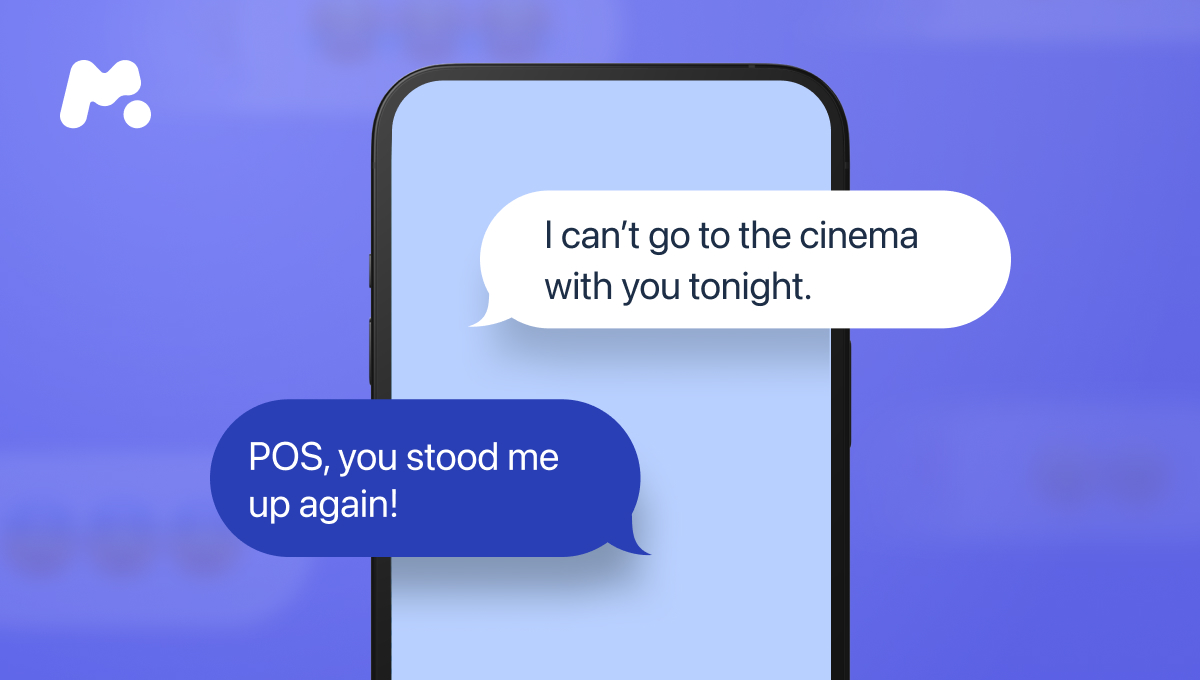
The Most Common Interpretation: “Piece of S**t”
Undoubtedly, the most prevalent and often the most impactful meaning of “POS” in texting is an expletive used to describe something or someone as being of extremely low quality, worthless, or fundamentally flawed. This usage is almost always negative and is typically employed in moments of frustration, anger, or extreme disappointment.
When Used to Describe Objects or Situations:
When someone texts “This phone is POS,” they are expressing strong dissatisfaction with the device’s performance, reliability, or overall functionality. Similarly, “The traffic today was POS” conveys intense annoyance with the congestion and delays. In these instances, “POS” serves as a concise and potent way to articulate a negative sentiment. The brevity of the abbreviation allows for a quick outburst of frustration without requiring a lengthy explanation. It’s the digital equivalent of throwing up your hands and declaring something utterly unbearable.
When Used to Describe People:
The application of “POS” to describe individuals is significantly more severe and personal. Texting “He’s such a POS” or “She acted like a POS” indicates a profound level of disdain and disrespect. This usage implies that the person being described is morally corrupt, unethical, selfish, or has behaved in a way that is considered unacceptable and offensive. It’s a harsh judgment, often delivered in the heat of the moment, and can significantly damage relationships if seen or overheard by the subject or their allies. The impact of this accusation is amplified by the informal and often untraceable nature of texting, where such condemnations can be sent quickly and without immediate consequence.
Nuances and Intensity:
It’s important to recognize that the intensity of “POS” can vary based on the sender and the relationship between the communicators. Among close friends who share a similar sense of humor or have a history of using strong language, “POS” might be employed more casually, perhaps even sarcastically, to express mild annoyance or a shared gripe. However, even in such contexts, the underlying negative connotation remains. When used by someone less familiar or in a more formal communication channel, its impact becomes far more serious, bordering on an insult that can escalate into conflict. The lack of non-verbal cues in text-based communication makes it particularly easy for the intended severity to be misconstrued. A sarcastic jab can easily land as a genuine attack.
The Less Common, But Equally Important: “Point of Sale”
Beyond the vulgar and negative, “POS” also has a completely different and entirely professional meaning: “Point of Sale.” This is a term widely used in the business and retail sectors and refers to the place or system where a retail transaction is completed. This typically involves a cash register, terminal, or computer system used to process payments for goods and services.
In Business and Retail Contexts:
Within a professional setting, “POS” is a standard technical term. A restaurant manager might text their staff, “We need to reboot the POS system before the lunch rush,” referring to the system that handles orders and payments. A retail store owner might discuss “upgrading their POS hardware” or “implementing a new POS software solution” with a vendor. In these scenarios, the abbreviation is technical and functional, devoid of any emotional charge. It’s a shorthand for a critical component of business operations. The context here is key; if the conversation revolves around business, inventory, or customer transactions, then “Point of Sale” is almost certainly the intended meaning.
Distinguishing from the Vulgar Meaning:
The crucial differentiator between the two meanings of “POS” is the surrounding conversation. If the text exchange involves discussions about business operations, inventory management, customer service protocols, or financial transactions, then the “Point of Sale” interpretation is the correct one. Conversely, if the discussion is about personal grievances, frustrations with products, or negative opinions about individuals, the expletive interpretation is far more likely. The professional context acts as an immediate filter, making the vulgar meaning highly improbable.
Other Potential Interpretations and Contextual Clues
While “Piece of S**t” and “Point of Sale” are the dominant meanings, there can be other, less common interpretations or instances where the abbreviation is used playfully or ambiguously. Recognizing these requires a deeper understanding of the sender and the dynamics of the relationship.
Playful or Ironic Usage:
In some informal circles, particularly among younger demographics or those who enjoy wordplay, “POS” might be used ironically or playfully to mean something akin to “Priceless Original Statement” or “Person of Significance.” This usage is rare and highly dependent on the established rapport and inside jokes between communicators. For example, if someone makes a particularly witty or insightful comment, a friend might text back, “OMG, that was POS!” meaning it was exceptionally good. However, this is a highly niche application and should not be assumed without strong evidence of such a playful dynamic.
Ambiguous Usage and the Risk of Misinterpretation:
The inherent danger with any abbreviation that has multiple meanings is the potential for misinterpretation. If the context is unclear, or if the sender is not precise, “POS” can easily lead to confusion or offense. A sender might intend to use it playfully, but the recipient, unfamiliar with the sender’s communication style, might interpret it as the vulgar expletive. This highlights the importance of clarity in digital communication, especially when using potentially ambiguous abbreviations.
Leveraging Contextual Clues:
To accurately decipher the intended meaning of “POS,” one must always consider the broader context. This includes:
- The Sender: What is their usual communication style? Are they prone to using vulgar language, or are they typically more professional?
- The Recipient: What is the relationship between the sender and receiver? Is it a close friend, a colleague, a family member, or a stranger?
- The Topic of Conversation: What is being discussed? Does it relate to business, personal matters, or something else entirely?
- Previous Messages: What has been said in the preceding texts? Do the earlier messages provide clues about the sender’s intent?
- Emojis and Other Non-Verbal Cues (within text): While limited, emojis can sometimes offer hints. A winking emoji might suggest playful intent, while an angry face emoji would reinforce a negative interpretation.
Navigating the Minefield: Strategies for Effective Communication
Given the potential for misinterpretation, understanding how to use and interpret “POS” effectively is a skill in modern digital communication. It’s not just about knowing the definitions; it’s about employing a strategic approach to ensure your message is received as intended.
When Using “POS”: Choose Your Words Wisely
The decision to use “POS” in a text message should not be taken lightly. While it can be a powerful tool for conveying strong emotions or technical terms efficiently, its misuse can lead to significant negative consequences.
Consider Your Audience and Relationship:
Before hitting send, always ask yourself: “Who am I texting?” and “What is my relationship with this person?” If you are communicating with a boss, a client, or someone you don’t know well, it is almost always best to avoid the vulgar interpretation of “POS” altogether. Even if you intend it playfully, the risk of causing offense or appearing unprofessional is too high. Stick to clear, unambiguous language.
Opt for Clarity Over Brevity:
While abbreviations are designed for speed, sometimes a few extra words are worth the effort to prevent confusion. If you are expressing strong negative feelings, instead of texting “This is POS,” consider “This is incredibly frustrating” or “I’m very disappointed with this.” If you are referring to a business system, spelling out “Point of Sale” might be clearer, especially if there’s any doubt about the recipient’s familiarity with the term.
The “If In Doubt, Leave It Out” Rule:
This is a golden rule of digital communication. If you have any hesitation about whether your use of “POS” will be understood correctly, or if it might be misinterpreted, then do not use it. The potential for misunderstanding and the damage it can cause far outweigh the perceived benefits of using a concise abbreviation. A simple clarification or a slightly longer sentence can save you from a world of hurt.
When Receiving “POS”: Don’t Jump to Conclusions
Receiving a text with “POS” can be jarring, especially if you assume the most negative interpretation. However, a measured approach, considering all possibilities, is crucial for accurate comprehension.
Analyze the Contextual Clues:
As previously discussed, meticulously examine the surrounding conversation. What was being discussed before the “POS” text? Who is the sender, and what is their typical communication style? Are there any indicators that suggest a professional context, a playful tone, or a genuine expression of anger?
Consider Alternative Meanings:
Don’t immediately default to the expletive meaning. Actively consider if “Point of Sale” or a less common playful interpretation might be applicable. For instance, if you are in a retail job and receive a text from your manager about a system issue, it’s highly likely they are referring to the “Point of Sale” system.
Seek Clarification When Necessary:
If, after careful analysis, you are still unsure about the intended meaning, do not hesitate to ask for clarification. A simple and polite follow-up text can prevent misunderstandings and avoid unnecessary conflict. You could text back: “Just to be sure, are you referring to the Point of Sale system, or something else?” or “I want to make sure I understand, could you clarify what you mean by ‘POS’ in this context?” Most reasonable communicators will appreciate your effort to understand.
The Future of “POS” in Texting: Evolving Language and Digital Literacy
The evolution of language is an ongoing process, and digital communication is a fertile ground for new abbreviations and evolving meanings. “POS” is a prime example of how a single abbreviation can carry multiple, sometimes contradictory, meanings. As digital literacy improves, and as communication platforms become more sophisticated, the way we use and interpret such shorthand will continue to adapt.
The Role of AI and Predictive Text
The rise of artificial intelligence and advanced predictive text algorithms in our smartphones and communication apps plays a significant role in shaping how we use abbreviations. These tools often suggest common abbreviations, potentially increasing their usage and reinforcing their meanings. As AI becomes more adept at understanding context, it might also help in disambiguating terms like “POS,” offering more tailored suggestions based on the ongoing conversation. However, AI is not infallible and can sometimes reinforce incorrect or less common interpretations if not trained on a diverse and nuanced dataset.
Generational Differences and Cultural Nuances
The usage and interpretation of “POS” can also vary significantly across different age groups and cultural backgrounds. Younger generations, who have grown up with instant messaging and social media, may be more accustomed to the rapid-fire use of abbreviations and have a broader understanding of their varied meanings. Conversely, older generations might be less familiar with such shorthand or may only recognize the most common or negative interpretations. Cultural norms also play a part; in some cultures, the use of profanity, even in abbreviated form, is more taboo than in others.

The Importance of Digital Etiquette and Empathy
Ultimately, understanding the meaning of “POS” in texting boils down to effective digital etiquette and empathy. It’s about being mindful of how our words, even abbreviated ones, can impact others. It requires us to consider the recipient’s perspective and to strive for clarity and respect in our digital interactions. By being conscious of the potential meanings and by actively seeking to understand and be understood, we can navigate the complexities of digital communication more effectively and foster stronger, more positive relationships in the online world. The ability to decipher and appropriately use terms like “POS” is not just a matter of linguistic knowledge but a crucial aspect of digital social intelligence.
aViewFromTheCave is a participant in the Amazon Services LLC Associates Program, an affiliate advertising program designed to provide a means for sites to earn advertising fees by advertising and linking to Amazon.com. Amazon, the Amazon logo, AmazonSupply, and the AmazonSupply logo are trademarks of Amazon.com, Inc. or its affiliates. As an Amazon Associate we earn affiliate commissions from qualifying purchases.