
In the volatile landscape of the modern stock market, few tickers evoke as much debate, passion, and scrutiny as PLTR—Palantir Technologies. To the uninitiated, Palantir is often shrouded in mystery, frequently associated with clandestine government operations and high-level data surveillance. However, for the serious investor, understanding “what PLTR does” is less about the intrigue of “spy-tech” and more about understanding a fundamental shift in how enterprise value is created through data integration and decision science.
At its core, Palantir is a software company that builds platforms for integrating, managing, and securing data. But from a “Money” perspective, Palantir is a high-growth infrastructure play. It provides the “operating system” for modern enterprises and governments, turning chaotic data into actionable financial and operational outcomes. This article explores Palantir’s business model, its revenue streams, and its financial trajectory to help investors understand the economic engine behind the ticker.
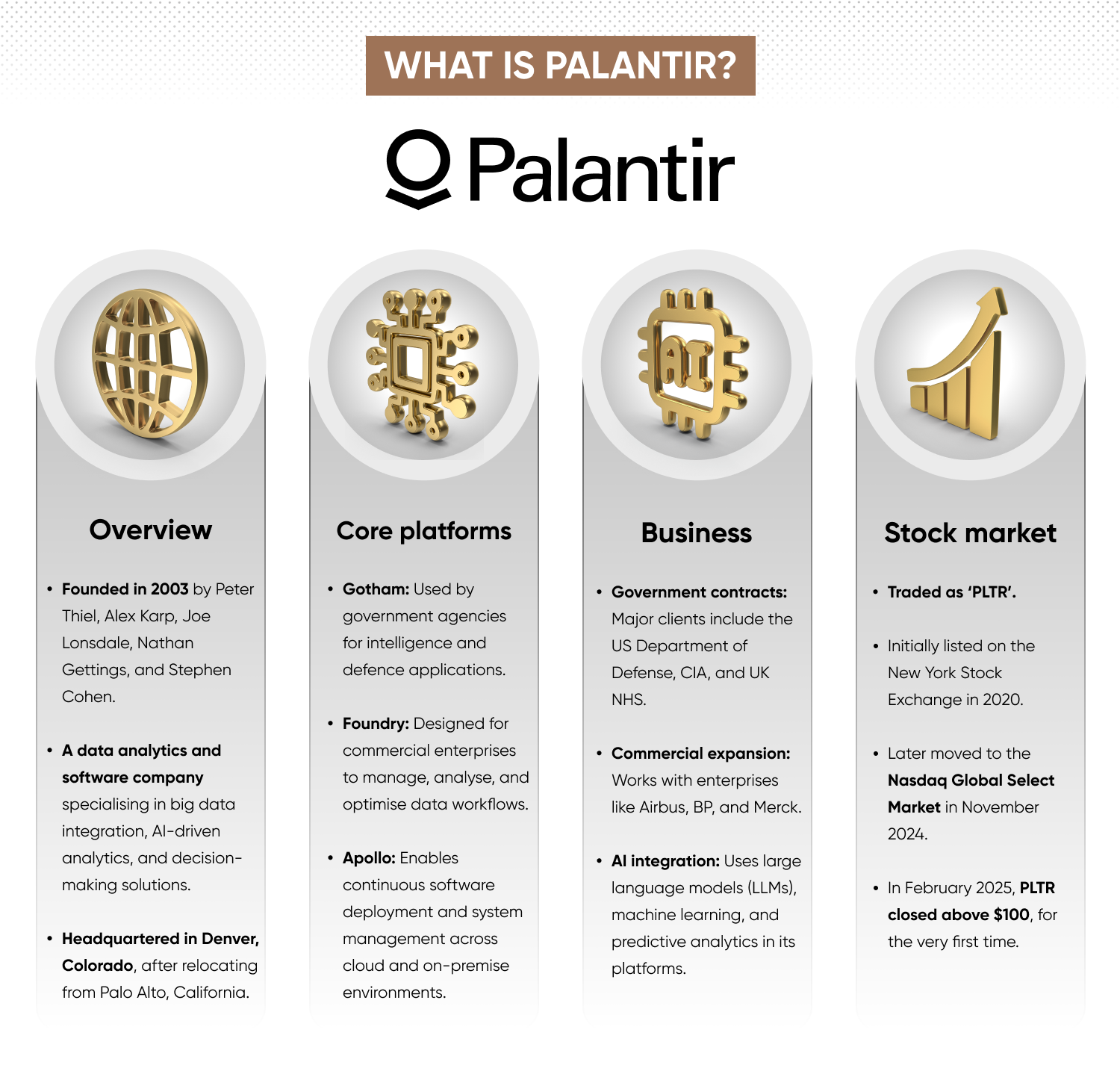
1. The Revenue Engines: Gotham, Foundry, and Apollo
To understand Palantir’s financial health, one must first break down its primary product offerings. These are not merely “apps”; they are massive software environments that command high-dollar contracts and create significant “moats” around the company’s revenue.
The Government Segment (Gotham)
Gotham is Palantir’s first flagship platform, primarily serving government agencies such as the DoD (Department of Defense), the CIA, and various international allies. From an investment standpoint, Gotham represents a “defensive” revenue stream. These are typically long-term, multi-year contracts that provide a stable floor for the company’s top line. In the world of finance, government contracts are highly coveted because they are “sticky”—once a government integrates its intelligence operations into Gotham, the switching costs are astronomical.
The Commercial Segment (Foundry)
If Gotham is the floor, Foundry is the ceiling. Foundry was designed for the corporate world, helping companies in industries like aviation, energy, and finance manage complex supply chains and optimize margins. For a “Money” focused analysis, Foundry is critical because it represents Palantir’s expansion into the massive Total Addressable Market (TAM) of the private sector. When a company like Airbus uses Foundry to streamline A350 production, the ROI is measurable in billions of dollars, justifying the high premium Palantir charges for its services.
Apollo: The Continuous Delivery Layer
Apollo is the often-overlooked third pillar. It is the software that allows Gotham and Foundry to be deployed across any environment, whether it’s a public cloud or a disconnected server in a submarine. For shareholders, Apollo represents operational efficiency. It allows Palantir to scale its deployments without a proportional increase in headcount, which is the key to transitioning from a service-heavy model to a high-margin software-as-a-service (SaaS) model.
2. The AIP Revolution: Accelerating the Sales Cycle
For years, the primary bear case against PLTR was its long and expensive sales cycle. It took months, sometimes years, to convince a CEO to overhaul their data infrastructure. However, the introduction of the Artificial Intelligence Platform (AIP) has fundamentally changed the company’s financial trajectory.
The “Boot Camp” Sales Model
Palantir has pivoted from traditional sales presentations to “Boot Camps.” This is a tactical shift in how the company acquires customers. By allowing potential clients to build functional workflows on their own data in just a few days, Palantir has drastically reduced Customer Acquisition Costs (CAC). For investors, a lower CAC combined with a faster “time-to-value” for the customer means accelerated revenue growth and improved cash flow margins.
AIP as a Growth Catalyst
AIP integrates Large Language Models (LLMs) into the existing Foundry and Gotham ecosystems. In financial terms, AIP is a “land and expand” tool. It provides a low-friction entry point for new customers who are desperate to implement AI but lack the infrastructure to do so securely. Once the client sees the efficiency gains—such as a logistics company reducing fuel costs by 10% through AI-driven routing—they are more likely to upgrade to full-scale Foundry licenses.
3. Financial Performance and Fundamental Analysis
When analyzing PLTR as an investment, the focus must shift from the technology to the numbers. Over the past few years, Palantir has crossed several milestones that have moved it from a speculative “growth at all costs” stock to a fundamentally sound enterprise.
GAAP Profitability and the S&P 500
The most significant turning point for Palantir was achieving sustained GAAP (Generally Accepted Accounting Principles) profitability. For institutional investors, this is the “gold standard.” It proved that the business model was viable and that the company could generate net income while still investing heavily in R&D. This profitability eventually led to Palantir’s inclusion in the S&P 500, a move that forced index funds to purchase the stock, providing a level of institutional support and liquidity that was previously absent.
The Rule of 40
In the software industry, the “Rule of 40” is a popular metric used to balance growth and profitability. It suggests that a company’s combined growth rate and profit margin should exceed 40%. Palantir has consistently flirted with or exceeded this benchmark. With revenue growth accelerating in the commercial sector and expanding operating margins, the company’s financial profile is increasingly attractive to “Quality” and “Growth” investors alike.
Balance Sheet Strength and Zero Debt
A hallmark of Palantir’s financial strategy is its conservative balance sheet. The company carries zero debt and maintains a multi-billion dollar cash pile. In a high-interest-rate environment, this is a massive competitive advantage. It allows the company to self-fund its expansion, pursue strategic acquisitions, and weather economic downturns without needing to dilute shareholders through secondary offerings or high-interest loans.
4. Market Positioning: The Competitive Moat
In the “Money” niche, we often talk about “moats”—the competitive advantages that protect a company’s market share. Palantir’s moat is built on two pillars: Data Sovereignty and Complexity.
Handling “Hard” Data
Most SaaS companies handle “soft” data—marketing metrics, HR records, or customer emails. Palantir handles “hard” data—real-time telemetry from jet engines, sensitive military intelligence, and global supply chain logistics. The barrier to entry for this market is incredibly high. Competitors would need not only the software but also the security clearances and the years of trust that Palantir has built with the world’s most sensitive organizations.
High Switching Costs
Once an organization’s logic—the “digital twin” of their business—is built inside Palantir, it becomes the central nervous system of the company. Extracting that logic to move to a competitor is a monumental task. This leads to high net-dollar retention (NDR) rates. For investors, high NDR is a signal of “annuity-like” cash flows, which are often rewarded with higher valuation multiples in the public markets.
5. Risks and Considerations for Shareholders
No financial analysis is complete without a discussion of risk. While Palantir’s growth is impressive, investors must weigh several factors before allocating capital.
Valuation Premium
Palantir often trades at a high Price-to-Earnings (P/E) and Price-to-Sales (P/S) ratio compared to the broader tech sector. This “Palantir Premium” means that much of the future growth is already priced into the stock. If the company fails to maintain its accelerated growth rate, or if the “AI hype” cools down, the stock could face significant multiple compression.
Stock-Based Compensation (SBC)
A frequent point of contention for PLTR bears is the company’s history of high stock-based compensation. While SBC is a common way for Silicon Valley firms to attract top-tier talent without depleting cash, it can lead to shareholder dilution. While Palantir has made strides in normalizing its SBC as a percentage of revenue, investors must continue to monitor the share count to ensure that their “slice of the pie” isn’t being unnecessarily shrunk.
Concentration and Political Risk
While the government segment is a stable source of revenue, it also introduces political risk. Changes in administration, shifts in defense spending priorities, or controversies surrounding data privacy can impact contract renewals. Furthermore, Palantir’s vocal stance on geopolitical issues can occasionally make it a polarizing figure in the international commercial market.
Conclusion: The Bottom Line on PLTR
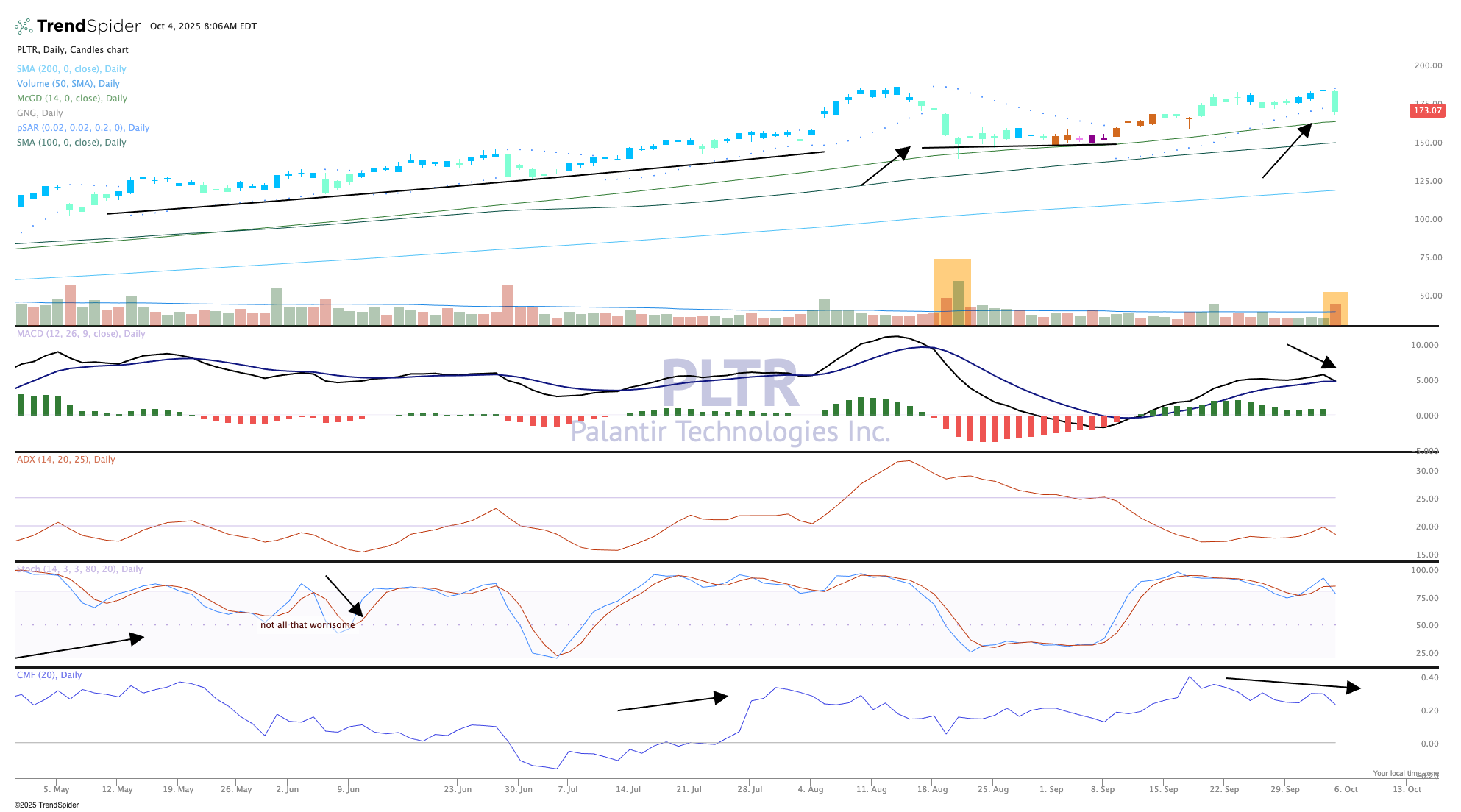
So, what does PLTR do? From a financial perspective, Palantir sells efficiency, security, and foresight. It has successfully transitioned from a niche government contractor to a diversified global software powerhouse. For the investor, Palantir represents a play on the “Industrialization of AI”—the moment where artificial intelligence moves from a chat interface to the backbone of global commerce and national security.
As the company continues to scale its commercial segment and leverage its AIP boot camps to capture market share, its financial profile suggests a company that is just beginning to realize its earning potential. However, like any high-growth tech investment, it requires a long-term horizon and an appetite for volatility. For those who believe that data is the new oil, Palantir is the world’s most advanced refinery, and its ability to monetize that process will determine its value for years to come.
aViewFromTheCave is a participant in the Amazon Services LLC Associates Program, an affiliate advertising program designed to provide a means for sites to earn advertising fees by advertising and linking to Amazon.com. Amazon, the Amazon logo, AmazonSupply, and the AmazonSupply logo are trademarks of Amazon.com, Inc. or its affiliates. As an Amazon Associate we earn affiliate commissions from qualifying purchases.