
In an increasingly dynamic financial landscape, the concept of passive income has transcended a mere buzzword to become a cornerstone of modern wealth-building strategies. For many, it represents the ultimate financial aspiration: earning money without actively trading time for dollars. Yet, the true meaning and practical implications of passive income often remain shrouded in misconception, leading to unrealistic expectations or overlooked opportunities. This article aims to demystify passive income, offering a comprehensive, insightful, and actionable understanding of what it truly entails, its diverse forms, and how individuals can strategically cultivate it to achieve greater financial independence.

Understanding the Core Concept of Passive Income
At its heart, passive income is income generated from an asset, investment, or business where the individual is not actively involved in the day-to-day operations or direct labor. It’s money that continues to flow in with minimal ongoing effort once the initial setup, investment, or creation phase is complete. This stands in stark contrast to traditional employment, where income is directly tied to the hours worked or tasks performed.
Active vs. Passive Income: A Fundamental Distinction
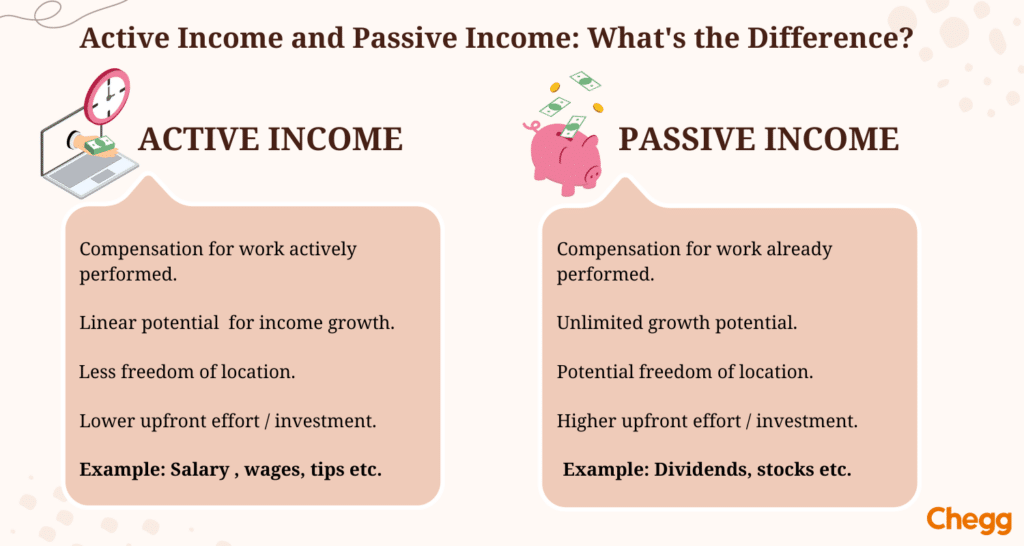
To truly grasp passive income, it’s crucial to differentiate it from its counterpart: active income. Active income is what most people earn through their primary jobs, freelance work, or businesses where their direct effort and time are exchanged for payment. This includes salaries, hourly wages, commissions, and professional fees. If you stop working, the active income stops.
Passive income, on the other hand, aims to decouple income generation from continuous direct effort. While it almost always requires significant initial effort, investment, or skill development, the goal is to create systems, assets, or investments that generate returns with minimal ongoing time commitment. Think of it as planting a tree: it requires substantial effort and resources to plant and nurture initially, but once established, it continues to bear fruit year after year with routine, less intensive care.
The Allure of Financial Freedom and Time Leverage
The primary appeal of passive income lies in its potential to create financial freedom and offer unparalleled time leverage. Financial freedom isn’t necessarily about being rich; it’s about having enough income—especially passive income—to cover your living expenses without needing to work a traditional job. This frees up time, allowing individuals to pursue passions, spend more time with family, travel, or retire earlier.
Time leverage is another critical benefit. By creating income streams that don’t demand constant attention, individuals can effectively multiply their earning potential beyond the confines of a 24-hour day. While there’s a limit to how many hours one can actively work, there’s no inherent limit to the number of passive income streams one can establish or the scale to which they can grow. This concept shifts the focus from earning more per hour to earning more per unit of initial effort, with subsequent returns requiring less effort.
Diverse Pathways to Building Passive Income Streams
The beauty of passive income lies in its versatility. There isn’t a single path to achieving it; rather, there are numerous avenues catering to different skill sets, risk tolerances, and initial capital levels. These can generally be categorized into investment-based, asset-based, and business-based approaches.
Investment-Based Passive Income
This category involves putting capital to work to generate returns without active management. It often requires an upfront sum of money but minimal ongoing effort beyond monitoring and occasional adjustments.
- Stocks and Bonds: Investing in dividend-paying stocks or interest-bearing bonds can generate regular income. Dividends are portions of a company’s profits distributed to shareholders, while bonds pay fixed interest over a period. Both require careful research and understanding of market dynamics but offer a relatively hands-off income stream.
- Real Estate Investments (REITs): For those interested in real estate without the complexities of direct property management, Real Estate Investment Trusts (REITs) offer a compelling option. REITs are companies that own, operate, or finance income-generating real estate. They trade on major stock exchanges and are legally required to distribute a significant portion of their taxable income to shareholders, often resulting in high dividend yields.
- Peer-to-Peer Lending: Platforms allow individuals to lend money directly to other individuals or small businesses, bypassing traditional financial institutions. Lenders earn interest on these loans, effectively acting as a bank. While offering attractive returns, this avenue also carries credit risk.
Asset-Based Passive Income
This approach focuses on creating an asset once and then monetizing it repeatedly, leveraging intellectual property or physical property without continuous creation or service delivery.
- Digital Products: Creating and selling digital products such as e-books, online courses, stock photos, software templates, or music can be highly passive. Once the product is created, it can be sold an infinite number of times with minimal additional effort for each sale, often through automated platforms.
- Royalties: Artists, authors, musicians, and inventors can earn passive income through royalties. Every time their copyrighted work (book, song, patent, design) is used or sold, they receive a percentage of the revenue. This requires significant upfront creative effort but yields returns long after the initial creation.
- Rental Properties (Managed): While direct property management can be active, hiring a property management company transforms rental properties into a more passive income stream. The company handles tenant screening, maintenance, and rent collection, allowing the owner to collect income with less direct involvement.
Business-Based Passive Income
These involve setting up a business system that can run with minimal owner intervention, often through automation, outsourcing, or robust operational processes.
- Automated Online Businesses: This can include e-commerce stores utilizing dropshipping or print-on-demand models, where order fulfillment and shipping are handled by third parties. Once the store is set up and marketing campaigns are optimized, it can generate sales with less daily oversight.
- Affiliate Marketing: Promoting other companies’ products or services and earning a commission on sales generated through unique affiliate links. Once content (blog posts, reviews, social media presence) is created and optimized for traffic, it can continue to generate commissions over time with minimal updates.
- Licensing Content/Ideas: If you have developed a unique product, system, or idea, you can license it to other businesses for a fee or royalty. This allows others to use your intellectual property while you collect passive income from their sales or usage.
Dispelling Common Myths and Realities of Passive Income
The allure of passive income often gives rise to misleading perceptions. It’s crucial to approach it with a realistic understanding of the effort, time, and strategic thinking required.
The “Set It and Forget It” Fallacy

Perhaps the most pervasive myth is that passive income is a “set it and forget it” endeavor. While the ongoing effort is minimal compared to active income, it is rarely zero. Every passive income stream requires some degree of maintenance, monitoring, and occasional adjustments. Investments need to be reviewed, digital products might need updates, and automated businesses require technological upkeep and customer service oversight. Ignoring these aspects can lead to diminished returns or even the collapse of the income stream.
Initial Effort and Investment are Inevitable
Another reality is that passive income almost always demands significant initial capital, time, or specialized skills. Building a successful passive income stream is like pushing a heavy ball up a hill: it requires immense effort to get it to the top, but once there, it rolls down with less exertion.
- Capital Investment: Many investment-based passive income streams (stocks, bonds, real estate) require a substantial initial sum of money.
- Time Investment: Creating digital products, building an online business, or writing a book demands a considerable time commitment for content creation, system setup, and initial marketing.
- Skill Investment: Developing expertise in a niche, learning advanced marketing techniques, or mastering a creative craft is a prerequisite for many asset-based or business-based passive income models.
There are very few, if any, genuinely “no effort, no money” passive income opportunities. Those that promise such are often scams or highly speculative ventures.
Maintenance, Scaling, and Adaptability
Successful passive income generation is not static. Market conditions change, technologies evolve, and consumer preferences shift. Therefore, passive income streams often require:
- Maintenance: Regular check-ups, security updates for websites, customer support, and financial reconciliation are common.
- Scaling: To grow income, individuals often need to reinvest profits, expand their reach, or diversify into new streams.
- Adaptability: Being willing to pivot, update products, or adjust strategies in response to feedback or market changes is crucial for long-term viability. A truly passive system is one that is resilient and can adapt to change without constant direct intervention from the creator.
Strategic Approaches to Cultivating Passive Wealth
Building effective passive income streams requires a strategic mindset, blending foresight with disciplined execution. It’s not about jumping on every trend but about identifying sustainable models aligned with one’s resources and goals.
Education and Skill Development
The foundation of any successful passive income strategy is knowledge. Understanding financial markets, digital marketing, intellectual property rights, or specific investment vehicles is paramount. Investing in self-education, whether through books, courses, or mentorship, can significantly reduce risk and accelerate success. Furthermore, developing specific skills (e.g., coding, writing, video production, graphic design) can enable the creation of high-value digital assets.
Diversification and Risk Management
Relying on a single passive income stream, no matter how robust, carries inherent risks. A strategic approach involves diversification across multiple streams. This mitigates the impact if one stream underperforms or fails. For instance, combining dividend stocks with a successful affiliate marketing blog and a small rental property creates a more resilient overall financial structure. Furthermore, understanding and managing the risks associated with each income stream is critical, from market volatility in investments to intellectual property theft for digital creators.
Leveraging Technology and Automation
Modern technology is a game-changer for passive income. Automation tools can handle tasks like email marketing, social media scheduling, customer service chatbots, payment processing, and inventory management for online businesses. Software can track investments, analyze market data, or manage rental properties. Learning to effectively leverage these tools can significantly reduce the “ongoing effort” component of passive income, making it truly more passive.
The Long-Term Impact and Benefits of Passive Income
Beyond the immediate financial gains, cultivating passive income streams has profound long-term implications for an individual’s financial health, lifestyle choices, and legacy.
Enhancing Financial Security and Resilience
Passive income acts as a financial safety net, providing a buffer against economic downturns, job loss, or unexpected expenses. In an unpredictable world, having multiple income sources, particularly those decoupled from active employment, significantly enhances financial security and reduces stress. It creates a sense of resilience, allowing individuals to navigate life’s challenges from a position of strength rather than vulnerability.
Paving the Way for Early Retirement and Lifestyle Choices
For many, the ultimate goal of passive income is to fund an early retirement or enable a lifestyle not constrained by traditional work hours. When passive income can sustainably cover all living expenses, the individual gains unprecedented freedom to choose how they spend their time. This could mean retiring years or even decades before the conventional age, pursuing passion projects, dedicating time to family, volunteering, or simply enjoying more leisure. It transforms “work-life balance” into “life-work integration,” where work is a choice, not a necessity.
Leaving a Legacy and Creating Generational Wealth
Strategically built passive income streams can extend beyond an individual’s lifetime, becoming a mechanism for creating generational wealth. Well-managed investments, real estate portfolios, or established businesses can be passed down, providing a sustainable financial foundation for future generations. This long-term perspective moves beyond personal financial freedom to consider the broader impact on family and future economic opportunities, establishing a lasting legacy that continues to give back.
In conclusion, passive income is not a myth, nor is it an overnight shortcut to riches. It is a strategic, often arduous, journey of building assets, systems, or investments that generate returns with diminishing active effort. It demands initial capital, time, or skill, ongoing maintenance, and a willingness to adapt. However, for those who embrace its true meaning and commit to its cultivation, passive income offers an unparalleled pathway to financial freedom, lifestyle flexibility, and the profound satisfaction of building a resilient financial future for themselves and their descendants.
aViewFromTheCave is a participant in the Amazon Services LLC Associates Program, an affiliate advertising program designed to provide a means for sites to earn advertising fees by advertising and linking to Amazon.com. Amazon, the Amazon logo, AmazonSupply, and the AmazonSupply logo are trademarks of Amazon.com, Inc. or its affiliates. As an Amazon Associate we earn affiliate commissions from qualifying purchases.