
In the landscape of enterprise software, few names carry as much weight—or as much mystery—as Palantir Technologies. Founded in the early 2000s with roots in the intelligence community, Palantir has evolved into a global powerhouse in the field of big data analytics. However, to describe Palantir simply as a “data company” is to miss the technical nuance of what they actually build. Palantir does not just store data; it builds the functional “operating systems” for modern institutions, allowing them to integrate, manage, and secure vast quantities of information to make real-time decisions.
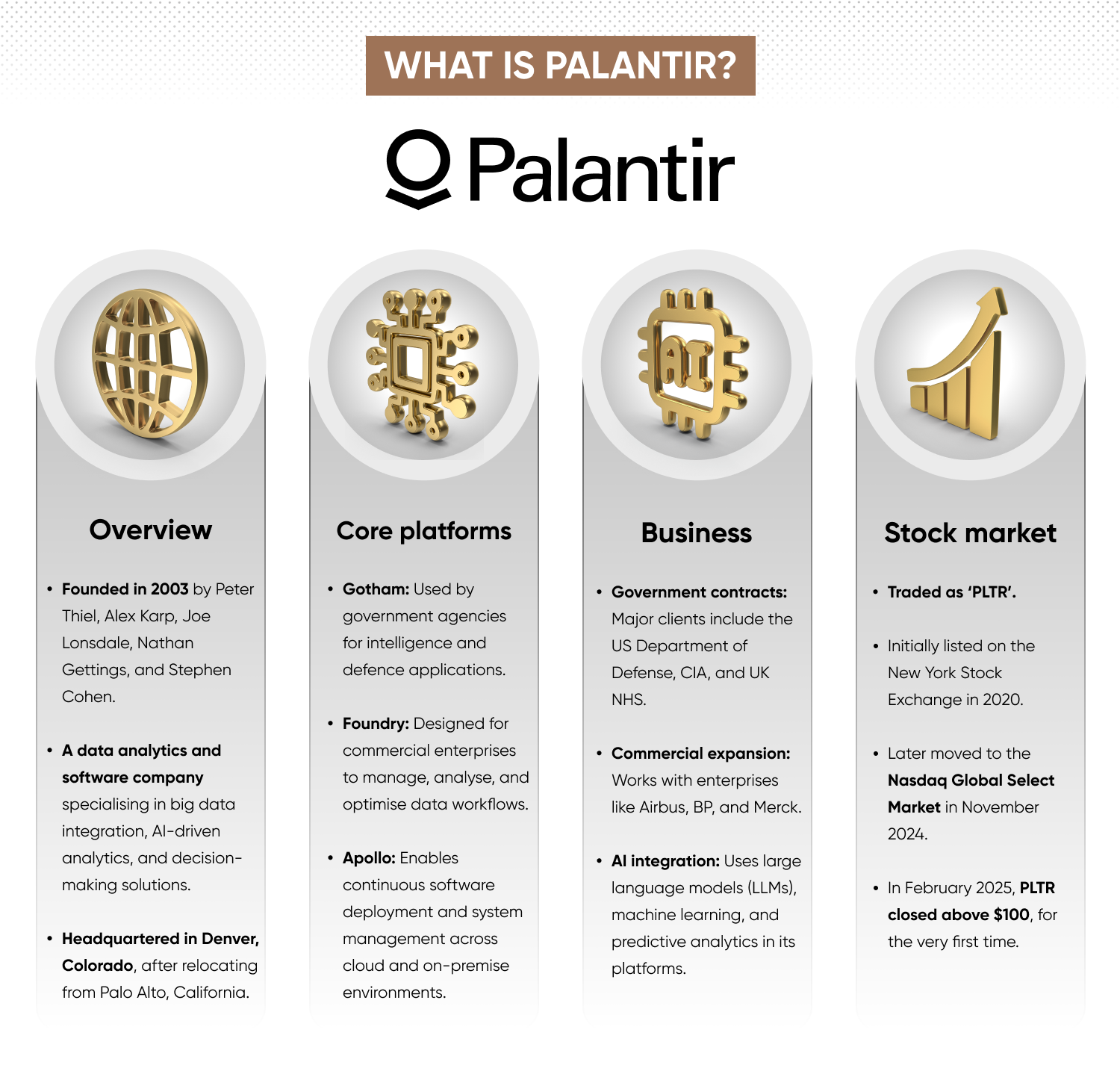
At its core, Palantir’s technology is designed to solve the “fragmented data” problem. Most large organizations suffer from data silos—databases that don’t talk to each other, legacy systems that are incompatible, and massive amounts of unstructured information that remain inaccessible to decision-makers. Palantir’s platforms act as a connective tissue, creating a unified digital environment.
1. The Core Platforms: Gotham and Foundry
To understand what Palantir does, one must first distinguish between its two primary software environments: Gotham and Foundry. While they share some underlying DNA, they are architected for different operational contexts.
Gotham: Intelligence and Defense Operations
Palantir Gotham was the company’s first flagship product, specifically designed for the defense and intelligence sectors. Technically, Gotham is a platform for “link analysis” and “entity resolution.” It allows analysts to find needles in haystacks by identifying connections between disparate data points—such as bank transfers, cell phone signals, and satellite imagery.
Gotham’s architecture is built around the concept of “the object.” Instead of looking at rows and columns in a spreadsheet, a Gotham user sees entities like “Person,” “Vehicle,” or “Event.” The software automatically maps the relationships between these entities, providing a visual and geospatial representation of complex networks. This makes it an indispensable tool for counter-terrorism, disaster response, and high-stakes law enforcement, where the speed of data synthesis can literally be a matter of life and death.
Foundry: The Enterprise Operating System
While Gotham focuses on intelligence, Palantir Foundry is built for the commercial and industrial world. It is a comprehensive data integration and analysis platform that serves as a “central nervous system” for organizations like Airbus, BP, and various healthcare systems.
Foundry’s technical brilliance lies in its ability to handle the entire data lifecycle. It manages everything from data ingestion (taking data from ERP systems, IoT sensors, and cloud warehouses) to data modeling and final application building. Unlike traditional Business Intelligence (BI) tools that only show what happened in the past, Foundry is designed for operational workflows—it helps users decide what to do now. For example, an airline might use Foundry to integrate weather data, flight schedules, and maintenance logs to predict which aircraft need servicing before a delay occurs.
2. The Semantic Layer: The Power of the “Ontology”
The most significant technical differentiator for Palantir is its use of a “Semantic Layer” or what they call the “Ontology.” This is the secret sauce that separates Palantir from standard data lake providers or traditional cloud infrastructure.
Bridging the Gap Between Code and Reality
In a typical technical environment, data is stored in complex tables that only a data scientist or SQL expert can understand. Palantir’s Ontology translates that technical data into a language that business users can understand. If a manufacturing company has a database for “PartID998,” the Ontology maps that data to a real-world concept: “Left Wing Flap.”
This mapping creates a “Digital Twin” of the entire organization. Every physical asset, every process, and every person is represented digitally within the software. When a user interacts with the software, they are interacting with the “Digital Twin,” allowing for complex simulations and “what-if” scenarios. If a supply chain is disrupted in Asia, the Ontology allows an executive to instantly see which specific products in a warehouse in Europe will be affected.
Data Lineage and Version Control
Another critical technical feature of the Palantir ecosystem is its rigorous approach to data lineage. In many big data environments, it is difficult to track how a specific piece of information was modified over time. Palantir treats data like code. It uses version control systems similar to Git, ensuring that every change made to a dataset is tracked, reversible, and auditable. This is essential for highly regulated industries like banking or pharmaceuticals, where the “provenance” of a data point is just as important as the data point itself.
3. Palantir Apollo: Infrastructure for any Environment

One of the greatest technical challenges in modern software is deployment. How do you run a massive, data-heavy platform in a cloud environment, on-premise in a secure government building, and on a “tactical edge” device like a drone or a submarine simultaneously? Palantir solved this with a platform called Apollo.
Continuous Delivery at the Edge
Apollo is a specialized software layer that manages the deployment and health of Gotham and Foundry. It acts as an autonomous “DevOps” engine. In the past, updating software in high-security or remote environments required manual intervention. Apollo automates this process, allowing Palantir to push updates and security patches to thousands of different environments without human oversight.
This capability is particularly vital for “Edge Computing.” Palantir’s tech is increasingly being deployed on hardware that isn’t connected to a stable internet connection—such as satellites in orbit or sensors in remote oil fields. Apollo ensures that these remote nodes have the latest algorithms and data models, enabling local processing and immediate action.
Independence from Cloud Providers
From a technical strategy standpoint, Apollo makes Palantir “cloud agnostic.” While many companies are locked into a specific provider like AWS, Google Cloud, or Azure, Palantir’s architecture allows its platforms to run across any of them, or even in “air-gapped” environments with no external connectivity. This flexibility is a cornerstone of their digital security strategy, ensuring that data sovereignty remains with the client.
4. The AIP Revolution: Artificial Intelligence and LLMs
The latest evolution in Palantir’s technology stack is the Artificial Intelligence Platform (AIP). As Large Language Models (LLMs) like GPT-4 have become mainstream, Palantir has moved to integrate these generative capabilities directly into its existing data frameworks.
Bringing LLMs to Private Data
The primary hurdle for enterprise AI is security. Most companies are hesitant to feed their sensitive, proprietary data into a public LLM. Palantir AIP solves this by bringing the LLM to the data, rather than the data to the LLM.
AIP allows organizations to deploy LLMs within their secure Palantir environment. Because the AI is integrated with the “Ontology” we discussed earlier, it has context. It doesn’t just guess; it “knows” the organization’s logic, its assets, and its rules. A user can ask the system, “Which of my shipping routes are most at risk due to the current hurricane, and how should I reroute them?” The AI uses the LLM to understand the question, queries the Foundry-powered digital twin for real-time data, and provides a validated answer.
Guardrails and Ethical Governance
Technical governance is a major focus for Palantir. AIP includes sophisticated “guardrails” that control what the AI can and cannot do. In a military or medical context, you cannot have an AI making autonomous decisions without human oversight. Palantir’s technical architecture ensures that AI-driven suggestions are transparent—users can see exactly which data points the AI used to reach a conclusion—and requires human-in-the-loop authorization for any critical actions.
5. Security and the Future of Digital Sovereignty
Security is not an afterthought for Palantir; it is the foundation of their technical stack. This is driven by their history of working with some of the most sensitive organizations on the planet.
Granular Access Controls
Most software platforms have broad access permissions. Palantir uses “Cell-Level Security.” This means that two people looking at the same dashboard might see different things based on their security clearance. One person might see a name and a social security number, while another sees only a redacted ID. This granular control is baked into the data layer itself, making it nearly impossible for unauthorized users to access sensitive information, even if they have access to the platform.
The Shift Toward Hyper-Automation
Looking forward, Palantir is moving toward a future of hyper-automation. By combining the data integration of Foundry, the deployment power of Apollo, and the reasoning capabilities of AIP, Palantir is building a system where the “software writes the software.” The goal is to move beyond mere analysis and into a state where the operating system proactively identifies problems and suggests (or implements) solutions before a human even realizes there is a crisis.
Conclusion
Palantir Technologies represents a shift in how institutions interact with data. It is not just about “analytics” or “visualizations.” Technically, Palantir provides a sophisticated architecture that merges disparate data into a coherent, real-world model (the Ontology), deploys that model across any environment (Apollo), and applies cutting-edge intelligence to it (AIP). By solving the hardest technical problems in data integration and security, Palantir has positioned itself as the foundational layer for the next generation of data-driven decision-making. For the modern enterprise or government agency, Palantir isn’t just a tool; it is the digital scaffolding upon which their entire operation rests.
aViewFromTheCave is a participant in the Amazon Services LLC Associates Program, an affiliate advertising program designed to provide a means for sites to earn advertising fees by advertising and linking to Amazon.com. Amazon, the Amazon logo, AmazonSupply, and the AmazonSupply logo are trademarks of Amazon.com, Inc. or its affiliates. As an Amazon Associate we earn affiliate commissions from qualifying purchases.