
In a world brimming with products and an endless array of choices, consumer trust has become a commodity more valuable than ever. We’re constantly bombarded with labels, seals, and certifications, each promising quality, safety, or superior performance. Among these, the distinctive “NSF Approved” mark stands out, often seen on everything from water filters to kitchen appliances, plumbing fixtures to dietary supplements. But beyond being a simple sticker, what does “NSF Approved” truly signify? Why should it matter to you, whether you’re a consumer, an entrepreneur, or simply someone trying to make informed decisions in a complex marketplace?

At its core, “NSF Approved” is a powerful emblem of health and safety, representing a product or system’s adherence to stringent standards established by NSF International. This independent, non-governmental organization is dedicated to protecting and improving human health worldwide. When you see the NSF mark, it’s not just a marketing ploy; it’s a testament to rigorous testing, unannounced inspections, and a commitment to public health that stretches back nearly 80 years. Understanding its meaning is key to making smarter choices, building stronger brands, and even managing your finances more effectively in an increasingly sophisticated market.
Understanding NSF International: The Guardian of Public Health
The journey to understanding “NSF Approved” begins with a closer look at the organization behind the mark. NSF International isn’t just a testing lab; it’s a global public health organization that has become synonymous with trust, transparency, and scientific rigor. Its work underpins the safety of countless products and services we interact with daily, often without realizing the extensive processes that ensure their reliability.
A Legacy of Safety and Standards
NSF International was founded in 1944 as the National Sanitation Foundation at the University of Michigan’s School of Public Health. Its initial mission was straightforward yet critical: to standardize sanitation and food safety requirements in a post-war America experiencing rapid industrialization and a rising demand for packaged goods. There was a clear need for uniform standards to protect public health, and the NSF stepped in to fill that void.
From these humble beginnings, NSF evolved into a global leader in the development of public health standards and certification programs. It transitioned from an academic institution to an independent, non-profit, non-governmental organization, maintaining its impartiality and scientific integrity. Today, NSF operates in over 180 countries, employing a diverse team of toxicologists, engineers, environmental health specialists, and microbiologists. They work collaboratively with industry experts, public health officials, and regulatory bodies to develop consensus-based standards that reflect the latest scientific knowledge and best practices.
The organization’s mission remains steadfast: to protect and improve human health worldwide. This is achieved through a multi-faceted approach that includes:
- Standards Development: Creating scientifically sound public health standards.
- Product Certification: Testing and certifying products against these standards.
- Auditing and Training: Ensuring compliance and promoting best practices across industries.
- Risk Management: Helping organizations identify and mitigate health-related risks.
When a product bears the NSF mark, it signifies that it has been evaluated by this esteemed organization and found to comply with strict standards designed to safeguard consumer well-being. It’s a testament to a legacy built on scientific integrity and a relentless pursuit of public health protection.
Beyond a Sticker: The Rigorous Certification Process
The journey to becoming “NSF Approved” is anything but trivial. It’s a comprehensive, multi-step process designed to ensure that products not only meet initial safety and quality benchmarks but continue to do so over time. This rigorous approach is what gives the NSF mark its significant weight and value.
The certification process typically involves:
-
Application and Information Review: Manufacturers initiate the process by applying for certification and providing detailed information about their product, including materials, design specifications, intended use, and manufacturing processes. NSF specialists review this documentation to determine which specific NSF/ANSI standards apply.
-
Product Testing: This is a critical phase where the product undergoes extensive laboratory testing. Depending on the standard, testing can include:
- Material Safety: Verifying that all materials coming into contact with food or water will not leach harmful contaminants. For example, plastic components in a water filter are tested to ensure they don’t introduce chemicals into the water.
- Performance Verification: Assessing if the product performs as claimed. A water filter, for instance, will be tested to confirm it effectively removes the specific contaminants it claims to filter, often under challenging conditions.
- Structural Integrity: Ensuring the product is durable and robust enough for its intended use, preventing failures that could lead to health hazards.
-
Facility Audits and Inspections: NSF doesn’t just test the product; they inspect the manufacturing facility. This includes:
- Quality Management Systems: Verifying that the company has robust quality control procedures in place to ensure consistent product quality.
- Good Manufacturing Practices (GMP): Assessing cleanliness, employee training, and operational procedures to prevent contamination and ensure product integrity.
- Ingredient and Component Traceability: Ensuring that raw materials are sourced responsibly and can be traced throughout the production process.
-
Annual Re-certification and Unannounced Inspections: Certification is not a one-time event. To maintain “NSF Approved” status, products and facilities undergo annual re-certification. Furthermore, NSF conducts unannounced audits and tests throughout the year. This crucial step ensures ongoing compliance and prevents manufacturers from cutting corners once they’ve received initial certification. It’s this continuous oversight that makes the NSF mark so reliable.
This comprehensive, continuous evaluation process ensures that when you see the NSF mark, you can trust that the product has been thoroughly vetted, from its components to its manufacturing environment, guaranteeing its safety and efficacy according to established public health standards.
The Tangible Benefits of NSF Certification: Why It Matters to You
The rigor of the NSF certification process translates into substantial, tangible benefits for everyone, from individual consumers seeking peace of mind to businesses striving for market leadership. It bridges the gap between scientific standards and practical applications, offering clear advantages in health protection, market credibility, and operational excellence.
For Consumers: Unwavering Trust and Health Protection
For the everyday individual, the “NSF Approved” mark is a beacon of trust in a marketplace often clouded by marketing hype and complex product claims. In an age where concerns about health, environmental safety, and product reliability are paramount, an NSF certification offers unparalleled peace of mind.
- Peace of Mind: Knowing a product is NSF certified means it has been independently tested and verified to meet strict public health standards. This eliminates guesswork and provides confidence that you are choosing a safe and reliable product for yourself and your family. Whether it’s the water you drink, the food preparation surfaces in your kitchen, or even the supplements you consume, the NSF mark ensures a layer of protection.
- Reduced Risk: NSF certification directly addresses potential health risks. For example, an NSF-certified water filter is guaranteed to reduce specific contaminants as advertised, protecting you from harmful substances like lead, chlorine, or cysts. Food service equipment with the NSF mark ensures that materials are non-toxic, easy to clean, and designed to prevent bacterial growth, safeguarding against foodborne illnesses. Dietary supplements are tested for purity, potency, and the absence of harmful levels of contaminants, addressing a critical concern in an often unregulated industry.
- Informed Choices: In a crowded market, distinguishing between genuinely safe and effective products and those that merely claim to be can be challenging. The NSF mark acts as a clear, universally recognized indicator of reliability and safety, simplifying purchasing decisions. It empowers consumers to make truly informed choices, allowing them to invest in products that genuinely contribute to their health and well-being.
- Examples in Daily Life: Think about the appliances in your home: a coffee maker, an ice maker, a water dispenser. If they bear the NSF mark for food safety, you know their components won’t leach chemicals into your beverages. Your home’s plumbing components, like pipes and faucets, when NSF certified, assure you that the materials contacting your drinking water are safe and won’t contribute to contamination. This pervasive impact on everyday items makes NSF certification incredibly relevant to consumer health and safety.
For Businesses: Building Brand Equity and Market Advantage (Brand)
For businesses, achieving NSF certification is far more than a regulatory hurdle; it’s a strategic investment that significantly enhances brand equity, secures a competitive edge, and facilitates market access. In today’s competitive landscape, a strong brand is built on trust, and NSF certification provides an undeniable foundation for that trust.
- Credibility and Reputation: Bearing the NSF mark immediately elevates a company’s reputation. It signals an unwavering commitment to quality, safety, and regulatory compliance. For customers, partners, and regulators, it’s a powerful endorsement that differentiates a brand as reliable and responsible. This heightened credibility fosters loyalty and positive brand perception, which are invaluable assets in the long run.
- Competitive Edge: In many industries, NSF certification can be a significant differentiator. When products from various manufacturers offer similar features, the NSF mark can be the deciding factor for consumers and commercial buyers who prioritize safety and verified claims. This competitive advantage can open doors to new markets, secure larger contracts, and increase market share, especially in sectors like food service, water treatment, and health products where safety is paramount.
- Market Access: For certain products and industries, NSF certification is not just an advantage but a prerequisite. Many regulatory bodies, particularly in North America, recognize and often mandate NSF standards for products like drinking water treatment systems, plumbing components, and food equipment. Furthermore, international markets frequently accept NSF certification as proof of compliance with global health and safety requirements, streamlining export processes and expanding a company’s reach.
- Risk Mitigation: Investing in NSF certification helps businesses mitigate various risks. By adhering to rigorous standards and undergoing continuous auditing, companies reduce the likelihood of product recalls, liability issues, and regulatory fines. This proactive approach safeguards financial stability, protects brand reputation from negative publicity, and ensures operational continuity by maintaining compliance.
- Operational Excellence: The process of preparing for and maintaining NSF certification encourages businesses to adopt best practices in manufacturing, quality control, and supply chain management. It pushes companies to scrutinize their processes, identify areas for improvement, and implement robust systems that lead to greater efficiency, reduced waste, and consistently higher product quality. This pursuit of operational excellence ultimately benefits the bottom line and strengthens the entire organization.
NSF in the Modern World: Tech, Innovation, and Your Wallet
The relevance of NSF certification extends beyond traditional manufacturing, finding crucial intersections with the rapidly evolving worlds of technology and personal finance. As technology reshapes our lives, and financial acumen becomes increasingly vital, understanding the role of NSF can empower consumers and businesses to make smarter decisions that impact health, innovation, and economic well-being.
NSF and Technology: Ensuring Safety in a Digital Age (Tech)
While NSF’s roots are in physical product safety, its principles of rigorous testing and public health protection are increasingly applicable and vital in an era dominated by technology. The rise of smart devices, connected appliances, and advanced manufacturing processes brings new challenges and opportunities for safety and quality assurance.
- Smart Home Appliances and Health Tech: Modern homes are replete with “smart” devices – refrigerators with water dispensers, air purifiers, and sophisticated kitchen gadgets. For any of these devices that interact with food, water, or air, or have a direct health function (like smart air purifiers), NSF certification ensures that the physical components are safe. This includes ensuring plastics don’t leach chemicals, filtration systems perform as advertised, and materials meet hygiene standards. For example, a smart water filter that connects to an app still relies on its physical filter media to be NSF certified for contaminant reduction.
- Materials Science and Advanced Manufacturing: The tech industry constantly innovates with new materials and manufacturing techniques. NSF’s expertise in material safety and performance testing becomes critical here. For components used in sensitive applications – perhaps in medical devices, food processing machinery with embedded sensors, or even new biodegradable plastics – NSF standards can provide a framework for evaluating their safety and long-term stability. This foresight ensures that technological advancements don’t inadvertently compromise public health.
- Digital Security for Physical Systems: While NSF doesn’t directly certify software or cybersecurity, the integrity of a physical product can be linked to the security of its embedded systems. For instance, in an industrial setting, NSF certifies equipment used in food processing. If that equipment has smart controls, ensuring the physical integrity of the control unit and its operational safety (e.g., preventing unauthorized physical access or tampering that could affect sanitation) aligns with the broader NSF mission. As AI tools are increasingly used for quality control and predictive maintenance in manufacturing, NSF’s audit processes can extend to how these technologies support the maintenance of certified standards within a facility. This ensures that the benefits of tech are harnessed without compromising established safety benchmarks.
The Financial Implications: Value, Investment, and Smart Spending (Money)
Understanding NSF certification also has significant financial implications, guiding consumers and businesses toward more intelligent spending, investment, and wealth protection strategies. It’s about recognizing long-term value over short-term savings and making financially sound decisions rooted in product integrity.
- Investing in Quality for Long-Term Savings: NSF-certified products often come with a slightly higher upfront cost. However, this initial investment frequently translates into long-term savings. Certified products are built to higher standards, are typically more durable, and perform more reliably, reducing the need for frequent replacements or costly repairs. For instance, an NSF-certified plumbing fixture might outlast cheaper, uncertified alternatives, saving you money on plumbers and new parts. More critically, investing in products that protect your health (like water filters) can lead to significant savings by preventing health issues and associated medical expenses in the future.
- Protecting Your Investment: When you purchase a major appliance or system (like a commercial kitchen oven or a whole-house water filtration system), you’re making a significant investment. NSF certification acts as an insurance policy, guaranteeing that you’re not buying a substandard product that might fail prematurely, perform inadequately, or even pose a health risk. It ensures that your money is well-spent on a product that delivers on its promises and maintains its value over time.
- Business Finance and ROI on Certification: For businesses, the cost of obtaining and maintaining NSF certification is a strategic investment that yields a substantial return. This ROI comes from enhanced market access, a stronger brand reputation, reduced liability risks, and increased sales. For a startup selling kitchenware or a company developing new water purification technology, NSF certification isn’t just an expense; it’s a key to unlocking profitability, securing venture capital, and building a sustainable business model. It’s a financial tool that builds trust and opens markets.
- Online Income and Side Hustles: If you’re involved in e-commerce, dropshipping, or a side hustle selling physical products, NSF certification can be a powerful marketing tool. Products bearing the NSF mark inherently command more trust and can often justify a higher price point. This allows entrepreneurs to build a reputable online store, attract discerning customers, and generate more substantial income by offering products that are genuinely vetted for safety and quality. It transforms an ordinary product into a premium, trustworthy offering.
- Financial Tools for Informed Decisions: Beyond direct product costs, understanding certifications like NSF is a valuable financial literacy tool. It teaches consumers to look beyond price tags and consider the total value proposition, including reliability, health benefits, and longevity. This knowledge empowers individuals to make more informed decisions across their entire financial portfolio, ensuring they allocate resources wisely to products that genuinely serve their needs and protect their assets.
Navigating the NSF Landscape: What to Look For
With a deeper understanding of NSF International and the importance of its certification, the next step is to confidently navigate the marketplace. Knowing what to look for, how to verify claims, and understanding common misconceptions will empower you to leverage the NSF mark effectively.
Recognizing the Mark and Verifying Certification
The NSF mark is deliberately designed to be distinct and easily recognizable. It features the letters “NSF” typically within an oval or circle. Crucially, the mark will almost always be accompanied by specific NSF/ANSI standard numbers, such as “NSF/ANSI 42” for aesthetic water filters or “NSF/ANSI 61” for drinking water system components. These numbers indicate precisely which standard the product has been certified against, specifying the scope of its safety and performance claims.
- Where to Find It: Look for the NSF mark directly on the product packaging, on the product itself (often molded or printed), or within the product’s documentation or user manual. Reputable manufacturers will prominently display this information.
- Understanding Standard Numbers: The standard numbers are vital. For example, “NSF/ANSI 42” certifies that a water filter reduces aesthetic contaminants like chlorine, taste, and odor. “NSF/ANSI 53” certifies a filter for health effects, meaning it reduces specific contaminants like lead, cysts, or volatile organic compounds (VOCs). Understanding these nuances ensures you’re selecting a product certified for your specific needs.
- Checking Certification: The most reliable way to verify a product’s NSF certification is to visit NSF International’s official website (www.nsf.org). They maintain a comprehensive database of all certified products and companies. You can search by company name, product type, or even the specific standard. If a product claims to be NSF certified but cannot be found in their database, exercise caution.
Common Misconceptions and What NSF Isn’t
While the NSF mark is a powerful indicator of safety and quality, it’s important to clarify what it does and doesn’t represent to avoid misunderstandings.
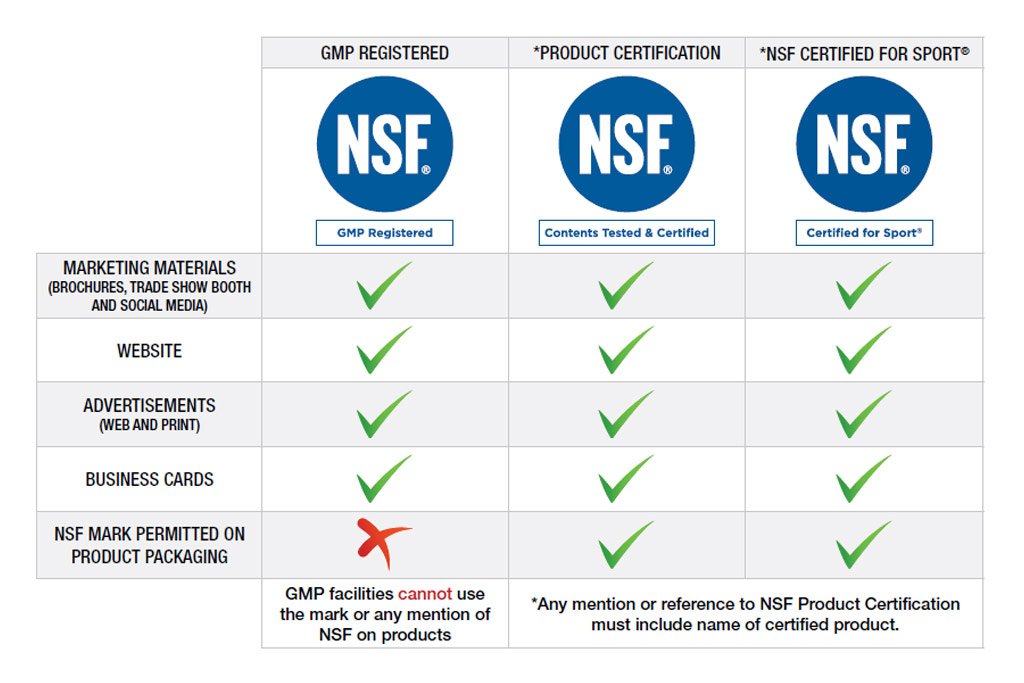
- “NSF Listed” vs. “NSF Certified”: While often used interchangeably, there can be subtle differences. “NSF Certified” generally implies the comprehensive process of product testing, material analysis, facility audits, and ongoing surveillance. “NSF Listed” is also a form of certification, often used for components or products meeting specific criteria within a larger system, indicating they meet relevant standards. Both essentially convey that the product has undergone NSF’s rigorous evaluation.
- Not a Universal Performance Guarantee: An NSF certification signifies compliance with specific standards. It does not mean a product is necessarily “the best” or that it will perform every possible function. For instance, an NSF/ANSI 42 certified water filter is excellent for taste and odor but might not remove lead (which requires NSF/ANSI 53 certification). Always check the specific standard and claims the product is certified for, rather than assuming blanket performance.
- Not a Government Agency: NSF International is an independent, not-for-profit, non-governmental organization. While it works closely with governmental bodies and its standards are often adopted or referenced by regulations, it is not a government entity. This independence is a key strength, allowing it to maintain impartiality and avoid political influence in its scientific assessments.
- Focus on Public Health, Not Everything: NSF’s primary focus is on public health and safety. While this often encompasses product quality and performance related to health, it doesn’t extend to every aspect of a product. For example, a chair might be comfortable and aesthetically pleasing, but NSF would only certify it if it were, for instance, used in a food service environment and required specific sanitation or material safety standards.
By understanding these distinctions, consumers and businesses can better interpret the NSF mark, using it as a precise tool for informed decision-making rather than a vague blanket assurance.
Conclusion
The “NSF Approved” mark is far more than a simple seal of approval; it is a profound testament to rigorous testing, unwavering commitment to public health, and a legacy built on scientific integrity. From ensuring the safety of the water we drink and the food we eat to providing a crucial competitive edge for businesses, NSF International plays an indispensable role in safeguarding well-being across the globe.
For consumers, the NSF mark represents peace of mind, empowering them to make informed purchasing decisions that protect their health and secure their investments. It simplifies choices in a complex marketplace, allowing them to trust that products bearing this mark have undergone extensive scrutiny.
For businesses, achieving NSF certification is a strategic imperative that builds invaluable brand equity, fosters trust, opens new markets, and mitigates significant risks. It’s an investment in credibility that yields substantial returns, enhancing reputation and securing a sustainable future in a competitive global economy.
In an increasingly tech-driven and financially conscious world, the principles behind NSF certification remain profoundly relevant. They guide the safe adoption of new technologies and inform smart financial choices, ensuring that innovation and economic growth are aligned with public health and safety.
Ultimately, “NSF Approved” is a symbol of trust, transparency, and a shared commitment to a healthier, safer world. Recognizing and understanding its significance empowers us all – as individuals, as entrepreneurs, and as participants in the global economy – to demand higher standards and make choices that truly matter.
aViewFromTheCave is a participant in the Amazon Services LLC Associates Program, an affiliate advertising program designed to provide a means for sites to earn advertising fees by advertising and linking to Amazon.com. Amazon, the Amazon logo, AmazonSupply, and the AmazonSupply logo are trademarks of Amazon.com, Inc. or its affiliates. As an Amazon Associate we earn affiliate commissions from qualifying purchases.