
In the rapidly evolving landscape of software as a service (SaaS), few platforms have redefined their niche as effectively as Klaviyo. Often simplified as an “email marketing tool,” Klaviyo is, in reality, a sophisticated data-driven automation engine designed to bridge the gap between complex database management and front-end marketing execution. To understand what Klaviyo does from a technical perspective, one must look beyond the templates and newsletters and examine its core infrastructure: a robust Customer Data Platform (CDP) integrated with a powerful multi-channel delivery system.
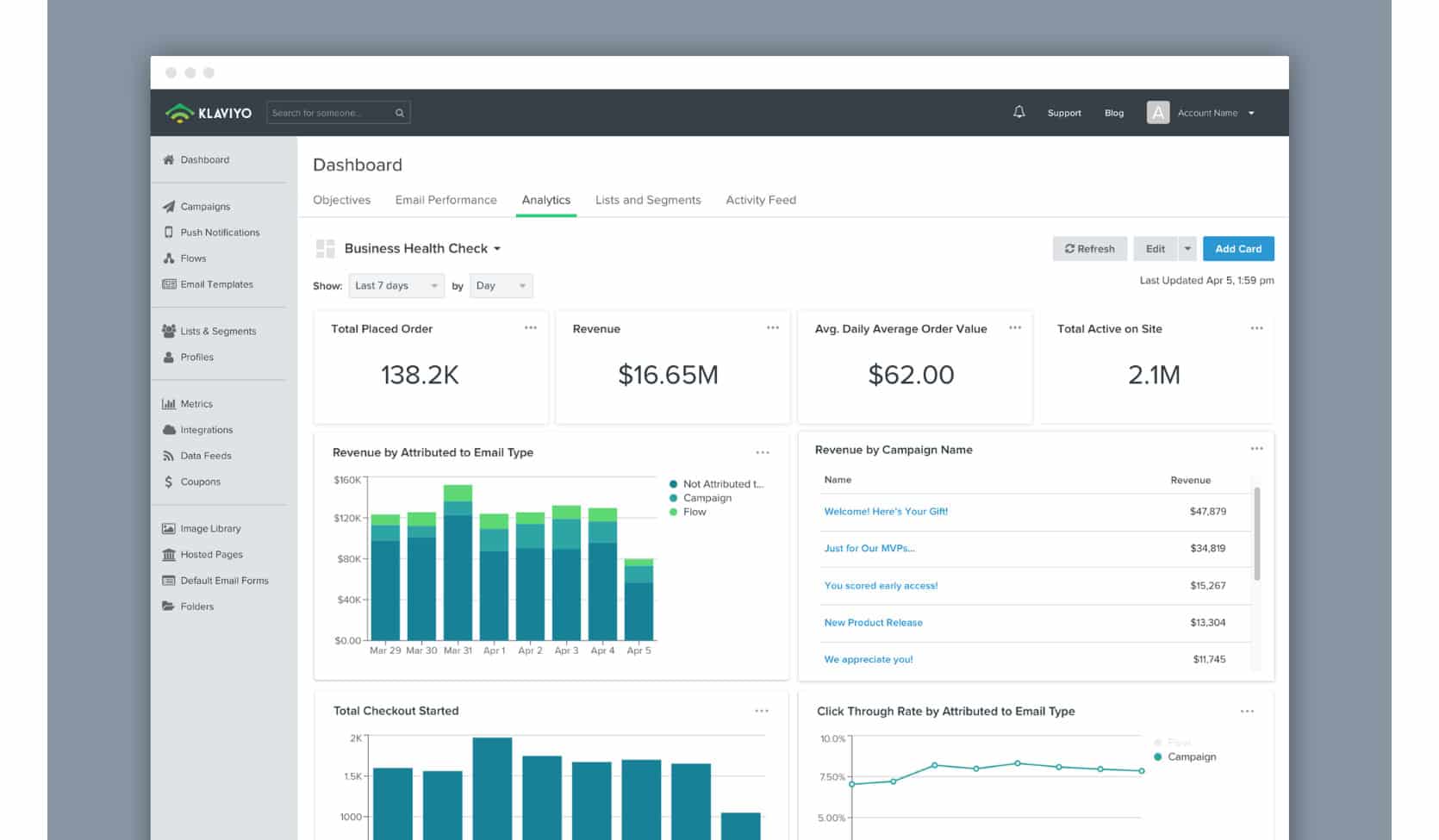
By centralizing customer data and applying real-time processing, Klaviyo enables businesses to move away from generic “blast” communications and toward highly personalized, event-driven interactions. In this exploration, we will dissect the technical pillars of Klaviyo, from its data ingestion capabilities to its implementation of machine learning and predictive analytics.
1. The Architecture of Klaviyo: A Deep Dive into Data Integration
At its heart, Klaviyo functions as a centralized repository for first-party data. Unlike traditional Email Service Providers (ESPs) that store basic contact lists, Klaviyo’s architecture is built on a relational framework that tracks every granular interaction a user has with a digital storefront.
Centralizing the Customer Data Platform (CDP)
The primary technical advantage of Klaviyo is its built-in Customer Data Platform. While many companies have to pay for a separate CDP to aggregate data before pushing it to their marketing tools, Klaviyo handles both. It creates a “single source of truth” for every individual user profile.
When a user visits a website, Klaviyo’s tracking script captures “events”—viewing a product, adding an item to a cart, or clicking a specific link. These events are not just stored as isolated logs; they are appended to a unique user profile. This allows the software to build a longitudinal view of customer behavior over months or years, providing a rich data set that informs every other function of the platform.
Seamless Integrations with E-commerce Stacks
What makes Klaviyo a staple in the tech stack of modern retailers is its deep, “plug-and-play” integration with major e-commerce backends like Shopify, Magento, BigCommerce, and Salesforce Commerce Cloud. These aren’t just surface-level connections. Through robust APIs, Klaviyo pulls in historical data (past purchases, refund history) and real-time data (inventory levels, current cart contents).
For developers, this means the heavy lifting of data mapping is largely automated. The platform utilizes webhooks to ensure that as soon as a transaction is processed in the e-commerce engine, the data is reflected in Klaviyo within seconds. This low-latency synchronization is critical for “transactional” and “behavioral” triggers where timing is everything.
2. Core Functionalities: Beyond Simple Email Marketing
Klaviyo’s utility lies in its ability to transform raw data into actionable communication sequences. It operates on a “if-this-then-that” (IFTTT) logic, but with a layer of complexity that allows for thousands of variations based on user metadata.
Hyper-Segmentation through Real-Time Behavioral Tracking
In the world of data science, segmentation is the process of dividing a large dataset into smaller, meaningful groups. Klaviyo’s segmentation engine is exceptionally powerful because it is dynamic. Traditional lists are static; you add a name, and it stays there until removed. Klaviyo’s segments are “live” filters.
For example, a developer can set up a segment for “Users who have spent over $500 in the last 60 days but haven’t opened an email in the last 2 weeks.” Because Klaviyo is constantly processing incoming data, users enter and exit these segments automatically as their behavior changes. This reduces the technical debt of manual list management and ensures that marketing logic is always applied to the most current data set.
Automated Flows and Lifecycle Management
“Flows” are Klaviyo’s version of automated workflows. These are logic trees that trigger based on specific events. Technically, these flows rely on a series of filters and time delays. When a “trigger event” occurs—such as a user signing up for a newsletter—the user enters a sequence.
The software allows for complex branching logic. At any point in a flow, the system can check a user’s properties (e.g., “Is this user a VIP?”) or their recent actions (e.g., “Did they buy something since the last email?”) to determine the next path. This event-driven architecture ensures that the software is only active when relevant, optimizing the user experience and the brand’s server-to-inbox reputation.
Multi-Channel Orchestration: SMS and Push Notifications
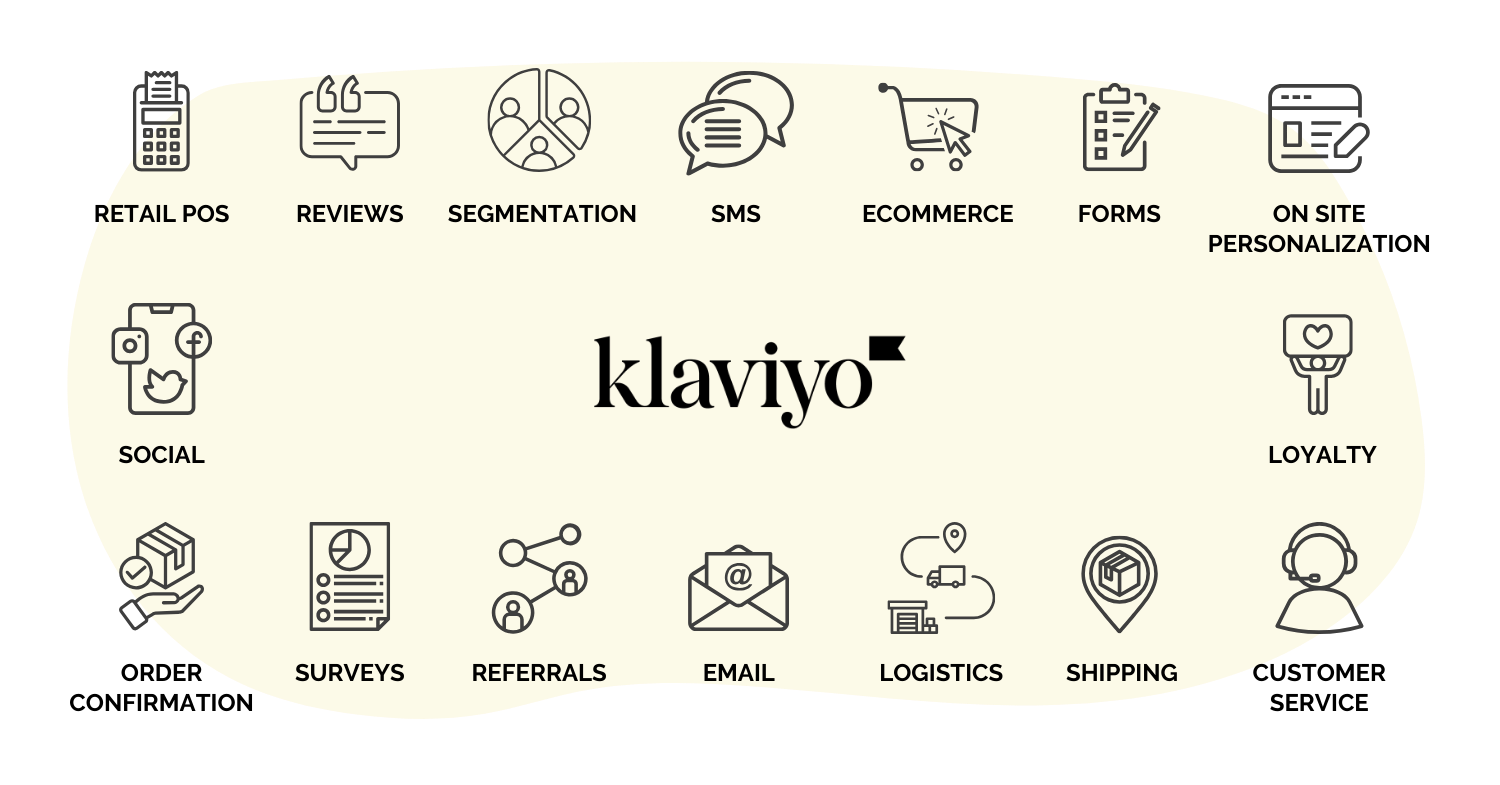
While Klaviyo started with email, it has evolved into a multi-channel orchestrator. It treats SMS and mobile push notifications as integrated components of the same data ecosystem. This is technically significant because it prevents “channel siloing.” If a user receives an SMS and makes a purchase, Klaviyo’s logic can automatically suppress the follow-up email that was scheduled for an hour later. This cross-channel communication is managed through a single interface, ensuring that the frequency and timing of messages are optimized across all touchpoints.
3. The Role of Artificial Intelligence and Machine Learning in Klaviyo
As the volume of data grows, it becomes impossible for human operators to manually optimize every interaction. Klaviyo addresses this through integrated AI and machine learning tools that provide predictive insights.
Predictive Analytics and Customer Lifetime Value (CLV)
One of the most advanced technical features of Klaviyo is its predictive analytics suite. By analyzing the historical purchase data of thousands of customers, Klaviyo’s algorithms can predict future behavior for individual users.
The software calculates three key metrics:
- Predicted Customer Lifetime Value (CLV): An estimate of the total amount a customer will spend in the next year.
- Churn Risk: The probability that a customer will never return.
- Predicted Next Order Date: A calculation based on the user’s specific buying cycle.
These aren’t just interesting statistics; they are actionable data points. A technical team can use these “Predicted” properties to trigger “Win-back” flows specifically for high-CLV customers who show a high risk of churning.
AI-Powered Content Generation and Testing
Beyond data analysis, Klaviyo has integrated generative AI to assist with content creation and optimization. This includes “Smart Send Time,” an algorithm that analyzes when individual recipients are most likely to open an email based on their historical engagement data. Rather than sending a campaign at a fixed time, the software staggers the delivery to maximize the probability of interaction. Additionally, Klaviyo’s AI can assist in A/B testing subject lines and copy, using statistical significance models to automatically crown a winner and redirect the remaining traffic to the highest-performing version.
4. Technical Implementation and Scalability
Implementing Klaviyo into a modern tech stack requires an understanding of how it interacts with the broader web environment. For enterprise-level organizations, scalability and deliverability are the primary technical concerns.
Setting Up the Tracking Pixel and Scripting
The integration process begins with the installation of “Klaviyo.js,” a JavaScript library. This snippet of code acts as the bridge between the client-side browser and the Klaviyo servers. It handles identity tracking (linking a cookie to an email address) and event tracking. For custom-built websites not using a standard e-commerce platform, developers use Klaviyo’s Track and Identify APIs to manually push data points. This flexibility allows Klaviyo to function with virtually any web application, provided the developer can send JSON payloads to Klaviyo’s endpoints.
Infrastructure for High-Volume Deliverability
A critical “behind-the-scenes” function of Klaviyo is its deliverability infrastructure. Sending millions of emails and SMS messages requires a sophisticated network of IP addresses and mail servers. Klaviyo manages the technical reputation of these servers, ensuring they comply with protocols like SPF (Sender Policy Framework), DKIM (DomainKeys Identified Mail), and DMARC.
Furthermore, Klaviyo’s “Smart Sending” feature acts as a technical safeguard. It automatically prevents a user from receiving too many messages within a set timeframe (e.g., 16 or 24 hours), which is essential for maintaining high engagement rates and avoiding being flagged as spam by Internet Service Providers (ISPs).
5. The Future of Marketing Technology: Klaviyo’s Place in the Modern Stack
As the tech industry moves toward a more privacy-centric model, the way software handles data is changing. Klaviyo’s focus on “owned marketing” and first-party data positions it as a resilient tool in an era where third-party cookies are being phased out.
Privacy-First Data Collection (First-Party Data)
With the implementation of Apple’s Mail Privacy Protection (MPP) and the general decline of third-party tracking, the value of “zero-party” and “first-party” data has skyrocketed. Klaviyo is designed to thrive in this environment. By focusing on data that a customer gives directly to a brand (via sign-up forms, preferences, and direct purchases), Klaviyo ensures that its users are not reliant on the shifting sands of advertising platforms like Facebook or Google.

Conclusion: A Unified Engine for Growth
In summary, Klaviyo is a sophisticated software platform that combines the capabilities of a Customer Data Platform, a predictive analytics engine, and a multi-channel communication tool. Its power lies in its ability to ingest massive amounts of raw behavioral data and translate it into automated, personalized experiences. For a tech-savvy organization, Klaviyo is more than a marketing tool; it is a vital piece of infrastructure that powers the logic and execution of digital growth in a data-driven world. Whether through its seamless API integrations, its machine learning models, or its robust delivery network, Klaviyo provides the technical foundation necessary for modern commerce.
aViewFromTheCave is a participant in the Amazon Services LLC Associates Program, an affiliate advertising program designed to provide a means for sites to earn advertising fees by advertising and linking to Amazon.com. Amazon, the Amazon logo, AmazonSupply, and the AmazonSupply logo are trademarks of Amazon.com, Inc. or its affiliates. As an Amazon Associate we earn affiliate commissions from qualifying purchases.