
The term “overweight” in the context of stock investing is a crucial piece of jargon that signifies a particular investment recommendation from financial analysts. It’s a rating assigned to a specific stock by a research firm or analyst, indicating their belief that the stock is poised to outperform its peers or the broader market over a given period. Understanding this designation is essential for investors seeking to make informed decisions about their portfolios, as it directly impacts how they might allocate their capital. This article will delve into the meaning of an “overweight” rating, explore the rationale behind it, and discuss its implications for investors.
The Analyst’s Perspective: Understanding Stock Ratings
Financial analysts play a vital role in the investment landscape by researching companies and providing insights and recommendations to investors. These recommendations are typically distilled into concise ratings that are easily understandable. The primary goal of these ratings is to offer guidance, helping investors navigate the complexities of the stock market and identify potential opportunities.
The Spectrum of Stock Ratings
Analyst ratings aren’t a monolithic concept; they exist on a spectrum, reflecting varying degrees of conviction about a stock’s future performance. While specific terminology can vary slightly between research firms, a common framework includes several key ratings:
- Buy/Outperform/Overweight: These terms generally indicate that an analyst believes a stock will perform better than the average stock in its sector or the overall market. “Overweight” is often used by larger, more institutional-focused research firms.
- Hold/Neutral/Market Perform: This rating suggests that an analyst expects the stock to perform in line with its peers or the market. It implies that the stock is currently fairly valued, and there’s no strong conviction to buy or sell.
- Sell/Underperform/Underweight: These ratings signal that an analyst believes a stock will perform worse than its peers or the market. Investors holding such a stock might be advised to consider selling it.
The “overweight” rating, therefore, sits at the more optimistic end of this spectrum. It’s not just a passive recommendation; it carries an implicit suggestion for portfolio allocation.
The Rationale Behind an “Overweight” Call
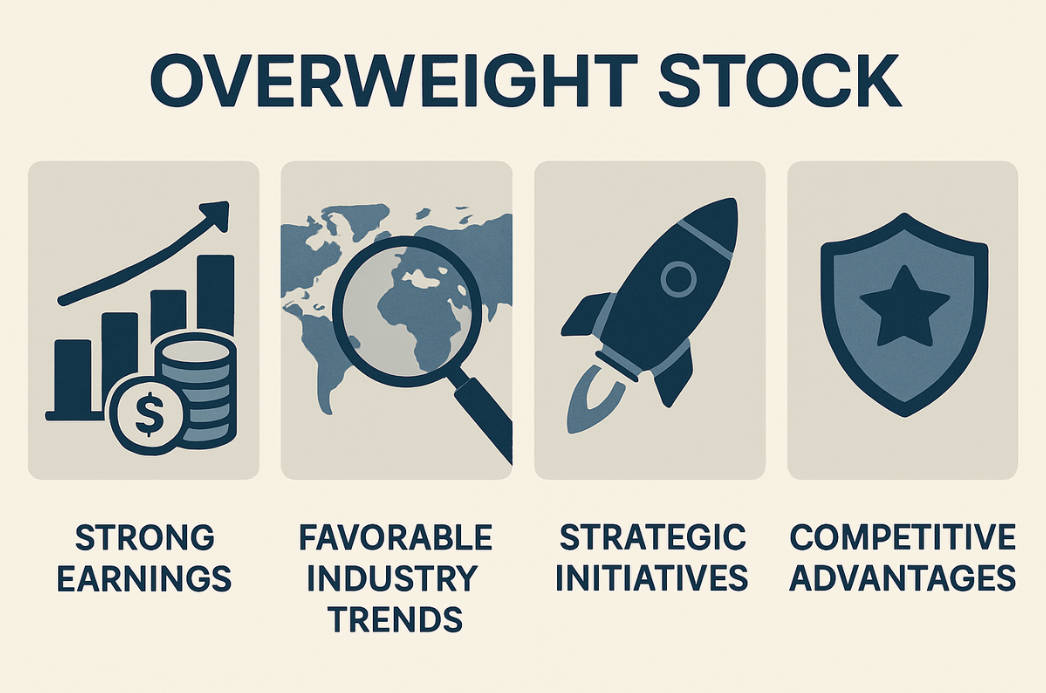
When an analyst assigns an “overweight” rating to a stock, it’s not an arbitrary decision. It’s the culmination of extensive research and analysis, focusing on a variety of fundamental and sometimes qualitative factors. These factors can be broadly categorized as follows:
Favorable Financial Performance and Growth Prospects
At the core of an “overweight” recommendation is a belief in the company’s robust financial health and its potential for sustained growth. Analysts scrutinize key financial metrics to support their conviction.
- Revenue Growth: A company demonstrating consistent and accelerating revenue growth is a strong indicator of its ability to capture market share or benefit from growing industry demand. Analysts will look at historical revenue trends and project future growth based on market conditions and the company’s competitive advantages.
- Profitability: Beyond revenue, profitability is paramount. This includes examining gross profit margins, operating margins, and net profit margins. An increasing trend in these margins suggests that the company is effectively managing its costs and translating sales into profits. Earnings per share (EPS) growth is a critical metric, as it directly impacts shareholder returns.
- Cash Flow Generation: Strong free cash flow is essential for a company’s ability to invest in its business, pay down debt, return capital to shareholders through dividends or buybacks, and weather economic downturns. Analysts assess the sustainability and growth of a company’s cash flow.
- Strong Balance Sheet: A healthy balance sheet indicates a company’s financial stability. This involves examining debt levels relative to equity and assets, as well as the company’s liquidity – its ability to meet short-term obligations. Companies with manageable debt and ample liquidity are generally considered less risky and better positioned for growth.
Competitive Advantages and Industry Position
Beyond the numbers, an analyst will also consider a company’s competitive landscape and its standing within its industry.
- Market Leadership: Companies that are leaders in their respective markets often possess significant pricing power, economies of scale, and brand recognition, all of which contribute to sustained profitability and growth.
- Moats (Durable Competitive Advantages): The concept of an economic “moat,” popularized by Warren Buffett, refers to a company’s sustainable competitive advantages that protect its long-term profits and market share from competitors. These can include strong brand loyalty, patents, network effects, regulatory advantages, or cost advantages.
- Industry Tailwinds: The broader industry in which a company operates can significantly influence its performance. An “overweight” rating might be driven by the expectation that the company is well-positioned to benefit from favorable industry trends, such as technological disruption, demographic shifts, or changing consumer preferences.
- Management Quality: Experienced and effective management teams are crucial for executing a company’s strategy and navigating challenges. Analysts often assess the leadership’s track record, strategic vision, and ability to adapt to changing market dynamics.
Valuation Metrics
Even a great company can be a poor investment if its stock is too expensive. Analysts use various valuation metrics to determine if a stock is trading at an attractive price relative to its intrinsic value and future earnings potential.
- Price-to-Earnings (P/E) Ratio: This common metric compares a company’s share price to its earnings per share. An “overweight” rating might be issued if the stock’s P/E ratio is considered low relative to its growth prospects or its peers, suggesting it is undervalued.
- Price-to-Sales (P/S) Ratio: Useful for companies that may not yet be profitable, this ratio compares a company’s market capitalization to its total revenue.
- Discounted Cash Flow (DCF) Analysis: This sophisticated valuation method attempts to estimate the value of an investment based on its expected future cash flows, discounted back to their present value.
- Enterprise Value to EBITDA (EV/EBITDA): This metric is often used for comparing companies with different capital structures. It measures the total value of a company (market capitalization plus debt, minus cash) relative to its earnings before interest, taxes, depreciation, and amortization.
When a stock’s valuation is deemed attractive relative to its fundamentals and growth potential, it strengthens the case for an “overweight” recommendation.
Strategic Implications for Investors: How to Act on an “Overweight” Rating
Receiving an “overweight” rating for a stock you hold or are considering investing in is a signal to pay attention. However, it’s not an automatic buy order. Prudent investors will consider this recommendation within the broader context of their own financial goals and risk tolerance.
Integrating “Overweight” Ratings into Portfolio Management
An “overweight” rating implies that an analyst believes the stock deserves a larger allocation in a portfolio than its market weight would suggest. For an investor, this translates to potentially increasing their position in that stock.
- Asset Allocation: The decision to increase a position should align with the investor’s overall asset allocation strategy. If a portfolio is already heavily weighted towards a particular sector or asset class, adding more to a stock in that area might increase risk.
- Diversification: While an “overweight” rating suggests conviction, it’s crucial not to sacrifice diversification. Over-concentrating in a single stock, even one with a positive rating, can expose the portfolio to undue risk if that specific company falters.
- Risk Tolerance: Investors with a higher risk tolerance might be more inclined to increase their exposure to an “overweight” stock, especially if it’s in a growth-oriented sector. Those with a lower risk tolerance might opt for a more modest increase or even maintain their current position.
Understanding the Nuances and Potential Pitfalls
Despite the positive nature of an “overweight” rating, it’s essential to acknowledge that no investment recommendation is foolproof. Analysts can be wrong, and market conditions can change rapidly.
- Analyst Bias: While research firms strive for objectivity, there can be inherent biases. For instance, some firms may have investment banking relationships with the companies they cover, which could, in some cases, influence their ratings. It’s always wise to consider the source of the rating and any potential conflicts of interest.
- Timeliness of Information: Analyst reports are based on the information available at the time of their publication. New developments, unexpected events, or shifts in market sentiment can quickly alter a stock’s trajectory, rendering an older rating less relevant.
- Market Sentiment vs. Fundamentals: Sometimes, a stock might be performing poorly due to broader market sentiment, even if its underlying fundamentals remain strong. Conversely, a stock might be overhyped and trading at an unsustainable valuation, leading to a correction even with positive analyst coverage.
- The “Herd Mentality”: Investors often look to analyst ratings for guidance, which can sometimes lead to a “herd mentality.” If many analysts issue an “overweight” rating, it can drive demand and push the stock price up, potentially creating a bubble.
The Importance of Due Diligence
An “overweight” rating should serve as a catalyst for further investigation, not as a substitute for it. Investors should conduct their own due diligence to validate the analyst’s thesis and ensure it aligns with their own investment philosophy.
- Read the Analyst Report: Go beyond the rating itself and read the accompanying research report. Understand the specific reasons cited for the “overweight” designation and the analyst’s price target.
- Consider the Company’s Business Model: Do you understand how the company makes money? Is its business model sustainable and adaptable to future changes?
- Analyze Management and Governance: Research the company’s leadership team and its corporate governance practices.
- Monitor Industry Trends: Stay informed about the competitive landscape and any emerging trends that could impact the company’s future.
- Follow Other Analysts: See if other reputable analysts hold similar or differing views on the stock. A consensus among multiple analysts can sometimes provide greater conviction.
Conclusion: “Overweight” as a Guide, Not a Gospel
In the intricate world of stock market investing, an “overweight” rating is a valuable signal from financial analysts. It suggests a belief that a particular stock is set to outperform its peers and the broader market. This designation is typically underpinned by thorough research into a company’s financial health, competitive positioning, growth prospects, and valuation.
For investors, an “overweight” rating is not a directive but rather a piece of expert opinion to be carefully considered. It can prompt a review of existing holdings, suggest potential new investment opportunities, and influence portfolio allocation decisions. However, it is paramount to remember that analyst ratings are not infallible. They can be influenced by biases, become outdated, and fail to anticipate unforeseen market events.
Ultimately, the prudent investor will treat an “overweight” rating as a starting point for their own comprehensive due diligence. By understanding the rationale behind the recommendation, considering their personal financial goals and risk tolerance, and conducting independent research, investors can effectively leverage these insights to build more robust and potentially more rewarding portfolios. The key lies in viewing “overweight” as a helpful guidepost on the journey of informed investment decision-making, rather than an unquestionable gospel.
aViewFromTheCave is a participant in the Amazon Services LLC Associates Program, an affiliate advertising program designed to provide a means for sites to earn advertising fees by advertising and linking to Amazon.com. Amazon, the Amazon logo, AmazonSupply, and the AmazonSupply logo are trademarks of Amazon.com, Inc. or its affiliates. As an Amazon Associate we earn affiliate commissions from qualifying purchases.