
The term “Green Card” is often used colloquially to refer to the Permanent Resident Card in the United States. While the name itself conjures an image of a distinctly green document, the actual appearance of this crucial immigration document has evolved significantly over the years, and its current iteration is designed with advanced security features to prevent fraud. Understanding what a Green Card looks like is not just a matter of curiosity; it’s essential for anyone who holds one, is applying for one, or interacts with individuals who possess this status. This document is tangible proof of lawful permanent residency in the United States, granting its holder the right to live and work permanently in the country.
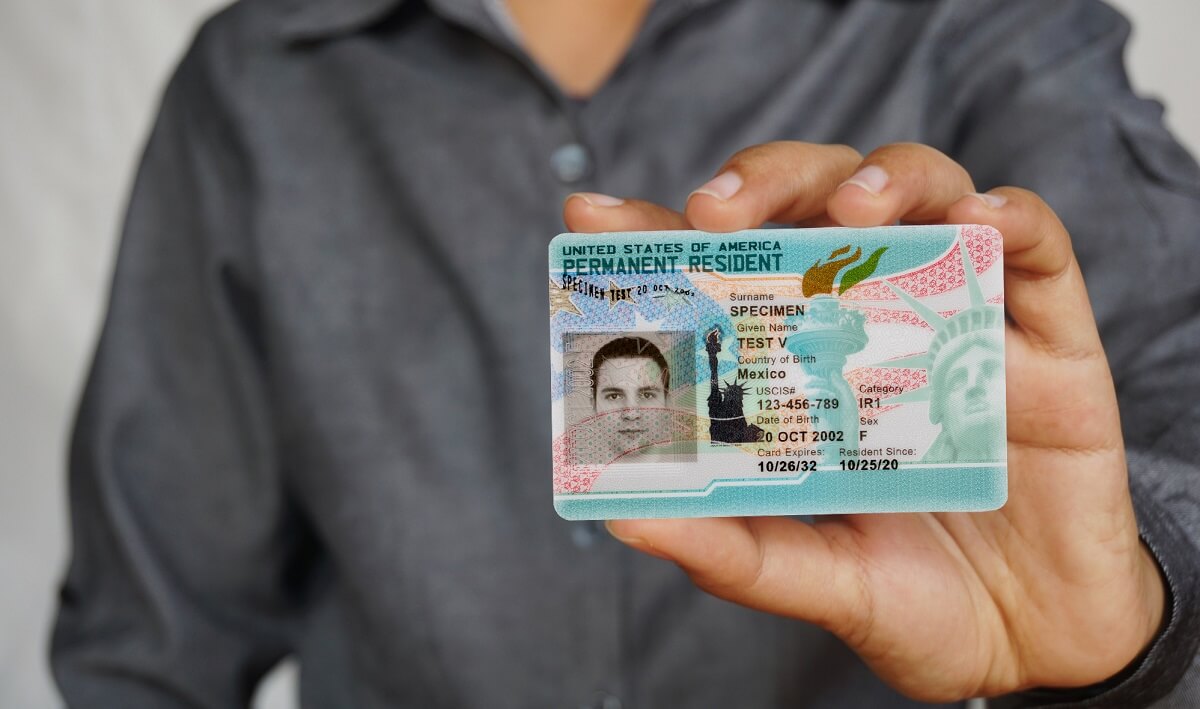
The journey to understanding the visual representation of a Green Card involves delving into its historical transformations, its present-day security attributes, and the practical implications of its physical form. Beyond a mere identification card, it serves as a key to accessing numerous opportunities and navigating daily life within the US. From employment verification to establishing residency for various services, the Green Card is a fundamental document. This article aims to provide a comprehensive overview of its appearance, the security measures embedded within it, and the importance of recognizing a genuine Green Card.
The Evolution of the Permanent Resident Card: A Visual History
The Green Card has undergone several transformations since its inception, reflecting advancements in security technology and changes in immigration policy. Initially, the document was a simple paper card, easily replicated and susceptible to fraud. As the need for more robust identification became apparent, USCIS (U.S. Citizenship and Immigration Services) and its predecessors began to incorporate more sophisticated design elements and materials.
Early Iterations: From Paper to Laminated Cards
The earliest versions of the permanent resident alien card, dating back to the mid-20th century, were often referred to as “alien registration cards.” These were typically paper-based documents that would be laminated for durability. While they served their purpose, they lacked the advanced security features that are standard today. The color was not consistently green, and the information printed on them was more basic. As technology progressed, so did the sophistication of these cards. Lamination provided a degree of protection against wear and tear, but it did little to deter determined counterfeiters. The focus was primarily on the basic identification of the holder and their legal status.
The Rise of the “Green Card”: A Distinctive Hue and Enhanced Features
The term “Green Card” gained widespread popularity in the 1950s and 60s when the card itself began to adopt a distinct green hue. This color choice, though not always uniformly applied across all versions, became so synonymous with permanent residency that the name stuck. These cards started to feature more detailed information, including photographs, fingerprints (though not always visible on the card itself), and more specific biographical data. The introduction of photographs was a significant step towards visual verification, making it harder to use someone else’s card. However, even these cards were relatively easy to forge compared to modern standards. The design elements were often printed, and the overall security was still relatively rudimentary.
Modern Green Cards: A Fortress of Security Features
The Green Card of today is a highly sophisticated document, designed to be extremely difficult to counterfeit. The U.S. government has invested heavily in anti-fraud measures, incorporating numerous layers of security into the card’s design and manufacturing process. These modern cards are made of polycarbonate, a durable plastic material that is resistant to tampering and degradation. The information and images are embedded within the card itself, making it challenging to alter or replace elements without damaging the card.
Decoding the Visual Elements of a Modern Green Card
A modern U.S. Permanent Resident Card (Form I-551) is a visually complex document packed with security features. Understanding these elements is crucial for verifying its authenticity. The card is approximately the size of a credit card, making it convenient to carry.
Front of the Card: Key Identification and Security Layers
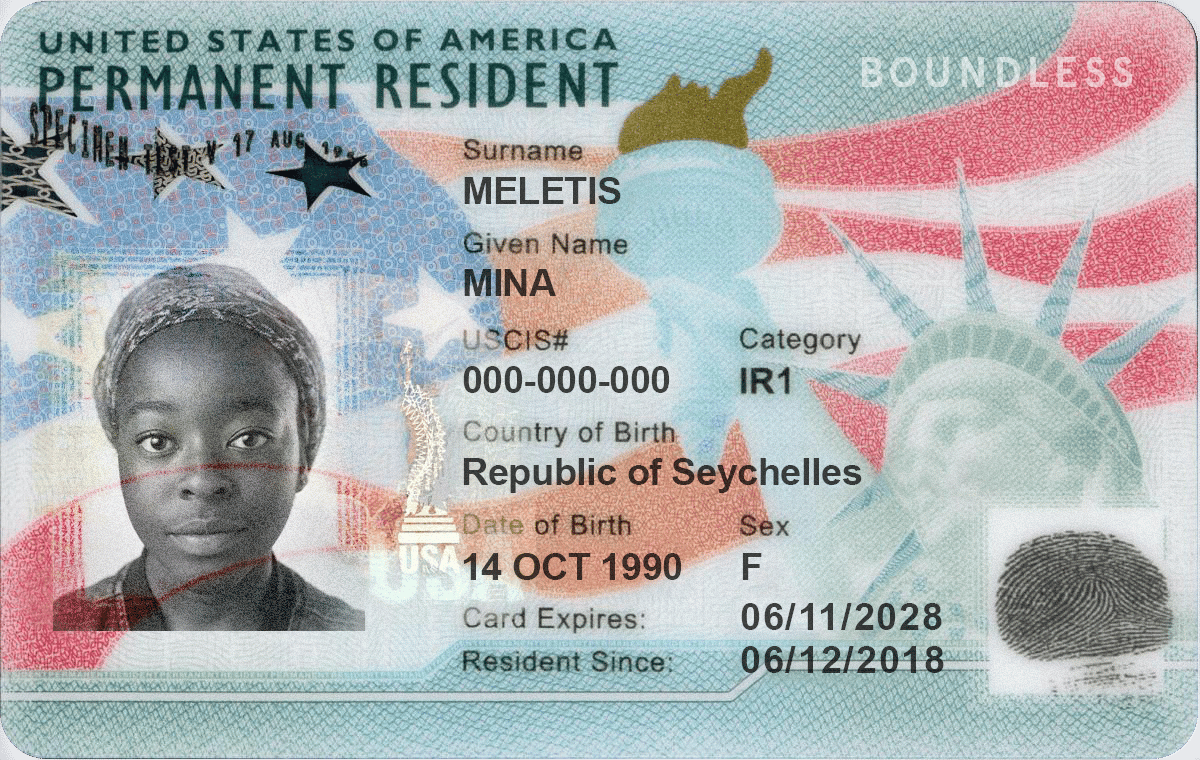
The front of the card is where the primary identifying information resides, alongside several key security features.
- “UNITED STATES OF AMERICA” and “PERMANENT RESIDENT CARD”: These inscriptions are prominently displayed at the top, clearly indicating the document’s origin and purpose.
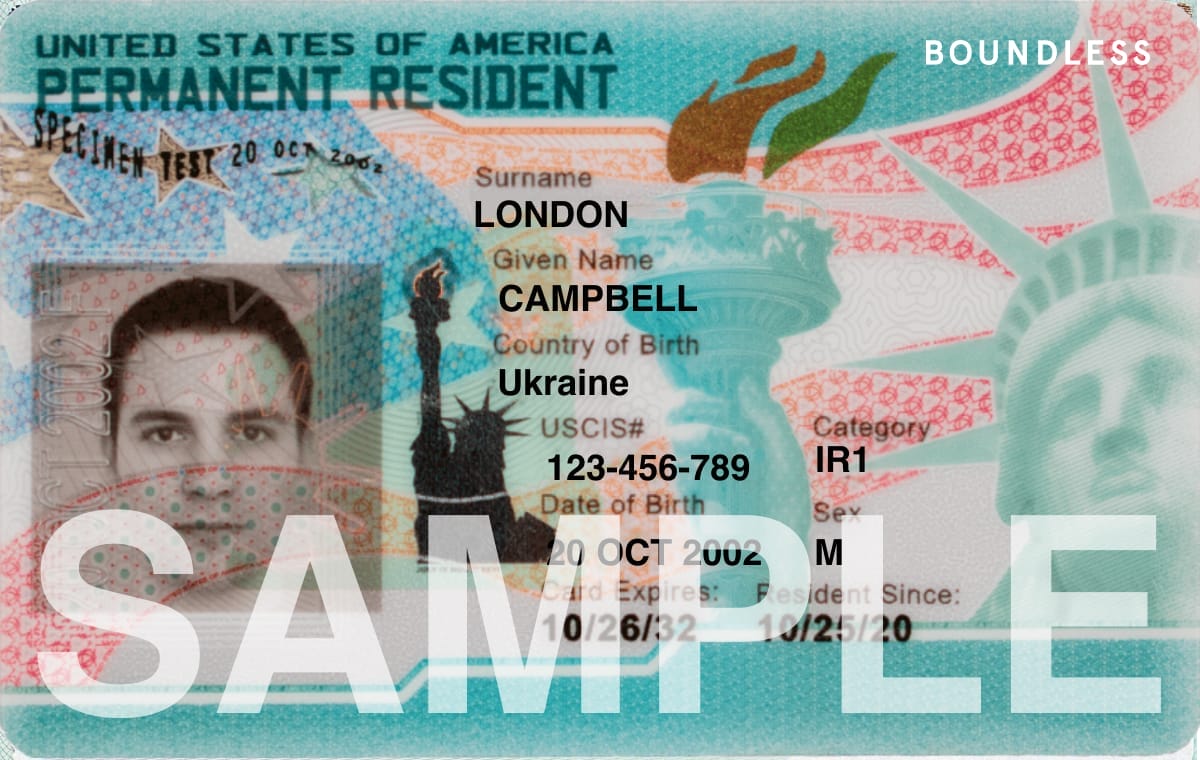
- Photograph: A high-resolution, color photograph of the cardholder is affixed to the left side of the card. This is a critical element for visual identification. The photograph is often integrated using sophisticated printing techniques that make it difficult to remove or replace without leaving clear signs of tampering.
- Biographical Data: Essential personal information includes the cardholder’s name, USCIS number (also known as an Alien Registration Number or A-Number), date of birth, country of birth, and gender. The font and placement of this information are standardized.
- “Lawful Permanent Resident” and the date of admission: This indicates the holder’s immigration status and the date they were granted permanent residency.
- Machine Readable Zone (MRZ): Located at the bottom of the card, this zone contains encoded information that can be scanned by machines. This allows for rapid verification of the cardholder’s identity and status at ports of entry and other official checkpoints. The MRZ follows international standards for travel documents.
- Holograms and Ghost Images: A crucial security feature is the presence of multiple holograms and a “ghost” image of the cardholder’s photograph. These are embedded within the card and are visible when the card is tilted at different angles. These features are extremely difficult to replicate accurately, making them a strong deterrent against counterfeiting.
- Microprinting: Extremely small text, known as microprinting, is incorporated into various parts of the card’s design. This text is often too small to be visible to the naked eye and requires magnification to read. It’s typically used for lines of text or dates, and its presence is a good indicator of authenticity.
- Tactile Features: While not always immediately obvious, some modern Green Cards incorporate tactile elements. These are subtle raised or indented areas that can be felt when touching the card, adding another layer of security that is difficult to replicate with standard printing methods.
- Color-Shifting Ink: Certain elements on the card may use ink that changes color when viewed from different angles. This is another sophisticated security feature that is challenging to counterfeit.
Back of the Card: Additional Security and Information
The back of the Green Card contains further security features and official markings.
- “USCIS” and “Department of Homeland Security” logos: These official seals affirm the card’s governmental origin.
- Issuance and Expiration Dates: While Green Cards for most individuals do not expire in terms of their permanent residency status, the card itself has an expiration date, similar to a driver’s license. This means the physical card needs to be renewed periodically to maintain valid identification. For individuals under 14 years of age, the card is typically valid for 5 years. For those 14 and older, it’s valid for 10 years.
- Signature of the Cardholder: The cardholder’s signature is present on the card, which can be compared against other signatures for verification.
- Issuing Officer’s Stamp/Seal (Historically): While less common on newer cards, older versions might have included an issuing officer’s stamp or seal.
- Security Background Patterns: The entire card is printed on a background of intricate, repeating patterns that are difficult to reproduce accurately. These patterns often incorporate latent images or other hidden security features.
- Biometric Data Indicator (Potential): While not always visually apparent, the card is designed to be compatible with systems that can verify biometric data, such as fingerprints, which are stored in USCIS databases.
The Importance of Recognizing a Genuine Green Card
The ability to recognize a genuine Green Card is vital for employers, law enforcement officers, and individuals who interact with immigrants. Misidentification or the acceptance of fraudulent documents can have serious legal and personal consequences.
For Employers: Verification and Compliance
Employers are legally obligated to verify the identity and employment authorization of all individuals they hire. This process is governed by the Form I-9, Employment Eligibility Verification. When an employee presents a Green Card as proof of their authorization to work, employers must examine the document to ensure it appears genuine and that the information matches the employee’s details. Understanding the security features of a modern Green Card helps employers avoid inadvertently hiring individuals with fraudulent documents or rejecting eligible employees who present authentic, albeit perhaps older, versions of the card. Familiarity with the holograms, ghost images, microprinting, and polycarbonate material are key indicators of authenticity.
For Law Enforcement and Government Agencies: Identification and Verification
Law enforcement agencies and other government bodies regularly encounter Green Card holders. Accurate identification is crucial for various purposes, including immigration checks, border control, and access to government services. Recognizing the security features of a Green Card allows these officials to quickly and reliably verify an individual’s legal status and identity. In situations where a card might appear damaged or the information seems inconsistent, knowledge of genuine features helps in determining the next steps, whether that involves further questioning or examination by specialized units.
For Green Card Holders: Safeguarding Your Identity
For Green Card holders themselves, understanding what their card looks like and its security features is crucial for protecting their identity and status. It helps them identify potential fraud if their card is lost or stolen and provides them with the confidence to present their document in various situations. It also aids them in recognizing when their card may need to be renewed due to its expiration date, ensuring they maintain continuous proof of their permanent residency. Keeping the card in good condition and being aware of its unique attributes are fundamental aspects of responsible Green Card ownership.
In conclusion, the Green Card, or Permanent Resident Card, is more than just an immigration document; it’s a sophisticated piece of identification designed with numerous security features to safeguard its authenticity. From its early, simpler paper iterations to the advanced, polycarbonate cards of today, its evolution reflects a commitment to secure immigration processes. Understanding the visual cues, the security layers, and the practical importance of recognizing a genuine Green Card is essential for employers, government officials, and, most importantly, for the cardholders themselves. By familiarizing oneself with the details outlined, one can navigate the world of permanent residency in the United States with greater confidence and security.
aViewFromTheCave is a participant in the Amazon Services LLC Associates Program, an affiliate advertising program designed to provide a means for sites to earn advertising fees by advertising and linking to Amazon.com. Amazon, the Amazon logo, AmazonSupply, and the AmazonSupply logo are trademarks of Amazon.com, Inc. or its affiliates. As an Amazon Associate we earn affiliate commissions from qualifying purchases.