
In the intricate world of electronics and metalwork, soldering stands as a foundational process, the invisible glue holding our technological advancements together. From the micro-components within a smartphone to the robust connections in industrial machinery, a reliable solder joint is paramount. Yet, amidst discussions of advanced soldering irons, specialized solders, and precise techniques, one crucial element often remains an unsung hero: flux. Far from being a mere accessory, flux is the chemical catalyst that enables the very possibility of strong, durable, and conductive solder connections. Without it, the vast majority of our modern electronics would simply fail to function, leading to product breakdowns, brand damage, and significant financial losses.

This article delves into the fundamental role of flux in soldering, demystifying its chemical actions and explaining why its presence is indispensable. We’ll explore the various types of flux, their specific applications, and critically, how this unassuming compound underpins technological progress, influences brand reputation, and impacts financial considerations across industries and even for the individual hobbyist.
The Unsung Hero: Understanding the Core Function of Flux
At its heart, soldering is about creating a metallurgical bond between two or more metal surfaces using a molten filler metal (solder) with a lower melting point than the base metals. For this bond to be successful, the surfaces must be impeccably clean. This is where flux enters the scene, performing a series of vital chemical functions that make reliable soldering possible.
Eliminating Oxidation: The Primary Challenge
One of the greatest enemies of a strong solder joint is oxidation. When metal surfaces are exposed to air, they naturally react with oxygen to form a thin layer of metal oxides. This process accelerates rapidly when metals are heated, which is precisely what happens during soldering. These oxide layers, no matter how thin, act as a barrier, preventing the molten solder from properly wetting (spreading evenly and bonding) with the base metal. Imagine trying to glue two pieces of glass together, but one has a layer of grease on it – the bond will be weak or non-existent.
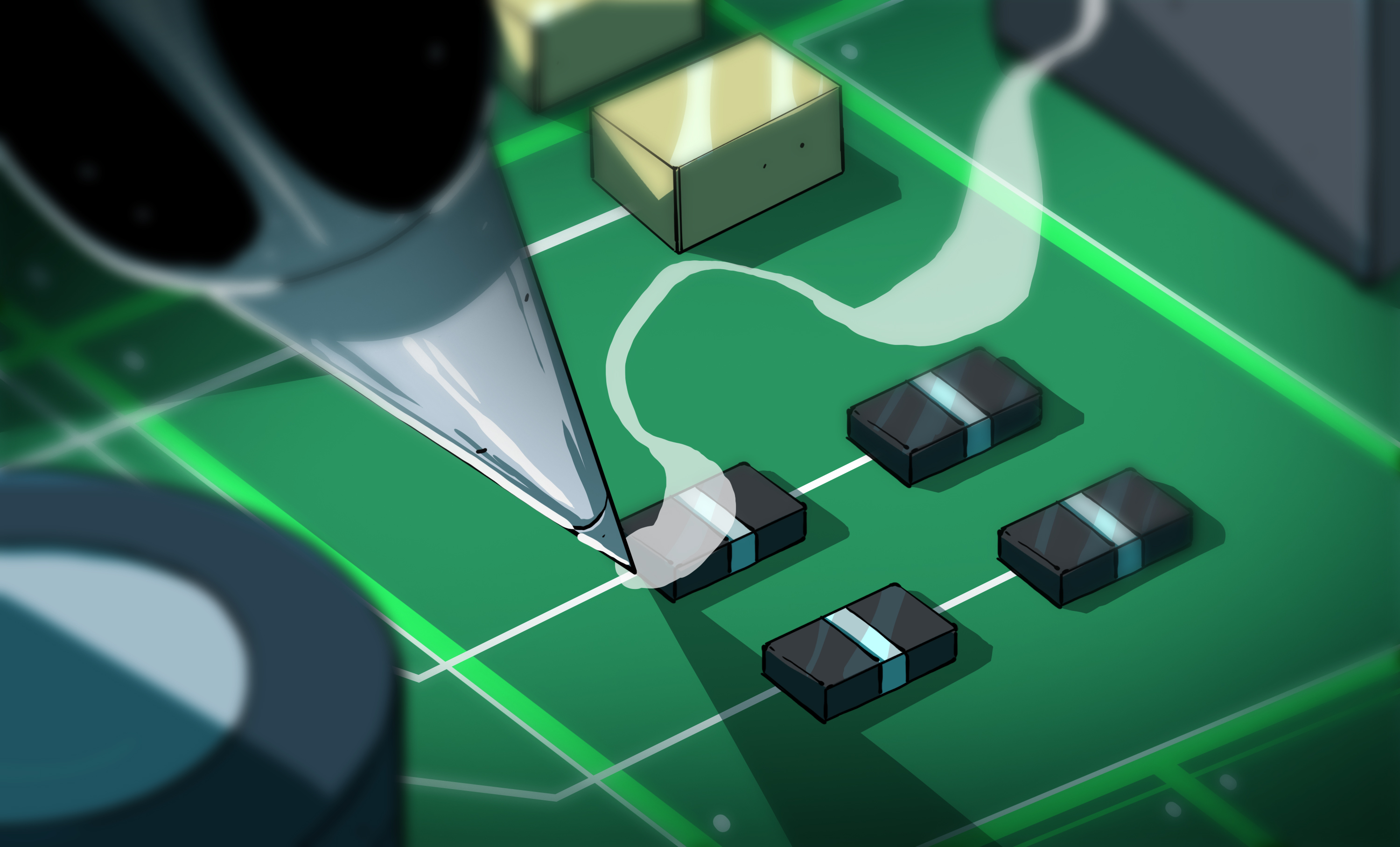
Flux is essentially a chemical cleaning agent designed to tackle this challenge. When heated, the active chemicals within the flux react with and dissolve these oxide layers. It’s a chemical “scrubbing” action that cleans the metal surfaces on a microscopic level, revealing the pure, unoxidized metal beneath. This is the primary and most critical role of flux: to prepare the surfaces for proper metallurgical bonding.
Improving Solder Flow and Wetting
Beyond just cleaning, flux plays a crucial role in improving the physical characteristics of the molten solder. Liquid metals, like molten solder, exhibit surface tension, a property that causes them to bead up, much like water on a waxed car. High surface tension can prevent the solder from flowing smoothly and spreading across the entire surface of the joint, leading to poor coverage and weak connections.
Flux acts as a wetting agent, significantly lowering the surface tension of the molten solder. With reduced surface tension, the solder is able to spread out thinly and evenly over the cleaned metal surfaces. This phenomenon, known as “wetting,” is essential for creating a strong, low-resistance, and aesthetically pleasing joint. Good wetting ensures maximum contact between the solder and the base metals, facilitating excellent electrical conductivity and mechanical strength. Without proper wetting, solder would simply form a blob, creating a poor connection or no connection at all.
Preventing Re-oxidation During Soldering
Once the flux has cleaned the metal surfaces, it doesn’t stop there. As the soldering process continues, and the metals remain heated, they would quickly re-oxidize if left exposed to the air. Flux forms a protective blanket or barrier over the cleaned surfaces. This barrier shields the exposed, clean metal from atmospheric oxygen, preventing new oxides from forming while the solder is melting, flowing, and solidifying. This dual action – cleaning existing oxides and preventing new ones – ensures that the solder has a pristine environment in which to form a robust, reliable metallurgical bond.
A Spectrum of Solutions: Types of Flux and Their Applications
The world of flux is not monolithic; various types have been developed to cater to different soldering applications, materials, and environmental considerations. Understanding these distinctions is crucial for selecting the right flux for the job, ensuring both performance and safety.
Rosin-Based Fluxes: The Traditional Workhorse
Rosin-based fluxes are derived from natural pine resin and have been a staple in electronics soldering for decades. They are generally considered mild in their activity, making them suitable for many general-purpose electronics applications.
- R (Rosin): Very mild activity, usually non-corrosive, but leaves a sticky residue.
- RMA (Rosin Mildly Activated): Contains activators to enhance cleaning power, making it more effective than pure R-type flux. Residue is generally non-corrosive and often left on the board in less critical applications.
- RA (Rosin Activated): The most aggressive of the rosin-based fluxes, containing stronger activators for tougher oxidation. Residue is more active and usually requires cleaning, though it’s generally less corrosive than water-soluble fluxes.
A key characteristic of rosin flux is that its residue, while potentially sticky and aesthetically undesirable, is typically non-corrosive and non-conductive, making cleaning optional in some low-reliability applications. However, for high-density boards, sensitive circuits, or aesthetic reasons, cleaning with an appropriate solvent (like isopropyl alcohol) is often recommended.
Water-Soluble Fluxes: Modern & Environmentally Conscious
Water-soluble fluxes represent a more modern approach, offering highly aggressive cleaning power. They are synthetic formulations, often organic acid based, and are particularly effective at tackling heavily oxidized surfaces and are frequently used in automated assembly lines due to their superior cleaning performance.
Their primary advantage lies in their residue: it’s highly active and therefore must be cleaned off thoroughly after soldering. However, unlike rosin-based residues requiring specific organic solvents, water-soluble flux residues can be removed simply with deionized water, often with mechanical assistance (e.g., brush, ultrasonic bath, high-pressure spray). This makes them attractive from an environmental and cost perspective, as water cleaning is generally safer and cheaper than solvent-based cleaning, especially in large-scale operations. Their strong cleaning action also makes them ideal for lead-free solders, which often require higher temperatures and thus encounter more aggressive oxidation.
No-Clean Fluxes: Convenience and Efficiency
No-clean fluxes were developed to reduce manufacturing costs and environmental impact by eliminating the post-soldering cleaning step. These fluxes are designed to leave minimal, benign, and non-corrosive residues after soldering. The residues are typically clear, non-tacky, and electrically non-conductive, allowing them to remain on the PCB without affecting circuit performance or long-term reliability.
While highly convenient and efficient, especially in automated assembly, “no-clean” doesn’t necessarily mean “invisible” or “completely residue-free.” A very thin layer of residue may still be present, which might be a concern in extremely sensitive high-frequency applications or where specific cosmetic standards are required. For the vast majority of consumer electronics, however, no-clean fluxes are the standard.
Specialty Fluxes for Specific Metals and Applications
Beyond these main categories, there are specialized fluxes tailored for unique challenges:
- Acid Fluxes: Highly corrosive and very aggressive, primarily used for plumbing or metal fabrication (e.g., soldering copper pipes) and never for electronics due to their highly corrosive residues.
- Aluminum Fluxes: Specifically formulated to break down the tenacious oxide layer on aluminum, which is notoriously difficult to solder.
- Brazing Fluxes: Used for brazing, a high-temperature joining process similar to soldering, but using filler metals with higher melting points.
- Flux-Cored Solder: Many solder wires come with flux already integrated into a core, simplifying the process for manual soldering. This is a very common format for hobbyists and repair technicians.
- Flux Paste/Gel: Thicker consistency, ideal for rework, surface mount device (SMD) component placement, or when precise application is needed.
The choice of flux is rarely arbitrary; it’s a decision influenced by the base metals, the solder alloy, the cleanliness requirements, production volume, environmental regulations, and ultimately, the desired reliability of the finished product.
Beyond the Bench: Flux’s Impact on Technology, Branding, and Economy
While flux might seem like a niche chemical compound, its influence extends far beyond the soldering bench, deeply affecting the broader landscapes of technology, product branding, and global economies.
Technological Advancements and Miniaturization
The unrelenting march towards miniaturization and increased complexity in electronics would be impossible without the consistent performance that flux provides. Consider the incredibly dense population of components on a modern smartphone’s printed circuit board (PCB) or the intricate multi-layer designs of high-performance computing devices. Each tiny surface mount device (SMD) requires a perfect connection.
Flux enables the precision required for these advanced manufacturing processes:
- Surface Mount Technology (SMT): Flux pastes are critical for placing microscopic components and ensuring the solder reflows correctly in ovens.
- Fine Pitch Components: As component leads become finer and closer together, the ability of flux to prevent solder bridges and ensure individual, reliable connections is paramount.
- High-Frequency Circuits: Residue from poorly chosen or applied flux can introduce capacitance or impedance, degrading signal integrity in high-frequency applications. Therefore, the right flux ensures the pristine electrical performance required for 5G, Wi-Fi 6, and other advanced communication technologies.
In essence, flux is a silent enabler of “Tech” advancements, ensuring that groundbreaking designs translate into functional, reliable devices that power our digital world. Its continued evolution goes hand-in-hand with the development of new materials, more complex circuits, and higher performance demands.
The Brand’s Promise: Quality, Reliability, and Reputation
For any brand, the quality and reliability of its products are directly tied to its reputation and customer trust. In the electronics sector, product failure often stems from poor solder joints. A device that stops working prematurely, glitches intermittently, or suffers from a complete breakdown due to a cold joint or short circuit can severely tarnish a brand’s image.
This is where flux’s role becomes critical for “Brand” integrity:
- Preventing Product Failure: Using the correct flux ensures strong, durable solder joints that withstand mechanical stress, thermal cycling, and environmental factors over the product’s lifespan. This directly reduces warranty claims, costly recalls, and negative customer reviews.
- Ensuring Performance: Reliable connections are not just about functionality; they’re about optimal performance. A high-end gaming console, a medical device, or an automotive control unit must perform consistently without interruption. Flux helps achieve this consistency, safeguarding the brand’s promise of quality.
- Customer Satisfaction: When products work as expected, customers are satisfied, leading to repeat business, positive word-of-mouth, and brand loyalty. Conversely, a faulty product, even if repaired or replaced, can leave a lasting negative impression.
Investing in quality flux and understanding its application is not just a manufacturing detail; it’s an investment in a brand’s long-term viability and market standing. A brand recognized for its robust and reliable electronics is a brand that has mastered the fundamentals, including the often-overlooked art and science of soldering with flux.
Economic Implications: From DIY Savings to Industrial Efficiency
The impact of flux on the “Money” aspect is multi-faceted, affecting both individual users and large-scale industrial operations.
- For the DIYer/Hobbyist: Learning to solder properly with flux can lead to significant cost savings. Instead of replacing a broken gadget, a hobbyist can repair it, extending its life and reducing waste. This skill also opens doors to personal projects, custom electronics, or even modest side hustles in repairs or custom builds, transforming a hobby into a potential income stream. The cost of a small container of quality flux is a negligible investment compared to the potential savings or earnings.
- For Professionals and Industry: In manufacturing, the economic impact is immense.
- Reduced Rework: Poor solder joints necessitate rework, which adds significant labor, material, and time costs to production. Proper flux minimizes defects, thereby reducing rework and improving production throughput.
- Material Waste Reduction: Fewer faulty units mean less scrap and more efficient use of expensive components and solder.
- Cleaning Costs: The choice of flux type (e.g., no-clean vs. water-soluble requiring cleaning) directly impacts post-production processing costs. No-clean fluxes reduce capital investment in cleaning equipment, operational costs of cleaning agents, and waste disposal, leading to substantial savings in high-volume manufacturing.
- Warranty and Returns: Minimizing product failures through reliable soldering dramatically cuts down on warranty claims, returns, and associated logistical costs, which can represent a significant financial drain for companies.
- Market Competitiveness: Companies that can consistently produce high-quality, reliable electronics efficiently due to optimized soldering processes (including flux selection) gain a competitive edge in the market, allowing for better pricing or higher profit margins.
In essence, the small investment in understanding and utilizing the right flux translates into substantial financial benefits, from direct cost savings to enhanced market positioning.
Best Practices and Future Trends in Flux Application
To fully harness the power of flux, understanding best practices and being aware of evolving trends is essential.
Proper Application and Safety
- Ventilation is Key: Many fluxes release fumes when heated. Always solder in a well-ventilated area or use a fume extractor to protect your respiratory health.
- Safety Gear: Wear appropriate safety glasses to protect against splashes and gloves to prevent skin contact, especially with more aggressive fluxes.
- Correct Amount: Apply just enough flux to cover the joint area. Too little will be ineffective; too much can lead to excessive residue, making cleaning difficult or potentially causing problems in no-clean applications.
- Storage: Store flux in a cool, dry place, sealed to prevent evaporation or contamination, and away from direct sunlight. Check expiration dates, as flux can degrade over time.
- Material Compatibility: Always ensure the flux is compatible with both your solder alloy (e.g., leaded vs. lead-free) and the base metals you are joining.
The Evolving Landscape: Lead-Free Soldering and Environmental Concerns
The global shift towards lead-free solders, driven by environmental regulations like RoHS, has significantly impacted flux development. Lead-free solders typically require higher processing temperatures, which means increased oxidation. This, in turn, demands more active or specialized fluxes to ensure reliable joints. The industry continues to innovate, developing new flux chemistries that are highly effective with lead-free alloys while also addressing environmental concerns. There’s an ongoing push for greener, less toxic flux formulations and residues, further minimizing the ecological footprint of electronics manufacturing. This constant evolution ensures that as technology advances and environmental standards tighten, flux chemistry continues to provide the critical support needed for the next generation of electronic devices.

Conclusion
Flux, often overlooked in the grand scheme of electronics manufacturing, is undeniably a cornerstone of reliable soldering. Its chemical prowess in cleaning metal surfaces, enhancing solder flow, and preventing re-oxidation is fundamental to creating the robust electrical and mechanical connections that power our modern world. Without this unassuming chemical, the smartphones in our pockets, the computers on our desks, and the vast network of IoT devices would simply cease to function reliably.
Beyond its immediate technical function, flux profoundly influences the broader landscape. It enables the technological advancements that lead to smaller, more powerful, and complex electronic devices. It is a critical factor in building and maintaining a strong brand reputation, ensuring product quality and customer satisfaction. And from individual DIY savings to massive industrial efficiencies, flux holds significant money implications, driving down costs and improving profitability across the electronics sector.
As technology continues to evolve and demand even greater precision and reliability, the role of flux will only become more critical. It is a testament to the power of chemistry that such a seemingly simple compound is so absolutely indispensable to the complex, interconnected world we inhabit daily.
aViewFromTheCave is a participant in the Amazon Services LLC Associates Program, an affiliate advertising program designed to provide a means for sites to earn advertising fees by advertising and linking to Amazon.com. Amazon, the Amazon logo, AmazonSupply, and the AmazonSupply logo are trademarks of Amazon.com, Inc. or its affiliates. As an Amazon Associate we earn affiliate commissions from qualifying purchases.