
In the vast ecosystem of modern technology, clarity is the ultimate currency. Every second, billions of search queries are processed, millions of lines of code are executed, and AI models generate human-like responses to complex prompts. However, human language is inherently messy, filled with homonyms, synonyms, and overlapping definitions. When a user types “Java” into a search bar, are they looking for a programming language, a cup of coffee, or an Indonesian island?
The technical process of resolving this uncertainty is known as disambiguation. In the realm of technology, disambiguation is not merely a linguistic exercise; it is a fundamental pillar of Natural Language Processing (NLP), search engine optimization, database management, and Artificial Intelligence. It is the invisible logic that allows machines to interpret context, predict intent, and deliver accurate results. Without it, our digital tools would be paralyzed by the paradox of choice.

Linguistic Precision in Natural Language Processing (NLP)
At its core, disambiguation in tech refers to Word Sense Disambiguation (WSD). This is a subfield of NLP that focuses on identifying which “sense” or meaning of a word is used in a specific sentence. While humans do this subconsciously using environmental cues, software must rely on complex algorithms and statistical models to achieve the same result.
Knowledge-Based vs. Supervised Disambiguation
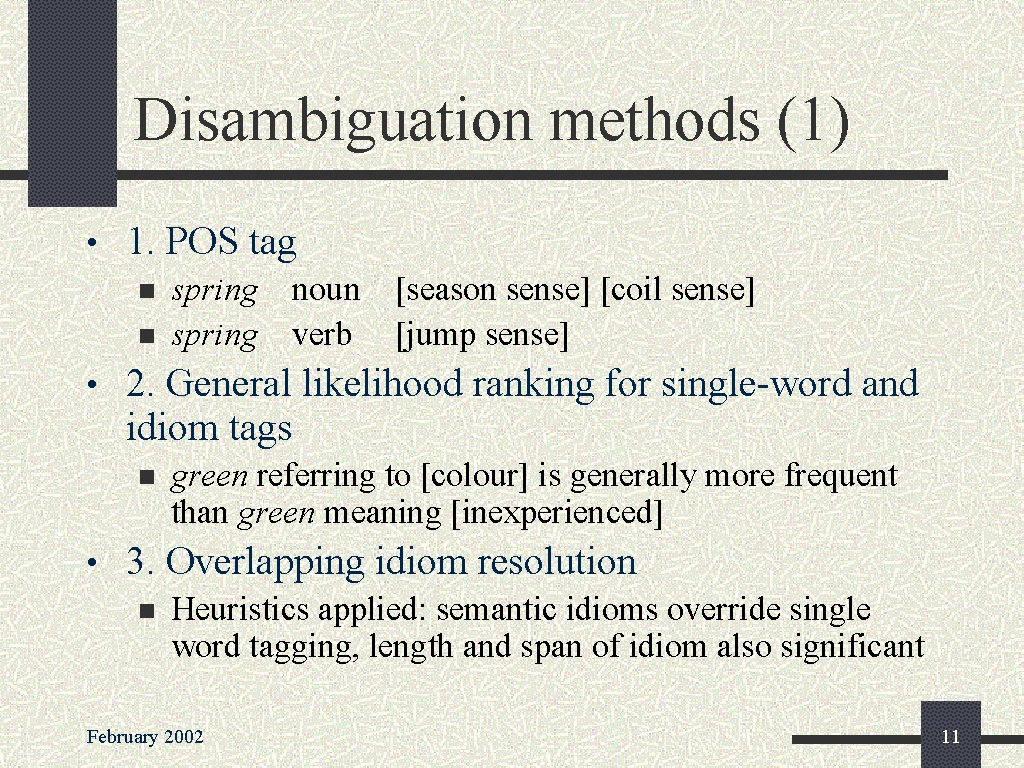
Developers generally approach WSD through two primary methodologies. The first is knowledge-based disambiguation, which relies on external resources like dictionaries (WordNet) or thesauri. The system looks at the target word and compares its definitions against the surrounding words in the text. If the sentence mentions “software” and “syntax” near the word “Java,” the system maps it to the programming language definition.
The second, more modern approach is supervised machine learning. In this model, an AI is trained on a massive corpus of “tagged” data where humans have already identified the correct meanings of words. Over time, the algorithm learns patterns—probabilistic associations between words—allowing it to predict the correct meaning in new, unseen texts with high degrees of accuracy.
The Role of Transformers and Attention Mechanisms
The most significant breakthrough in technical disambiguation came with the advent of the Transformer architecture, which powers models like GPT-4 and BERT. Unlike older “bag-of-words” models that looked at words in isolation, Transformers use attention mechanisms. This allows the AI to “attend” to every other word in a sentence simultaneously. By analyzing the entire context at once, the software can disambiguate words based on subtle nuances in tone, grammar, and relationship, moving us closer to a truly “semantic” understanding of digital data.
How Search Engines Master the Art of Context
Search engines are perhaps the most visible implementers of disambiguation technology. For Google or Bing, disambiguation is the difference between a satisfied user and a lost one. When a query is ambiguous, the search engine must perform a high-speed analysis of intent before the results page even loads.
Semantic Search and Entity Recognition
Modern search engines have evolved from simple keyword matching to semantic search. This shift relies heavily on Named Entity Recognition (NER). When you search for “Mercury,” the engine doesn’t just see a string of letters; it sees several distinct “entities”: a planet, an element, a Greek god, or a defunct car brand.
By utilizing a “Knowledge Graph,” search engines link these entities to related concepts. If your recent search history involves astronomy, or if you include the word “orbit” in your query, the engine uses disambiguation logic to prioritize the planet. This technical layer ensures that the information retrieved is relevant to the user’s specific context rather than a generic definition.
User Intent: The Ultimate Disambiguator
Beyond the words themselves, tech companies use metadata to aid in disambiguation. This includes:
- Geographic Location: A search for “football” in London versus Dallas requires immediate disambiguation between soccer and American football.
- Search History: Previous interactions provide a “profile” that acts as a tie-breaker for ambiguous terms.
- Device Context: A search for “Apples” on a mobile device near a grocery store might trigger different disambiguation logic than the same search on a desktop in a tech hub.

Data Architecture and Database Management
Disambiguation is not limited to the spoken or written word; it is equally critical in the structured world of databases and back-end architecture. In data science, disambiguation (often called Entity Resolution) is the process of identifying different records that refer to the same real-world object.
Resolving Conflict in Relational Databases
In large-scale corporate databases, information is often pulled from disparate sources. One system might list a customer as “J. Smith,” while another lists “John Smith,” and a third lists “Smith, John.” Without a disambiguation layer, the software would treat these as three different people, leading to fragmented analytics and shipping errors.
Technical teams use probabilistic matching algorithms to resolve these conflicts. By comparing secondary data points—such as phone numbers, IP addresses, or birth dates—the system can calculate the mathematical probability that these records represent the same entity, “merging” them into a single, unambiguous identity.
Disambiguation in the Semantic Web and Knowledge Graphs
The “Semantic Web” (or Web 3.0) aims to make the internet readable by machines as well as humans. This is achieved through the use of URIs (Uniform Resource Identifiers). In this framework, every unique concept is given a specific code. Instead of using the word “Bank,” which could mean a financial institution or the side of a river, the data is tagged with a unique identifier that points to a specific, non-negotiable definition. This level of technical disambiguation allows different software systems to share data without the risk of misinterpretation.
Designing for Clarity: UX and Digital Interface Strategies
From a software development and User Experience (UX) perspective, disambiguation is often a design challenge. If a system cannot automatically determine what a user wants, it must “ask” in a way that is intuitive and frictionless.
Interactive Disambiguation: Guided User Input
We see this daily in search suggestions and “Did you mean?” prompts. When a user enters a term that the system identifies as high-ambiguity, the UX design incorporates interactive disambiguation. For example, when searching for a movie title that has been remade several times (e.g., “A Star is Born”), a well-designed app will present a list of years (1937, 1954, 1976, 2018). This prevents the software from guessing incorrectly and puts the power of disambiguation in the user’s hands through a structured interface.
Managing Ambiguity in Voice User Interfaces (VUIs)
As we move toward voice-controlled technology, the stakes for disambiguation rise. In a visual interface, you can show five options; in a voice interface like Alexa or Google Assistant, you usually only have one. Developers of VUIs use confidence scores. If the system is 95% sure the user wants to “play music,” it proceeds. However, if the confidence score for “call Mom” vs. “call Tom” is nearly equal, the system is programmed to pause and ask for clarification. This “graceful degradation” is a specialized form of disambiguation designed to maintain trust in AI systems.
The Future of Technical Disambiguation: Toward AGI
As Artificial Intelligence continues to evolve, the goal of disambiguation is shifting from “logical guessing” to “true understanding.” We are moving away from simple rule-based systems toward contextual awareness.
The future of this field lies in Multimodal Disambiguation. This involves AI systems that can resolve ambiguity by looking at multiple streams of data simultaneously—text, image, video, and biometric data. Imagine an AI assistant that knows you are talking about the “light” in the room because it sees you gesturing toward the lamp, even if your verbal command was ambiguous.
In the tech industry, disambiguation is the bridge between human chaos and machine logic. It is what transforms a pile of raw data into a personalized, intuitive digital experience. As our digital tools become more integrated into our lives, the algorithms that define what we mean when we speak, type, or click will continue to be the most important—and invisible—technologies in the world. By mastering disambiguation, software developers and AI researchers are not just building better search engines; they are teaching machines to understand the complexities of the human experience.
aViewFromTheCave is a participant in the Amazon Services LLC Associates Program, an affiliate advertising program designed to provide a means for sites to earn advertising fees by advertising and linking to Amazon.com. Amazon, the Amazon logo, AmazonSupply, and the AmazonSupply logo are trademarks of Amazon.com, Inc. or its affiliates. As an Amazon Associate we earn affiliate commissions from qualifying purchases.