
In the ever-evolving landscape of technology, certain acronyms and terms become foundational, even if their origins and full meanings aren’t always common knowledge. One such term, frequently encountered by anyone who delves beyond the surface of their operating system, is “CMD.” While it might conjure images of complex code and arcane commands for some, understanding what CMD stands for and its role is crucial for anyone looking to gain a deeper appreciation for how their computers function. This article will demystify CMD, exploring its meaning, its historical significance, its core functionalities, and its continued relevance in the modern tech world. We will focus exclusively on its place within the Tech niche, examining its technical underpinnings and operational aspects.
The Genesis of CMD: From Commands to Interfaces
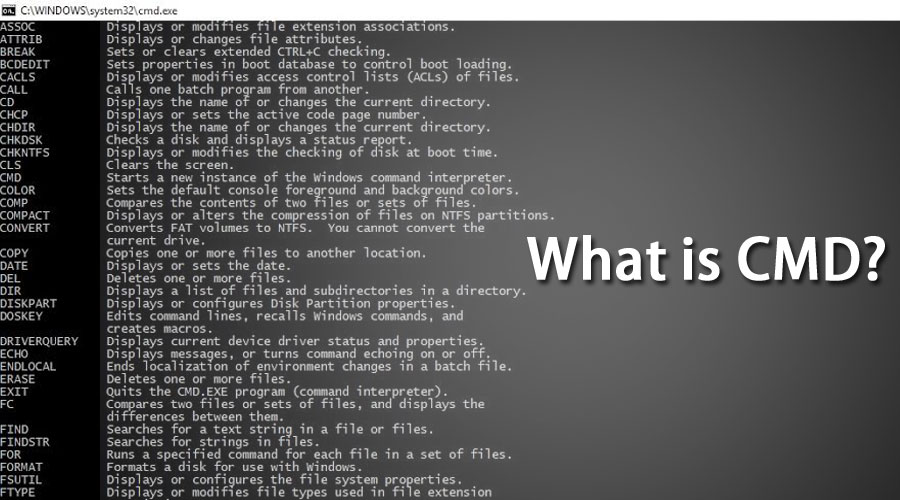
The term “CMD” primarily refers to the Command Prompt, a command-line interpreter application available in most versions of Microsoft Windows. To understand what CMD stands for, we need to peel back the layers of its functionality and historical context.
From Punch Cards to Keyboard Input
The very concept of interacting with a computer through text-based commands predates graphical user interfaces (GUIs) by decades. In the early days of computing, before screens and mice were commonplace, users interacted with machines through physical means like punch cards or switches. As computing evolved, so did the methods of input. The development of keyboards allowed for a more direct and immediate way to instruct a computer. This led to the rise of command-line interpreters, which are programs that read and execute commands typed by the user.
The Birth of the Command Prompt
Microsoft’s journey into personal computing brought with it the need for a user-friendly way to manage files and execute programs. Early versions of MS-DOS (Microsoft Disk Operating System) featured a command-line interface that was the primary means of interaction. As Windows began to incorporate graphical elements, the need for a direct command-line access point persisted for power users, developers, and system administrators. This is where the Command Prompt, or CMD.EXE, as it’s technically known, came into existence.
The full name, Command Prompt, encapsulates its core function: it provides a prompt, a blinking cursor waiting for a command, that allows users to issue instructions to the operating system. This is a direct interface to the underlying functionalities of Windows, bypassing the visual abstractions of the GUI.
Evolution and Variations
It’s important to note that while “CMD” is most commonly associated with the Windows Command Prompt, the concept of a command-line interpreter is universal across operating systems. Linux and macOS, for instance, use shells like Bash (Bourne Again Shell) or Zsh (Z Shell), which serve a similar purpose. These shells are also command-line interpreters, offering powerful ways to interact with the system. However, within the Windows ecosystem, “CMD” specifically refers to the interpreter historically associated with DOS and its continued presence in Windows.
The distinction between CMD and PowerShell is also noteworthy. PowerShell is a more modern and powerful command-line shell and scripting language developed by Microsoft. While CMD remains a staple for basic command execution and legacy script compatibility, PowerShell offers a richer set of cmdlets (command-lets), object-oriented capabilities, and advanced scripting features, making it the preferred tool for many complex system administration tasks. Nevertheless, CMD continues to hold its ground due to its simplicity and widespread familiarity.
Core Functionalities: What Can You Do with CMD?
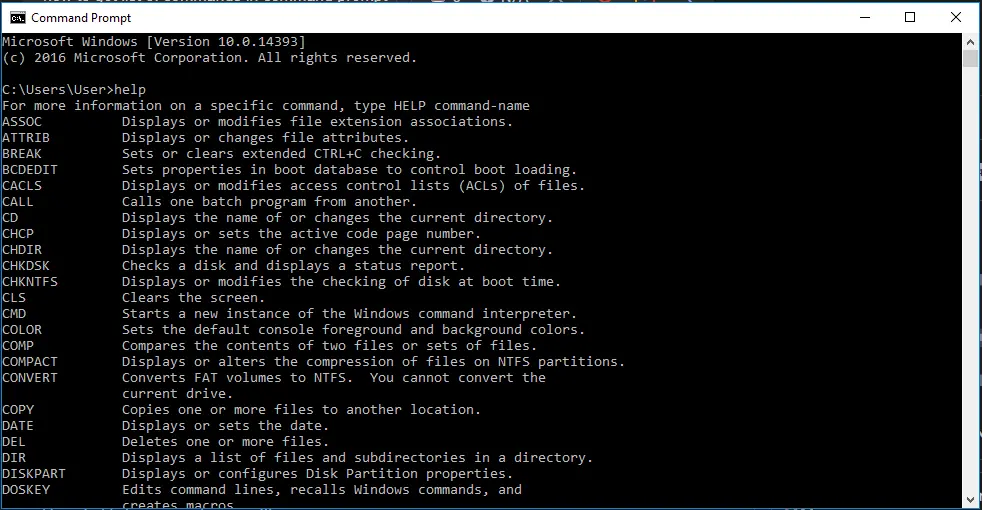
The power of the Command Prompt lies in its ability to execute a vast array of commands that directly control and interact with the Windows operating system. These commands, when combined, can automate tasks, troubleshoot issues, manage files, and much more.
File and Directory Management
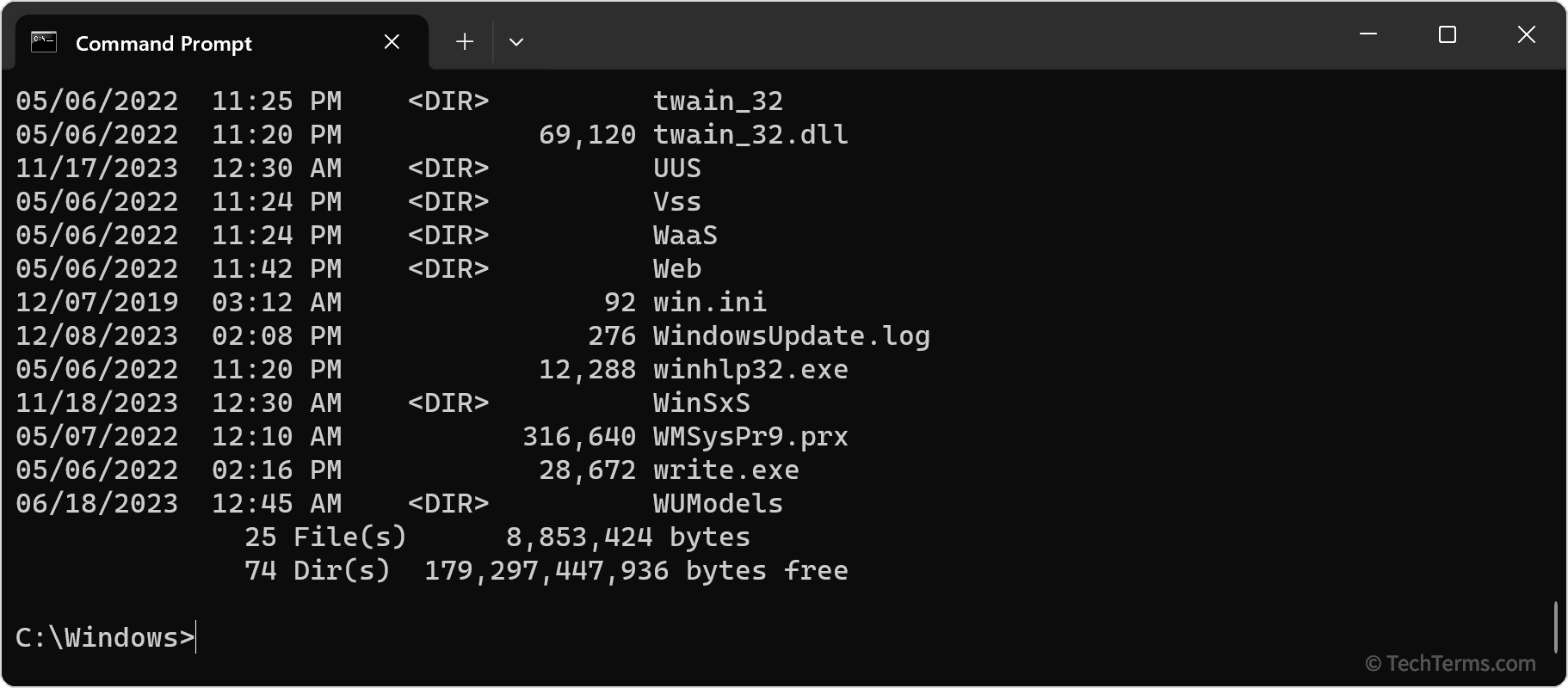
At its most basic, CMD allows for the fundamental operations of managing files and directories. Commands like DIR (directory listing), CD (change directory), MD or MKDIR (make directory), RD or RMDIR (remove directory), COPY, MOVE, and DEL (delete) are essential for navigating and manipulating your file system. For instance, a user could quickly navigate to a deeply nested folder with a few CD commands, create a new directory for a project, and then copy multiple files into it without ever opening a File Explorer window. This can be particularly efficient for repetitive tasks or when dealing with a large number of files.
System Information and Diagnostics
CMD provides access to a wealth of information about your system’s configuration and health. Commands like IPCONFIG are indispensable for network troubleshooting, displaying your computer’s IP address, subnet mask, and default gateway. PING allows you to test network connectivity to other devices or websites. TRACERT helps trace the route that network packets take to reach a destination, identifying potential bottlenecks.
Furthermore, commands like SYSTEMINFO can provide a comprehensive overview of your operating system, hardware, and installed hotfixes. TASKLIST displays a list of running processes, and TASKKILL allows you to terminate specific processes – a powerful tool for ending unresponsive applications. For disk-related diagnostics, CHkdsk (Check Disk) can scan for and repair file system errors.
Network Configuration and Management
Beyond basic connectivity checks, CMD offers granular control over network settings. NETSTAT can display active network connections, listening ports, and Ethernet statistics. ROUTE allows you to view and manipulate the IP routing table. For more advanced scenarios, NETSH (Network Shell) is a powerful utility that allows you to view, configure, and update network configurations from the command line. This can include managing network adapters, configuring firewall rules, and setting up remote access.
Scripting and Automation
One of the most significant strengths of CMD is its ability to be used for scripting. Batch files, with the .bat or .cmd extension, are sequences of commands that can be executed as a single program. This allows for the automation of repetitive tasks. For example, you could create a batch file to:
- Back up important files to an external drive at a scheduled time.
- Install multiple software applications with default settings.
- Clean up temporary files and optimize disk space.
- Rename a series of files based on a specific pattern.
These scripts can significantly boost productivity, especially for IT professionals and power users. While modern scripting languages like PowerShell offer more advanced features, batch scripting remains relevant for its simplicity and compatibility with older systems.
The Enduring Relevance of CMD in Modern Computing
Despite the rise of sophisticated graphical interfaces and powerful scripting languages, CMD continues to hold a significant place in the tech landscape. Its persistence is a testament to its fundamental utility and the ongoing need for direct, low-level interaction with operating systems.
Power User and Developer Tool
For system administrators, developers, and advanced users, CMD remains an indispensable tool. Its efficiency in performing complex operations, automating repetitive tasks, and diagnosing intricate system issues is unmatched by GUIs in many scenarios. The ability to quickly execute commands, chain them together, and create scripts provides a level of control and speed that is highly valued. Even when using modern IDEs (Integrated Development Environments) or GUI-based tools, developers often find themselves dropping into a command prompt for quick tasks like Git operations, dependency management, or running build scripts.
Troubleshooting and System Recovery
In situations where the graphical interface might be corrupted or inaccessible, the Command Prompt becomes a crucial lifeline. During boot-up or in a recovery environment, CMD can be used to access system files, repair boot sectors, diagnose hardware issues, and restore the system to a working state. Its ability to operate independently of the GUI makes it a vital component of disaster recovery strategies.
Legacy Compatibility and Simplicity
Many legacy applications and scripts were developed with the Windows Command Prompt in mind. For backward compatibility, CMD remains essential. Furthermore, for users who are new to command-line interfaces, CMD offers a gentler introduction compared to more complex shells. Its syntax is relatively straightforward for basic operations, and the wealth of online resources available makes it accessible for learning.
The Foundation for More Advanced Tools
It’s also worth noting that even more advanced tools, like Windows Subsystem for Linux (WSL), which allows users to run Linux environments directly on Windows, often interact with the underlying Windows system through command-line interfaces. Understanding the principles of command-line interaction, as exemplified by CMD, provides a solid foundation for mastering these more complex environments.
Navigating the CMD Landscape: Best Practices and Resources
While the Command Prompt is a powerful tool, it’s essential to use it with care and to understand best practices to avoid unintended consequences.
Understanding Command Syntax and Parameters
Each command in CMD has a specific syntax, which often includes switches or parameters that modify its behavior. For example, DIR /W displays the directory listing in a wide format, while DIR /S displays files in the specified directory and all subdirectories. It’s crucial to consult the help documentation for each command. Typing the command followed by /? (e.g., DIR /?) will usually display a brief explanation of its usage and available options.
Running Commands with Elevated Privileges
Many system-level commands require administrator privileges to execute. To run CMD with elevated privileges, you need to right-click on the Command Prompt shortcut and select “Run as administrator.” This grants the command prompt the necessary permissions to make system-wide changes. Be cautious when running commands with elevated privileges, as incorrect commands can potentially destabilize or damage your system.
The Role of Batch Scripting
As mentioned earlier, batch scripting is a powerful way to automate tasks. When writing batch files, it’s good practice to:
- Use comments (
REMor::) to explain the purpose of different sections of the script. - Use
ECHO OFFat the beginning of the script to prevent commands from being displayed as they are executed, making the output cleaner. - Use
PAUSEto halt the script’s execution and allow the user to read output before it closes. - Test scripts thoroughly on non-critical data or in a virtual environment before deploying them widely.
Learning Resources
The journey into mastering the Command Prompt doesn’t have to be daunting. Numerous resources are available:
- Microsoft Documentation: The official Microsoft documentation is an invaluable resource for understanding commands and their parameters.
- Online Tutorials and Blogs: Many tech websites and blogs offer detailed tutorials on using CMD for various tasks.
- Forums and Communities: Online forums dedicated to Windows and computing can provide answers to specific questions and insights from experienced users.
- Practice: The best way to learn is by doing. Experiment with different commands in a safe environment, and gradually build your proficiency.
Conclusion: CMD as a Pillar of Digital Dexterity
In conclusion, “CMD” stands for Command Prompt, a fundamental command-line interpreter in Microsoft Windows. It represents a direct interface to the operating system, offering unparalleled control for a wide range of tasks, from basic file management to complex system diagnostics and automation through batch scripting. While modern computing often emphasizes graphical user interfaces, the Command Prompt remains a vital tool for power users, developers, and anyone seeking to deepen their understanding of how their computers operate. Its historical significance as a direct descendant of early computing interaction methods, coupled with its enduring practical utility, solidifies its position as a critical component of digital dexterity in today’s tech-driven world. Mastering CMD is not just about learning a set of commands; it’s about unlocking a more profound and efficient way to interact with your technology.
aViewFromTheCave is a participant in the Amazon Services LLC Associates Program, an affiliate advertising program designed to provide a means for sites to earn advertising fees by advertising and linking to Amazon.com. Amazon, the Amazon logo, AmazonSupply, and the AmazonSupply logo are trademarks of Amazon.com, Inc. or its affiliates. As an Amazon Associate we earn affiliate commissions from qualifying purchases.