
In the complex ecosystem of commercial real estate (CRE), the financial viability of an investment often hinges on more than just the monthly rent checks. For seasoned investors, portfolio managers, and business owners, the term “CAM” represents a critical component of the financial structure of a lease. CAM, or Common Area Maintenance, is a fundamental concept that dictates how property operating expenses are distributed between landlords and tenants.
Understanding CAM is not merely a matter of vocabulary; it is a vital part of financial due diligence. Whether you are calculating the potential Net Operating Income (NOI) of a retail strip mall or negotiating a lease for a new corporate headquarters, the nuances of CAM charges will directly impact your cash flow, your tax liabilities, and your long-term return on investment (ROI). This article delves into the financial mechanics of CAM, its role in various lease structures, and how it serves as a lever for maintaining asset value in the competitive world of property finance.
The Financial Mechanics of CAM: Defining the Fundamentals
At its core, Common Area Maintenance (CAM) refers to the fees that tenants pay to landlords to cover the costs associated with managing, maintaining, and repairing the shared spaces of a commercial property. These “common areas” are the parts of the building or complex that all tenants use but none exclusively occupy.
What is Common Area Maintenance?
In a financial context, CAM is an expense-recovery mechanism. Landlords do not typically want to bear the rising costs of property taxes, insurance, and maintenance alone, as these costs can erode the profitability of the asset over time. By implementing CAM charges, the landlord shifts a portion of the operational risk and cost to the tenants who benefit from the property’s upkeep. This ensures that the property remains in a condition that attracts customers and high-quality occupants, thereby preserving the underlying value of the real estate investment.
The Components of CAM Charges
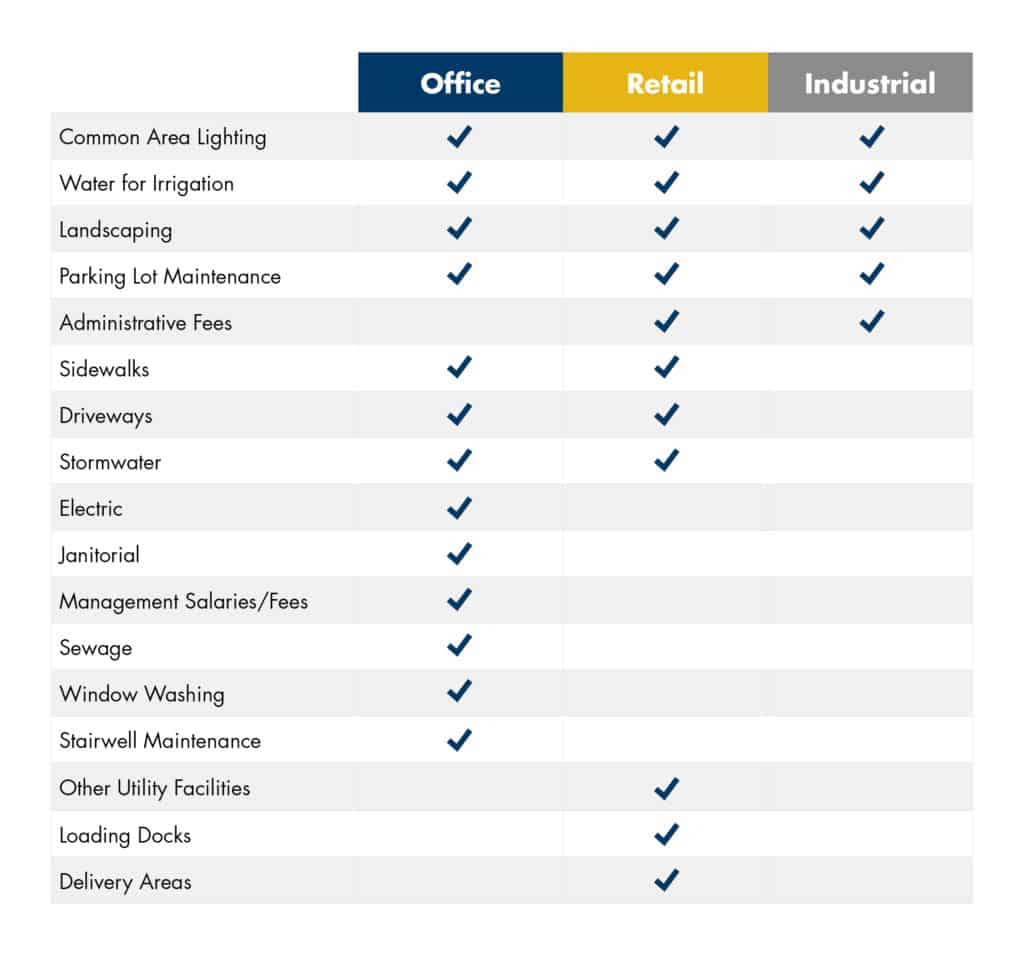
CAM fees are not arbitrary; they are usually based on the actual costs incurred by the landlord. Common expenses included in a CAM budget involve:
- Landscaping and Groundskeeping: Mowing, planting, and irrigation.
- Snow Removal and Parking Lot Maintenance: Paving, striping, and clearing.
- Security Services: On-site guards, surveillance systems, and gate maintenance.
- Janitorial Services: Cleaning of lobbies, elevators, and public restrooms.
- Utilities for Common Areas: Electricity for parking lot lights and water for shared fountains.
- Administrative Fees: The cost of property management and accounting personnel.
How CAM Fits into Triple Net (NNN) Leases
The relevance of CAM is most pronounced in “Net” leases. In a Triple Net (NNN) lease—the gold standard for many passive real estate investors—the tenant is responsible for their pro-rata share of property taxes, insurance, and CAM. This structure is highly attractive to investors because it provides a “clean” rental income that is protected from inflationary pressures on operating costs. In contrast, in a Gross Lease, the landlord pays all CAM expenses out of the base rent, which means any spike in maintenance costs directly reduces the landlord’s profit margin.
Navigating the Numbers: How CAM Impacts Investment Returns
From a money management perspective, CAM is a variable that can significantly alter the valuation of a property. For an investor, the ability to pass through these costs is the difference between a high-yield asset and a cash-flow drain.
CAM and Net Operating Income (NOI)
Net Operating Income is the cornerstone of real estate valuation. It is calculated by subtracting operating expenses from total income. When CAM is structured effectively, the “expense” side of the NOI equation is mitigated because the tenants reimburse those costs. This stabilization of NOI makes the property more attractive to lenders and future buyers. A higher, more predictable NOI leads to a higher property valuation when applying a capitalization (cap) rate. If a landlord fails to accurately calculate or recover CAM, the resulting “leakage” can lead to a lower valuation, potentially costing millions in equity during a sale.

The Importance of CAM Reconciliation
At the start of a fiscal year, landlords provide tenants with a CAM estimate. Tenants pay a monthly portion based on this estimate. However, the true financial “moment of truth” occurs during the year-end reconciliation. This is where the landlord compares the estimated payments against the actual expenses documented throughout the year.
- Underpayment: If actual costs were higher than estimates, the tenant must pay a “true-up” amount.
- Overpayment: If the landlord was more efficient than expected, the tenant receives a credit.
For business finance professionals, managing these reconciliations is essential for maintaining accurate year-end balance sheets and ensuring that the property’s cash reserves remain healthy.
Expense Caps and Operating Efficiencies
Savory tenants often negotiate “CAM Caps” to protect their bottom line. A cap limits how much a CAM charge can increase year-over-year (for example, a 5% annual cap). From the landlord’s perspective, these caps create a financial incentive to operate the property efficiently. If the landlord can keep costs below the cap through better vendor management or energy-efficient upgrades, they protect their NOI. If costs spiral out of control, the landlord must eat the excess, highlighting the importance of strategic cost management in real estate finance.
Strategic Budgeting and Negotiation: The Money Perspective
Negotiating CAM is where the “money” aspect of real estate becomes a tactical game. Both landlords and tenants must approach these clauses with a focus on long-term financial sustainability.
Controlling Variable Costs for Tenants
For a business tenant, CAM represents a “hidden” cost of doing business. A retail shop might have a base rent of $3,000, but if CAM adds another $1,200, the “all-in” occupancy cost changes the feasibility of the location. Smart business owners look for “controllable” vs. “uncontrollable” expense distinctions. Controllable expenses (like janitorial services) can be capped, while uncontrollable expenses (like property taxes or state-mandated insurance hikes) usually are not. Understanding this distinction is key to budgeting for a side hustle or a major corporate expansion.
Protecting Asset Value for Landlords
Investors must ensure that the definition of CAM is broad enough to cover future contingencies. If a lease is too restrictive, the landlord might find themselves unable to charge for a necessary roof repair or a parking lot resurfacing. These are “Capital Expenditures” (CapEx), which are traditionally excluded from CAM. However, modern “Money-smart” leases often allow for the amortization of CapEx if the improvement reduces overall operating costs (such as installing LED lighting to lower the utility bill). This creates a win-win scenario: the landlord improves the asset value, and the tenant sees a lower monthly CAM charge over time.
Fixed vs. Variable CAM Models
In recent years, some sectors of the real estate market have shifted toward a “Fixed CAM” model. Instead of a year-end reconciliation, the tenant pays a flat fee that increases by a set percentage each year. This provides “budget certainty” for the tenant and reduces administrative overhead for the landlord. From an investment standpoint, Fixed CAM can be a double-edged sword; it simplifies the income stream but leaves the landlord vulnerable if actual maintenance costs (like a sudden spike in security needs) outpace the fixed increases.
The Future of Real Estate Finance: Transparency and Compliance
As institutional investors and REITs (Real Estate Investment Trusts) dominate the market, the financial scrutiny of CAM charges has reached an all-time high. Transparency is no longer optional; it is a requirement for maintaining investor confidence.
Auditing and Compliance
Most commercial leases grant the tenant the right to audit the landlord’s books regarding CAM charges. In the world of business finance, an audit can reveal “over-billing” where a landlord might have inadvertently included costs that don’t belong in the CAM pool (such as marketing the building to new tenants). For the investor, maintaining pristine records and clear separation of accounts is vital to avoid legal disputes and financial penalties that could jeopardize the property’s reputation and cash flow.
Leveraging Data for Cost Optimization
The intersection of finance and property management is increasingly driven by data. By analyzing historical CAM data, owners can identify trends, such as rising water costs that might indicate a hidden leak, or excessive repair bills that suggest a need for a total equipment replacement rather than a temporary fix. This proactive approach to “Money” management ensures that the property remains competitive. In a market where tenants have choices, a property with well-managed, transparent, and fair CAM charges will always have a lower vacancy rate and a more stable financial outlook.
In conclusion, CAM is the heartbeat of commercial real estate finance. It is the mechanism that ensures the physical asset is preserved, the tenant’s environment is maintained, and the landlord’s investment remains profitable. By mastering the intricacies of CAM—from NNN lease structures to year-end reconciliations—investors and business owners can make more informed decisions, protect their margins, and build more resilient financial portfolios. Understanding what CAM means in real estate is not just about knowing a term; it’s about knowing how to manage your money in one of the world’s most lucrative asset classes.
aViewFromTheCave is a participant in the Amazon Services LLC Associates Program, an affiliate advertising program designed to provide a means for sites to earn advertising fees by advertising and linking to Amazon.com. Amazon, the Amazon logo, AmazonSupply, and the AmazonSupply logo are trademarks of Amazon.com, Inc. or its affiliates. As an Amazon Associate we earn affiliate commissions from qualifying purchases.