
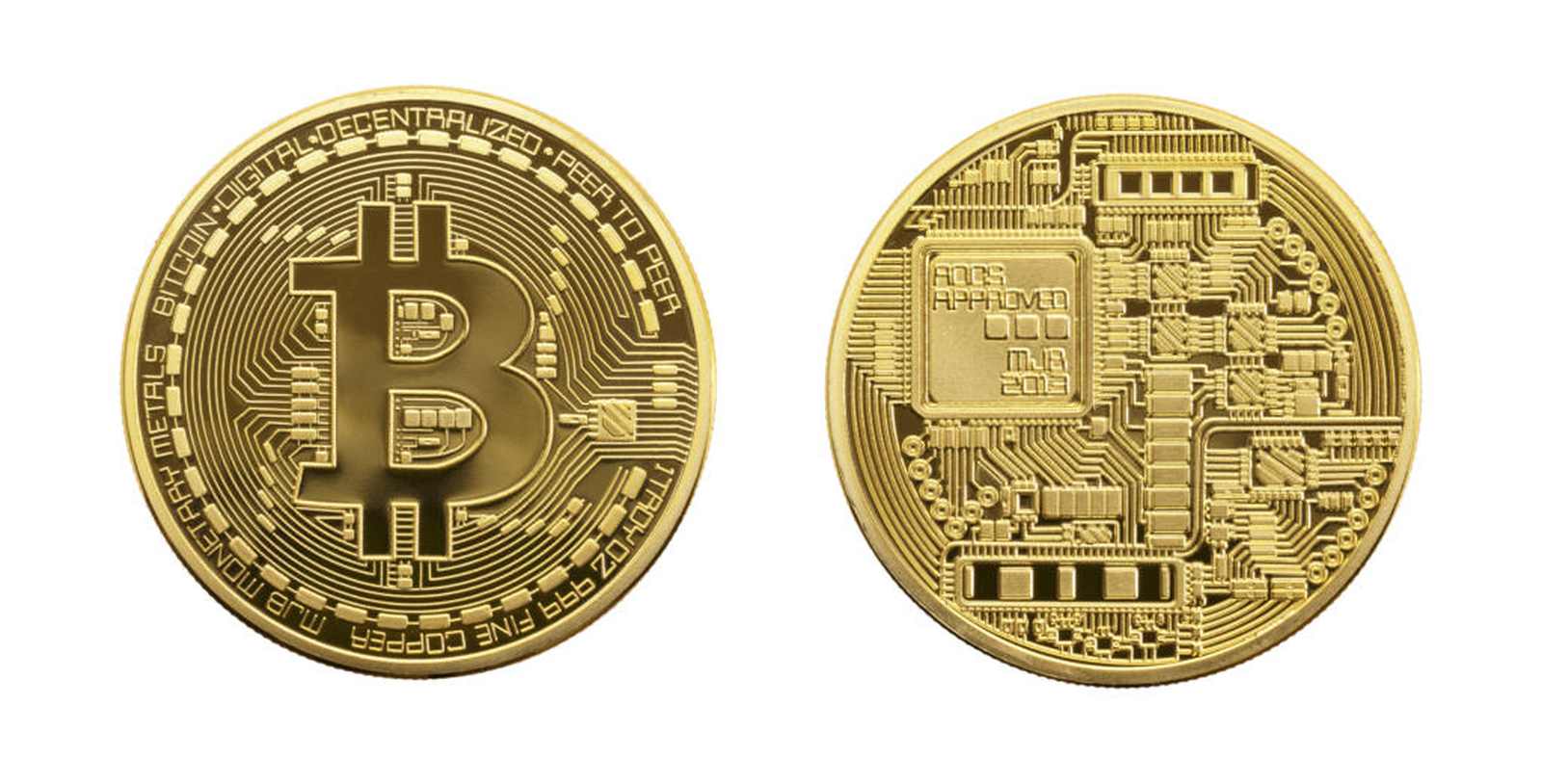
For the uninitiated, the question “What does Bitcoin look like?” often conjures images of shiny gold coins embossed with a stylized “B.” These physical tokens, frequently used by media outlets to illustrate news stories, are a helpful metaphor but a technical fiction. In reality, Bitcoin has no physical form. It cannot be held in a hand, tucked into a leather wallet, or stored in a mahogany vault.
To understand what Bitcoin actually looks like from a financial and investment perspective, one must shift their focus away from the tangible and toward the conceptual. In the world of modern finance, Bitcoin looks like a combination of a global, transparent ledger, a complex network of computing power, and a revolutionary new asset class defined by mathematical scarcity. For the investor, “looking” at Bitcoin means understanding the infrastructure of digital ownership and the shifting landscape of global liquidity.
The Invisible Asset: Visualizing the Public Ledger
At its most fundamental level, Bitcoin looks like a ledger—specifically, the Timechain (more commonly known as the Blockchain). If you were to peel back the layers of the software, you wouldn’t find coins; you would find a continuous, chronological record of every transaction ever made since the network’s inception in 2009.
The Concept of the Public Ledger and UTXOs
When you “own” Bitcoin, you don’t actually possess a digital file. Instead, what you have is the exclusive right to reassign a specific amount of value on the public ledger. To a financial analyst, Bitcoin looks like a series of Unspent Transaction Outputs (UTXOs). Imagine a global accounting book where everyone can see the balances of every account, but the account holders are identified only by alphanumeric strings.
This transparency is a radical departure from traditional banking. In the legacy financial system, ledgers are private and siloed. If you want to see your balance, you must trust the bank’s internal database. Bitcoin, however, looks like a glass house. Anyone with an internet connection can view the entire history of the network, verifying for themselves that no double-spending has occurred and that the total supply remains capped.
Transparency vs. Pseudonymity
From a regulatory and financial perspective, Bitcoin looks like a “pseudonymous” network. While every transaction is public, the identities of the participants are not explicitly attached to the addresses. However, because the ledger is permanent, sophisticated data analytics can often map these flows. For institutional investors, this means Bitcoin offers a level of auditability that is impossible with physical cash or even complex derivatives. It is a financial system where the “truth” is settled every ten minutes through a global consensus.
The Infrastructure of Value: Nodes and Miners
While the ledger is the “map” of Bitcoin, the physical infrastructure that supports it gives the asset its security and value. If you were to travel to where Bitcoin is “made,” it would look like rows upon rows of high-powered computers hum in climate-controlled warehouses.
The Physical Reality of ASICs
Bitcoin’s security is derived from “Proof of Work.” This process involves specialized hardware known as ASICs (Application-Specific Integrated Circuits). To an observer, this part of Bitcoin looks like industrial-scale computing. These machines consume electricity to solve complex mathematical puzzles, a process that ensures the integrity of the ledger. This physical “tether” to the real world through energy consumption is what gives Bitcoin its “hardness” as an asset. Unlike fiat currency, which can be printed at a negligible cost, Bitcoin requires a verifiable expenditure of resources to produce, mirroring the cost of mining gold.
The Decentralized Network Map
On a global scale, Bitcoin looks like a decentralized web of nodes. There is no central server, no headquarters, and no CEO. Instead, thousands of individual computers (nodes) across the globe keep a copy of the ledger and verify transactions. For an investor concerned about “single points of failure,” this visual is incredibly reassuring. Because the network is distributed, it is nearly impossible to shut down, censor, or alter. It is a financial network that exists everywhere and nowhere at the same time.
Bitcoin in Your Wallet: The User Experience of Digital Ownership
For the individual investor or saver, Bitcoin looks very different from the industrial warehouses of miners. In the palm of your hand, Bitcoin looks like a software interface—a “digital wallet.”

Public and Private Keys: The Digital Deed
To the user, owning Bitcoin looks like managing a pair of cryptographic keys. Your “Public Key” is like an IBAN or an email address; it is what you show the world so they can send you value. Your “Private Key,” usually represented as a 12 or 24-word seed phrase, is the actual “ownership” of the asset.
In a financial sense, Bitcoin looks like the ultimate form of property rights. If you hold your own keys, no bank can freeze your account, and no government can seize your assets without your cooperation. This “self-sovereignty” is a core component of Bitcoin’s value proposition as “digital gold.” It represents a shift from “permissioned” finance (where you ask a bank to move your money) to “permissionless” finance (where you move it yourself).
Exchange Interfaces vs. Cold Storage
The “look” of Bitcoin also depends on how you choose to store it. For many, Bitcoin looks like a line item on a brokerage app like Coinbase or Fidelity. This provides a familiar, user-friendly experience but lacks the security of true ownership. For the more security-conscious, Bitcoin looks like a “hardware wallet”—a small device resembling a USB stick that keeps private keys offline. In this context, Bitcoin looks like a high-tech vault that fits in your pocket, providing a physical bridge to a purely digital asset.
The Market Perspective: Graphs, Scarcity, and Volatility
To a trader or a macroeconomist, Bitcoin doesn’t look like a coin or a computer; it looks like a price chart. Specifically, it looks like one of the most volatile and high-performing assets in human history.
The 21 Million Cap and the Halving
From a monetary policy perspective, Bitcoin looks like a fixed mathematical formula. Unlike the US Dollar or the Euro, which have uncapped supplies determined by central banks, Bitcoin has a hard cap of 21 million units. This is programmed into the code.
Every four years, an event called “the Halving” occurs, where the rate of new Bitcoin production is cut in half. On a supply-demand graph, this looks like a periodic “supply shock.” For investors, this predictable scarcity is the primary reason Bitcoin is viewed as a hedge against inflation. While the “look” of the US dollar is a declining purchasing power curve, the “look” of Bitcoin is intended to be a long-term store of value.
Interpreting Price Action and Market Caps
On a trading terminal, Bitcoin looks like “digital liquidity.” Because it trades 24/7/365, it is often the first asset to react to global macro events. Its price action is a reflection of global sentiment regarding monetary debasement and technological adoption. While its volatility can be daunting, the “logarithmic growth curve” of Bitcoin’s price over the last decade shows a clear trend of increasing adoption. It has evolved from a niche experiment worth pennies to a trillion-dollar asset class that rivals the market capitalization of the world’s largest corporations.
The Future Appearance of Bitcoin in Global Finance
As we look toward the next decade, the way Bitcoin “looks” to the average person is likely to change again. It is moving from the fringes of the internet into the heart of the global financial system.
Institutional Adoption and ETFs
In 2024, the “look” of Bitcoin changed significantly with the approval of Spot Bitcoin ETFs (Exchange-Traded Funds). For millions of retirees and institutional fund managers, Bitcoin now looks like a ticker symbol (such as IBIT or FBTC) inside a traditional 401(k) or brokerage account. This “institutional wrapper” has normalized Bitcoin, stripping away the technical complexities of keys and nodes and presenting it as a standard asset class for portfolio diversification.
Bitcoin as a Layer 1 Settlement Layer
Finally, on a systemic level, Bitcoin is beginning to look like the “base layer” for a new internet of value. Much like how gold used to be the settlement layer for central banks, Bitcoin is increasingly viewed as a neutral, digital settlement asset. With the development of secondary layers like the Lightning Network, Bitcoin is also starting to look like a medium of exchange—allowing for instantaneous, nearly free global payments.

Conclusion: A Multi-Faceted Financial Revolution
What does Bitcoin look like? The answer depends entirely on your vantage point. To a computer scientist, it looks like a breakthrough in distributed systems. To a brand designer, it looks like an iconic orange logo. But to the investor and the student of money, Bitcoin looks like the most transparent, secure, and scarce financial system ever devised.
It looks like a global ledger that cannot be erased, a bank in your pocket that cannot be closed, and a monetary policy that cannot be manipulated by politics. As it continues to integrate into the global economy, the “physical” appearance of Bitcoin will remain a myth, but its financial presence will become an inescapable reality. Understanding that Bitcoin “looks” like math, code, and decentralized consensus is the first step toward navigating the future of wealth in a digital age.
aViewFromTheCave is a participant in the Amazon Services LLC Associates Program, an affiliate advertising program designed to provide a means for sites to earn advertising fees by advertising and linking to Amazon.com. Amazon, the Amazon logo, AmazonSupply, and the AmazonSupply logo are trademarks of Amazon.com, Inc. or its affiliates. As an Amazon Associate we earn affiliate commissions from qualifying purchases.