
In the modern landscape of personal finance, recurring subscriptions have become a significant portion of the average household budget. Among these, Amazon Prime stands as perhaps the most ubiquitous. What began in 2005 as a simple $79-per-year expedited shipping service has evolved into a multi-faceted digital ecosystem. However, as the price point has climbed and the service offerings have expanded, the question for the financially conscious consumer is no longer just “what does it cost?” but rather “is the investment yielding a positive return?”
To understand the financial footprint of an Amazon Prime membership, one must look beyond the sticker price and analyze the opportunity costs, the behavioral impact on spending, and the tangible savings generated by its various tiers.
1. The Membership Ledger: Breaking Down the Explicit Costs
When evaluating the cost of Amazon Prime, the first step is a clinical look at the current pricing structures. Amazon has transitioned from a one-size-fits-all model to a tiered system designed to capture different demographics, each with its own financial implications.
The Annual vs. Monthly Comparison
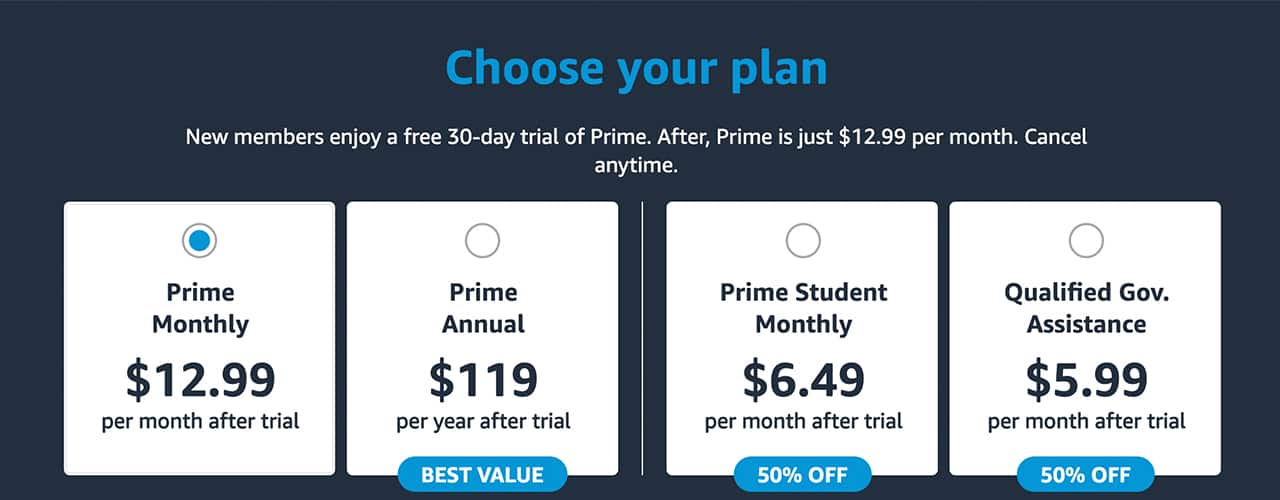
As of late 2024, the standard Amazon Prime membership is priced at $14.99 per month or $139 per year. From a personal finance perspective, the choice between these two is the first “math test” for the consumer. The annual payment represents a roughly 23% discount over the monthly commitment. For a long-term user, opting for the monthly plan is an inefficient use of capital, costing an additional $40.88 annually. However, for those managing tight monthly cash flows or those who only use Amazon during the holiday season, the monthly flexibility can serve as a tactical budgeting tool.
Subsidized Tiers: Prime Student and Prime Access
Amazon offers two significant discounts that change the ROI calculation for specific groups. Prime Student is priced at approximately $7.49 per month or $69 per year, offering a 50% discount for those with valid academic credentials. For individuals receiving qualifying government assistance (such as SNAP or Medicaid), Prime Access reduces the monthly fee to $6.99. From a wealth-management standpoint, these tiers are loss-leaders for Amazon but high-value assets for the consumer, providing access to logistics and entertainment at a fraction of the market rate.
The Impact of Subscription Inflation
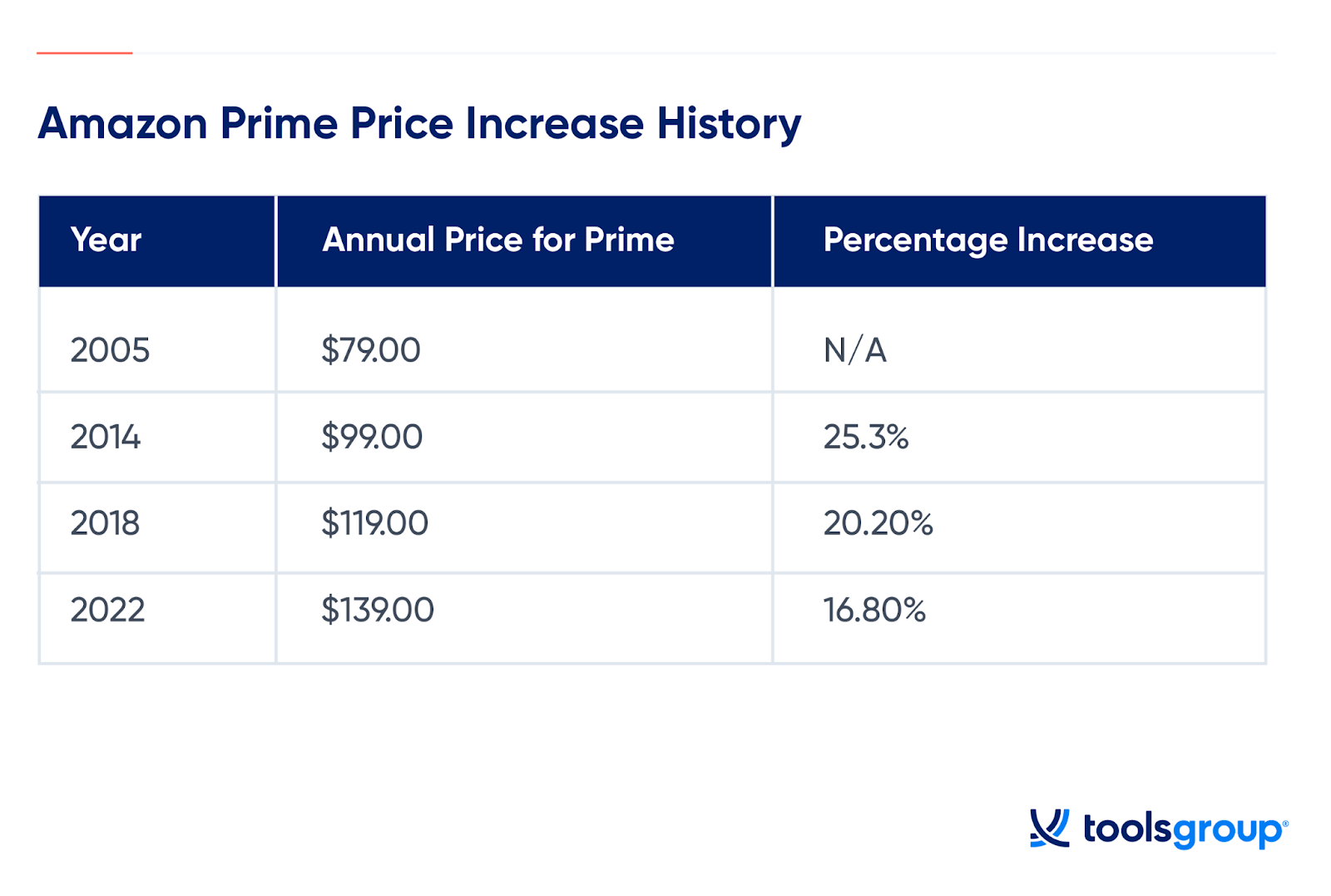
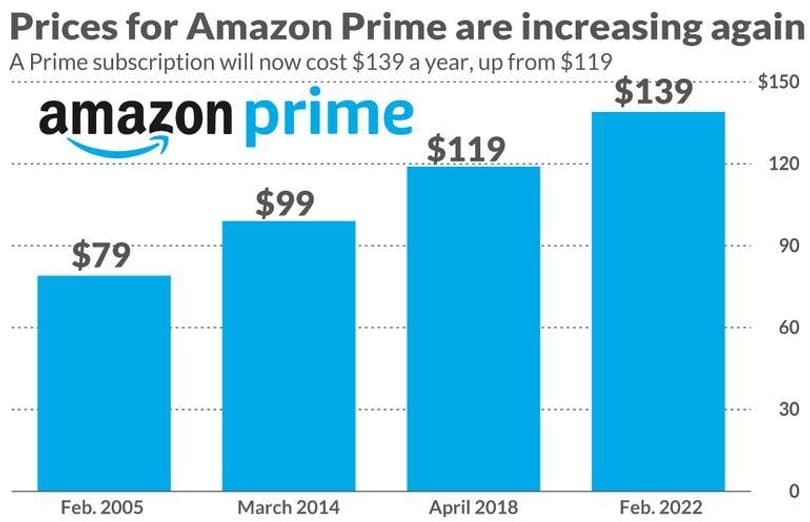
It is vital to note that the cost of Prime is not static. Since its inception, the price has risen multiple times—from $79 to $99, then to $119, and currently $139. For the long-term budgeter, this 75% increase over the last decade necessitates a periodic “audit” of the service. If the membership price continues to outpace general inflation, the utility derived from the service must increase proportionally to justify its place in a diversified financial plan.
2. Calculating the ROI: When Does Prime Pay for Itself?
To determine if the $139 annual fee is a sound financial decision, a consumer must calculate their “break-even point.” This involves quantifying the savings on shipping, media, and grocery expenses against the membership fee.
Shipping Arbitrage and Logistics Savings
The primary financial driver for most Prime members is “free” shipping. Without Prime, standard shipping rates on Amazon typically range from $3.99 to $9.99 depending on the item and speed. If we assume an average shipping cost of $7, a consumer needs to place approximately 20 orders per year to recoup the $139 membership fee through shipping savings alone. For households that consolidate their shopping into one or two large orders a month, Prime may actually be a net negative. However, for those who rely on frequent, smaller deliveries, the logistical savings can easily exceed $500 annually.
The Value of Bundled Digital Services
From a “Money” perspective, Prime is not just a shipping service; it is a bundle of digital commodities. If a consumer were to pay for separate services—such as Netflix ($15.49/mo), Spotify ($11.99/mo), and a cloud storage provider like Google One ($1.99/mo)—they could easily spend over $350 per year. Amazon Prime Video, Amazon Music Prime, and Amazon Photos (unlimited photo storage) are included in the $139 fee. For a household willing to consolidate their digital consumption into the Amazon ecosystem, the “shadow savings” on entertainment can be substantial, effectively reducing the “cost” of the shipping benefit to zero or even a net positive.
Strategic Grocery Savings via Whole Foods and Amazon Fresh
For those who live near Amazon-owned grocery outlets, the financial benefits extend to the kitchen. Prime members receive an additional 10% off sale items at Whole Foods Market and access to exclusive “Prime Member Deals.” In a high-inflation environment, leveraging these targeted discounts on high-ticket items (like proteins or organic produce) can lead to monthly savings of $20–$50, which pays for the annual membership in a matter of months.
3. The Amazon Flywheel: Behavioral Finance and Hidden Costs
While the explicit costs and savings are easy to track, the “hidden” cost of Amazon Prime lies in its effect on consumer psychology and spending habits. In brand strategy, this is known as the “flywheel effect,” but in personal finance, it can be a significant drain on discretionary income.
The Sunk Cost Fallacy in Subscription Models
Once a consumer pays the $139 upfront fee, they often feel a psychological pressure to “get their money’s worth.” This leads to a behavioral shift where the consumer defaults to Amazon for every purchase, often neglecting to price-compare with other retailers like Walmart, Target, or local specialty stores. This lack of price discovery can result in paying a “convenience premium” on the items themselves, which may quietly erode the savings gained from free shipping.
The Frictionless Spending Trap
Amazon’s greatest financial innovation is the removal of friction. “1-Click” ordering and “Buy Now” buttons, combined with the “free” shipping of Prime, bypass the logical checkpoints in the human brain that usually pause to consider a purchase. From a budgeting perspective, Prime can lead to an increase in “micro-transactions”—small, impulsive purchases that, when aggregated, can derail a monthly savings goal. Research has consistently shown that Prime members spend significantly more annually on Amazon than non-members, a testament to the fact that the “cost” of Prime is often much higher than the membership fee when impulse spending is factored in.
Opportunity Cost of the Membership Fee
In the world of investing, every dollar spent has an opportunity cost. If the $139 annual fee were instead invested in a low-cost S&P 500 index fund with an average annual return of 8%, that single year’s membership would be worth approximately $647 after 20 years. While this is a small amount in isolation, for a consumer juggling multiple subscriptions (streaming, gym, software, news), the cumulative opportunity cost of these “small” recurring fees can represent a significant loss in long-term wealth accumulation.
4. Financial Optimization: Maximizing the Prime Ecosystem
For those who have determined that Amazon Prime is a necessary utility, there are specific financial tools and strategies to optimize the cost and turn the membership into a high-yield asset.
Leveraging the Amazon Prime Visa Card
One of the most effective ways to offset the cost of Prime is through the Amazon Prime Visa. This card offers 5% back on all Amazon and Whole Foods purchases. For a household that spends $3,000 a year on Amazon (including groceries), the 5% cash back yields $150—effectively making the membership free and providing a $11 surplus. This transforms Prime from an expense into a cash-flow-positive component of a household budget.
Household Sharing and “Amazon Household”
A frequently overlooked feature is “Amazon Household,” which allows two adults to share a single Prime membership and its benefits. By splitting the $139 fee between two adults (even within the same family unit), the per-person cost drops to $69.50. This is one of the simplest ways to double the ROI of the service without increasing the capital outlay.
The “Cancel and Re-evaluate” Strategy
From a disciplined financial standpoint, no subscription should be “permanent.” Many savvy consumers utilize a “cycle” strategy: they pay for Prime only during months of high usage (such as November and December for holiday shopping or during Prime Day in July) and cancel it for the remainder of the year. This targeted approach ensures that you are only paying for the service when its utility is at its peak, avoiding the “leakage” of paying for a service during low-usage months.
Conclusion: The Financial Verdict
What does Amazon Prime cost? The answer is $139 on paper, but in practice, it is far more complex. It is a tool that, if used strategically, can save a household hundreds of dollars in logistics, groceries, and entertainment. However, if left unmonitored, it can act as a catalyst for impulsive spending and a drain on long-term investment potential.
In the realm of personal finance, the goal is to ensure that every dollar spent serves a purpose. Amazon Prime is a “convenience asset.” To make it a “financial asset,” the consumer must actively manage the subscription—leveraging cash-back rewards, sharing the cost within a household, and remaining vigilant against the frictionless spending that the platform encourages. Ultimately, the true cost of Amazon Prime is determined not by the price Amazon sets, but by the discipline of the person using the account.
aViewFromTheCave is a participant in the Amazon Services LLC Associates Program, an affiliate advertising program designed to provide a means for sites to earn advertising fees by advertising and linking to Amazon.com. Amazon, the Amazon logo, AmazonSupply, and the AmazonSupply logo are trademarks of Amazon.com, Inc. or its affiliates. As an Amazon Associate we earn affiliate commissions from qualifying purchases.