
In the modern landscape of technology, performance is often measured by clock speeds, teraflops, and gigabytes per second. However, as we push the boundaries of Moore’s Law and enter the era of hyperscale AI and electric mobility, the most critical bottleneck isn’t just processing power—it is thermal management. At the heart of this challenge lies a fundamental concept from thermodynamics: specific heat capacity.
To an engineer or a hardware enthusiast, asking “what does a higher specific heat mean” is not just an academic exercise in physics; it is a question about the longevity, efficiency, and safety of the next generation of gadgets. In the context of tech trends, a material with a higher specific heat serves as a thermal buffer, dictating how long a device can run at peak performance before the dreaded “thermal throttling” kicks in.
The Physics of Performance: Understanding Specific Heat in Hardware Design
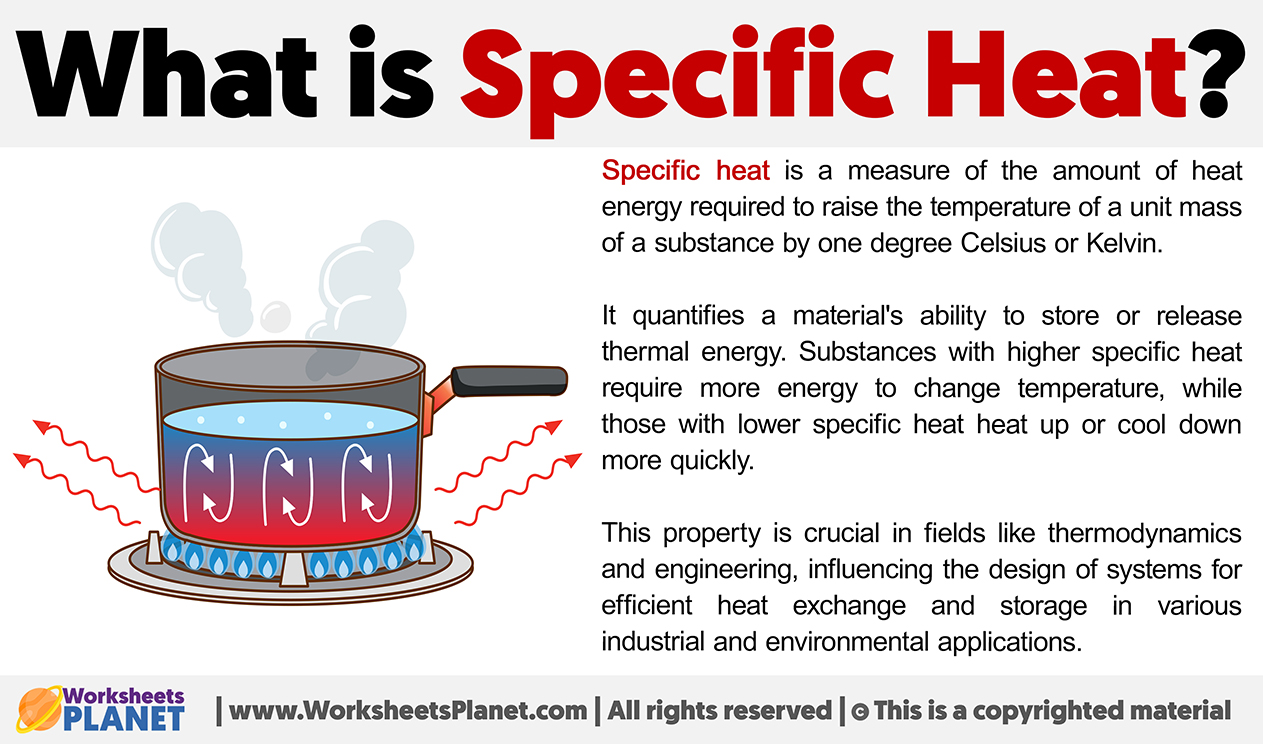
Specific heat is defined as the amount of heat energy required to raise the temperature of a unit mass of a substance by one degree Celsius. In the realm of technology, every electron moving through a circuit encounters resistance, and that resistance is converted into heat. As components become smaller and more densely packed, the management of this heat becomes the primary design constraint.
Defining Specific Heat for the Tech Industry
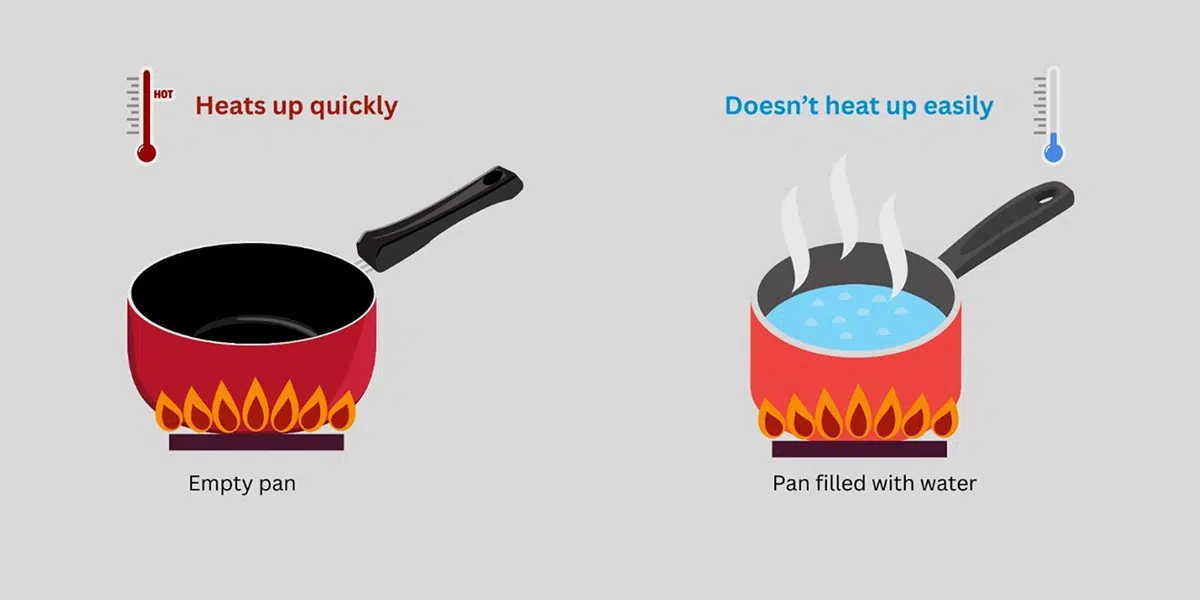
When we say a material has a higher specific heat, it means that the material can absorb a significant amount of energy before its own temperature rises. For hardware designers, this is a double-edged sword. A high specific heat capacity in a casing or a structural component means the device will feel “cooler” to the touch for a longer period because the material is soaking up the internal heat without spiking in temperature. However, it also means that once that material does get hot, it will take much longer to cool back down.
Why Material Selection Dictates Device Longevity
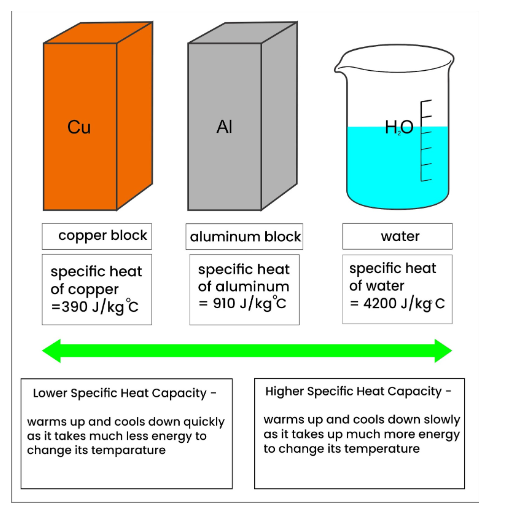
In the design of smartphones and ultra-thin laptops, the selection of materials with specific thermal properties is vital. Aluminum, for instance, has a relatively high specific heat compared to many other metals, coupled with excellent thermal conductivity. This combination allows it to act as both a “heat soak” (absorbing the initial burst of heat from the CPU) and a “heat spreader” (moving that heat to the surface where it can dissipate). Understanding the specific heat of various alloys allows manufacturers like Apple or Razer to create chassis that protect sensitive silicon components from rapid temperature fluctuations, which can cause micro-fractures in solder joints over time.
Thermal Management in Consumer Tech: From Smartphones to Gaming Laptops
As consumers demand more powerful AI features and high-fidelity gaming on mobile devices, the internal temperatures of these gadgets have skyrocketed. This has led to a technological arms race in thermal engineering, where “specific heat” is the metric that determines the winner.
Vapor Chambers and Heat Sinks
In high-end gaming laptops and the latest flagship smartphones (like the Samsung Galaxy S-series or the iPhone Pro models), engineers utilize vapor chambers and heat sinks. A heat sink’s efficiency is partially determined by its mass and the specific heat of its material. Copper is often used because, while it has a lower specific heat than aluminum (meaning it heats up faster), its thermal conductivity is superior, allowing it to move heat away from the processor instantly.
However, we are seeing a trend toward hybrid materials. Designers are looking for “Phase Change Materials” (PCMs) that offer an incredibly high “effective” specific heat. These materials absorb energy as they transition from solid to liquid, maintaining a constant temperature during the process and preventing the processor from hitting its thermal limit during intense workloads.
The Trade-off Between Portability and Cooling Capacity
The quest for thinner devices directly conflicts with the laws of thermodynamics. A thinner device has less mass, and less mass means a lower total heat capacity. This is why a thick gaming laptop can maintain high performance for hours, while a thin ultrabook might start to lag after fifteen minutes of video editing. Tech reviewers are increasingly focusing on “thermal saturation”—the point at which a device’s materials have absorbed all the heat they can hold. A higher specific heat in the internal cooling assembly delays this saturation point, allowing for longer “burst” speeds in mobile processors.
The AI Infrastructure Challenge: Cooling the Modern Data Center
The rise of Generative AI and Large Language Models (LLMs) has moved the discussion of specific heat from the consumer’s pocket to the massive data centers of Google, Microsoft, and NVIDIA. The H100 and Blackbridge GPUs used for AI training consume enormous amounts of power, and every watt of power consumed is a watt of heat that must be removed.
Liquid Cooling vs. Air Cooling
Traditionally, data centers relied on air cooling. However, air has a very low specific heat capacity (approximately 1.006 kJ/kg°C). This makes it a poor medium for transporting large amounts of heat away from high-density server racks. As AI chips push TDPs (Thermal Design Power) toward 1,000 watts per chip, air simply cannot keep up.
This has led to a massive shift toward liquid cooling. Water has a specific heat capacity of 4.184 kJ/kg°C—more than four times that of air. This means water can carry away four times as much heat for the same volume and temperature rise. In the tech industry, “higher specific heat” in this context translates directly to operational efficiency and lower electricity bills, as liquid-cooled systems require less energy to move heat than massive fan-based arrays.
Sustainable Computing and Heat Recovery
Higher specific heat is also a boon for sustainability. Because liquids like water or specialized dielectric fluids can hold so much heat energy without reaching boiling points, data centers are now “recycling” that heat. The high-heat-capacity water coming out of a server rack can be piped into municipal heating systems to warm homes or greenhouses. This “Heat as a Service” model is only possible because the cooling medium has a high enough specific heat to act as a viable energy transport mechanism.
Future Frontiers: High Specific Heat Materials in Battery Tech and EVs
The most critical application of specific heat in the coming decade will be in the automotive tech sector. Electric Vehicles (EVs) are essentially high-performance computers on wheels, powered by massive lithium-ion battery packs.
Solid-State Batteries and Thermal Stability
One of the primary dangers in EV tech is “thermal runaway”—a chain reaction where an increase in temperature releases energy that further increases the temperature. Here, what a higher specific heat means is “safety.” If the electrolyte or the separator in a battery has a higher specific heat, it can absorb more internal energy during a fast-charge cycle or a short-circuit event without reaching the critical temperature that triggers a fire.
Research into solid-state batteries is focused on finding solid electrolytes that not only offer high ion conductivity but also high thermal mass. A battery with high specific heat is more resilient to the stresses of rapid charging, which is currently a major hurdle for EV adoption.
Managing Thermal Runaway Through Material Science
Modern EV manufacturers, such as Tesla and Lucid, use sophisticated thermal management systems that circulate coolant through the battery pack. The goal is to maximize the “thermal inertia” of the system. By using coolants with high specific heat, the vehicle can handle sudden spikes in power demand (like flooring the accelerator) without the battery cells experiencing a localized heat spike. In the world of tech-heavy transportation, specific heat is the “buffer” that allows for both extreme performance and long-term battery health.
Conclusion: The Silent Architect of the Digital Age
While “specific heat” may sound like a relic from a high school chemistry textbook, it is, in fact, one of the silent architects of the digital age. In the tech niche, it defines the limits of how fast our phones can run, how long our laptops can last on a single charge, and how efficiently our AI models can be trained.
As we look to the future—whether it is the miniaturization of wearables, the expansion of the “Metaverse” requiring massive local compute, or the transition to a fully electric transport grid—our success will depend on our ability to manipulate materials with the right specific heat properties. A higher specific heat means more than just a slower rise in temperature; it means more stable AI, safer batteries, and a more sustainable technological footprint. For the tech-savvy consumer and the industry professional alike, understanding these thermal foundations is key to navigating the next wave of innovation.
aViewFromTheCave is a participant in the Amazon Services LLC Associates Program, an affiliate advertising program designed to provide a means for sites to earn advertising fees by advertising and linking to Amazon.com. Amazon, the Amazon logo, AmazonSupply, and the AmazonSupply logo are trademarks of Amazon.com, Inc. or its affiliates. As an Amazon Associate we earn affiliate commissions from qualifying purchases.