
The question “What do Islam mean?” delves into a profound and multifaceted concept that extends far beyond a simple dictionary definition. It is a question that touches upon faith, practice, worldview, and the lived experiences of over 1.9 billion people worldwide. While the literal translation of the Arabic word “Islam” is “submission to God,” its true meaning is a rich tapestry woven with theological principles, ethical guidelines, legal frameworks, and a spiritual journey. Understanding Islam requires an exploration of its core tenets, its historical development, and its impact on the lives of its adherents.
This exploration is crucial in our increasingly interconnected world, where a nuanced understanding of diverse cultures and belief systems is paramount. Misconceptions and stereotypes often cloud public perception, hindering genuine dialogue and mutual respect. By delving into the meaning of Islam, we aim to provide a clear, insightful, and engaging overview, stripping away the layers of misunderstanding and revealing the profound depth of this global faith.

The Core Tenets of Islamic Faith: Submission and Tawhid
At the heart of Islam lies the concept of “Islam” itself – submission. This is not a passive resignation but an active and willing surrender to the will of Allah (God), the singular, omnipotent, and transcendent creator. This submission is rooted in a fundamental understanding of God’s sovereignty and humanity’s role as His vicegerent on Earth.
Tawhid: The Uncompromising Oneness of God
The most central and defining principle of Islam is Tawhid, the absolute and indivisible oneness of God. This concept is not merely a belief in one God, but a comprehensive understanding of God’s uniqueness, power, and authority. Tawhid rejects any form of polytheism (shirk), idolatry, or the attribution of divine qualities to any created being, including prophets or saints.
-
Allah as the Sole Creator and Sustainer: Muslims believe that Allah is the origin of all existence, the one who brought the universe into being and continues to sustain it. There is no intermediary between God and His creation; prayer and supplication are directed solely to Him. This belief fosters a deep sense of reliance and trust in God, while simultaneously emphasizing human responsibility.
-
The Attributes of Allah: The Quran, the holy book of Islam, describes Allah through numerous attributes, such as the Merciful, the Compassionate, the All-Knowing, the All-Powerful, the Just. These attributes guide Muslims in their understanding of God’s relationship with humanity and provide a framework for ethical conduct. For instance, recognizing God’s mercy encourages Muslims to be compassionate towards others.
-
Rejecting Idolatry and Association: The concept of Tawhid is the bedrock upon which all Islamic practices are built. It necessitates a complete rejection of associating partners with God in worship or in any aspect of His divinity. This extends to the veneration of statues, relics, or any created entity as if they possessed divine power.
The Prophetic Mission: Guides for Humanity
Islam recognizes a chain of prophets sent by God throughout history to guide humanity. These prophets, including Adam, Noah, Abraham, Moses, Jesus, and finally Muhammad (peace be upon them all), were chosen to deliver God’s message and establish His way of life.
-
The Finality of Prophethood: Muslims believe that Prophet Muhammad (peace be upon him) is the final prophet in this lineage. His teachings and the Quran he brought are considered the ultimate and complete revelation from God, meant for all of humanity until the end of time. This belief underscores the importance of following his example, known as the Sunnah.
-
The Quran as Divine Revelation: The Quran is the literal word of God, revealed to Prophet Muhammad over a period of 23 years. It serves as the primary source of Islamic guidance, providing a comprehensive code of life covering spiritual, moral, social, and economic matters. Muslims believe the Quran is preserved in its original Arabic form, uncorrupted by human alteration.
-
The Sunnah: The Prophet’s Example: The Sunnah comprises the sayings, actions, and silent approvals of Prophet Muhammad. It provides practical context and elaboration on the principles outlined in the Quran. Studying and following the Sunnah is an integral part of Islamic practice, offering a detailed roadmap for living according to God’s will.
The Five Pillars of Islam: The Framework of Practice
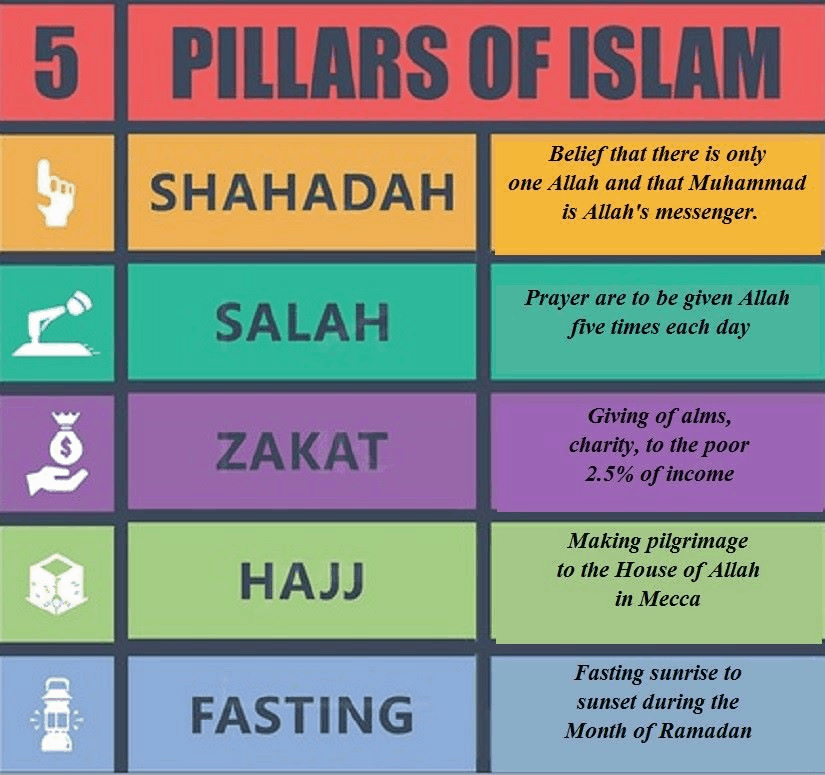
Beyond the core tenets of faith, Islam provides a structured framework for Muslims to live out their submission to God. This framework is embodied in the Five Pillars of Islam, which are obligatory acts of worship and devotion for all able Muslims.
Shahada: The Declaration of Faith
The Shahada, or declaration of faith, is the foundational pillar. It is the sincere utterance, “La ilaha illa Allah, Muhammadun rasul Allah” (There is no god but Allah, and Muhammad is His Messenger). This declaration is the gateway to Islam and a constant affirmation of Tawhid and the acceptance of Prophet Muhammad’s prophethood.
-
Embracing Monotheism: Reciting the Shahada with conviction signifies a conscious choice to abandon polytheistic beliefs and to submit to the singular God. It is a profound personal commitment that shapes one’s entire worldview.
-
Accepting Prophetic Authority: Acknowledging Prophet Muhammad as God’s messenger means accepting his teachings and his role as the divinely appointed guide for humanity. This acceptance is crucial for understanding and implementing Islamic principles.
Salat: The Ritual Prayer
Salat, the ritual prayer, is performed five times a day at prescribed times: dawn (fajr), noon (dhuhr), mid-afternoon (asr), sunset (maghrib), and night (isha). It is a direct communion between the worshipper and God, fostering a sense of discipline, mindfulness, and spiritual connection.
-
Purification and Intention: Before prayer, Muslims perform ritual purification (wudu), cleansing themselves physically and symbolically. The intention (niyyah) to pray for God’s sake is paramount, ensuring the sincerity of the act.
-
Physical and Spiritual Engagement: Salat involves a series of prescribed movements, including standing, bowing, prostrating, and sitting, accompanied by the recitation of verses from the Quran and du’a (supplication). This combination engages both the body and the spirit, creating a holistic act of worship.
-
Regular Remembrance of God: The five daily prayers serve as constant reminders of God’s presence, encouraging Muslims to live their lives in awareness of their Creator and to strive for righteousness in all their actions.
Zakat: Charity and Social Responsibility
Zakat is the obligatory charitable giving, a fixed percentage of a Muslim’s wealth that is distributed to the poor and needy. It is not merely charity but a purification of wealth and a recognition of the rights of the less fortunate.
-
Wealth as a Trust: Muslims view wealth as a trust from God, and zakat is a way of fulfilling their obligation to share that trust. It acknowledges that true wealth lies not only in accumulation but also in equitable distribution.
-
Alleviating Poverty and Inequality: The systematic collection and distribution of zakat aim to alleviate poverty, reduce social inequality, and foster a sense of solidarity within the community. It is a powerful tool for social justice.
-
Spiritual Growth through Giving: The act of giving zakat is seen as a means of spiritual purification, detaching the giver from excessive materialism and cultivating empathy and generosity.
Sawm: Fasting During Ramadan
Sawm, or fasting, during the month of Ramadan is another pillar, where Muslims abstain from food, drink, and marital relations from dawn until sunset. It is a period of intense spiritual reflection, self-discipline, and empathy for those less fortunate.
- Spiritual Discipline and Self-Control: Fasting cultivates self-control, patience, and the ability to resist desires. It trains the mind and body to focus on spiritual matters and to detach from worldly distractions.
-
Empathy and Compassion: By experiencing hunger and thirst, Muslims are reminded of the suffering of the poor and are encouraged to be more compassionate and generous towards them.
-
Community and Reflection: Ramadan is a time of heightened community spirit, with families and friends gathering for meals before dawn and after sunset. It is a month dedicated to increased prayer, Quran recitation, and introspection.
Hajj: The Pilgrimage to Mecca
The Hajj, the pilgrimage to Mecca, is an obligation for all able-bodied Muslims who can afford it, to be performed at least once in their lifetime. It is a profound spiritual journey that symbolizes the unity of Muslims and their devotion to God.
-
Unity of the Ummah: During Hajj, Muslims from all races, nationalities, and social classes gather in one place, dressed in simple white garments, emphasizing their equality before God and their brotherhood and sisterhood.
-
Reenacting Abrahamic Traditions: The rituals of Hajj are deeply rooted in the traditions of Prophet Abraham (Ibrahim), the father of monotheism, connecting pilgrims to a long lineage of God’s prophets.
-
Seeking Forgiveness and Spiritual Renewal: The Hajj is considered a significant opportunity for spiritual purification and the seeking of divine forgiveness. A Hajj performed with sincerity is believed to cleanse a person of past sins.
Islam’s Ethical and Moral Compass: A Way of Life
The meaning of Islam extends beyond ritualistic practice to encompass a comprehensive ethical and moral framework that guides all aspects of a Muslim’s life. This framework is derived from the Quran and the Sunnah and emphasizes justice, compassion, honesty, and accountability.
Justice and Fairness: Upholding Divine Law
Islam places a strong emphasis on establishing justice (adl) in all dealings, whether personal, social, or economic. This principle is rooted in God’s attributes of justice and fairness.
-
Equality Before the Law: Islamic teachings stipulate that all individuals are equal before the law, regardless of their social status, race, or gender. Justice should be administered impartially.
-
Fairness in Transactions: This principle extends to all transactions, including trade, contracts, and family matters. Deception, cheating, and exploitation are strictly forbidden.
-
Protecting the Vulnerable: Islamic law mandates the protection of the rights of the vulnerable, including orphans, the poor, women, and the elderly.
Compassion and Mercy: Reflecting God’s Attributes
The Quran frequently describes Allah as Ar-Rahman (The Most Gracious) and Ar-Rahim (The Most Merciful). Muslims are encouraged to emulate these divine attributes in their interactions with others.
-
Kindness to Family and Neighbors: Strong emphasis is placed on maintaining good relationships with family members, neighbors, and the wider community. Kindness, forgiveness, and mutual support are highly valued.
-
Care for the Environment: While not always explicitly termed “environmentalism,” Islamic teachings promote the responsible stewardship of God’s creation. Wastefulness and environmental degradation are discouraged.
-
Humility and Forgiveness: Muslims are encouraged to be humble, avoid arrogance, and to forgive others, reflecting God’s own boundless mercy.
Honesty and Integrity: Building Trust
Honesty and integrity are fundamental virtues in Islam, essential for building a just and trustworthy society.
-
Truthfulness in Speech and Action: Muslims are commanded to be truthful in all their words and deeds, even when it is difficult or disadvantageous to them.
-
Fulfilling Promises and Contracts: Keeping promises and honoring agreements are seen as vital for maintaining trust and social cohesion.
-
Avoiding Deception and Betrayal: Lying, cheating, and betraying trust are considered grave sins that can damage individuals and communities.
The Global Ummah: A Universal Brotherhood and Sisterhood
The meaning of Islam also encompasses the concept of the Ummah, the global community of Muslims. This transcends national, ethnic, and racial boundaries, uniting believers in a shared faith and purpose.
Shared Identity and Brotherhood
The Ummah signifies a profound sense of belonging and kinship among Muslims worldwide. This shared identity is rooted in their common belief in Allah and His Messenger, and their adherence to the Quran and Sunnah.
-
Mutual Support and Solidarity: Muslims are encouraged to support one another, offer assistance in times of need, and to stand in solidarity with fellow believers facing hardship or injustice.
-
Dignity and Respect: The concept of the Ummah promotes mutual respect and dignity among all Muslims, recognizing the inherent worth of each individual as a servant of God.

Diversity within Unity
While united by core beliefs, the Ummah is characterized by a rich diversity of cultures, languages, and traditions. This diversity is not seen as a threat to unity but as a testament to the richness and adaptability of Islam.
-
Cultural Expression within Islamic Frameworks: Islamic teachings provide a universal framework, within which diverse cultures can flourish and express their faith in unique ways.
-
Interfaith Dialogue and Coexistence: While focused on the Muslim community, Islamic principles also advocate for respectful interaction and coexistence with people of other faiths, emphasizing shared humanity and common values.
In conclusion, the meaning of Islam is a profound invitation to submission to the Divine, a commitment to a righteous life guided by the Quran and the Sunnah, and a participation in a global community united by faith. It is a journey of spiritual growth, ethical development, and active engagement with the world, striving to reflect the mercy, justice, and wisdom of its Creator in every facet of life. Understanding Islam in its fullness requires an appreciation for its theological depth, its practical guidance, and its enduring spirit of universal brotherhood and sisterhood.
aViewFromTheCave is a participant in the Amazon Services LLC Associates Program, an affiliate advertising program designed to provide a means for sites to earn advertising fees by advertising and linking to Amazon.com. Amazon, the Amazon logo, AmazonSupply, and the AmazonSupply logo are trademarks of Amazon.com, Inc. or its affiliates. As an Amazon Associate we earn affiliate commissions from qualifying purchases.