
In the rapidly shifting landscape of digital communication, language evolves at the speed of a fiber-optic connection. For many users navigating social media platforms, messaging apps, and online forums, the term “ASL” has become a point of linguistic confusion. Depending on the digital era of the user and the platform they occupy, “ASL” can signify vastly different things. However, beyond the simple definition, the evolution of this acronym reflects broader trends in technology, from the primitive chat rooms of the 1990s to the algorithmic-driven content of the 2020s. Understanding what “ASL” means in text today requires an analysis of how software interfaces, user demographics, and artificial intelligence influence the way we transmit information.

The Historical Architecture of Digital Identity: Age, Sex, Location
To understand the roots of “ASL,” one must look back at the architecture of the early internet. Before the era of robust social media profiles and verified identities, the internet was a collection of anonymous nodes. In the 1990s and early 2000s, platforms like AOL Instant Messenger (AIM), ICQ, and various IRC (Internet Relay Chat) channels were the primary hubs for digital interaction.
The Genesis of Metadata Shorthand
In these early text-based environments, users frequently interacted with total strangers. Because early software did not feature integrated profile pages with photos and biographies, “ASL” emerged as a functional protocol. It stood for Age, Sex, and Location. It was essentially a manual metadata request—a way for users to quickly categorize the person on the other side of the screen. In a tech landscape limited by low bandwidth and text-only interfaces, brevity was the primary goal of any communication protocol.
From Manual Queries to Automated Profiles
As web technology transitioned from Web 1.0 to Web 2.0, the necessity for the “ASL” query began to diminish. The development of social networking sites like MySpace and eventually Facebook integrated these data points directly into the User Interface (UI). Databases began storing this information as structured data, making the manual text query redundant. This shift marked the first major evolution in how technology handles personal identification: moving from conversational shorthand to automated database fields.
The Legacy of Security and Privacy
The historical use of “ASL” also serves as a case study in early digital security. In the infancy of the consumer internet, tech literacy regarding “doxing” or data privacy was minimal. The “ASL” prompt was a precursor to the modern privacy concerns we face today. It taught early netizens the risks of sharing PII (Personally Identifiable Information) in unsecured digital environments—a lesson that continues to influence how developers build secure messaging protocols in the modern era.
The Modern Linguistic Shift: ASL as an Intensifier
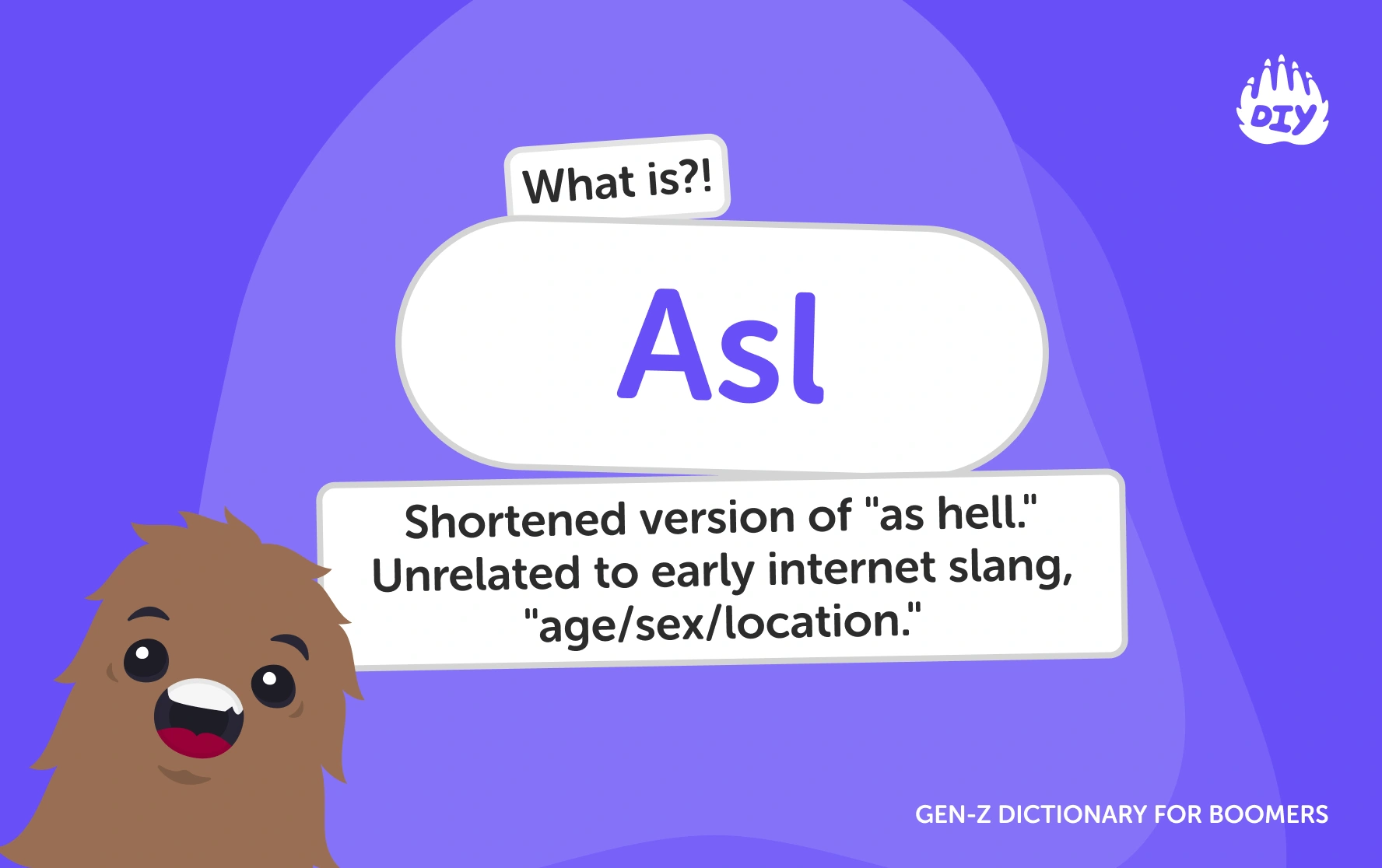
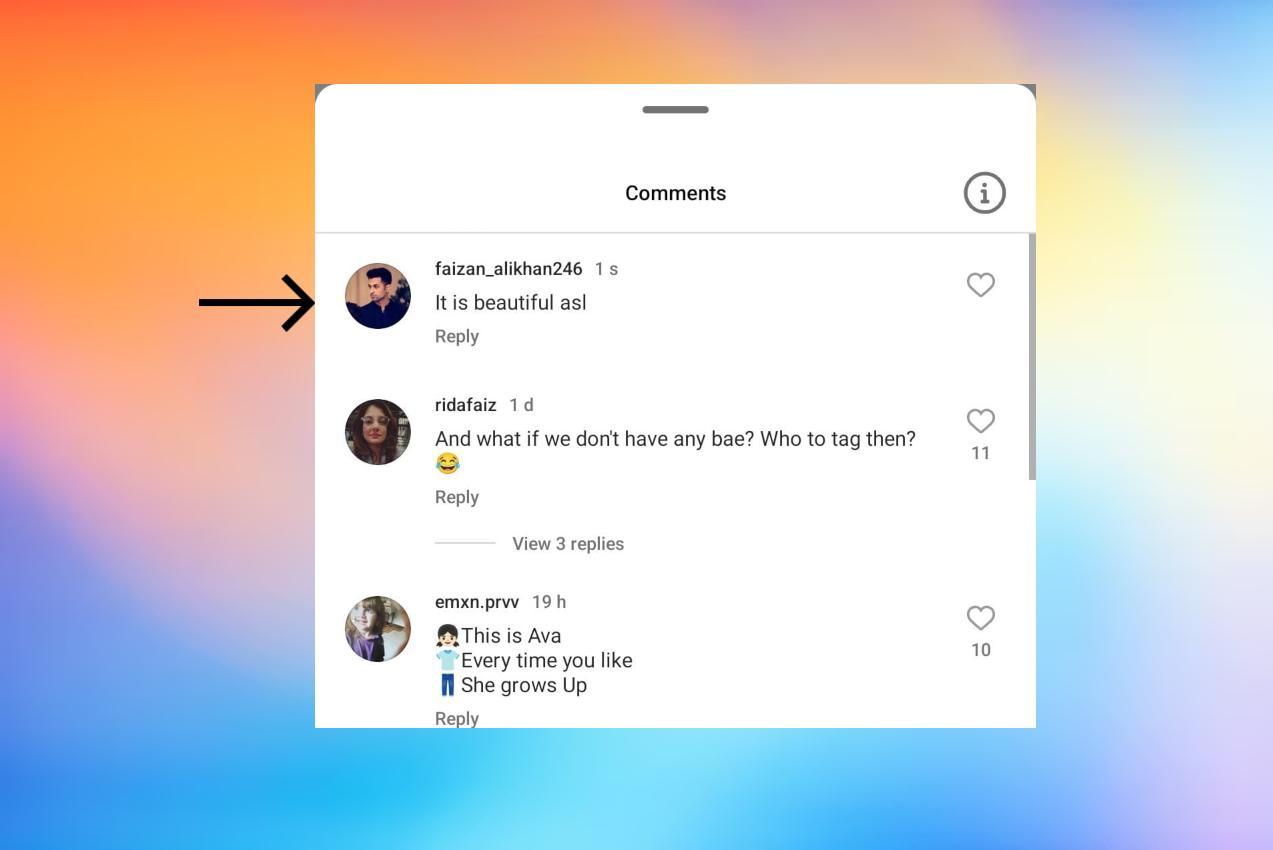
As the original “Age, Sex, Location” meaning faded into the background of internet history, a new definition emerged, driven largely by the UI constraints and cultural speed of platforms like TikTok, Twitter (X), and Snapchat. In the contemporary digital lexicon, “ASL” is frequently used as a phonetic shorthand for “as hell.”
Phonetic Compression in Mobile Communication
The shift from a demographic query to an intensifier is a direct result of how users interact with mobile hardware. On smartphone keyboards, users prioritize speed and “thumb-friendliness.” Saying “I’m hungry asl” is significantly faster than typing “I am extremely hungry” or even “I am hungry as hell.” This is an example of linguistic compression, where the phonetic sound of the letters “A-S-L” mimics the slurred pronunciation of “as hell.”
The Role of Content Algorithms in Language Adoption
Technology platforms are no longer neutral conduits; their algorithms play a significant role in how slang spreads. When a creator on TikTok uses “ASL” in their captions, the algorithm distributes that content to millions of users. If the engagement metrics are high, the platform’s recommendation engine continues to prioritize similar content. This creates a feedback loop where tech-mediated trends accelerate the adoption of shorthand, forcing older generations and even AI systems to adapt to new meanings in real-time.
Cross-Platform Nuances
It is important to note that the meaning of “ASL” can change based on the software environment. On professional networking tools like Slack or LinkedIn, “ASL” is rarely used and might still be interpreted in its legacy context. Conversely, in the “comment sections” of Gen-Z-focused apps, the “as hell” definition is the standard. This fragmentation requires users to possess a high degree of “platform literacy”—the ability to adjust communication styles based on the specific software and audience they are engaging with.
The Technology of Interpretation: How AI and NLP Handle Slang
The dual meaning of “ASL” presents a fascinating challenge for developers working in the fields of Artificial Intelligence (AI) and Natural Language Processing (NLP). For a machine to accurately interpret text, it must look beyond the characters and analyze the context.
Contextual Sentiment Analysis
Modern Large Language Models (LLMs), such as those powering ChatGPT or Claude, use transformer architectures to understand the relationship between words. When an NLP system encounters “ASL,” it evaluates the surrounding tokens. If the sentence is “What is your ASL?”, the model recognizes a demographic inquiry. If the sentence is “That’s crazy ASL,” the model identifies “ASL” as an adverbial intensifier. This ability to parse ambiguous shorthand is a hallmark of modern machine learning, moving away from rigid, dictionary-based lookups toward fluid, probabilistic interpretation.
Training Data and Temporal Drift
One of the biggest hurdles in tech development is “temporal drift”—the way language changes over time. AI models trained on data from 2010 might only recognize “ASL” as “Age, Sex, Location.” Developers must constantly update training sets with real-time data from social media APIs to ensure that virtual assistants and chatbots remain relevant. This reflects a broader trend in software engineering: the need for “living” software that evolves alongside human culture.
Accessibility and American Sign Language
We must also consider the tech intersection with American Sign Language (ASL). In the context of accessibility software and video conferencing tools (like Zoom or Google Meet), “ASL” refers to the visual language used by the Deaf and hard-of-hearing community. Developers working on gesture-recognition AI are currently building tools that can translate ASL signs into text in real-time. In this specific tech niche, the acronym “ASL” carries a weight of inclusivity and assistive technology that is entirely separate from internet slang.
Digital Etiquette and Security in the Era of Shorthand
As shorthand like “ASL” becomes more common, it introduces new dynamics in digital etiquette and cybersecurity. The way we use these terms can impact our digital footprint and our safety within the “Internet of Things.”
Social Engineering and Modern Phishing
While “ASL” as a demographic query is considered “cringe” or outdated by younger users, it remains a tool in the arsenal of social engineers. Cybersecurity experts warn that older acronyms are still used in phishing attempts targeting less tech-savvy populations. A request for “ASL” in a modern app is often a red flag for a “bot” or a malicious actor attempting to gather data for identity theft. Understanding the “tech-age” of certain slang terms can actually serve as a defense mechanism against digital fraud.
The Professional-Personal Divide in Tech
In the modern remote-work economy, the lines between personal and professional communication apps are blurring. Software like Microsoft Teams often sees a mix of formal and informal language. However, the use of “ASL” (meaning “as hell”) in a professional tech environment can lead to algorithmic flagging by HR monitoring software or simply create a disconnect in multi-generational teams. The “Tech-savvy” employee is one who knows not just what the acronym means, but where its use is appropriate within the digital ecosystem.
Data Privacy in Shorthand Communication
Every time we use shorthand on a platform, we are feeding data into a system. Messaging apps that use end-to-end encryption (like Signal or WhatsApp) keep our “ASL” usage private. However, on public-facing platforms, our use of specific slang is tracked by data brokers to build “psychographic profiles.” Using modern slang identifies a user as belonging to a specific age demographic, which in turn influences the types of advertisements and “suggested content” the tech stack serves them.
The Future of Textual Communication in Emerging Tech
As we move toward the next frontier of technology—including the Metaverse, Augmented Reality (AR), and sophisticated Voice-to-Text interfaces—the way we use “ASL” and similar shorthand will continue to transform.
Haptic and Gesture-Based Communication
In AR and VR environments, text entry is notoriously difficult. This suggests that shorthand will become even more vital. We may see “ASL” and other acronyms transformed into “macro-gestures” or “haptic shortcuts.” In a 3D digital workspace, a single gesture could convey the intensity of “as hell,” effectively turning text-based slang into a physical digital language.
The Rise of Predictive Synthesis
We are already seeing the “Auto-complete” and “Smart Compose” features in Gmail and mobile OSs. Future communication tech may move toward “Predictive Synthesis,” where the software anticipates the user’s intent. If you start typing a sentence about being tired, the AI might suggest “ASL” as a suffix to match your established digital voice. This creates a symbiotic relationship between human slang and machine logic, where the software helps define the “coolness” or “efficiency” of our speech.
Conclusion: A Microcosm of Digital Evolution
The simple question “what does ASL mean in text” reveals a complex story about our relationship with technology. From its origins as a manual data entry requirement in the early days of chat, to its current status as a phonetically-driven intensifier powered by social media algorithms, “ASL” is more than just a three-letter acronym. It is a microcosm of how software, hardware, and AI shape human expression. As we continue to develop more sophisticated tools for connection, the language we use will remain a fluid, ever-changing bridge between the human experience and the digital machines we inhabit. For the tech-literate individual, staying updated on these shifts is not just about understanding slang—it is about understanding the very mechanics of modern communication.
aViewFromTheCave is a participant in the Amazon Services LLC Associates Program, an affiliate advertising program designed to provide a means for sites to earn advertising fees by advertising and linking to Amazon.com. Amazon, the Amazon logo, AmazonSupply, and the AmazonSupply logo are trademarks of Amazon.com, Inc. or its affiliates. As an Amazon Associate we earn affiliate commissions from qualifying purchases.